

- Endometriosis, hypermobility and EDS: where the connective tissue link holds up, and where it doesn’t - 1 October 2026
- Teeth, Gums and Jaw Pain in hEDS, and How to Get Through a Dental Appointment - 28 September 2026
- Why ADHD and Hypermobility Keep Turning Up Together - 16 September 2026
This article is part of our comprehensive guide to hypermobility and Ehlers-Danlos syndrome.
Pelvic floor trouble is no stranger to those with hypermobility and one of the least likely to ever get named as part of it. Leaking when you cough or laugh, an urgency that has you mapping toilets before you leave the house, constipation that no amount of fibre seem to shift, pain with sex, and a dragging heaviness that gets worse as the day goes on. Most women with Ehlers Danlos syndrome report several of those at once, and the bladder ones tend to be the ones they find hardest to live with [1].
Before we go any further, a useful thing to understand first is that “pelvic floor dysfunction” isn’t just one thing. It’s a label sitting over at least five different problems that produce overlapping symptoms, and in hEDS and HSD any of them can be the one that you’ve got. The tissue might not be holding as well as it should, or the muscles might be gripping and never letting go. The information coming back from the pelvis might be poor enough that the brain is making bad decisions with it. The autonomic nervous system might be driving a good chunk of the bladder and bowel symptoms, or the pain system itself might have turned the volume up on a pelvis that is structurally fine.
Which one you have, matters an awful lot, as the treatments point in different directions. Squeezing harder is reasonable advice for the first and actively unhelpful for the second, and no amount of either will do much for the fifth. That’s the whole reason a proper assessment comes before a programme. It’s also why so many hypermobile women have done months of pelvic floor exercises and come out the other side no better, or worse.
The research in this area, is genuinely very lopsided. The symptom side is described reasonably well now. The mechanism side is small and patchy . And treatment aimed at hypermobile pelvic floors barely exists, so a lot of what follows is a sensible read across a lot of literature, rather than specific hypermobile research, but there are some. [2].
What the pelvic floor is actually doing all day
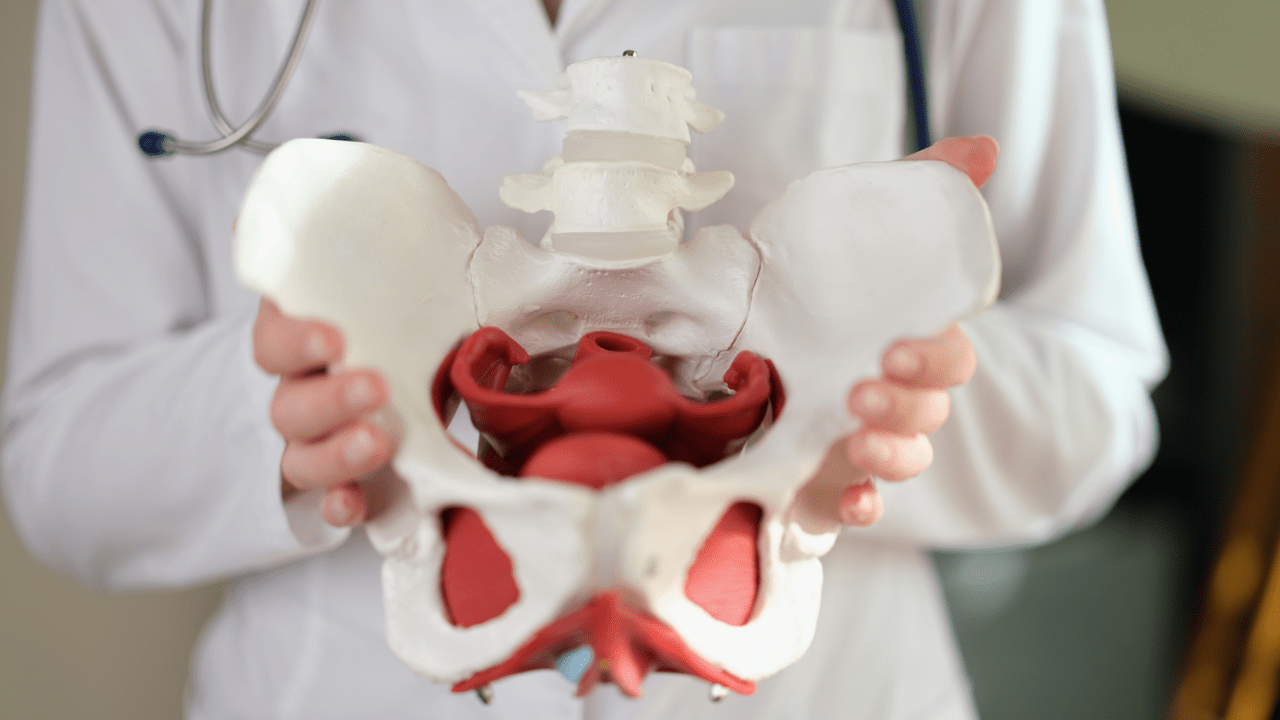
Whatever the diagram in the leaflet suggested, the pelvic floor isn’t jsut one muscle, and it isn’t really a hammock either. It’s a layered set of muscle, fascia, ligament and nerves slung across the base of the pelvis [3], and it holds the bladder, the bowel and the womb up against gravity. It lets things out on purpose, and keeps them in the rest of the time [4]. It contributes to continence, to emptying the bowel, to sexual function, to how the pelvic girdle holds together, and to how you breathe [3].
That last one surprises people, as the pelvic floor works as part of a team. The diaphragm sits above it, the belly wall in front, the deep back muscles behind, and the four of them share the job of managing the pressure inside your belly every time you breathe, cough, lift or stand up [3]. Measure women with pelvic floor problems in different positions, and the diaphragm works hardest alongside a pelvic floor squeeze in four point kneeling, with diaphragm and belly activity rising and falling together across the positions tested [5]. That’s general pelvic floor work rather than hEDS work though. Take it as a description of how the system is wired, rather than as proof of anything specific to hEDS.
So, the pelvic floor has to be strong enough to hold, supple enough to let go, and well enough coordinated to know which of those to do at any given second. And because it’s tied into breathing and pressure, it’s affected by all sorts of things that have nothing to do with the pelvis. Which is part of why it gets missed so often.
Hypermobility, HSD and hEDS, in plain terms
Being hypermobile is a trait rather than a diagnosis. Plenty of people have joints that move further than average and never have a day’s bother with it. Hypermobility spectrum disorder and hypermobile Ehlers-Danlos syndrome are the clinical labels for when that hypermobility comes with symptoms or with broader connective tissue involvement [6]. The current international classification lists thirteen types of Ehlers-Danlos syndrome. hEDS is still the only one with no genetic test to confirm it though, so it’s diagnosed by a clinician working through a set of criteria rather than by a blood sample [7]. HSD arrived at the same time, for people who are clearly symptomatic but don’t tick every box for hEDS [8].
That distinction matters a lot less than you’d think for the pelvic floor, as both carry a multisystem load, and both turn up alongside bladder and bowel trouble, gut symptoms, fatigue, orthostatic intolerance and long standing pain [8][9]. HSD is a different set of boxes rather than a milder version of the same ones.
All of this is still very much under the radar, by the way. Health record data from the whole of Wales puts the diagnosed rate at roughly two in a thousand. Women get the label later than men. And they carry a lot more problems outside the joints and muscles around the time they get it [10]. That’s a diagnosed rate rather than a true one though, it’s most likely far more common. A condition picked up late, and picked up unevenly, gives you exactly what we see in the pelvic floor world: women turning up to a bladder appointment with their fifth apparently unrelated problem, and nobody rubbing two brain cells together and joining them up.
How common pelvic floor problems actually are
Very. Ask a large international group of women with Ehlers-Danlos syndrome and most report pelvic pain, and most report leaking of some kind. A good few also report prolapse symptoms or bowel leaking. The bladder ones were rated the most bothersome of the lot [1]. Ask a wider group with hEDS or HSD and around four in ten say they have pelvic floor problems [11]. They volunteered themselves, mind, which nearly always pushes a figure up.
Widen it out beyond the pelvic floor and the reported problems run across bladder, gynae, pregnancy, kidney and men’s health [2]. Which is a lot of ground for something most people are never warned about. The evidence underneath it is straight about its own limits though, as it’s built mostly of small write ups rather than trials, and how common this is, how it shows up, and how it ends up are all still badly pinned down [2].
So, this is common, it’s broad, and the exact numbers you’ll see quoted are soft, while the direction of them really isn’t. Pelvic floor trouble in hEDS and HSD seems to be a recurring part of the condition rather than a coincidence. It stopped being an anecdote some time ago.

Five things that can go wrong, and they aren’t the same problem
Read this next bit with your own symptoms in mind, as they overlap a lot, and most women have more than one of these going on at once.
The tissue doesn’t hold as well
This is the obvious one, and the one everybody reaches for first. If the connective tissue all through your body gives more easily, then the fascia and ligaments holding the pelvic organs up give more easily too, and the support fails sooner, and under less strain, than it would in somebody else.
It’s a reasonable idea, and the indirect evidence backs it up. Hypermobile joints and prolapse turn up together often enough that pooling the work we have puts the risk at roughly double [12]. The individual pieces disagree with each other quite a lot though, and some of them aren’t very well built, so hold that number loosely. It isn’t your personal risk. The tissue biology side is thinner still. Changes in the scaffolding between cells, fragile tissue and odd fascial repair are all described in hEDS and HSD. All of them could plausibly change how force travels through the pelvis. Almost nobody has looked at actual pelvic floor tissue in this group though [13].
In practice that means support failure is real. It probably sits under a good chunk of the prolapse and the leaking. It isn’t the whole story though. Treating it as the whole story is where most of the bad advice comes from.
The muscles are working too hard
The less obvious one, and in our experience the one that gets missed most. If the tissue around a joint is doing less of the holding, the muscles pick up the slack, and muscle that’s been asked to hold all day tends to stop letting go. A pelvic floor in that state is short, tender and permanently half switched on rather than weak, and it produces urgency, incomplete emptying, pain with penetration and a deep ache that people describe as bruising.
There’s real support for this pattern being common in hypermobile women with pelvic pain. In women attending for genitopelvic pain, hypermobility features are common and an overactive pelvic floor is often found alongside them [14][15]. Among women with long term pelvic pain more widely, a scored tenderness exam picks out a high tone floor fairly well. The ones who meet the threshold have more constant pain, more pain brought on by activity, and worse sexual function with more severe pain during sex [16]. The symptoms on their own did not separate the two groups though. You cannot tell from the symptom list whether your pelvic floor is overworking, as somebody has to actually examine it.
A couple of caveats sit on all of that. Direct comparisons of pelvic floor tone in hEDS and HSD against matched controls are limited, so the mechanism is inferred more than it’s measured [17]. And even outside hEDS, there’s still no agreed name for a high tone pelvic floor and no settled treatment standard, which is a polite way of saying the field is arguing with itself [18].
The signal coming back is poorer
The layer that gets left out entirely is the signal itself, and it’s the one our own work sits on. Laxer tissue doesn’t just hold less well, it reports less well, as the information a joint sends back about where it is, and what’s happening to it, comes through less clearly. And a brain making decisions on a noisier signal, makes worse ones.
In the pelvis this shows up most clearly in the bowel. Women with constipation who also have hEDS or HSD are more likely to have rectal hyposensitivity, which means the rectum has to be fuller than it should be before the urge registers at all. How fast things moved through the gut, and what the scans showed, weren’t clearly different from other people with constipation [19]. If the urge arrives late, you’ll sit down late. And by then the stool is harder and the job is worse. So it’s a sensing problem producing something that looks exactly like a motility problem.
There’s a coordination half to it as well. Set against matched controls, people with HSD or hEDS and gut symptoms relaxed the anal sphincter less, and kept more pressure there, while straining as though to empty [20]. The simple expulsion test came out much the same. The imaging didn’t differ in the ones who had it. So the bowel isn’t being lazy, it’s being pushed against a door that hasn’t been told to open.
Away from the pelvis, the same theme runs right through the limb work. People with Ehlers-Danlos syndrome judging where their arm is are no less accurate on average, they’re a lot less precise though, with much more scatter around the right answer [21]. Knee joint position sense is impaired in women with the hypermobility type compared against matched controls [22]. Nobody has done the same work on the pelvic floor, so applying it here is our own read rather than a finding. It’s a reasonable one in our opinion. It explains something women say to us constantly, which is that they genuinely cannot feel whether they’re squeezing or bearing down.
The autonomic nervous system is in the mix
Pelvic symptoms in hEDS and HSD rarely travel on their own. Dysautonomia is common in this group and it can involve the bladder directly, alongside gut symptoms, dizziness, near fainting, temperature problems and orthostatic intolerance [23]. Among women with HSD and hEDS, a large share also carry a diagnosis of postural tachycardia syndrome, and a smaller but decent sized group carry mast cell activation syndrome on top of that [24].
So, urgency, an unpredictable bowel, fatigue and not tolerating exercise can all be partly autonomic rather than purely pelvic. A programme aimed only at the pelvic floor will shift some of that and not the rest. If your bladder is worse on days you’re upright a lot, worse in heat, and better lying down, that’s a pattern worth taking to whoever treats your POTS as well as to whoever treats your pelvic floor.
The so called trifecta of hEDS, POTS and mast cell activation is where this gets properly contested. The overlap in the groups looked at so far is real and it keeps turning up [24]. What hasn’t been shown is a shared biology linking all three. The work that looks hardest at this keeps landing in the same place, as the evidence is weak, the criteria used are often loose, and the mast cell definitions in particular are frequently poor [25]. Both of those things are true at the same time, so you can have all three diagnoses and be entirely genuine. Nobody can yet tell you why they cluster.
The pain system has turned the volume up
Pain in hypermobility isn’t simply the sum of the tissue damage, and the pelvis is no exception. Hypermobile adults show pain in more places, lower thresholds to heat and cold, and more wind up, which is where the same poke felt over and over is felt more strongly each time [26]. And all of that turns up with no sign of damage to the sensory nerves themselves. Newer work using the current criteria describes severe long standing pain, frequent nerve type features, and a sensitised system as a likely key step in how the condition changes over the years [27]. The modern term for pain generated this way is nociplastic pain, meaning pain arising from altered processing rather than from ongoing tissue damage or nerve injury [28].
That matters a great deal for the pelvis. In women with long term pelvic pain, higher nociplastic pain scores track with more severe pain, more frequent pain, more interference with life, and more muscle pain [29]. They also track with a higher chance of the pain being the sort that wrecks your week, whether or not there’s endometriosis or past surgery in the picture. In other words, the pain system’s own state predicts how bad the pelvic pain is, over and above what’s found in the pelvis.
Now, don’t let anyone convert that into “it’s central, so there’s nothing in your pelvis”. Among people with hEDS and HSD sent on for nerve pain or autonomic symptoms, definite small fibre neuropathy turned up in well over half of those who finished both kinds of testing [30]. Those two findings sit together perfectly well. Hypermobile adults in general come out with their sensory nerves intact, while a group already picked out for nerve symptoms comes out with damage in a lot of them. Small fibre neuropathy is damage to the thinnest nerve fibres, the ones carrying pain, temperature and a good deal of autonomic traffic. So it’s real, it’s measurable, and it’s out in the body rather than in the brain. Whether it feeds into pelvic, bladder or vulval pain has not been studied, which is a gap rather than a negative.
The long view on all of this recast being hypermobile as a lifelong pain condition rather than a party trick, with pain, fatigue and headache clustering and shifting through different stages of life [31]. And the psychological and autonomic threads are tangled into that rather than sitting off to the side. Not coping well with being upright accounts for a good part of the link between being hypermobile and anxiety, which is to say the anxiety is sitting on top of a body that keeps sending alarm signals [32]. Hypermobile people also show differences in the brain areas handling body sensation and threat, alongside a twitchier autonomic system [33]. Attention to bodily sensations, low mood and boom and bust activity patterns all make disability worse, without any of it meaning the pain is imaginary [34]. Biology, psychology and circumstance all load the same system. Not one of them makes the pain less real.
What all that looks like symptom by symptom
Prolapse and leaking
Prolapse is when the support around the bladder, bowel or uterus gives enough that the organ descends into the vaginal wall, and it’s felt as heaviness, dragging, a bulge, or the sense that something is coming down, usually worse by evening and worse after being upright. In hypermobile women it can arrive young, and without any of the usual causes, which is exactly why it gets waved away in women in their twenties and thirties who haven’t had children [35]. Stress leaking, the kind that happens with a cough, a sneeze or a trampoline, frequently comes along with it.
Now, the link between hypermobile joints and prolapse is consistent enough to take seriously, at roughly double, though the work underneath it pulls in different directions and some of it is poor [12]. Figures for how common it is in Ehlers-Danlos syndrome vary wildly depending on who was asked and how [36]. So a number quoted at you is a rough steer rather than your odds.
Constipation, and the feeling of not being empty
Constipation and gut dysmotility are common right across hEDS and HSD, and not only in the women who end up in a pelvic floor service, with constipation and abdominal pain both running well above comparison groups without hypermobility [37]. The link between joint hypermobility and difficulty evacuating the rectum has been described for well over a decade now [38].
Which brings the sensing problem back round: if the urge registers late, more fibre and more laxative are aimed at the wrong thing [19], and if the sphincter isn’t letting go while you push, then pushing harder makes it worse [20]. Both of those are fixable, and neither of them is fixed by the standard advice.
Bladder symptoms
Frequency, needing to go at night, a weak or hesitant stream, bladder pain, urgency. All common, all worth naming, and the mechanism isn’t what most people assume. Women with hEDS have been looked at with video urodynamics, which is a test that measures pressure and flow while filming the bladder. The symptoms were all there. The bladder itself was mostly behaving though, with no overactive bladder muscle, no leaking shown on the test, and normal stretch. A few did show pelvic floor problems on the muscle traces [39]. That points at the pelvic floor and the nerves feeding it rather than at a bladder disease, at least in the women who get sent to that kind of service. It was a small group seen at a specialist centre, mostly white and mostly female, so it describes that group rather than everyone.
Pull the wider bladder work together and the same picture holds. Bladder symptoms are common in Ehlers-Danlos and the hypermobility syndromes, and the rates move about depending on how the question was asked [36].
Pain with sex, and vulval pain
This one hardly ever gets asked about, and it should be. Pain with sex is common in Ehlers-Danlos syndrome. More than a third of women in that large international group get it often, and it sits alongside pelvic pain as one of the two most reported symptoms overall [1]. Take a well described group of women with confirmed hEDS, seen at a specialist centre, and heavy periods, painful periods and pain with sex were all common. Some of them also said their symptoms swung with puberty, with the cycle, after birth or on the pill. That points to a hormone sensitivity in some women and not others [40].
Vulvodynia, meaning persistent vulval pain without anything obvious to see, also turns up a lot. In a big online group of women with EDS or HSD found through social media, most had pain with sex, and about half screened positive for probable vulvodynia [41]. That group was overwhelmingly white and mostly American, which is a real limit. It’s one that has since been documented deliberately rather than glossed over [42]. Among women attending for genitopelvic pain in the first place, every woman with diagnosed hEDS in one such group had vestibulodynia, which is pain at the entrance to the vagina [15]. That absolutely cannot be read as “everyone with hEDS has this”, as they were all there for pain in the first place. It does mean that if you have hEDS and pain at the entrance, you’re in extremely ordinary company.
Chronic pelvic pain
Pelvic pain is the single most reported pelvic floor symptom in this population [1]. It’s also the one with the most going on behind it: a pelvic floor working too hard [16], a pain system turned up [29], and possibly damage to the smallest nerve fibres [30]. In a few women there’s also vascular compression in the belly and pelvis, where a vein or an artery gets squashed by what sits next to it. That causes pain and congestion that no amount of pelvic floor work will touch [43]. Those are uncommon, and they get over diagnosed in some corners of the internet (which honestly happens a lot in this space). They’re real though, and they’re one reason that pelvic pain which isn’t shifting deserves a proper look, rather than another round of the same exercises.
Pregnancy, birth and the year afterwards
The childbearing research has improved and it’s still not strong. The best summary we have says outright that the good evidence here is thin [44]. What it describes is worth knowing anyway. The pelvic floor, the abdominal wall, the hips and the back can all take longer to settle than anyone warned you about. More pelvic pain, pelvic floor problems, bladder symptoms, constipation, pain with sex and worries about prolapse all feature afterwards [44].
On the birth itself, large international data that women filled in themselves point to higher than background rates of several problems. Pre-eclampsia, heavy bleeding, early birth, wound infection and very fast labour all came up, and prolapse was reported after roughly one pregnancy in eight [45]. National inpatient data also point to more caesarean delivery, postpartum haemorrhage, growth restriction and preterm birth after adjusting for age [46]. Against that, the specialist centre group of women with confirmed hEDS came out broadly reassuring on the main birth outcomes set against women generally, apart from more miscarriage [40]. So the risk figures genuinely disagree with each other depending on how the group was put together. What you’ve got is complicated rather than a set number.
What the guidance actually lands on is that care has to be built around the woman it’s for, and joined up, rather than that one birth plan wins. Fragile tissue, pain, autonomic symptoms and mast cell issues keep coming up in this group, and none of them is standard [44]. The interview work alongside it is fairly bleak. Women describe poor professional knowledge and poor support over and over, which makes the distress worse and puts people off going back [47]. So if you’re pregnant and hypermobile, getting a pelvic health physiotherapist involved before the birth rather than after it is one of the few genuinely proactive moves available.
Men, and the bit nobody has studied
Men get pelvic floor problems too, and men with hEDS and HSD are close to invisible in the research. Of all the work gathered on pelvic and urinary problems in these conditions, only a small fraction addressed men’s health problems at all (surprise, surprise) [2]. Which is a research gap rather than evidence that men are fine. The words for the symptoms exist, and so does a framework for assessing a man’s pelvic floor and bladder [48]. Nobody has ever applied either of them to this group properly. So if you’re a hypermobile man with pelvic pain, dribbling after you’ve finished, urgency or pain with ejaculation, you’re unstudied rather than an anomaly. And those are two very different things.
Getting assessed properly, and what to ask for
You cannot work out which of the five problems you have from the symptom list, as the symptoms overlap almost completely [16]. Somebody has to examine you and, for the bowel and bladder side, measure you.
– Pelvic floor examination: An internal exam by a pelvic health physio is what separates a floor that’s weak from one that’s overworking and tender. Those two lead to opposite programmes. It’s the thing to push for first, before any exercise plan, and it’s also the thing most often skipped.
– Prolapse: Diagnosed on your history and an exam rather than on a scan, with bowel or bladder testing added where the symptoms warrant it [49]. If you’ve been told you’re too young for it, that’s an assumption rather than a reason.
– Bowel testing: Where the problem is not emptying rather than slow transit, expert guidance now recommends anorectal manometry, a balloon expulsion test, or defecography in hEDS [50]. Pelvic floor problems are common enough here to be worth measuring rather than guessing at. Manometry measures the pressures, the balloon test checks whether you can actually expel something, and defecography images the mechanics while you go.
– Urodynamics: Worth it where the bladder picture is confusing, or where it hasn’t shifted. Partly to find what is there, and partly to rule out the things a pelvic floor programme won’t fix [39].
– The autonomic side: If your pelvic symptoms swing with posture, heat, fatigue or how much you’ve been upright, say so out loud at the appointment [23]. It changes the interpretation.
What actually helps
Treatment evidence in this population is the weakest part of the whole field, so what follows is the best steer we have rather than a protocol. The general picture across hEDS and HSD is that gentle, rehab led care comes first. Physio, exercise, motor control training and joined up care from more than one profession are all supported in principle. Trials in this condition are still scarce though [51].
Pelvic floor physiotherapy
Physio is the best supported thing on the list. It’s also the one most often recommended in specialist bladder practice for hEDS [39]. Outside hEDS and HSD, pelvic floor physio helps a high tone floor, long term pelvic pain, vulvodynia, pain with sex, and some bladder and bowel symptoms [52]. The work behind that is often poor quality, mind. Nobody has run the same trial in hEDS and HSD, so this is a reasonable transfer rather than a proven one.
Pelvic floor physio is not another word for Kegels, and that part really matters. For an overworking floor, the job is downtraining, which means learning to let go and lengthen, and adding squeezes to that is a bit like asking a cramping calf to do more calf raises. For a floor that genuinely isn’t holding, strengthening is appropriate. The exam decides which of those you need. And that’s exactly why doing the exercises you found online is a coin flip.
Biofeedback, and why sensation is the target
Biofeedback means being shown, on a screen or through a probe, what your pelvic floor is actually doing while you try to move it. That’s how you learn the difference between squeezing and bearing down when you can’t feel it yourself.
The rationale for it in this population is a good deal better than the direct proof. Where constipation in hEDS and HSD comes with a rectum that registers fullness late, the target is the sensation rather than the strength [19]. Sensory biofeedback is the obvious way at that. That’s condition specific reasoning and it lines up with everything else we know about poor signal in hEDS and HSD, but it’s still inference. Nobody has run the trial.
Breathing work
Breathing and the pelvic floor are genuinely linked, so the rationale is sound. The evidence that adding breathwork improves outcomes is weaker than the internet suggests though (as it usually is). Several physio methods can improve a pelvic floor squeeze, none of them is clearly better than the others, and they vary so much from one piece of work to the next that comparing them is hard [53]. More directly, adding a structured breathing based approach to pelvic floor muscle training for period pain didn’t outperform the muscle training on its own [54]. So breathing work is worth doing as part of how you retrain the timing and calm a jumpy system. Claims that it’s the missing ingredient should stay fairly modest.
Pessaries
A pessary is a silicone device placed in the vagina to support a prolapse, and it’s a standard option short of surgery for women generally, often the first thing offered [49][55]. In hypermobile women it’s an appealing idea, as it deals with the support problem mechanically, without the surgical risk. The surgical alternative here comes with more caution than usual.
The awkward bit is that hEDS specific pessary data barely exist. In the Ehlers-Danlos prolapse surgery work we have, a pessary turns up only as one form of further treatment after an operation [56]. Nobody has tested it in its own right. Worth a try then, with realistic expectations and no promises at all about how well it holds.
The rest of your body
Oddly, the hypermobility evidence here is actually better than the pelvic floor evidence! Which is worth knowing, as it means the general rehab work is the part you can be most confident about. Across the work we have, exercise, motor control training, low impact strengthening, stability work, body awareness and psychologically informed rehab all tend to help [57][51], with pain, function, joint sense, fatigue and quality of life all shifting in hEDS and HSD. The evidence comparing one approach against another is weak though. Nobody can tell you the best type or dose [58][59]. Where pelvic girdle pain is part of the picture, training the joint sense is argued for directly [60].
None of that is pelvic floor training, but a pelvic floor sitting inside a body that holds itself rigid all day, breathes into the top of the chest and braces constantly, has a harder job than one that doesn’t. Fixing how you stand, breathe and load your hips is most of the context the pelvic floor is operating in, rather than a detour from it.
The pain side of it
Where pelvic pain has become persistent and widespread rather than tied to one provocation, treating it as a tissue problem alone stops working. Pain work that takes in the head as well as the body looks relevant here, especially alongside physio, though the evidence for it is small and poor quality [61]. An online pain programme built for hEDS and HSD turned out to be workable and acceptable [62]. Worst pain improved a little by three months, and so did how much people felt their hypermobility was getting in the way. Early and small, but it’s the right shape of thing.
Now, pain education is part of this, and it needs saying carefully. Knowing that a sensitised system makes real pain out of ordinary input is genuinely useful, and it isn’t the same statement as your pain being in your head. None of this means the pelvis is fine and the brain is confused.
Surgery
Caution rather than avoidance, and that distinction matters because women in this group get refused operations they’d benefit from as often as they get rushed into ones they wouldn’t.
Women with inherited connective tissue disorders had more of the milder problems around the operation itself, and got readmitted more often after pelvic floor repair, than the women they were set against [63]. In the Ehlers-Danlos prolapse surgery work we have, early problems were few but close to a third went on to need further treatment, usually another operation [56]. So the risk isn’t mainly in the theatre, it’s in durability. Tissue that didn’t hold the first time has to hold a repair, and that’s a fair thing to weigh up beforehand rather than discover afterwards. Trying the gentler options first is the sensible order. Going in with clear eyes about a second operation is the sensible chat to have.
What nobody knows yet
Quite a lot, as it happens.
Nobody has established which mechanism dominates in which woman. Tissue that doesn’t hold, muscles that overwork, poor feedback from the pelvis, a wonky autonomic system, and a pain system turned up, with damage to the smallest nerve fibres sitting inside that last one. All five are plausible and all five have some evidence behind them. There’s no way yet to tell you which combination you’ve got without somebody examining and measuring you [2]. Nobody has studied pelvic floor tissue directly in hEDS in any depth [13]. Nobody has tested whether the small fibre findings extend to pelvic, bladder or vulval pain [30]. Nobody has run a treatment trial for the hypermobile pelvic floor, so the treatment section above is borrowed from a nearby group and applied with judgement [52][51]. And men are close to absent from the whole literature [2].
What has changed, and it’s genuinely a change, is that this is no longer treated as a curiosity. Across symptom work, physiology, urogynaecology, gut guidance and pregnancy research, pelvic floor trouble now reads as a normal part of a whole body condition rather than as bad luck in a few women.
The question to take to an appointment isn’t whether your pelvic floor is weak, it’s which of the five things is going on, and how anybody would know. That one can actually be answered, by an exam rather than by guesswork.
The Fibro Guy

References
[1] Kciuk, O., Li, Q., Huszti, E. and McDermott, C.D. (2022) ‘Pelvic floor symptoms in cisgender women with Ehlers–Danlos syndrome: an international survey study’, International Urogynecology Journal. https://doi.org/10.1007/s00192-022-05273-8
[2] Gilliam, E., Hoffman, J.D. and Yeh, G. (2019) ‘Urogenital and pelvic complications in the Ehlers‐Danlos syndromes and associated hypermobility spectrum disorders: A scoping review’, Clinical Genetics. https://doi.org/10.1111/cge.13624
[3] Tim, S. and Mazur-Bialy, A.I. (2021) ‘The Most Common Functional Disorders and Factors Affecting Female Pelvic Floor’, Life. https://doi.org/10.3390/life11121397
Read More[4] Quaghebeur, J., Petros, P., Wyndaele, J.J. and De Wachter, S. (2021) ‘Pelvic-floor function, dysfunction, and treatment’, European Journal of Obstetrics & Gynecology and Reproductive Biology. https://doi.org/10.1016/j.ejogrb.2021.08.026
[5] Korkmaz Dayican, D., Keser, I., Celiker Tosun, O., Yavuz, O., Tosun, G., Kurt, S. et al. (2023) ‘Exercise Position to Improve Synergy Between the Diaphragm and Pelvic Floor Muscles in Women With Pelvic Floor Dysfunction: A Cross Sectional Study’, Journal of Manipulative and Physiological Therapeutics. https://doi.org/10.1016/j.jmpt.2024.02.005
[6] Morlino, S. and Castori, M. (2023) ‘Placing joint hypermobility in context: traits, disorders and syndromes’, British Medical Bulletin. https://doi.org/10.1093/bmb/ldad013
[7] Malfait, F., Francomano, C., Byers, P., Belmont, J., Berglund, B., Black, J. et al. (2017) ‘The 2017 international classification of the Ehlers–Danlos syndromes’, American Journal of Medical Genetics Part C: Seminars in Medical Genetics. https://doi.org/10.1002/ajmg.c.31552
[8] Carroll, M.B. (2023) ‘Hypermobility spectrum disorders: A review’, Rheumatology and Immunology Research. https://doi.org/10.2478/rir-2023-0010
[9] Daylor, V., Griggs, M., Weintraub, A., Byrd, R., Petrucci, T., Huff, M. et al. (2025) ‘Defining the Chronic Complexities of hEDS and HSD: A Global Survey of Diagnostic Challenges, Life-Long Comorbidities, and Unmet Needs’, Journal of Clinical Medicine. https://doi.org/10.3390/jcm14165636
[10] Demmler, J.C., Atkinson, M.D., Reinhold, E.J., Choy, E., Lyons, R.A. and Brophy, S.T. (2019) ‘Diagnosed prevalence of Ehlers-Danlos syndrome and hypermobility spectrum disorder in Wales, UK: a national electronic cohort study and case–control comparison’, BMJ Open. https://doi.org/10.1136/bmjopen-2019-031365
[11] Teran-Wodzinski, P. and Kumar, A. (2023) ‘Clinical characteristics of patients with hypermobile type Ehlers–Danlos syndrome (hEDS) and generalized hypermobility spectrum disorders (G-HSD): an online survey’, Rheumatology International. https://doi.org/10.1007/s00296-023-05378-3
[12] Veit-Rubin, N., Cartwright, R., Singh, A.U., Digesu, G.A., Fernando, R. and Khullar, V. (2015) ‘Association between joint hypermobility and pelvic organ prolapse in women: a systematic review and meta-analysis’, International Urogynecology Journal. https://doi.org/10.1007/s00192-015-2896-1
[13] Wang, T.J., Stecco, A., Hakim, A.J. and Schleip, R. (2025) ‘Fascial Pathophysiology in Hypermobility Spectrum Disorders and Hypermobile Ehlers–Danlos Syndrome: A Review of Emerging Evidence’, International Journal of Molecular Sciences. https://doi.org/10.3390/ijms26125587
[14] Mitchell, L., Flint Reiff, M., Skovronsky, G., Lorenzini, S., Kopits, I., Holloway, J. et al. (2024) ‘(028) IDENTIFYING A CORRELATION BETWEEN EHLERS DANLOS SYNDROME (HYPERMOBILITY TYPE) AND GENITOPELVIC PAIN IN WOMEN’, The Journal of Sexual Medicine. https://doi.org/10.1093/jsxmed/qdae054.027
[15] Barton, L., Moss, C., Ellis, C., Kopits, I., Flint, M., Skovronsky, G. et al. (2026) ‘Characterizing sexual dysfunction in females with hypermobile Ehlers Danlos syndrome or hypermobility spectrum disorder and genito-pelvic pain through cross-sectional analysis’, Rheumatology International. https://doi.org/10.1007/s00296-026-06161-w
[16] Till, S.R., Schrepf, A., Arewasikporn, A., Kratz, A.L., Missmer, S.A. and As-Sanie, S. (2026) ‘Data-driven diagnosis and clinical presentation of high-tone pelvic floor dysfunction’, American Journal of Obstetrics and Gynecology. https://doi.org/10.1016/j.ajog.2025.12.036
[17] Abaza, I., Tadros, M., Lemmon, B., Bhide, A., Fernando, R. and Khullar, V. (2026) ‘Joint hypermobility syndrome for the urogynaecologist – A narrative review’, European Journal of Obstetrics & Gynecology and Reproductive Biology. https://doi.org/10.1016/j.ejogrb.2026.114943
[18] Torosis, M. and Ackerman, A.L. (2024) ‘In Reply:’, Obstetrics & Gynecology. https://doi.org/10.1097/aog.0000000000005618
[19] Choudhary, A., Vollebregt, P.F., Aziz, Q., Scott, S.M. and Fikree, A. (2022) ‘Rectal hyposensitivity: a common pathophysiological finding in patients with constipation and associated hypermobile Ehlers–Danlos syndrome’, Alimentary Pharmacology & Therapeutics. https://doi.org/10.1111/apt.17104
[20] Zhou, W., Zikos, T.A., Halawi, H., Sheth, V.R., Gurland, B., Nguyen, L.A. et al. (2022) ‘Anorectal manometry for the diagnosis of pelvic floor disorders in patients with hypermobility spectrum disorders and hypermobile Ehlers-Danlos syndrome’, BMC Gastroenterology. https://doi.org/10.1186/s12876-022-02572-8
[21] Clayton, H.A., Jones, S.A.H. and Henriques, D.Y.P. (2015) ‘Proprioceptive precision is impaired in Ehlers–Danlos syndrome’, SpringerPlus. https://doi.org/10.1186/s40064-015-1089-1
[22] Rombaut, L., De Paepe, A., Malfait, F., Cools, A. and Calders, P. (2009) ‘Joint position sense and vibratory perception sense in patients with Ehlers–Danlos syndrome type III (hypermobility type)’, Clinical Rheumatology. https://doi.org/10.1007/s10067-009-1320-y
[23] Mathias, C.J., Owens, A., Iodice, V. and Hakim, A. (2021) ‘Dysautonomia in the Ehlers–Danlos syndromes and hypermobility spectrum disorders—With a focus on the postural tachycardia syndrome’, American Journal of Medical Genetics Part C: Seminars in Medical Genetics. https://doi.org/10.1002/ajmg.c.31951
[24] Collins Hutchinson, M.L., Liang, E., Fuster, E. and Blitshteyn, S. (2025) ‘Autonomic symptom burden, comorbidities and quality of life in women with Hypermobility Spectrum Disorders and hypermobile Ehlers-Danlos syndrome’, Autonomic Neuroscience. https://doi.org/10.1016/j.autneu.2025.103356
[25] Kucharik, A.H. and Chang, C. (2019) ‘The Relationship Between Hypermobile Ehlers-Danlos Syndrome (hEDS), Postural Orthostatic Tachycardia Syndrome (POTS), and Mast Cell Activation Syndrome (MCAS)’, Clinical Reviews in Allergy & Immunology. https://doi.org/10.1007/s12016-019-08755-8
[26] Di Stefano, G., Celletti, C., Baron, R., Castori, M., Di Franco, M., La Cesa, S. et al. (2016) ‘Central sensitization as the mechanism underlying pain in joint hypermobility syndrome/Ehlers–Danlos syndrome, hypermobility type’, European Journal of Pain. https://doi.org/10.1002/ejp.856
[27] Bénistan, K. and Martinez, V. (2019) ‘Pain in hypermobile Ehlers‐Danlos syndrome: New insights using new criteria’, American Journal of Medical Genetics Part A. https://doi.org/10.1002/ajmg.a.61175
[28] Nijs, J., Malfliet, A. and Nishigami, T. (2023) ‘Nociplastic pain and central sensitization in patients with chronic pain conditions: a terminology update for clinicians’, Brazilian Journal of Physical Therapy. https://doi.org/10.1016/j.bjpt.2023.100518
[29] Till, S.R., Schrepf, A., Clauw, D.J., Harte, S.E., Williams, D.A. and As-Sanie, S. (2023) ‘Association Between Nociplastic Pain and Pain Severity and Impact in Women With Chronic Pelvic Pain’, The Journal of Pain. https://doi.org/10.1016/j.jpain.2023.03.004
[30] Fernandez, A., Aubry‐Rozier, B., Vautey, M., Berna, C. and Suter, M.R. (2022) ‘Small fiber neuropathy in hypermobile Ehlers Danlos syndrome/hypermobility spectrum disorder’, Journal of Internal Medicine. https://doi.org/10.1111/joim.13539
[31] Castori, M., Morlino, S., Celletti, C., Ghibellini, G., Bruschini, M., Grammatico, P. et al. (2013) ‘Re‐writing the natural history of pain and related symptoms in the joint hypermobility syndrome/Ehlers–Danlos syndrome, hypermobility type’, American Journal of Medical Genetics Part A. https://doi.org/10.1002/ajmg.a.36315
[32] Csecs, J.L.L., Dowell, N.G., Savage, G.K., Iodice, V., Mathias, C.J., Critchley, H.D. et al. (2021) ‘Variant connective tissue (joint hypermobility) and dysautonomia are associated with multimorbidity at the intersection between physical and psychological health’, American Journal of Medical Genetics Part C: Seminars in Medical Genetics. https://doi.org/10.1002/ajmg.c.31957
[33] Eccles, J., Owens, A., Harrison, N., Grahame, R. and Critchley, H. (2016) ‘Joint hypermobility and autonomic hyperactivity: an autonomic and functional neuroimaging study’, The Lancet. https://doi.org/10.1016/s0140-6736(16)00427-x
[34] Baeza-Velasco, C., Bulbena, A., Polanco-Carrasco, R. and Jaussaud, R. (2018) ‘Cognitive, emotional, and behavioral considerations for chronic pain management in the Ehlers–Danlos syndrome hypermobility-type: a narrative review’, Disability and Rehabilitation. https://doi.org/10.1080/09638288.2017.1419294
[35] Nazemi, A., Shapiro, K., Nagpal, S., Rosenblum, N. and Brucker, B.M. (2023) ‘Pelvic Organ Prolapse in Ehlers-Danlos Syndrome’, Case Reports in Urology. https://doi.org/10.1155/2023/6863711
[36] Boileau, A., Brierre, T., Castel-Lacanal, É., Soulié, M. and Gamé, X. (2024) ‘Lower urinary tract involvement in Ehlers-Danlos and Joint Hypermobility syndromes: Review of the literature’, The French Journal of Urology. https://doi.org/10.1016/j.fjurol.2024.102698
[37] Thwaites, P.A., Gibson, P.R. and Burgell, R.E. (2022) ‘Hypermobile Ehlers–Danlos syndrome and disorders of the gastrointestinal tract: What the gastroenterologist needs to know’, Journal of Gastroenterology and Hepatology. https://doi.org/10.1111/jgh.15927
[38] Mohammed, S.D., Lunniss, P.J., Zarate, N., Farmer, A.D., Grahame, R., Aziz, Q. et al. (2010) ‘Joint hypermobility and rectal evacuatory dysfunction: an etiological link in abnormal connective tissue?’, Neurogastroenterology & Motility. https://doi.org/10.1111/j.1365-2982.2010.01562.x
[39] Ansari, M., Pine, M., Sapkalova, V., Brodowsky, E., Powell, C.R. and Burns, R.T. (2026) ‘Beyond Joint Hypermobility: Investigating Bladder Dysfunction in Hypermobile Ehlers-Danlos Syndrome’, Proceedings of IMPRS. https://doi.org/10.18060/29597
[40] Hugon-Rodin, J., Lebègue, G., Becourt, S., Hamonet, C. and Gompel, A. (2016) ‘Gynecologic symptoms and the influence on reproductive life in 386 women with hypermobility type ehlers-danlos syndrome: a cohort study’, Orphanet Journal of Rare Diseases. https://doi.org/10.1186/s13023-016-0511-2
[41] Glayzer, J.E., McFarlin, B.L., Castori, M., Suarez, M.L., Meinel, M.C., Kobak, W.H. et al. (2021) ‘High rate of dyspareunia and probable vulvodynia in Ehlers–Danlos syndromes and hypermobility spectrum disorders: An online survey’, American Journal of Medical Genetics Part C: Seminars in Medical Genetics. https://doi.org/10.1002/ajmg.c.31939
[42] Glayzer, J.E., Bray, B.C., Kobak, W.H., Steffen, A.D. and Schlaeger, J.M. (2024) ‘Lack of Diversity in Research on Females with Ehlers-Danlos Syndromes: Recruitment Protocol for a Quantitative Online Survey’, JMIR Research Protocols. https://doi.org/10.2196/53646
[43] Bruessel, P., Govender, M. and Frahm-Jensen, G. (2026) ‘The Investigation and Management of the Abdominopelvic Vascular Compression Syndromes in Patients with Ehlers–Danlos Syndrome and Hypermobility Spectrum Disorder’, Vascular Health and Risk Management. https://doi.org/10.2147/vhrm.s592420
[44] Pezaro, S., Brock, I., Buckley, M., Callaway, S., Demirdas, S., Hakim, A. et al. (2024) ‘Management of childbearing with hypermobile Ehlers-Danlos syndrome and hypermobility spectrum disorders: A scoping review and expert co-creation of evidence-based clinical guidelines’, PLOS ONE. https://doi.org/10.1371/journal.pone.0302401
[45] Pearce, G., Bell, L., Pezaro, S. and Reinhold, E. (2023) ‘Childbearing with Hypermobile Ehlers–Danlos Syndrome and Hypermobility Spectrum Disorders: A Large International Survey of Outcomes and Complications’, International Journal of Environmental Research and Public Health. https://doi.org/10.3390/ijerph20206957
[46] Alrifai, N., Alhuneafat, L., Jabri, A., Khalid, M.U., Tieliwaerdi, X., Sukhon, F. et al. (2023) ‘Pregnancy and Fetal Outcomes in Patients With Ehlers-Danlos Syndrome: A Nationally Representative Analysis’, Current Problems in Cardiology. https://doi.org/10.1016/j.cpcardiol.2023.101634
[47] Pezaro, D.S., Pearce, D.G. and Reinhold, D.E. (2020) ‘Understanding hypermobile Ehlers-Danlos syndrome and Hypermobility Spectrum Disorders in the context of childbearing: An international qualitative study’, Midwifery. https://doi.org/10.1016/j.midw.2020.102749
[48] D’Ancona, C., Haylen, B., Oelke, M., Abranches‐Monteiro, L., Arnold, E., Goldman, H. et al. (2019) ‘The International Continence Society (ICS) report on the terminology for adult male lower urinary tract and pelvic floor symptoms and dysfunction’, Neurourology and Urodynamics. https://doi.org/10.1002/nau.23897
[49] Raju, R. and Linder, B.J. (2021) ‘Evaluation and Management of Pelvic Organ Prolapse’, Mayo Clinic Proceedings. https://doi.org/10.1016/j.mayocp.2021.09.005
[50] Aziz, Q., Harris, L.A., Goodman, B.P., Simrén, M. and Shin, A. (2025) ‘AGA Clinical Practice Update on GI Manifestations and Autonomic or Immune Dysfunction in Hypermobile Ehlers-Danlos Syndrome: Expert Review’, Clinical Gastroenterology and Hepatology. https://doi.org/10.1016/j.cgh.2025.02.015
[51] Garreth Brittain, M., Flanagan, S., Foreman, L. and Teran-Wodzinski, P. (2023) ‘Physical therapy interventions in generalized hypermobility spectrum disorder and hypermobile Ehlers-Danlos syndrome: a scoping review’, Disability and Rehabilitation. https://doi.org/10.1080/09638288.2023.2216028
[52] van Reijn-Baggen, D.A., Han-Geurts, I.J.M., Voorham-van der Zalm, P.J., Pelger, R.C.M., Hagenaars-van Miert, C.H.A.C. and Laan, E.T.M. (2022) ‘Pelvic Floor Physical Therapy for Pelvic Floor Hypertonicity: A Systematic Review of Treatment Efficacy’, Sexual Medicine Reviews. https://doi.org/10.1016/j.sxmr.2021.03.002
[53] Mateus-Vasconcelos, E.C.L., Ribeiro, A.M., Antônio, F.I., Brito, L.G.D.O. and Ferreira, C.H.J. (2017) ‘Physiotherapy methods to facilitate pelvic floor muscle contraction: A systematic review’, Physiotherapy Theory and Practice. https://doi.org/10.1080/09593985.2017.1419520
[54] Yakıt Yeşilyurt, S., Birinci Olgun, T., Dağ, Y., Dönmez, E.N., Aytekin, İ., Erkanlı, M.E. et al. (2026) ‘Effect of pelvic floor muscle training with or without dynamic neuromuscular stabilization–based breathing on menstrual pain and symptoms of primary dysmenorrhea: a randomized controlled trial’, BMC Women’s Health. https://doi.org/10.1186/s12905-026-04578-w
[55] Padoa, A., Braga, A., Brecher, S., Fligelman, T., Mesiano, G. and Serati, M. (2025) ‘Pelvic Organ Prolapse: Current Challenges and Future Perspectives’, Journal of Clinical Medicine. https://doi.org/10.3390/jcm14207313
[56] Cevigney, R., Lee, S., Yao, M. and Wallace, S. (2026) ‘Postoperative Outcomes in Ehlers–Danlos Syndrome Patients With Pelvic Organ Prolapse’, Obstetrics & Gynecology. https://doi.org/10.1097/aog.0000000000006208.13
[57] Reychler, G., De Backer, M., Piraux, E., Poncin, W. and Caty, G. (2021) ‘Physical therapy treatment of hypermobile Ehlers–Danlos syndrome: A systematic review’, American Journal of Medical Genetics Part A. https://doi.org/10.1002/ajmg.a.62393
[58] Aubry-Rozier, B., Schwitzguebel, A., Valerio, F., Tanniger, J., Paquier, C., Berna, C. et al. (2021) ‘Are patients with hypermobile Ehlers–Danlos syndrome or hypermobility spectrum disorder so different?’, Rheumatology International. https://doi.org/10.1007/s00296-021-04968-3
[59] Hakimi, A., Bergoin, C., De Jesus, A., Hoorelbeke, A., Ramon, P., Florea, O. et al. (2023) ‘Multiple Sustainable Benefits of a Rehabilitation Program in Therapeutic Management of Hypermobile Ehlers-Danlos Syndrome: A Prospective and Controlled Study at Short- and Medium-Term’, Archives of Physical Medicine and Rehabilitation. https://doi.org/10.1016/j.apmr.2023.06.012
[60] Ali, A., Andrzejowski, P., Kanakaris, N.K. and Giannoudis, P.V. (2020) ‘Pelvic Girdle Pain, Hypermobility Spectrum Disorder and Hypermobility-Type Ehlers-Danlos Syndrome: A Narrative Literature Review’, Journal of Clinical Medicine. https://doi.org/10.3390/jcm9123992
[61] Clark, N.L., Kainth, G.S., Johnson, M., Rangan, A., Kottam, L. and Swainston, K. (2023) ‘Psychological interventions to improve pain, fatigue, anxiety, depression, and quality of life in children and adults with hypermobility spectrum disorders and Ehlers-Danlos syndrome: a systematic review’, Rheumatology International. https://doi.org/10.1007/s00296-023-05503-2
[62] Chew, M.T., Ilhan, E., Nicholson, L.L., Kobayashi, S., Pacey, V., Hakim, A. et al. (2025) ‘HOPE for Hypermobile Ehlers–Danlos Syndrome (hEDS) and Hypermobility Spectrum Disorder (HSD)—A Pilot Randomised Controlled Trial of Feasibility, Acceptability and Appropriateness’, European Journal of Pain. https://doi.org/10.1002/ejp.70030
[63] Davidson, E.R.W., Alam, P.A., Byrnes, J.N., Bochenska, K., Florian-Rodriguez, M., Carter-Brooks, C.M. et al. (2021) ‘Perioperative outcomes following pelvic floor reconstruction in women with hereditary disorders of connective tissue: a retrospective cohort study’, International Urogynecology Journal. https://doi.org/10.1007/s00192-021-04893-w