
- Hypermobile hip exercises we use, and why clamshells aren’t one of them - 17 October 2026
- Is Fibromyalgia a Disability in the UK, and Can You Claim PIP? - 14 October 2026
- Fibromyalgia and Central Sensitisation, What Is It in Plain English? - 8 October 2026
This article is part of our comprehensive guide to living with fibromyalgia.
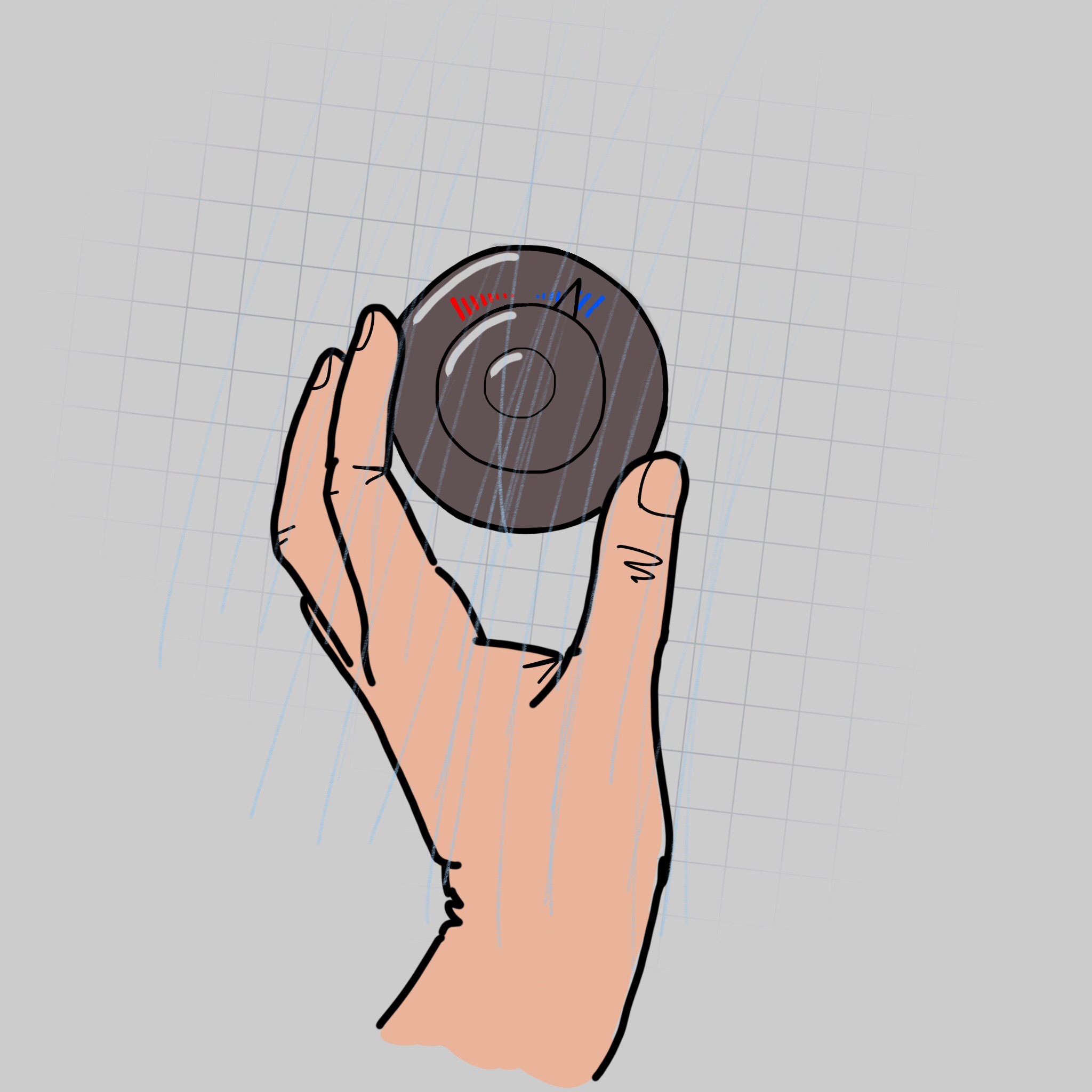
Cold showers land in our inbox most weeks, usually from somebody who’s just watched a very cheerful man lower himself into a barrel of ice, and wondered whether it might do anything for pain she’s had for years. The honest answer is that nobody has tested it. There isn’t a single trial of cold showers in fibromyalgia, not one, so anybody telling you cold showers help fibro is really just borrowing a result from healthy volunteers and hoping it travels [1]. What has actually been tested in fibromyalgia is the whole body cryotherapy chamber, which is a different stimulus, in a different building, with a member of staff watching you, and even there what you get is a modest improvement in pain, sleep and how much the condition takes out of your week, which then fades once the sessions stop [2].
So, if you cold shower and you love it, carry on, as there’s nothing in any of this that says stop. And if you’ve tried it and it hurt, or it left you shaky and wrung out for the rest of the morning, there’s a reason for that. Cold sensitivity is genuinely common in fibromyalgia, so the same half minute under a cold tap can land as bracing for one person, and as a proper pain flare for the next [3].
That split is the part the internet never mentions, as a video of somebody enjoying a cold plunge is content, and a video of somebody in tears in a shower cubicle very much isn’t.
What’s actually been tested, and who on
Actual cold showers, the sort you can do at home for nothing, have only really been looked at in healthy adults with no serious health problems. They finished a normal hot shower with a burst of cold, every day, for a month, and what turned up was fewer days off work, with no reduction at all in the number of days people reported feeling ill [4].
Sit with that for a second, as it’s a strange result rather than a bad one. The same people who took fewer sick days, weren’t getting fewer illnesses. Whatever changed there, it looks a great deal more like how they felt about dragging themselves into work than anything happening in their immune system. And the three different lengths of cold that were compared, made no difference to the result either, which is worth knowing given how confidently the internet will tell you exactly how long to stand there (to the second, usually) [4].
Beyond that one, the cold water evidence in healthy adults is genuinely thin, and it’s thin in a fairly specific way. Pooled together, inflammatory markers go up immediately after a cold dip and are still up an hour later, stress measures come down half a day afterwards but not straight away, and sleep quality and general quality of life look better while mood doesn’t shift much at all [5]. The caveats on that aren’t small either: few decent trials, small groups, and almost everybody in them looking much the same as everybody else [5].
Now, the immune claim deserves its own sentence, as it’s the one plastered across every cold plunge advert in the country! When healthy adults took daily cold showers for three months, a few immune measures moved and others sat exactly where they were [6]. So what you’ve got there is a selective change in a handful of markers in healthy people, which is a long way from boosting your immune system, and further still from doing anything at all about fibromyalgia.
Who was actually in all of this, matters a great deal though. Every one of those studies was done in healthy adults, and chronic illness was deliberately excluded rather than accidentally missed, which means those with fibromyalgia, hypermobile Ehlers Danlos, POTS, mast cell problems and long standing pain were kept out of the rooms where this was being measured [5]. So when somebody quotes a cold water finding at you, they’re quoting a result from a population you’re not in, and whether it travels has never been asked.
Nobody has settled the dose either, so not the temperature, not the duration, not how often, not for pain and not for anything else, as every attempt to land on a standard protocol comes back empty handed [7]. Which makes the very specific, very confident numbers you see online a bit odd, given there’s nothing underneath them.
The cryotherapy chambers, and why they aren’t your shower
Whole body cryotherapy is the one form of cold exposure that’s actually been pointed at fibromyalgia, so it’s worth going through properly. You stand in a chamber cooled far below anything a British winter will ever manage (and a British winter does have a go), for a couple of minutes, usually in a centre somewhere, usually supervised, and usually for a fee that adds up pretty quickly.
Compared with simply resting, pain came down and so did the amount fibromyalgia was taking out of daily life [8]. The effect lingered after the sessions stopped for long enough that only the first stretch of the comparison could be read cleanly, which is a genuine limit on how much weight that one carries, rather than a technicality. In another group, ten sessions across about a week and a half improved quality of life, and the improvement was still sitting there a month later [9].
Added on top of a proper rehab programme, rather than instead of one, the chamber produced better pain, mood, sleep and overall impact than the rehab alone, though it made no difference to what people could physically do when that was measured directly [10]. Following a similar group for a year afterwards, the extra benefit on pain, sleep and general wellbeing lasted somewhere around three to four months, and fatigue, mood and anxiety ended up much the same in both groups by the end of it [11].
There’s one finding in here that should keep everybody honest though, as pain and disease activity improved partway through a short course of sessions and again at the end of it, and then three months after the sessions stopped, there was nothing measurable left at all [2].
A treatment that works while you’re having it isn’t the same animal as a treatment that changes something, and both are worth having, they’re just worth very different amounts of money and very different amounts of your extremely limited energy. Which matters a great deal if you’re being sold a course of ten and a membership afterwards.
The practical maths is worth a mention as well, as it’s the thing the community actually asks about rather than the thing the literature answers. Chamber sessions are sold in blocks, they aren’t cheap, and the benefit in the evidence runs for weeks to a few months before it settles back [1]. Which makes it closer to an ongoing cost than a treatment, and that’s a perfectly legitimate thing to weigh up when your money and your energy are both finite.
Promising and not established is where this honestly sits [1], as the groups are small, several of the supporting pieces exist only as conference abstracts rather than full papers, and the treatments differ from each other enough that pooling them is awkward [1]. Promising isn’t the same word as proven though, and a cryotherapy centre’s website will quietly swap one for the other somewhere around the third paragraph.
Safety in the chambers is reassuring without being nothing. The recorded problems are mostly mild and settle on their own, so headaches, dizziness, shivering, hives and a temporary jump in blood pressure, and the case for screening people properly before they go anywhere near a chamber is still made firmly [12]. Which is worth sitting with for a moment, as a centre screens you because there are people who shouldn’t be in there, and your bathroom screens nobody at all.
The bigger problem with all of it, for our purposes, is the transfer. A supervised chamber at an extreme temperature for two minutes is a very long way from thirty seconds of cold water on your shoulders while you hold onto the tiles. Nobody has shown that a result from one arrives in the other, and the mechanisms people reach for to explain the chamber depend on the size of the cold dose in ways a shower simply can’t reproduce.
What cold actually does when you turn the tap
Most of the arguing about cold showers is really arguing about mechanism, so it’s worth knowing what actually happens, as none of it is particularly mysterious and it explains a great deal of the rest of this.
Cold water on skin is one of the strongest and fastest stimuli you can hand a nervous system. The first thing that happens is the gasp, an involuntary sharp intake of breath followed by a spell of rapid breathing that you can’t easily talk yourself out of (you can try, it doesn’t work) [13]. At the same time the blood vessels near the surface clamp down, the sympathetic nervous system fires, and noradrenaline climbs steeply within the first couple of minutes. Metabolic rate rises sharply as the body starts generating heat, and blood pressure lifts a little [14].
What doesn’t happen is genuinely interesting as well, as cortisol, the hormone everybody reaches for the moment they want to call something stressful, doesn’t go up [14]. So it’s a sharp, short, sympathetic event rather than the sort of grinding stress response people tend to picture, and that’s part of why it can feel energising instead of awful.
Then the picture flips. After the initial hit, the calming side of the autonomic nervous system becomes more active rather than less. Heart rate variability measures go up, heart rate comes down slightly, mean blood pressure sits a touch higher, and those changes are still measurable a quarter of an hour after you get out [15]. So the story isn’t simply that cold equals stress, it’s a sharp sympathetic spike followed by a real parasympathetic rebound, and the rebound is what most people are describing when they say they feel calm and clear headed afterwards.
That sequence explains the timing of everything else too. It’s why the alertness is genuine and why it doesn’t last, as noradrenaline is a fast chemical with a very short story, and it’s why a single session moves mood measures for a few hours rather than a few weeks. It also explains why the durability question keeps coming back with the same answer in the chamber work, as a response that’s largely resolved within the hour was never likely to reorganise a chronic pain problem on its own.
The size of the dose matters a great deal more than anybody admits, as well. A whole body immersion, a chamber, a shower on your back and a cold flannel on the neck aren’t the same stimulus at four different strengths. They produce measurably different autonomic responses [15], which is exactly why carrying a result from one across to another is the mistake that keeps getting made in this entire field.
Why the same cold shower helps one person and floors another
Fibromyalgia isn’t one thing happening to everybody in the same way, and that stops being a platitude fairly quickly once you look at temperature.
In most of those with fibromyalgia the nervous system has turned the gain up on the signals it’s receiving, so ordinary input arrives amplified (this is what people mean by central sensitisation), and that’s been measured directly rather than assumed [16]. Temperature is one of the places it shows up most clearly, as cold pain thresholds are often lower, and the way temperature gets processed is genuinely altered, which is a different statement from being a bit sensitive to the cold [3].
It goes further than thresholds too, as cold processing in fibromyalgia has been described as strongly aversive, with cold pushing pain up rather than damping it down [17]. So for a decent proportion of people, cold is an input the system treats as a threat and responds to accordingly, and no amount of getting used to it changes that arithmetic.
Now, the reason cold works as a painkiller in everybody else is worth understanding, as it’s the exact thing that tends to be unreliable here. In most nervous systems, one sore thing turns the volume down on another. Put your hand in ice water and a separate pain elsewhere in the body becomes less noticeable, because the brain has a braking system that kicks in once it gets a strong enough input. In fibromyalgia, that braking system is measurably weaker on average when it’s tested [18].
Which is a fairly large irony to leave lying around, as the mechanism the cold plunge crowd are leaning on, is the one that’s least dependable in the very people asking whether cold plunges will help them.
It isn’t universal, mind. Researchers genuinely disagree about how much of this is a failure of that braking system and how much is straightforward hypersensitivity, and some careful work finds the hypersensitivity without the braking failure at all [19]. There’s no settled answer, so anybody presenting one is ahead of the evidence, and that includes us.
Now, there’s also the nerve fibre side of it. Roughly half of those with fibromyalgia show some evidence of damage or dysfunction in the smallest nerve fibres, the ones that carry temperature and the ones that run the automatic housekeeping of blood vessels and sweat glands, although the estimates swing around a great deal depending on how you look and what you count [20]. So if your temperature carrying fibres are part of the problem, a big cold input is arriving in a system whose temperature hardware is already misbehaving, rather than in a normal one that’s misreading it.
Put all of that together and the individual variation stops being much of a mystery. Two people can have the same diagnosis, the same duration, the same medications and genuinely different nervous systems underneath, and a cold shower is a strong enough input to sort them into two groups on the very first go. One finds it sharpens her up for a couple of hours, and the other has a flare that costs her the day.
Neither of them needs to build up a tolerance, by the way. They’ve got different problems that share a label, which is true of an enormous amount of fibromyalgia, and it’s easily the most useful thing to hold onto whenever a new thing sweeps the internet.
Which is quite freeing once you stop fighting it, as well. If cold helps you, you haven’t uncovered a universal truth to pass on to the next person in the support group, and if it floors you, you haven’t failed a test everybody else is passing. What you’ve found out is something fairly specific about your own nervous system, which is more than most of us get out of any single experiment we run on ourselves. Worth writing down somewhere too, as the same answer will very probably apply to the next cold thing that gets popular.
Hypermobility, POTS, and where cold stops being harmless
If you’re hypermobile as well, or instead, the picture changes in a way that’s worth taking seriously rather than worrying about.
The pain picture in hypermobile Ehlers Danlos and hypermobility spectrum disorder looks a lot like the fibromyalgia one. Cold and heat pain thresholds are lower, repeated pokes build up into more pain than they should, and the pattern fits a sensitised nervous system rather than damaged nerves [21]. In those with painful hEDS, a conditioning pain that reduced test pain in controls actually increased it, which is that braking system running backwards [22]. And cold is a conditioning pain, so it isn’t much of an accident that some people come out of it worse rather than better.
Then there’s the autonomic side of it, which is where the practical risk actually lives. Dysautonomia is pretty common in Ehlers Danlos and hypermobility spectrum disorder, often turning up as trouble staying upright, low blood pressure on standing, or postural tachycardia syndrome, with palpitations, dizziness, the feeling you’re about to faint, and sometimes actually fainting [23]. Cold exposure isn’t a neutral event for that system, as we’ve just been through, and the autonomic shift it produces is still detectable a good while after you get out [15].
Stack the gasp reflex and the spell of overbreathing on top of that, plus the cold shock and cardiovascular strain that get flagged for anybody susceptible [13], and a cold shower starts to look like a fair few things happening at once. You’re standing bolt upright, in a warm room, in a slippery cubicle, doing all of it on purpose, and then getting on with something else in a rush afterwards. If your blood pressure control is already unreliable when you stand up in a quiet kitchen, that’s quite a lot to ask of it before breakfast.
None of that makes cold forbidden, it just makes it something to sit down for.
Cold urticaria is the one hard line in all of this. Cold can set off wheals, swelling and, occasionally, a full anaphylactic reaction, through mast cells dumping their contents in response to the temperature change rather than to anything you’re allergic to [24]. Mast cell problems travel alongside hypermobility often enough that this isn’t an exotic possibility to raise. So if cold water gives you hives, if your lips or tongue tingle, if your face swells, or if you feel genuinely unwell rather than just cold, stop and get it looked at properly. Cold urticaria has a name, a diagnosis and a management plan, and none of those three things is toughing it out.
Three claims you’ll have heard, and what’s actually underneath them
Three things get repeated so often about cold exposure that they’ve stopped sounding like claims at all, and all three are either unsupported or considerably more complicated than the version you’ll have heard.
Cold plunging releases endorphins
This is the most repeated one and the least supported. When healthy adults were put into cold water and the body’s own opioid like chemicals were measured directly (beta endorphins), they didn’t change, even though low mood and cortisol were both lower a few hours afterwards [25]. So something is definitely happening, it just isn’t the thing everybody names.
Longer term cold exposure tells much the same story, as in healthy women doing this repeatedly over months, noradrenaline stayed elevated while the pituitary and adrenal side of things declined to get involved at all [26]. So what keeps turning up, across both one off and repeated exposure, is a stress hormone and nervous system response rather than an opioid one. The endorphin story is a tidy explanation that’s been handed around for years without anybody ever checking whether the measurements support it.
Now, the mechanism matters because it decides what else you should expect. A noradrenaline surge explains alertness, a bit of euphoria, and feeling sharper for an hour or so, but it doesn’t predict lasting pain relief, and it doesn’t predict anything at all about inflammation, which is exactly what the endorphin story gets used to sell.
Eleven minutes a week is the optimal dose
This one actually has a traceable origin, which is rare and quite satisfying. It comes from work on winter swimmers, looking at brown fat, the metabolically active fat that burns energy to keep you warm. The men in it were young, healthy, and already swimming in cold water several times a week before anybody measured a thing, and the design can’t show that the cold exposure caused the differences that were found [27].
So a figure describing what a group of habitual cold swimmers happened to be doing, has been reversed into a prescription for everybody else, which makes it a description of a hobby rather than a dose finding result.
Meanwhile the actual question, of how much cold, how cold, how often, and for what, has no answer, as every attempt to land on a standard protocol concludes that there isn’t one [7]. Nobody’s withholding the “optimal” dose from you, it’s just never been worked out.
Cold is anti inflammatory
The answer on this one is genuinely mixed, so it’s worth resisting the urge to simply flip it over.
In healthy adults, pooled together, inflammatory markers rose immediately after cold water immersion and were still up an hour afterwards [5], which is the opposite direction to the claim. Under certain chamber protocols and in certain groups, some inflammatory markers do come down, and that’s been measured properly [28]. And in rats with knee arthritis, repeated cold exposure made the inflammatory pain worse rather than better, which has never been tested in people and should be read as a reason to be careful rather than as a finding about you [29].
Three different answers in three different settings, and one blanket claim on the packaging. What you can’t do is take a chamber result in athletes and print it on a cold shower routine for chronic pain, which is the move being made almost every single time you see this claim.
What actually helps with fibromyalgia
There’s one thing in fibromyalgia with a strong recommendation behind it, and it isn’t cold.
Exercise is the only treatment for fibromyalgia carrying a strong recommendation in the European guidance, and that’s after drugs and everything else had been looked at. Everything else got a weak recommendation at best, and the effects of most things were modest [30]. So not cryotherapy, not cold showers, and not heat, hydrotherapy, biofeedback or hypnotherapy either.
The pooled evidence on the non drug options points the same way. Exercise improves pain, sleep and how much fibromyalgia takes out of your life, with aerobic and strengthening work doing the useful part, and stretching on its own being the exception that doesn’t [31]. That’s a broad, repeated evidence base built up over decades, sitting next to a small handful of chamber studies and no shower studies whatsoever.
Which is deflating, unfortunately. Graded, boring, carefully built movement is slow, and it’s genuinely hard when you’re in pain and exhausted, whereas a cold shower is over in forty seconds and makes you feel like you’ve achieved something before you’ve even had a cup of tea. The appeal is obvious and it isn’t stupid, it’s just not where the change comes from.
One honourable mention for cold water though, in the one place it genuinely does earn its keep. After hard exercise, cold water immersion does reduce muscle soreness, and that’s a decent, repeated finding rather than a hopeful one. What it doesn’t reliably do is restore your actual performance, and in some measurements it blunts explosive power straight afterwards [32]. So if you train hard and you ache, cold water for the ache is a perfectly reasonable use of it, which is a completely different claim from treating fibromyalgia.
My own cold showers, for what they’re worth
I’ve cold showered for years. Right through being ill, and right through to now, it’s just part of the morning, and I’d feel like something was missing if I skipped it. I finish every shower cold, I don’t count the seconds, and I’ve never once thought of it as treatment (nor have I ever owned a barrel).
Now, whether it helps is a different question. I feel more awake and more refreshed for it, reliably, every time, and that’s about as far as I’d take it. I’m one person with one habit and no control group, and I genuinely have no idea whether it’s done a single thing for my pain over the years, as there’s no version of me who skipped it to compare against.
It’s also easily the cheapest thing in my routine, which counts for something in a field where most of what gets sold to those with hypermobility lands somewhere between forty quid and a small mortgage.
Plenty of people in this community cold shower and love it, and they haven’t all been fooled. Feeling better after a cold shower is real, it just isn’t the same thing as a treatment effect, and both of those can be true on the same morning.
One thing to keep in mind though, is that I was doing this alongside the graded loading, the sleep work and everything else that actually rebuilt things, so it was never carrying the weight on its own. If I’d only done the cold showers, I’d still be exactly where I started, and that ordering is what goes missing when a habit gets promoted into a protocol.
A habit you enjoy and a treatment you’re relying on should also be held to completely different standards, as nobody needs a trial to justify liking their morning shower cold. The standard only goes up when somebody starts charging for it, or when it starts displacing the work that actually shifts things, or when somebody whose cold pain thresholds are already lowered is being told to push through because it’s good for her.
If you want to try it, here’s how I’d go about it
None of this is a recommendation to start, and it’s worth a word with your GP first if you’ve got a heart or breathing condition, or if you faint. If you do want to try it though, this is roughly how I’d go at it.
– Finish cold rather than starting cold: Have your normal warm shower and turn it down at the end. That’s how it was tested in the one piece of home relevant work we actually have, and it gives you a far shorter and much more controllable exposure than climbing into cold water and hoping for the best [4].
– Sit down, or keep a hand on the wall: If you’ve got POTS, orthostatic intolerance, or you go grey when you stand up too fast, a cold cubicle isn’t the place to find out how your blood pressure is feeling today. A shower stool costs very little, and the cold hit shifts autonomic balance enough to be worth respecting [15].
– Try your face and the side of your neck first: Brief cold on the face or the side of the neck increases activity in the vagus nerve, which is the calming side of the nervous system rather than the big sympathetic hit of a whole body dunk [33]. Nobody has tested that properly in dysautonomia (surprise, surprise), so treat it as a smaller dose rather than a proven safe option, but a cold flannel on the neck is a much cheaper experiment than a full cold shower.
– Learn the difference between bracing and painful: Bracing is unpleasant and then good, whereas painful is just painful, and given how often cold pain thresholds are lowered in fibromyalgia, pain here is information rather than weakness [3]. If it hurts, that’s your answer, and it’s a completely legitimate one.
– Don’t introduce it during a flare: Adding a strong new input while your system is already shouting tells you nothing useful, and can cost you a week you didn’t have going spare. Start it on a reasonable day, one variable at a time, so you can actually tell what did what.
– Stop entirely for hives, swelling, tingling lips, or feeling unwell: That combination points at cold urticaria and mast cells rather than at being unfit for the cold, and it needs looking at rather than pushing through [24].
– Keep it as something you like rather than something you’re treating yourself with: A habit you enjoy costs you nothing at all when it stops working, whereas a treatment you’ve invested hope in is much harder to put down, and there’s a decent chance it was never doing the job you gave it in the first place.
Give it a fortnight and then be straight with yourself about what actually changed. If your mornings are better, keep it, as you’ve found something free that you like, and if nothing changed, that’s worth knowing too. Have the cold shower if you enjoy it, it just isn’t the thing that changes the pain.
The Fibro Guy

References
[1] Fontana, J.M., Gobbi, M., Piterà, P., Giusti, E.M. and Capodaglio, P. (2022) ‘Whole-Body Cryostimulation in Fibromyalgia: A Scoping Review’, Applied Sciences. https://doi.org/10.3390/app12094794
[2] Klemm, P., Becker, J., Aykara, I., Asendorf, T., Dischereit, G., Neumann, E. et al. (2021) ‘Serial whole-body cryotherapy in fibromyalgia is effective and alters cytokine profiles’, Advances in Rheumatology. https://doi.org/10.1186/s42358-020-00159-z
[3] Berwick, R.J., Siew, S., Andersson, D.A., Marshall, A. and Goebel, A. (2021) ‘A Systematic Review Into the Influence of Temperature on Fibromyalgia Pain: Meteorological Studies and Quantitative Sensory Testing’, The Journal of Pain. https://doi.org/10.1016/j.jpain.2020.12.005
Read More[4] Buijze, G.A., Sierevelt, I.N., van der Heijden, B.C.J.M., Dijkgraaf, M.G. and Frings-Dresen, M.H.W. (2016) ‘The Effect of Cold Showering on Health and Work: A Randomized Controlled Trial’, PLOS ONE. https://doi.org/10.1371/journal.pone.0161749
[5] Cain, T., Brinsley, J., Bennett, H., Nelson, M., Maher, C. and Singh, B. (2025) ‘Effects of cold-water immersion on health and wellbeing: A systematic review and meta-analysis’, PLOS ONE. https://doi.org/10.1371/journal.pone.0317615
[6] El-Ansary, M.R.M., El-Ansary, A.R., Said, S.M. and Abdel-Hakeem, M.A. (2024) ‘Regular cold shower exposure modulates humoral and cell-mediated immunity in healthy individuals’, Journal of Thermal Biology. https://doi.org/10.1016/j.jtherbio.2024.103971
[7] Kunutsor, S.K., Lehoczki, A. and Laukkanen, J.A. (2024) ‘The untapped potential of cold water therapy as part of a lifestyle intervention for promoting healthy aging’, GeroScience. https://doi.org/10.1007/s11357-024-01295-w
[8] Rivera, J., Tercero, M.J., Salas, J.S., Gimeno, J.H. and Alejo, J.S. (2018) ‘The effect of cryotherapy on fibromyalgia: a randomised clinical trial carried out in a cryosauna cabin’, Rheumatology International. https://doi.org/10.1007/s00296-018-4176-0
[9] Vitenet, M., Tubez, F., Marreiro, A., Polidori, G., Taiar, R., Legrand, F. et al. (2018) ‘Effect of whole body cryotherapy interventions on health-related quality of life in fibromyalgia patients: A randomized controlled trial’, Complementary Therapies in Medicine. https://doi.org/10.1016/j.ctim.2017.10.011
[10] Varallo, G., Piterà, P., Fontana, J.M., Gobbi, M., Arreghini, M., Giusti, E.M. et al. (2022) ‘Is Whole-Body Cryostimulation an Effective Add-On Treatment in Individuals with Fibromyalgia and Obesity? A Randomized Controlled Clinical Trial’, Journal of Clinical Medicine. https://doi.org/10.3390/jcm11154324
[11] Verme, F., Majdič, N., Modaffari, G., Alito, A., Scarpa, A., Piterà, P. et al. (2024) ‘Whole-Body Cryostimulation: An Effective Complementary Treatment in Fibromyalgia? A Follow Up Study’, Journal of Personalized Medicine. https://doi.org/10.3390/jpm14080836
[12] Legrand, F.D., Dugué, B., Costello, J., Bleakley, C., Miller, E., Broatch, J.R. et al. (2023) ‘Evaluating safety risks of whole-body cryotherapy/cryostimulation (WBC): a scoping review from an international consortium’, European Journal of Medical Research. https://doi.org/10.1186/s40001-023-01385-z
[13] Ossowska, W., Wojdat-Krupa, K., Czarnota, M., Monika Rogowska, Płudowska, K. and Ösztreicher, W. (2025) ‘Health Benefits and Physiological Effects of Cold Water Immersion: A Review of Current Research’, Journal of Education, Health and Sport. https://doi.org/10.12775/jehs.2025.83.61851
[14] ?r�mek, P., ?ime?kov�, M., Jansk�, L., ?avl�kov�, J. and Vyb�ral, S. (2000) ‘Human physiological responses to immersion into water of different temperatures’, European Journal of Applied Physiology. https://doi.org/10.1007/s004210050065
[15] Jdidi, H., Dugué, B., de Bisschop, C., Dupuy, O. and Douzi, W. (2024) ‘The effects of cold exposure (cold water immersion, whole- and partial- body cryostimulation) on cardiovascular and cardiac autonomic control responses in healthy individuals: A systematic review, meta-analysis and meta-regression’, Journal of Thermal Biology. https://doi.org/10.1016/j.jtherbio.2024.103857
[16] Desmeules, J.A., Cedraschi, C., Rapiti, E., Baumgartner, E., Finckh, A., Cohen, P. et al. (2003) ‘Neurophysiologic evidence for a central sensitization in patients with fibromyalgia’, Arthritis & Rheumatism. https://doi.org/10.1002/art.10893
[17] Bäumler, P., Brenske, A., Winkelmann, A., Irnich, D. and Averbeck, B. (2023) ‘Strong and aversive cold processing and pain facilitation in fibromyalgia patients relates to augmented thermal grill illusion’, Scientific Reports. https://doi.org/10.1038/s41598-023-42288-7
[18] O’Brien, A.T., Deitos, A., Triñanes Pego, Y., Fregni, F. and Carrillo-de-la-Peña, M.T. (2018) ‘Defective Endogenous Pain Modulation in Fibromyalgia: A Meta-Analysis of Temporal Summation and Conditioned Pain Modulation Paradigms’, The Journal of Pain. https://doi.org/10.1016/j.jpain.2018.01.010
[19] Staud, R., Godfrey, M.M. and Stroman, P.W. (2023) ‘Fibromyalgia is associated with hypersensitivity but not with abnormal pain modulation: evidence from QST trials and spinal fMRI’, Frontiers in Pain Research. https://doi.org/10.3389/fpain.2023.1284103
[20] Galosi, E., Truini, A. and Di Stefano, G. (2022) ‘A Systematic Review and Meta-Analysis of the Prevalence of Small Fibre Impairment in Patients with Fibromyalgia’, Diagnostics. https://doi.org/10.3390/diagnostics12051135
[21] Di Stefano, G., Celletti, C., Baron, R., Castori, M., Di Franco, M., La Cesa, S. et al. (2016) ‘Central sensitization as the mechanism underlying pain in joint hypermobility syndrome/Ehlers–Danlos syndrome, hypermobility type’, European Journal of Pain. https://doi.org/10.1002/ejp.856
[22] Leone, C.M., Celletti, C., Gaudiano, G., Puglisi, P.A., Fasolino, A., Cruccu, G. et al. (2020) ‘Pain due to Ehlers-Danlos Syndrome Is Associated with Deficit of the Endogenous Pain Inhibitory Control’, Pain Medicine. https://doi.org/10.1093/pm/pnaa038
[23] Mathias, C.J., Owens, A., Iodice, V. and Hakim, A. (2021) ‘Dysautonomia in the Ehlers–Danlos syndromes and hypermobility spectrum disorders—With a focus on the postural tachycardia syndrome’, American Journal of Medical Genetics Part C: Seminars in Medical Genetics. https://doi.org/10.1002/ajmg.c.31951
[24] Maltseva, N., Borzova, E., Fomina, D., Bizjak, M., Terhorst‐Molawi, D., Košnik, M. et al. (2020) ‘Cold urticaria – What we know and what we do not know’, Allergy. https://doi.org/10.1111/all.14674
[25] Reed, E.L., Chapman, C.L., Whittman, E.K., Park, T.E., Larson, E.A., Kaiser, B.W. et al. (2023) ‘Cardiovascular and mood responses to an acute bout of cold water immersion’, Journal of Thermal Biology. https://doi.org/10.1016/j.jtherbio.2023.103727
[26] Leppäluoto, J., Westerlund, T., Huttunen, P., Oksa, J., Smolander, J., Dugué, B. et al. (2008) ‘Effects of long‐term whole‐body cold exposures on plasma concentrations of ACTH, beta‐endorphin, cortisol, catecholamines and cytokines in healthy females’, Scandinavian Journal of Clinical and Laboratory Investigation. https://doi.org/10.1080/00365510701516350
[27] Søberg, S., Löfgren, J., Philipsen, F.E., Jensen, M., Hansen, A.E., Ahrens, E. et al. (2021) ‘Altered brown fat thermoregulation and enhanced cold-induced thermogenesis in young, healthy, winter-swimming men’, Cell Reports Medicine. https://doi.org/10.1016/j.xcrm.2021.100408
[28] He, J., Zhang, X., Ge, Z., Shi, J., Guo, S. and Chen, J. (2025) ‘Whole-body cryotherapy can reduce the inflammatory response in humans: a meta-analysis based on 11 randomized controlled trials’, Scientific Reports. https://doi.org/10.1038/s41598-025-90396-3
[29] Kim, S.H., Sindhuri, V., Koo, M.J., Jeon, S.H., Kim, S. and Koo, S. (2024) ‘Effects of Repeated Exposure to Ambient Cold on the Development of Inflammatory Pain in a Rat Model of Knee Arthritis’, Life. https://doi.org/10.3390/life14111428
[30] Macfarlane, G.J., Kronisch, C., Dean, L.E., Atzeni, F., Häuser, W., Fluß, E. et al. (2017) ‘EULAR revised recommendations for the management of fibromyalgia’, Annals of the Rheumatic Diseases. https://doi.org/10.1136/annrheumdis-2016-209724
[31] Kundakci, B., Kaur, J., Goh, S.L., Hall, M., Doherty, M., Zhang, W. et al. (2021) ‘Efficacy of nonpharmacological interventions for individual features of fibromyalgia: a systematic review and meta-analysis of randomised controlled trials’, Pain. https://doi.org/10.1097/j.pain.0000000000002500
[32] Zhu, Y., Yang, L., Liu, T., Yao, F., Wang, Q. and Yi, Z. (2026) ‘Effects of cold-water immersion at different body regions on post-exercise muscle damage recovery: a systematic review and meta-analysis’, Frontiers in Sports and Active Living. https://doi.org/10.3389/fspor.2026.1738075
[33] Jungmann, M., Vencatachellum, S., Van Ryckeghem, D. and Vögele, C. (2018) ‘Effects of Cold Stimulation on Cardiac-Vagal Activation in Healthy Participants: Randomized Controlled Trial’, JMIR Formative Research. https://doi.org/10.2196/10257