

- What Causes chronic pain in Fibromyalgia and Hypermobility - 27 June 2025
- Mast Cells and Fibromyalgia: The Hidden Connection - 19 June 2025
This article is part of our comprehensive guide to living with fibromyalgia.
If you’ve had a fibromyalgia diagnosis for any length of time, and you’ve spent an evening online looking for something better than what you got at the appointment, you’ll have met the mast cell theory by now (the algorithm is very good at finding you). It tends to arrive as the thing your doctors missed, and it usually arrives with a testing package or a supplement attached to it. So, the short version, before anybody spends money on any of it. Mast cells really are a genuine research lead in fibromyalgia, there’s proper mechanistic work sitting behind them, and there’s a perfectly sensible reason to suspect that an immune cell parked right next to a nerve might be turning the volume up on pain. What there isn’t, is evidence that fibromyalgia is a mast cell disease. Central sensitisation is still the established mechanism, and the mast cell material sits alongside it as a possible extra contributor, rather than a replacement for it [1][2].
The part of all this with the best evidence behind it, gets the least airtime, and that’s the overlap between fibromyalgia and hypermobility. It turns up in group after group, and it’s large enough that it really ought to change how you get assessed [3][4]. Meanwhile the part that gets the most airtime, the tidy trifecta of hEDS, POTS and mast cell activation syndrome all being driven by one shared mechanism, is the part with the least behind it, as no common mechanism linking the three has ever been described, and symptoms overlapping isn’t proof that one thing causes the others [5][6].
What Mast Cells Actually Do
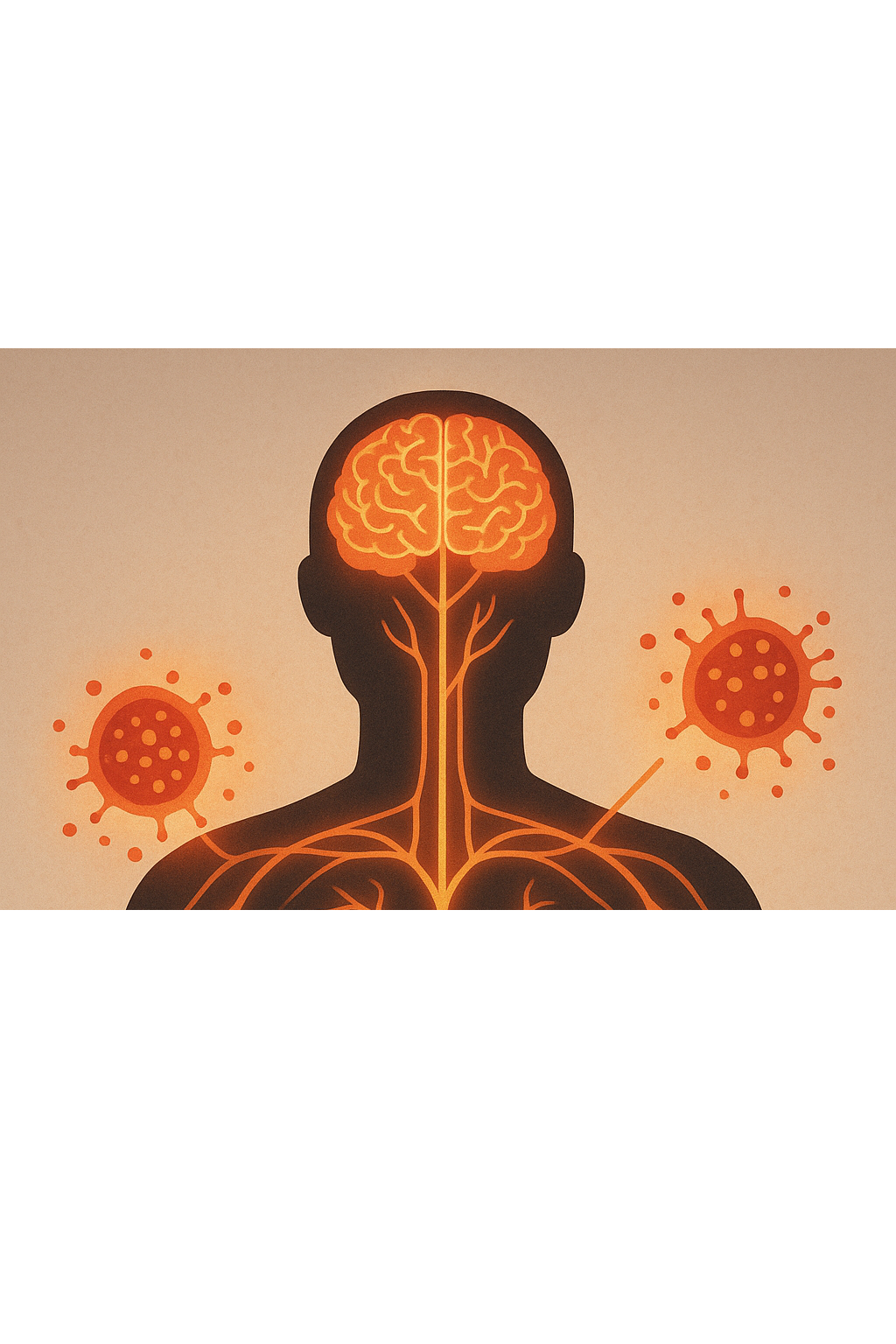
Mast cells are immune cells, and the interesting thing about them for anyone in pain isn’t really what they release, it’s where they sit. They live in the tissues that meet the outside world, so skin, gut lining and airway, and they cluster around blood vessels and in among nerve fibres [7][8]. That’s a fairly unusual address for an immune cell (the immune system’s equivalent of living above the shop), and it’s pretty much the whole reason they keep turning up in pain research.
When something sets them off, and that can be an injury, an allergen, certain drugs, or a physical trigger, they release their contents straight into the tissue around them. Histamine, tryptase, a range of cytokines, various proteases, and a long list of other mediators after that [7][8]. A lot of that is genuinely helpful, as it’s how tissue gets repaired and how infection gets dealt with, and a body that couldn’t do it would be in a considerably worse position than one that can.
Now, because of where they’re sitting, those mediators don’t only act on tissue, as mast cells can signal directly to peripheral nerves, and they can also feed into the wider neuroinflammatory machinery, the microglia and the cytokine signalling that sit behind a great deal of chronic pain research [9][2][10]. Experimental work has shown mast cell signalling driving both mechanical and thermal hypersensitivity, which is about as direct a line from these cells to pain as anybody has drawn [8].
The biological rationale is sound then, and it’s worth saying that plainly, because the criticism worth making here isn’t that the idea is daft, as it’s a perfectly good idea. The question is just how far anybody has actually got with it.
What Has Turned Up in Fibromyalgia So Far
There are three sorts of finding, and they’re really not equally strong.
The first is in skin, as increased numbers of mast cells in the papillary dermis, which is the upper layer, have been described in those with fibromyalgia [1][11]. That’s a tissue finding though, and a tissue finding is a long way from an explanation. Having more mast cells in the skin, doesn’t tell you they’re driving the pain, it doesn’t tell you why they’re there, and it certainly doesn’t define a clinical subtype that anybody could diagnose you with tomorrow.
The second is in blood: a handful of signalling molecules, including substance P, a stress hormone and a couple of inflammatory cytokines, ran higher in the blood of those with fibromyalgia than in people without it, and that pattern is consistent with mast cells being activated [12]. Consistent with, mind, as those molecules come from more than one cell type, so this is indirect evidence that fits the theory rather than evidence that proves it.
The third is in animals, and that’s where the mechanism actually gets tested properly, because you can’t do this bit in people. In a mouse model built to produce fibromyalgia like symptoms, mast cells accumulated in the tissue of the paw, and either removing the mast cells or giving a drug that stabilises them prevented the mechanical hypersensitivity, the cold hypersensitivity and the fatigue like behaviour [13]. That’s a real result, and it’s the kind of thing that should make people sit up. It’s also a mouse though (mice have been getting better from all sorts of things for decades without much of it ever going anywhere), and nobody has tested whether any of it holds in a human being.
Then there’s the newest piece, and it’s the one currently doing the rounds. Antibodies taken from those with fibromyalgia were shown to activate mast cells through a receptor called MRGPRX2, to increase the density of mast cells in skin along with tryptase levels, and losing either the mast cells or the receptor prevented the hypersensitivity from developing in mice [14]. If that holds up it’s genuinely important, because it would join the antibody work and the mast cell work into one story. Take it gently for now though, as it hasn’t been through peer review yet, and early work that fits beautifully has a habit of getting messier once other people start picking at it.
So, put the three together and you get a coherent hypothesis with a real mechanism attached, supported by indirect human data and direct animal data, which is a perfectly respectable position for an idea to be in. It’s just not the same position as “this is what fibromyalgia is”, which is how you’ll usually see it presented.

The Overlap With the Better Evidence Behind It
Fibromyalgia and the hypermobility conditions overlap enormously, and this is the part most likely to matter to you personally. Across the adult data, the proportion of people carrying both hEDS or HSD and fibromyalgia ran from roughly two thirds to nearly nine in ten, depending on which group was being looked at [3]. The shared features were joint pain, muscle weakness, neurological symptoms, dysautonomia, reduced function and reduced quality of life, which is more or less the entire fibromyalgia picture written out in a different order (you’d be forgiven for thinking somebody had copied somebody else’s homework) [3].
It’s not a one off finding either, as in a group of people with fibromyalgia and ME/CFS, most met the Brighton criteria for hypermobility syndrome and a smaller minority met the 2017 hEDS criteria, with hypermobility scores tracking how bad the symptoms were [4]. And in a group attending a specialist EDS service, more than half carried both diagnoses, with the overlap running across every single symptom and comorbidity that was asked about [9].
All of that is observational though, and that genuinely matters, as these are all groups of people who had already come through somebody’s door, so nobody can tell you from this work whether one condition causes the other, or whether they share a cause, or whether the diagnostic criteria are simply catching the same people twice.
What it does tell you is practical enough though, as hypermobility can be misdiagnosed as fibromyalgia, because both can present with widespread pain, fatigue, poor sleep, anxiety and symptoms in several body systems at once [3][15]. But plenty of people genuinely meet the criteria for both, so the question usually isn’t “is it fibromyalgia or is it EDS” [3], it’s whether anybody has bothered to check for the second one after writing down the first.
Now, that one is worth taking to an appointment. If you’ve got a fibromyalgia diagnosis and nobody has ever actually put their hands on your joints or run a Beighton score, that’s a gap, and it’s a far more useful gap to go and fill than a mast cell panel. Going off what people tell us, it’s also usually something you’ll have to ask for yourself.
Where the Mast Cell and Hypermobility Link Stands
The proposed link runs like this: mast cells live in connective tissue, they respond to signals from the matrix around them, and the things they release, histamine, tryptase, cytokines, proteases, can affect fibroblasts, blood vessel permeability, how the extracellular matrix gets remodelled, and how nerves signal [7][16][17]. So if your connective tissue is more fragile and getting repeatedly irritated, the argument goes, you’d have a standing invitation for mast cells to keep activating, and their mediators could in turn keep the tissue disorganised [17][18]. Histamine and tryptase specifically have been proposed as the culprits for disrupting connective tissue integrity in hEDS and HSD [18][17].
That’s a proposal though, and a perfectly reasonable one (proposals are free), but it’s a mechanism somebody has sketched rather than a mechanism anybody has demonstrated in a person with hypermobility.
The clinical association data is uneven, and reading it properly means keeping the setting in view. In an allergy and immunology practice where people had been referred for suspected mast cell activation disease, about one in ten had hEDS or HSD alongside it, and roughly one in five had hEDS or HSD plus mast cell activation disease plus an immunoglobulin deficiency [19]. Now, that’s a specialty practice, and the people in it were sent there precisely because somebody already suspected a mast cell problem, and that selection bias was flagged at the time as a likely problem [19]. In other hypermobility groups, a little under half had symptoms suggestive of MCAS, but that was based on symptoms rather than on anybody confirming a mediator in the blood [20].
And the counterweight to all of this is a great deal stronger than the internet lets on.
– The evidence has been called thin, and by people working in the area: the warning was specifically against treating a presumed mast cell activation syndrome before anybody has actually diagnosed one, which makes it a warning about harm rather than a technicality [21].
– No shared mechanism has been described: when the proposed link between hEDS, POTS and MCAS was assessed, it rested on symptom overlap, and symptom overlap on its own isn’t adequate proof that one condition drives another [5].
– The associations don’t hold up in people who clearly meet the criteria: the proposed associations with hEDS have not been demonstrated in those who properly meet consensus MCAS criteria, which is a different and rather more damaging criticism than saying the evidence is early [6].
That last one isn’t “we haven’t looked yet” though, it’s that when you apply the actual diagnostic standard rather than a symptom checklist, the association gets considerably harder to find. In our opinion that’s the line worth hanging onto, and it’s the one that almost never gets quoted.
What a Mast Cell Diagnosis Requires
This is where a lot of people come unstuck, because the bar is quite specific and chronic pain doesn’t clear any part of it on its own.
Consensus criteria for MCAS want three things together. Recurrent symptoms typical of mast cell activation, affecting at least two organ systems. An objective rise in a mast cell mediator, measured rather than assumed. And improvement when treatment aimed at mast cells is actually given [19][22][23].
Read that back against what fibromyalgia actually is and the problem is fairly obvious, as widespread pain and fatigue aren’t typical mast cell activation symptoms, they’re not organ system specific, and there’s no mediator that goes up when they flare. So “I have fibromyalgia, therefore I probably have MCAS” doesn’t follow, and a symptom questionnaire that tells you otherwise, is measuring something a great deal broader than the criteria it borrowed its name from.
None of which means the opposite, by the way, as if you do get flushing, itching, hives, gut symptoms and palpitations that come in episodes and settle, across more than one body system, that’s a genuinely different pattern and it’s worth asking about properly. The bar exists to sort those people from the much larger group whose main problem is pain, and it exists because the treatments aren’t free of consequences.
The Treatments, and How Good the Evidence for Them Is
Management of mast cell activation is stepwise and gets picked to match the phenotype rather than the label, and the options are fairly settled even where the evidence for them isn’t [24][23][6].
– H1 and H2 antihistamines: the usual starting point, aimed at blocking the effects of the mediators once they’re out, and most useful for the symptoms histamine actually drives [24][23]. This is the cheapest and least eventful end of it, which is pretty much why it sits first.
– Mast cell stabilisers and mediator blockade: sodium cromoglicate, leukotriene receptor blockade, and drugs that interfere with mediators being made or released, all of which are listed as options and all of which get chosen based on the syndrome and the symptoms in front of you [24][19][25].
– Anti IgE therapy: omalizumab is the one considered for refractory disease, meaning the symptoms that haven’t settled on anything else, or recurrent severe reactions [23][6].
– Adrenaline and corticosteroids: an acute severe mast cell activation episode is an emergency and needs adrenaline, with steroids sometimes used where a reaction drags on [24][22][6]. That’s acute episode territory, and it has nothing to do with routine fibromyalgia care.
Now, the part that usually gets left out! The evidence quality under the first line drugs is modest, and that’s putting it kindly, as what sits under H1 antihistamines in primary mast cell activation syndromes is a small number of small crossover comparisons, all of them at moderate or high risk of bias, and the larger, properly controlled trials that were asked for still haven’t been run [26]. In mastocytosis, one antihistamine improved itching, hives, flares, flushing, palpitations and headache over four weeks, and did nothing at all for the gut symptoms [26]. Which is worth knowing if the gut is your main complaint.
Omalizumab has the clearest recent evidence behind it and it’s still thin. Across the small number of refractory cases that have been pulled together, most got a partial response, a few got a complete one, and no major adverse events were reported, but all of it came from small uncontrolled reports rather than anything designed to test the question [27]. It’s also considered off label for MCAS, and reading any of it gets harder again because of the small numbers, the composite endpoints, and the fact that these conditions wax and wane on their own anyway [27][6].
So, the treatment side comes down to reasonable, phenotype led practice built on expert opinion and small biased studies, in a population that genuinely meets mast cell criteria. Which is a long way from a protocol for fibromyalgia.
What Nobody Knows Yet
The open question is a specific one, and it’s worth stating precisely rather than vaguely, as the vague version is where most of the misinformation around this comes from.
Nobody knows whether there’s an identifiable subgroup within fibromyalgia whose symptoms are actually driven by mast cells. Not whether mast cells can amplify pain, as that’s been shown. Not whether mast cell numbers and mediators look different in fibromyalgia, as they do appear to [1][12]. The unanswered question is whether you could take a room full of people with a fibromyalgia diagnosis, pick out the ones with a mast cell problem using a test rather than a hunch, treat them accordingly, and get a reproducible result. That hasn’t been done (surprise, surprise), and until it is, everything downstream of it is inference.
The real shift over the last few years has been the move from broad theory to actual mechanistic data in skin, in blood and in animals [1][12][13][14]. That’s genuine progress and it’s the right direction to be moving in, it just hasn’t arrived yet though, and there’s a fairly large difference between an area that’s moving and one that has actually landed.
What that means for you, practically. If you have fibromyalgia and you also have episodic symptoms across more than one body system, that’s worth raising with somebody who knows the criteria, and it’s worth doing properly rather than through a private panel of tests that nobody will then interpret for you. If you have fibromyalgia and your symptoms are pain, fatigue, poor sleep and brain fog, the mast cell route is unlikely to be your answer, and the hypermobility question is the one far more likely to be sitting unasked in your notes [3][4].
And if you’ve been told that mast cells explain the whole thing, that isn’t what the evidence currently supports. It’s a good idea, the data behind it is still early, and both of those are allowed to be true at the same time.
The Fibro Guy

References
[1] Theoharides, T.C., Tsilioni, I. and Bawazeer, M. (2019) ‘Mast Cells, Neuroinflammation and Pain in Fibromyalgia Syndrome’, Frontiers in Cellular Neuroscience. https://doi.org/10.3389/fncel.2019.00353
[2] Banfi, G., Diani, M., Pigatto, P.D. and Reali, E. (2020) ‘T Cell Subpopulations in the Physiopathology of Fibromyalgia: Evidence and Perspectives’, International Journal of Molecular Sciences. https://doi.org/10.3390/ijms21041186
[3] Alsiri, N., Alhadhoud, M., Alkatefi, T. and Palmer, S. (2023) ‘The concomitant diagnosis of fibromyalgia and connective tissue disorders: A systematic review’, Seminars in Arthritis and Rheumatism. https://doi.org/10.1016/j.semarthrit.2022.152127
Read More[4] Eccles, J.A., Thompson, B., Themelis, K., Amato, M.L., Stocks, R., Pound, A. et al. (2021) ‘Beyond bones: The relevance of variants of connective tissue (hypermobility) to fibromyalgia, ME/CFS and controversies surrounding diagnostic classification: an observational study’, Clinical Medicine. https://doi.org/10.7861/clinmed.2020-0743
[5] Kucharik, A.H. and Chang, C. (2020) ‘The Relationship Between Hypermobile Ehlers-Danlos Syndrome (hEDS), Postural Orthostatic Tachycardia Syndrome (POTS), and Mast Cell Activation Syndrome (MCAS)’, Clinical Reviews in Allergy & Immunology. https://doi.org/10.1007/s12016-019-08755-8
[6] Lee, E. and Picard, M. (2025) ‘Diagnosis and management of mast cell activation syndrome (MCAS) in Canada: a practical approach’, Allergy, Asthma & Clinical Immunology. https://doi.org/10.1186/s13223-025-00998-9
[7] Seneviratne, S.L., Maitland, A. and Afrin, L. (2017) ‘Mast cell disorders in Ehlers–Danlos syndrome’, American Journal of Medical Genetics Part C: Seminars in Medical Genetics. https://doi.org/10.1002/ajmg.c.31555
[8] Green, D.P., Limjunyawong, N., Gour, N., Pundir, P. and Dong, X. (2019) ‘A Mast-Cell-Specific Receptor Mediates Neurogenic Inflammation and Pain’, Neuron. https://doi.org/10.1016/j.neuron.2019.01.012
[9] Fairweather, D., Bruno, K.A., Darakjian, A.A., Bruce, B.K., Gehin, J.M., Kotha, A. et al. (2023) ‘High overlap in patients diagnosed with hypermobile Ehlers-Danlos syndrome or hypermobile spectrum disorders with fibromyalgia and 40 self-reported symptoms and comorbidities’, Frontiers in Medicine. https://doi.org/10.3389/fmed.2023.1096180
[10] Skaper, S.D., Facci, L., Zusso, M. and Giusti, P. (2018) ‘An Inflammation-Centric View of Neurological Disease: Beyond the Neuron’, Frontiers in Cellular Neuroscience. https://doi.org/10.3389/fncel.2018.00072
[11] Conti, P., Gallenga, C.E., Caraffa, A., Ronconi, G. and Kritas, S.K. (2020) ‘Impact of mast cells in fibromyalgia and low‐grade chronic inflammation: Can IL‐37 play a role?’, Dermatologic Therapy. https://doi.org/10.1111/dth.13191
[12] Tsilioni, I., Russell, I.J., Stewart, J.M., Gleason, R.M. and Theoharides, T.C. (2016) ‘Neuropeptides CRH, SP, HK-1, and Inflammatory Cytokines IL-6 and TNF Are Increased in Serum of Patients with Fibromyalgia Syndrome, Implicating Mast Cells’, The Journal of Pharmacology and Experimental Therapeutics. https://doi.org/10.1124/jpet.115.230060
[13] Brum, E.D.S., Fialho, M.F.P., Becker, G., Nogueira, C.W. and Oliveira, S.M. (2024) ‘Involvement of peripheral mast cells in a fibromyalgia model in mice’, European Journal of Pharmacology. https://doi.org/10.1016/j.ejphar.2024.176385
[14] Sanchez, K.R., Burgess, J., Zheng, Q., Alam, U., Neiland, H., Berwick, R. et al. (2025) ‘The sensitising effect of IgG in fibromyalgia syndrome is mediated by Mrgprb2 in mast cells’. https://doi.org/10.1101/2025.05.15.652596
[15] Halverson, C.M.E., Cao, S., Perkins, S.M. and Francomano, C.A. (2023) ‘Comorbidity, misdiagnoses, and the diagnostic odyssey in patients with hypermobile Ehlers-Danlos syndrome’, Genetics in Medicine Open. https://doi.org/10.1016/j.gimo.2023.100812
[16] Royer, S.P. and Han, S.J. (2022) ‘Mechanobiology in the Comorbidities of Ehlers Danlos Syndrome’, Frontiers in Cell and Developmental Biology. https://doi.org/10.3389/fcell.2022.874840
[17] Wang, T.J., Stecco, A., Hakim, A.J. and Schleip, R. (2025) ‘Fascial Pathophysiology in Hypermobility Spectrum Disorders and Hypermobile Ehlers–Danlos Syndrome: A Review of Emerging Evidence’, International Journal of Molecular Sciences. https://doi.org/10.3390/ijms26125587
[18] Monaco, A., Choi, D., Uzun, S., Maitland, A. and Riley, B. (2022) ‘Association of mast-cell-related conditions with hypermobile syndromes: a review of the literature’, Immunologic Research. https://doi.org/10.1007/s12026-022-09280-1
[19] Brock, I., Prendergast, W. and Maitland, A. (2021) ‘Mast cell activation disease and immunoglobulin deficiency in patients with hypermobile Ehlers‐Danlos syndrome/hypermobility spectrum disorder’, American Journal of Medical Genetics Part C: Seminars in Medical Genetics. https://doi.org/10.1002/ajmg.c.31940
[20] Aubry-Rozier, B., Schwitzguebel, A., Valerio, F., Tanniger, J., Paquier, C., Berna, C. et al. (2021) ‘Are patients with hypermobile Ehlers–Danlos syndrome or hypermobility spectrum disorder so different?’, Rheumatology International. https://doi.org/10.1007/s00296-021-04968-3
[21] Seneviratne, S.L., Maitland, A. and Afrin, L.B. (2018) ‘Response to: “In reply to: ‘Mast Cell Disorders in Ehlers–Danlos Syndrome’ (Jaime Vengoechea, Department of Human Genetics, Emory University)”’, American Journal of Medical Genetics Part A. https://doi.org/10.1002/ajmg.a.38528
[22] Valent, P., Hartmann, K., Bonadonna, P., Niedoszytko, M., Triggiani, M., Arock, M. et al. (2022) ‘Mast Cell Activation Syndromes: Collegium Internationale Allergologicum Update 2022’, International Archives of Allergy and Immunology. https://doi.org/10.1159/000524532
[23] Weiler, C.R., Austen, K.F., Akin, C., Barkoff, M.S., Bernstein, J.A., Bonadonna, P. et al. (2019) ‘AAAAI Mast Cell Disorders Committee Work Group Report: Mast cell activation syndrome (MCAS) diagnosis and management’, Journal of Allergy and Clinical Immunology. https://doi.org/10.1016/j.jaci.2019.08.023
[24] Castells, M. and Butterfield, J. (2019) ‘Mast Cell Activation Syndrome and Mastocytosis: Initial Treatment Options and Long-Term Management’, The Journal of Allergy and Clinical Immunology: In Practice. https://doi.org/10.1016/j.jaip.2019.02.002
[25] Valent, P., Akin, C., Nedoszytko, B., Bonadonna, P., Hartmann, K., Niedoszytko, M. et al. (2020) ‘Diagnosis, Classification and Management of Mast Cell Activation Syndromes (MCAS) in the Era of Personalized Medicine’, International Journal of Molecular Sciences. https://doi.org/10.3390/ijms21239030
[26] Nurmatov, U.B., Rhatigan, E., Simons, F.E.R. and Sheikh, A. (2015) ‘H 1 ‐antihistamines for primary mast cell activation syndromes: a systematic review’, Allergy. https://doi.org/10.1111/all.12672
[27] Matheny, M.V., Craig, T. and Al-Shaikhly, T. (2025) ‘Systematic review of omalizumab for refractory clonal and non-clonal mast cell activation syndrome’, Allergy and Asthma Proceedings. https://doi.org/10.2500/aap.2025.46.240076