
- Beta Blockers for POTS: What the Evidence Actually Says - 10 August 2026
- Duloxetine (Cymbalta) for Fibromyalgia: What the Evidence Actually Says - 10 August 2026
- Gabapentin for Fibromyalgia: What the Evidence Actually Says - 7 August 2026
If you’ve got hypermobility or EDS, chances are you’ve asked someone, at some point, whether a supplement is worth it. Which ones help, which ones are money down the drain, and the question underneath all the others, whether any of them actually do a thing for pain, fatigue, or the fog that comes bundled in with all of it. Gut stuff, vitamin D, collagen, creatine, they all come up. Creatine more than the lot of them put together.
So you’d think, with that many people asking the same thing, somebody would have written a decent answer down by now. They haven’t. Search creatine and hypermobility and what you get back is the same recycled paragraph every site has copied off every other site. Builds muscle. Good for the brain. Sorts your fatigue out. None of it written with you in mind, and not one word of it telling you where the evidence quietly runs out.
Which is the whole point of this. A straight answer on what creatine does and doesn’t do when you’ve got hypermobility, with the supplement-shop sales pitch left at the door. We did cover creatine years ago, and back then the honest verdict was fairly bleak. One rubbish case study, a load of theory, not much else worth your time. Enough of you have asked since whether that’s changed, especially with creatine plastered all over the press lately for brain health and fatigue, that I went back and read the lot properly. This is what came out the other side.
This is a beast of an article, and I make no apologies for the length, because the whole aim of it is to leave you knowing what creatine genuinely does, what it almost certainly doesn’t, what the newer fibromyalgia and post viral fatigue studies actually found, and how to take it sensibly if you decide to. You’ll also know exactly where the evidence runs dry. And that part matters every bit as much as the rest, because half the problem with supplements online is that nobody ever tells you where the data stops and the wishful thinking starts.
Now, before we go any further, a scope warning, because we don’t do hype here. There is still no randomised controlled trial of creatine in hypermobility or Ehlers-Danlos syndrome. The only thing that comes close is a single low quality case report from 2024, one woman with hEDS who felt better on it, which we’ll come back to later [15]. But a single patient is suggestive at best, and you can’t build advice on it. Everything useful we can tell you comes from research in adjacent groups, things like fibromyalgia, osteoarthritis, long COVID, chronic fatigue, and healthy adults, so we’ll flag it every single time we’re extrapolating. Because the gap is real, and pretending otherwise would be dishonest.
So, if you’re ready to find out what creatine can and can’t do for you, let’s get into it.
What creatine actually is
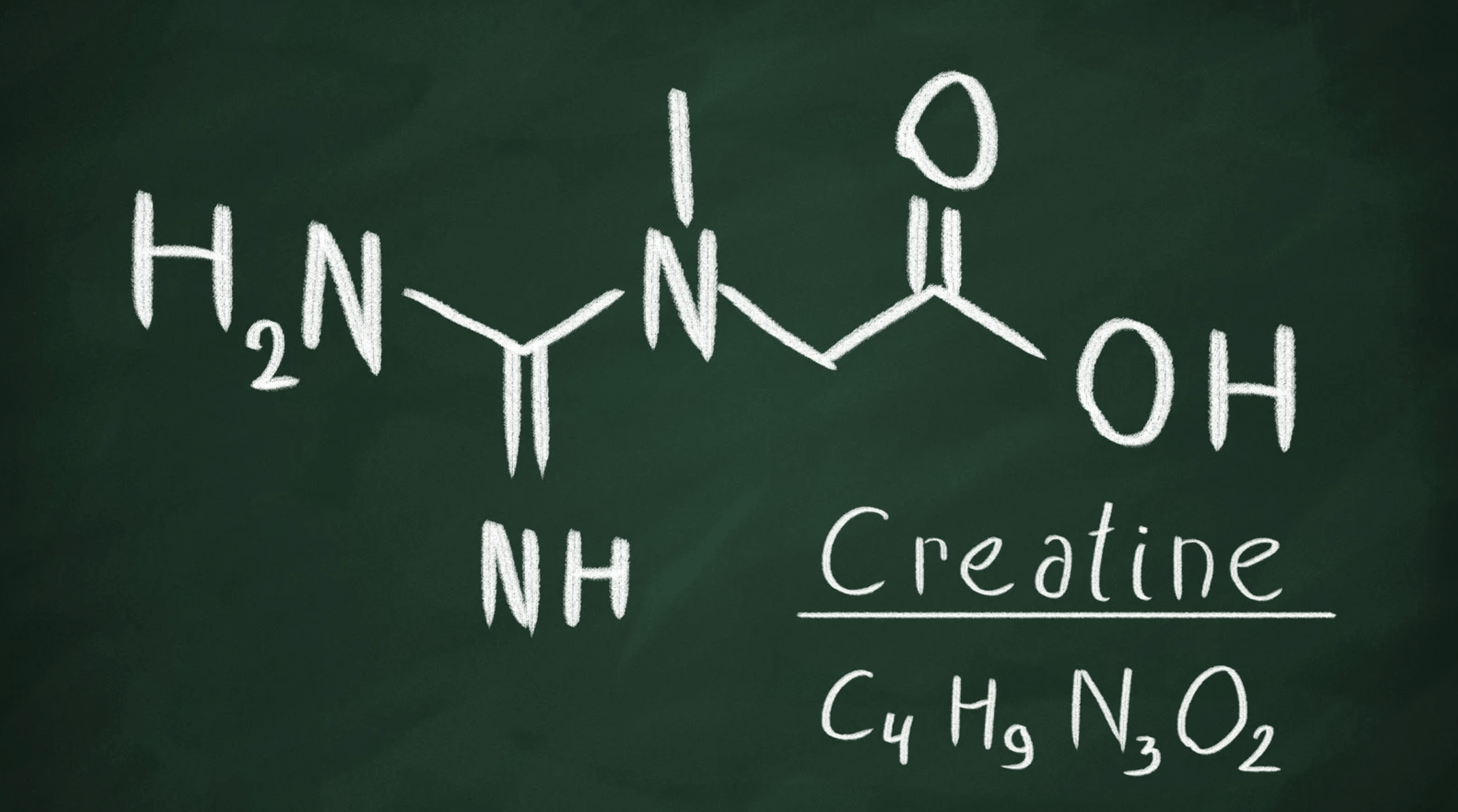
Your body already makes the stuff. So does mine, so does pretty much everyone’s, and you eat a bit more of it whenever there’s meat or fish on the plate. The bulk of it sits in muscle, where it does one job and does it extremely well, which is helping to regenerate your fast energy currency [1].
Your muscles run on a molecule called ATP. And during anything explosive, a hard set in the gym, getting up off the floor, the stairs when your legs are already cooked, your cells burn through that ATP fast. Creatine, stored in muscle as phosphocreatine, hands a phosphate straight back to the breakdown product and turns it back into ATP. So the more phosphocreatine you’ve got in the tank, the longer you can keep producing energy before you hit the wall [1].
When it comes down to it, creatine is an energy buffer, nothing more exotic than that. It isn’t a hormone. It isn’t a stimulant. And it certainly isn’t a painkiller. Hold onto that last point, because it’s where most of the confusion around creatine and chronic conditions tends to start.
It’s also been studied for the brain, for mood, and for fatigue, and we’ll get to all of that in turn. But the muscle energy story is the foundation everything else is built on, so it’s worth getting that straight first.
Is creatine safe? This part is genuinely settled
I know first-hand how much grief comes with trying supplements when you’ve got a chronic condition, and I’ve worked my way through plenty over the years myself. But creatine is a rare case. When it comes to safety, it’s had more eyes on it than almost any supplement you could care to name.
A 2025 analysis pooled 685 clinical trials, nearly thirteen thousand people taking creatine in total, and it found that reported side effects were no more common in the creatine groups than in the placebo groups [2]. Higher doses didn’t change that. Longer use didn’t change it either [2].
Now, stomach upset can show up during a heavy loading phase, or when you knock back a big dose on an empty stomach. But splitting the dose across the day and taking it with food sorts that out for the vast majority of people, so it’s a fairly minor problem in practice.
Here’s the caveat that does genuinely matter though. That safety record applies to people with normal kidney function, and because creatine is cleared by the kidneys, anyone with kidney problems, or anyone taking medication that affects kidney function, really does need to clear it with their doctor first. That isn’t us hedging for the sake of it. It’s the one genuine contraindication there is, and it’s exactly the kind of thing that’s easy to skip past when a supplement has otherwise been handed such a clean bill of health.
So, safety wise, you can more or less take creatine off the worry list. And that’s a real statement, because very few supplements ever earn it. What creatine actually does for your symptoms is the more interesting question, and the answer there is a good deal messier.
Creatine and pain: the honest version
I swallowed countless supplements over the years that I’d been told would make a difference, at no small expense either. Every now and then I’d convince myself one was working, and then a few days later the pain and fatigue would be sitting there exactly as bad as before. So I do understand the pull of it, when someone holds out a tub of something and swears blind this one is different. With creatine and pain, though, you have to be straight with people about what the research actually says.
Creatine doesn’t reduce pain directly, and it isn’t a painkiller in any meaningful sense. What the better evidence shows is a clean split between the things creatine changes and the things it leaves completely untouched. And pain sits firmly on the untouched side of that line.
The clearest study on this comes out of fibromyalgia research. Sixteen weeks, women with fibromyalgia, and the researchers measured pretty much everything you could think to measure. Muscle energy, strength, pain, sleep, quality of life, the lot [3]. Muscle phosphocreatine shot up, and strength in the lower and upper body both improved meaningfully. The pain itself? It didn’t budge. The main sleep and quality of life scores didn’t move either, with two small exceptions tucked away in the secondary measures, a presleep score and the mental health part of the quality of life questionnaire, both of which nudged in creatine’s favour but are exactly the kind of minor subscale finding the authors themselves were careful not to make too much of. So the honest read is this. Creatine did exactly what creatine does best, which is make the muscles more capable, and to the pain that brings people through the door, it did nothing worth the name.
For my money, that one result is probably the single most useful thing to understand about creatine and pain. Because it pulls apart two promises that get bundled into one on the shelf. Getting stronger and hurting less are not the same purchase, however often the marketing folds them together.
The osteoarthritis research tells you the same story from a slightly different angle. One trial in postmenopausal women with knee OA, run alongside a lower limb training programme, found that pain dropped in both the creatine group and the placebo group by roughly the same amount [4]. It was the training reducing the pain, not the creatine. What creatine added on top was better physical function, less stiffness, more lean muscle, and improved quality of life. All of it useful. None of it pain relief.
And the inflammation angle? A 12 week trial measured the inflammatory markers and the cartilage breakdown in people with knee OA and came back with nothing at all. No change in the inflammation markers, no change in the cartilage markers, no change in pain or strength [5]. A 2026 meta-analysis that pulled together eight randomised, double-blind trials landed in exactly the same place, no meaningful effect on either CRP or IL-6, moderate certainty [16]. So there’s nothing there to suggest creatine quietly calms inflammation and that this is how it helps with pain. It’s a lovely story. It just isn’t a true one.
So why does any of this matter so much for those with hypermobility? Because when you’re sore most days of the week, the instinct is always to reach for the thing that’ll take the edge off the pain there and then, and creatine simply won’t be that thing. What it might do is help you get through the training that, over months rather than weeks, genuinely does change how your pain behaves. That’s a completely different thing, and it’s worth being honest with yourself about which of the two you’re actually paying for.
Creatine and fatigue: the more interesting story
Creatine and fatigue, now that came as something of a surprise to me. I’d gone into this part of the research with low expectations, and I’ll be honest, I came out of it more interested than I’d predicted. Fatigue, as anyone with hypermobility, POTS or fibromyalgia knows far too well, is very often the symptom that wrecks the day more thoroughly than the pain ever does.
The liveliest corner of all this is post viral fatigue, the lingering kind so many people picked up after COVID, and the findings are consistent enough to be worth paying attention to. A six month trial gave a small group of people with post COVID fatigue syndrome a modest daily dose of creatine, four grams a day. Here I have to be careful with the wording, because this is exactly the sort of thing that gets overstated everywhere else. General fatigue did fall within the creatine group over the first three months, but when you line the creatine group up directly against the placebo group, that fatigue difference didn’t reach statistical significance. In other words the fatigue scores improved compared to where people started, not compared to placebo. What did clearly separate from placebo was a whole cluster of symptoms over the full six months, including body aches, headaches, breathing difficulty, and trouble concentrating [6]. Scans showed the creatine actually getting into both muscle and brain tissue, which matters a great deal, because it means the stuff was reaching the very places that were struggling. One thing worth flagging here, the lead researcher on this study has disclosed industry ties, including an advisory role with a creatine manufacturer and a related patent, and the trial itself was part funded by the very company that makes the creatine used in it. None of that sinks the result, but when the people who make the product are also helping fund the study that tests it, you read the findings with rather more than one eyebrow raised.
A second trial, this one run by a completely separate research group with no creatine industry ties, backed up the broad picture. People with post COVID fatigue taking around six grams a day saw their fatigue scores fall meaningfully and their grip strength improve [7]. That independence matters, because it means the post viral fatigue signal isn’t resting on one lab’s word alone. It’s a weaker study by design though, and you should know that. It was a short four week pilot, and it was single blind rather than double blind, meaning the researchers knew who was getting what even if the participants didn’t. So treat it as encouraging support rather than hard proof. Here’s the genuinely useful detail though. A much higher dose of eighteen grams a day didn’t work better. It actually failed to beat placebo on both fatigue and grip strength, and brought a good deal more stomach trouble with it. Which is a tidy reminder that more is not better. The sweet spot for fatigue looks like roughly the same modest daily dose people already take for the gym.
There’s a mechanistic reason all of this hangs together, and it’s a slightly unsettling one. When researchers measured tissue creatine in a small group of people with long COVID, nineteen of them, they found it was actually depleted. Muscle creatine lower than in healthy people, brain creatine lower too, and the lower someone’s muscle creatine ran, the worse their muscle pain tended to be [8]. So in these conditions there may well be a genuine energy shortfall, and topping the tank back up makes real biological sense. Although, and this is the same research group with the same industry ties to bear in mind, it was a small cross-sectional study, so it shows an association and not a cause.
Now, the honest caveats. These are small studies, and post viral fatigue is not the same animal as the fatigue of hypermobility or fibromyalgia, even when it feels more or less identical from the inside. And in fibromyalgia specifically, that same well run trial we leaned on earlier found that creatine improved strength but did nothing whatsoever for fatigue [3]. So it’s not a clean win across the board. Not even close to one.
What about chronic fatigue syndrome itself, ME/CFS? Here the evidence is thinnest of the lot. There’s just one small feasibility study, eleven people who finished it, no placebo group, in which they took a high dose for six weeks and reported less fatigue and faster thinking, with brain creatine measurably rising [9]. But a study with no control group can’t tell you whether the creatine did it, or whether people simply felt a bit better over six weeks for reasons nobody was measuring. So it’s a starting point for proper research, and nothing more than that.
So where does fatigue leave us? More promising than pain, genuinely worth watching, and best understood like this. If your fatigue has an energy shortfall component to it, creatine might help top it back up. But the strongest evidence by a distance is in post viral fatigue rather than hypermobility, and we’re extrapolating the moment we point any of it at you.
Creatine and the brain: real, but oversold
For me, one of the worst things about chronic conditions is the brain fog. The confusion, not being able to concentrate long enough to get anything done. So, naturally, the brain health angle for creatine got my attention. And let’s be clear here, some of it stands up, and a great deal of it really doesn’t.
The strongest finding is the one about the stressed or sleep deprived brain. In a tightly run study, a single large dose of creatine given before a night of sleep deprivation protected people’s thinking, and brain scans confirmed it was propping up the brain’s energy system while they were running on empty [10]. That’s a real effect, and it fits the energy buffer mechanism perfectly.
But here’s the part the supplement marketing quietly skips over. For healthy, well rested adults at the normal daily dose, the cognitive benefit sits somewhere between small and uncertain. The largest trial in healthy people, using the standard five grams a day, found no improvement in memory or reasoning that crossed the usual line for statistical significance, though the authors were honest enough to say their data hinted at a small effect that a bigger study might confirm [11]. It also found no special benefit for vegetarians, despite that being one of the most repeated claims going. And that same trial threw up something the headlines never mentioned. Side effects were actually more common in the creatine group than in the placebo group, which is a useful little reality check against the idea the stuff is completely inert [11]. I’ll be straight with you though, that’s one mid-sized study, and it sits a little awkwardly next to the much larger safety analysis we leaned on earlier, the one that pooled 685 trials and found no real difference in side effects between creatine and a sugar pill [2]. So read it as a nudge to stay honest, not as proof creatine upsets people: the weight of the evidence still says it’s about as well tolerated as supplements get.
Let me be clear here, the researchers are not claiming creatine cures brain fog. Reviews that pool all the studies together do scrape out a small memory benefit, but it’s mostly in older adults, and the studies disagree with each other a fair bit [12]. To be fair to the other side of it, not every pooled analysis is so lukewarm. A 2024 meta-analysis pulled the cognitive trials together and did find a clear, statistically significant benefit overall [17]. The reason I still land on real but oversold rather than just real is that those pooled benefits are small, they lean heavily on older adults and stressed brains, and they sit on top of the brain delivery problem I’m about to get to, which is the bit that keeps me cautious.
And there’s a bigger problem lurking underneath all of it. Getting creatine into the brain is genuinely hard. The brain guards its creatine supply tightly, and a recent review made the rather uncomfortable point that the standard three to five gram dose probably doesn’t raise brain creatine in most people much at all, while the studies that did manage to move brain creatine used much bigger doses [13]. So a good chunk of the cognitive trials may have been testing a dose that never properly reached the target in the first place. Worth knowing, this review comes from the same research group with the creatine industry ties we flagged earlier, and since it argues your standard dose may not be doing much, it actually cuts against their own commercial interest rather than for it, which is a point in its favour. And it’s part of why the regulators looked at the cognitive evidence and declined to approve a brain health claim for creatine [14].
So, brain benefits are real in the right context, meaning a tired, stressed, or energy starved brain. But for a healthy, rested one at a normal dose, you shouldn’t expect a great deal. And for hypermobility specifically there’s no brain research at all, so we’re firmly back in extrapolation territory.
How to use creatine sensibly if you decide to
None of this is medical advice, and the kidney caveat from earlier still stands, so check with your doctor first if you’ve got any kidney issues at all.
When it comes to which form to buy, it’s genuinely simple, because the answer is creatine monohydrate. It’s the form used in the vast majority of studies, it’s by some distance the cheapest, and none of the fancier, pricier versions have ever been shown to beat it. So if you buy anything else, you’re mostly paying for the label.
On dosing you’ve broadly got two options. You can load, which means around twenty grams a day split into smaller doses for the first week, and that saturates your muscles faster. Or you can skip the loading entirely and take a steady three to five grams a day, which gets you to exactly the same place in three to four weeks without the higher chance of an upset stomach. For the fatigue research specifically, the doses that worked sat in that modest three to six gram daily range, and going much higher than that made things worse rather than better, as we saw with the eighteen gram arm earlier [7].
Take it daily, including on rest days, because the whole point is keeping your stores topped up. I decided to take mine every day at the same time. I set a reminder on my phone, and no matter what I was doing or how I was feeling, I’d get up and take it. That way I made sure I did the minimum every day without letting anything else get in the way. Taking it with food, or with a drink that contains a bit of carbohydrate, can help absorption and settle your stomach.
One honest expectation to set. The good news is you can genuinely help yourself get stronger with creatine. But it’s just as possible to completely waste your money on it if you don’t do the work. Creatine works best as the thing that lets you do the training, the strength work, the graded loading, and the dull but necessary consistency that actually changes how your joints and your pain behave over time. Sitting on a shelf doing nothing for your training, it changes very little. And that’s the whole of it.
So where does all this leave us?
Creatine is safe, and that part is genuinely settled. It reliably makes muscles more capable. It does not directly reduce pain, and anyone telling you otherwise is running well ahead of the evidence. It shows real promise for fatigue, the post viral kind especially, though we’re extrapolating the moment we aim that at hypermobility. Its brain benefits are real under stress and oversold the rest of the time. And the one thing that has barely budged since we first wrote about all this is that there’s still no proper trial in hypermobility or EDS, just that one single patient case report and nothing more [15]. So every word here is borrowed from adjacent conditions and applied with care.
People do recover and get stronger every day. You just don’t always see it talked about honestly. If you’re already doing the work, rebuilding strength, getting your joints steadier, and training week in and week out, then creatine is a cheap, safe, and well evidenced thing to have in your corner. Just buy it for what it actually does, rather than for what the internet rather wishes it did.
Frequently Asked Questions
Does creatine help with hypermobility or EDS specifically?
Nobody’s ever run a proper trial in hypermobility or EDS, so anyone who tells you it definitely helps is guessing. There’s one 2024 case report, a single woman with hEDS who felt less knackered on it [15]. Interesting, sure, but it’s one person, and you can’t hang a recommendation on one person. What I can tell you is that creatine genuinely does make muscles stronger, and stronger muscles hold dodgy joints together better, so the help, if there is any, comes through the training, not through the powder. Use it to prop up your strength work. Don’t expect it to treat the condition.
Will creatine reduce my pain?
Not on its own, no. The best fibromyalgia trial we’ve got showed creatine made people stronger but left their pain untouched, and the main sleep and quality of life scores too, bar a couple of minor secondary measures the authors themselves played down [3]. So if you’re buying it hoping it’ll take the edge off a bad day, save your money. Any pain win is going to come the long way round, through being able to train and move better over months, not from the stuff working like a painkiller. It isn’t one.
Is creatine safe to take long term?
If your kidneys are fine, yes, and this is about as settled as supplement science gets. A 2025 review pulled together 685 trials and found side effects no more common on creatine than on a sugar pill, even at bigger doses and over longer stretches [2]. The one group that needs to stop and ask first is anyone with kidney trouble, because that’s the bit your kidneys deal with. Check with a doctor before you start.
What dose should I take?
Three to five grams a day, every day, and that’s it. You can do the loading thing, twenty grams a day for a week to fill the tank quicker, but honestly you don’t need to, you just get there a bit faster. And before you assume more must be better, it isn’t. The fatigue studies that worked sat in the three to six gram range, and when one trial went up to eighteen grams it actually did worse and gave people more gut ache for the privilege [7].
Does creatine help fatigue and brain fog?
This is the bit I find genuinely interesting. In post viral fatigue, a modest daily dose brought fatigue down and sharpened concentration over a few months [6], which is more than I expected going in. For the brain side, it seems to do most of its work when you’re running on no sleep or under stress [10], and a lot less when you’re rested and fine. The catch, and I’ll keep saying it, is that none of this was done in people with hypermobility, so treat it as worth a try rather than a sure thing.
If you’ve read this far and you’re still weighing creatine up against everything else on the shelf, it sits alongside the honest run through of what actually works for pain medication in EDS rather than replacing it. The fatigue and brain fog angle also connects to how traditional strength training often falls short for hypermobile bodies, and to broader questions about what a sensible diet for hypermobility and EDS looks like.
— The Fibro Guy Team —
References
- Kreider RB, Kalman DS, Antonio J, et al. International Society of Sports Nutrition position stand: safety and efficacy of creatine supplementation in exercise, sport, and medicine. J Int Soc Sports Nutr. 2017;14:18. doi: 10.1186/s12970-017-0173-z
- Kreider RB, Gonzalez DE, Hines K, Gil A, Bonilla DA. Safety of creatine supplementation: analysis of the prevalence of reported side effects in clinical trials and adverse event reports. J Int Soc Sports Nutr. 2025;22(1):2488937. doi: 10.1080/15502783.2025.2488937
- Alves CRR, Santiago BM, Lima FR, et al. Creatine Supplementation in Fibromyalgia: A Randomized, Double-Blind, Placebo-Controlled Trial. Arthritis Care Res. 2013;65(9):1449-1459. doi: 10.1002/acr.22020
- Neves M, Gualano B, Roschel H, et al. Beneficial Effect of Creatine Supplementation in Knee Osteoarthritis. Med Sci Sports Exerc. 2011;43(8):1538-1543. doi: 10.1249/MSS.0b013e3182118592
- Cornish SM, Peeler J. No effect of creatine monohydrate supplementation on inflammatory and cartilage degradation biomarkers in individuals with knee osteoarthritis. Nutr Res. 2018;51:57-66. doi: 10.1016/j.nutres.2017.12.010
- Slankamenac J, Ranisavljev M, Todorovic N, et al. Effects of six-month creatine supplementation on patient- and clinician-reported outcomes, and tissue creatine levels in patients with post-COVID-19 fatigue syndrome. Food Sci Nutr. 2023;11(11):6899-6906. doi: 10.1002/fsn3.3597
- Santos MSCd, et al. Creatine supplementation on fatigue related to post-COVID-19 condition – fatigue study: a randomized controlled trial. Front Nutr. 2026;13:1731306. doi: 10.3389/fnut.2026.1731306
- Ranisavljev M, Todorovic N, Ostojic J, Ostojic SM. Reduced tissue creatine levels in patients with long COVID-19: A cross-sectional study. J Postgrad Med. 2023;69(3):162-163. doi: 10.4103/jpgm.jpgm_65_23
- Godlewska BR, Sylvester AL, Emir UE, et al. Six-Week Supplementation with Creatine in Myalgic Encephalomyelitis/Chronic Fatigue Syndrome (ME/CFS): A Magnetic Resonance Spectroscopy Feasibility Study at 3 Tesla. Nutrients. 2024;16(19):3308. doi: 10.3390/nu16193308
- Gordji-Nejad A, Matusch A, Kleedorfer S, et al. Single dose creatine improves cognitive performance and induces changes in cerebral high energy phosphates during sleep deprivation. Sci Rep. 2024;14:4937. doi: 10.1038/s41598-024-54249-9
- Sandkühler JF, Kersting X, Faust A, et al. The effects of creatine supplementation on cognitive performance – a randomised controlled study. BMC Med. 2023;21:440. doi: 10.1186/s12916-023-03146-5
- Prokopidis K, Giannos P, Triantafyllidis KK, et al. Effects of creatine supplementation on memory in healthy individuals: a systematic review and meta-analysis of randomized controlled trials. Nutr Rev. 2023;81(4):416-427. doi: 10.1093/nutrit/nuac064
- Candow DG, Pratt J, Fabiano N, et al. Creatine Supplementation and the Brain: Have We Put the Cart Before the Horse? J Diet Suppl. 2026. doi: 10.1080/19390211.2026.2616440
- EFSA Panel on Nutrition, Novel Foods and Food Allergens (NDA). Creatine and improvement in cognitive function: Evaluation of a health claim pursuant to article 13(5) of regulation (EC) No 1924/2006. EFSA Journal. 2024;22(9):e9100. doi: 10.2903/j.efsa.2024.9100
- Behringer CR, Afrin S. Creatine Monohydrate as an Effective Supplement for Muscular Fatigue in an Ehlers-Danlos Patient. Cureus. 2024;16(6):e61721. doi: 10.7759/cureus.61721
- de Camargo KMR, et al. Impact of creatine supplementation on inflammation: evidence from a systematic review and meta-analysis of randomized double-blind placebo trials. Front Immunol. 2026;17:1743603. doi: 10.3389/fimmu.2026.1743603
- Xu C, Bi S, Zhang W, Luo L. The effects of creatine supplementation on cognitive function in adults: a systematic review and meta-analysis. Front Nutr. 2024;11:1424972. doi: 10.3389/fnut.2024.1424972