
This article is part of our comprehensive guide to POTS and dysautonomia.
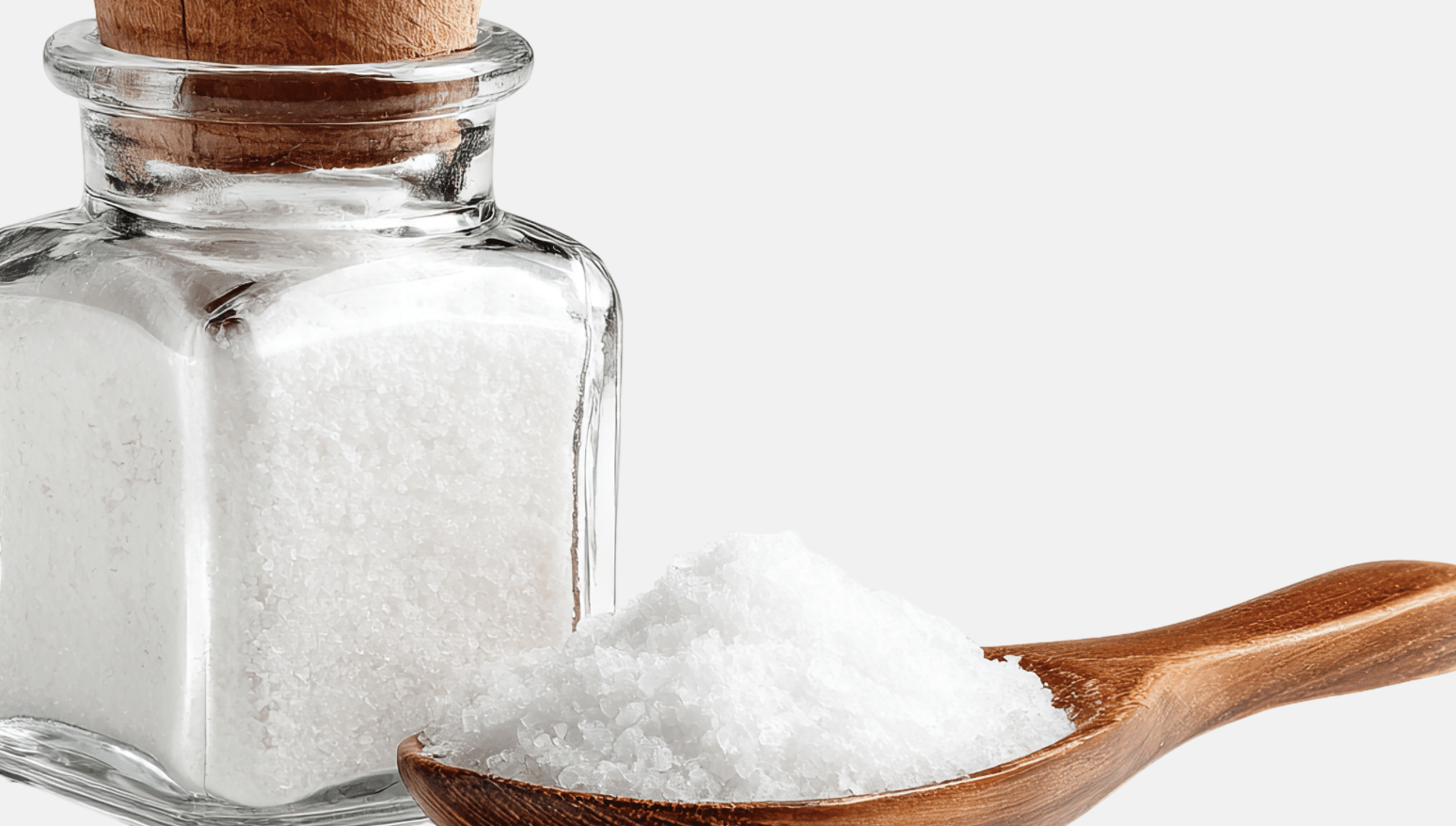
Salt does something, it just doesn’t do anywhere near as much as you’ve been told, and that gap is where most of the frustration actually lives. So, the short version is this: in POTS, blood volume really is low, low enough and often enough that it’s worth treating as the working assumption [2]. Loading up on sodium does expand that volume, and measured against a diet with almost no salt in it, it takes a real chunk off a standing heart rate [1]. What it didn’t do, in the one place anyone has measured it properly, was make people feel measurably better, and not one person who did it stopped meeting the criteria for POTS afterwards [1]. The famous figure of ten grams of salt and three litres of water a day is a consensus number rather than a result, and the documents your clinic works from say so themselves, in writing [3][4][5][6].
Salt is still worth trying, it’s cheap, it’s available, and there’s an objective way to find out whether you’re actually doing it. It isn’t the strongest tool you have though, and being told otherwise for years is why so many people end up concluding that their POTS is untreatable, when what they’ve actually run out of is one fairly mediocre lever.
What is actually low, and why your blood test came back fine
Standing up is a plumbing problem. Around half a litre of blood drops into your legs and abdomen the moment you go upright, and the body has to claw it back before your brain notices, so if there’s less blood in the system to begin with, that job gets considerably harder and the heart rate goes up to cover the shortfall.
In POTS, there’s measurably less. Both the liquid part of the blood and the red cells themselves come up short, and the total deficit is in the region of a sixth of what it should be [2]. It’s the entire physiological reason anyone ever suggested salt in the first place, really.
There are, however, a few details that matter a lot more than that headline, and they almost never get passed on!
It’s not low in everyone
The deficit varies enormously from one person to the next. Some people with POTS are running a shortfall of over a fifth of their expected plasma volume, and at least one person looked at had a plasma volume that was actually higher than predicted [2]. So low blood volume is common in POTS, it just isn’t universal, and nobody can tell you which one you are without measuring it, which almost nobody gets to do.
That’s the first honest reason salt might do nothing for you, because if your blood volume isn’t the thing that’s low, expanding it is solving a problem you don’t have.
A normal full blood count won’t show it
If you’ve been told your bloods are fine, that tells you very little here. The liquid and the red cells drop roughly in step with each other, so the ratio between them stays normal, and the ratio is what a routine blood count measures [2]. Haematocrit comes back unremarkable in POTS while total blood volume is well down [2]. Your results weren’t wrong, they were just never capable of answering the question.
The system that should fix this doesn’t switch on
POTS gets genuinely strange at this point. When blood volume drops, the body has a hormonal system whose entire job is to hang onto sodium and water until the volume comes back up, and in POTS, that system is running at levels that are much too low for how depleted the person actually is [2]. It’s been named the renin aldosterone paradox (great name for a band), and it’s well documented as an observation. Why it happens isn’t settled though, and the one intermediate step that would explain it has never been measured [2].
The practical upshot for you is this: your body isn’t conserving salt the way it should be, which is at least a coherent argument for putting more in. It’s also a reminder that if the retention machinery is misfiring, adding raw material to the front of a broken conveyor belt has fairly obvious limits.
What happened when somebody actually tested it
This is the part where the internet gets incredibly loud and at the same time, the evidence gets very, very quiet. Salt in POTS has been tested properly once, that anyone sweeping the literature has been able to find [8], and it was a small group of women, it ran for less than a week on each diet, and everybody involved knew which diet they were on [1]. So treat what follows as the best information available rather than as settled.
On the high sodium side, the liquid part of the blood expanded and that shortfall nearly closed, while the red cell shortfall didn’t move at all [1]. Standing heart rate came down by roughly twelve beats a minute, and the jump between lying and standing came down by about fourteen [1]. Of the two adrenaline family chemicals that go up when you stand, one came down and the other didn’t move, and the one that came down did the same thing in the healthy comparison group, so it isn’t something salt does specifically to POTS [1]. Most of the mechanism did pretty much what the theory predicted it would, which is not nothing, and if you’ve been told salt is pure folklore, that’s wrong.
One thing has to sit next to those numbers or they’ll mislead you. The high salt diet was never compared against a normal diet, it was compared against a diet with almost no salt in it at all, and nothing was measured on a normal intake, so what happens when you add salt to what you already eat is simply not known [1]. Twelve beats a minute is the gap between two extremes, not the improvement you’d get by putting more salt on your dinner.
Now, the two findings that never make it into the advice! The first is that how people felt didn’t measurably improve [1]. There was a drift in the right direction on how they scored their symptoms, and it wasn’t strong enough to count [1]. Nobody can tell you whether that’s a true absence of benefit or a small piece of work failing to see a real effect it was never big enough to catch, and it’s dishonest to claim either.
What we can say is narrower than what we said last time: in the one trial that measured it properly, the heart rate improved and the people in it didn’t report feeling better. Our own previous article said people reported improvements, and it said it as though the question were closed. It isn’t closed, in either direction.
The second is that nobody was normalised. After five full days of high sodium, with a plasma volume deficit closed to almost nothing, every single person still met the diagnostic threshold for POTS, and their upright symptom scores were still worse than those of people without it [1]. The wording used at the time was that a high salt diet, while helpful, is not sufficient to normalise anyone [1].
And the effect may not even hold, as whether the improvements in heart rate, blood volume and chemistry last beyond a few days is openly flagged as uncertain, and nobody has followed it out far enough to find out [1].
When all of this was pulled together and formally graded in 2026, every outcome came out as low or very low certainty, salt and drugs alike [8]. Salt keeps getting recommended anyway, and the openly stated reason is that it’s simple to apply [8]. Which is a reason to try something rather than evidence that it works.

How much salt, and does anybody actually know
The number you’ll be given is ten grams of salt a day, alongside around three litres of fluid [3][4][5][6]. Even the fluid figure isn’t tidy: one document says up to two to three litres, another says at least three, and a third manages three different versions of it in three separate places [3][4][5]. What tends not to get passed on is the grade sitting next to all of it. In 2015 that advice was formally classified as consensus opinion in the absence of credible published evidence, which is the weakest tier that document has [3]. By 2020 it had firmed up to a strong recommendation on low quality evidence, which is an honest way of saying we think you should do this and we can’t particularly show you why [4]. The 2026 positions haven’t moved [5][6].
Then there’s a problem nobody seems to want to fix. It isn’t clear whether ten grams means ten grams in total or ten grams on top of what you already eat. One source says an extra ten grams [6]. Another says both increasing dietary salt to ten grams daily and, elsewhere in the same document, adding extra salt of ten grams [5]. A third frames its figure explicitly as additional, on top of a typical intake of around eight and a half grams, which is the general population figure that source works from [7]. So a person following the same sentence in good faith could end up on ten grams, or on something close to nineteen, which is roughly a twofold difference in the actual dose, and unfortunately no source resolves it.
There has never been a dose finding study in POTS, not one. The number isn’t derived from anyone comparing doses and picking the best, and the closest thing to an evidence based figure anyone has offered is about six grams of added salt a day, from someone pooling data after the fact rather than testing it, and written for people whose problem is fainting rather than for people with POTS [7]. So treat six grams as a reasonable starting point with weak support borrowed from a neighbouring condition, not as a better number.
Worth knowing, if only for perspective: the amount actually used in the one piece of work that tested salt was around seventeen grams a day, which is more extreme than anything anyone recommends to a person with POTS [1][10].
What form it comes in, and why the expensive one isn’t better
No formulation of sodium chloride has been shown to work better than any other [7]. That’s a flat statement of absence, and it’s genuinely useful, because it means the deciding factor is entirely whether you’ll keep taking it.
– Salt on food: the cheapest option and frequently the best tolerated. Salt can cause nausea, and dietary salt tends to sit better than tablets [6]. The obvious limit is that ten grams of salt tastes like ten grams of salt, and there’s only so much brine a person can face at breakfast.
– Salt capsules and tablets: easier to dose accurately and much easier to take when food is the last thing you want, and the trade off is gut tolerance. The risk of an upset gut and osmotic diarrhoea with tablets is described as theoretical rather than demonstrated, and slow release buffered versions are usually well tolerated but cost more [5]. A lot of those with hypermobility already have gut issues to work around, so that side of it tends to make the choice for them. The comparative evidence on formulation is thin rather than absent, so nobody can hand you a winner, and tolerability is the sensible basis for choosing [5].
– Electrolyte sachets and oral rehydration solutions: popular, palatable, and much weaker than people assume. The sachet used in the work on children delivers well under a gram of sodium a dose, which is a long way below adult salt loading [11], and paediatric salt loading generally runs at very low doses [7]. The likeliest explanation for any benefit is the fluid rather than the salt, and that’s an interpretation offered as a likelihood rather than a finding, so hold it loosely [7]. Most of the community prefer brands like LMNT or Nuun, which can get incredibly expensive over the course of a year. If you like the taste and it gets fluid into you, fine, just don’t assume you’re salt loading on it.
Water, and the awkward business of drinking it with your salt
Everyone gets told to drink around three litres a day [3][4][5][6]. The evidence for that is weaker than the evidence for salt, which is saying something.
When drinking more water has been looked at in POTS, the numbers didn’t move. Heart rate didn’t shift in any of the work that exists, and blood pressure was dropped as an outcome before any of it was extracted, so nobody reported it either way [8]. Some of those studies did record that people felt better on it, they just didn’t measure that on any scale that counts [8]. All of it was short and single dose, so the honest position is that the standard fluid advice is untested rather than disproved [8].
This matters for one specific piece of advice you’ll see repeated constantly: the rapid water bolus, half a litre knocked back in five minutes to blunt the heart rate. In other conditions that effect is real and well described. In POTS it has been looked at, including at those volumes, and it didn’t do what it was supposed to [8]. Our previous article presented it as established, and it isn’t, it’s plausible physiology with fairly disappointing results in the population it’s being sold to.
There’s one more oddity here and it needs flagging carefully, because it’s the least transferable thing on this page. Salt and water taken in the same glass may partly cancel each other out in the short term. When salty water was compared against plain water, the blood pressure rise in the first half hour was less than half as big with the salt in it, and the interpretation offered was that the gut responds to plain water being dilute, and adding salt removes the trigger [12]. The difference had gone within the hour, so whatever this is, it’s brief [12].
That was looked at in a small number of much older people with a different condition, a form of autonomic failure where blood pressure drops on standing, and that group was chosen on purpose, because the blood pressure swing being chased shows up biggest in them [12]. So that’s a large caveat, and nobody has tested whether it holds in POTS at all, which makes this a reason to suspect something rather than a reason to believe it. The conclusion drawn at the time was not that people should avoid salt, but that a high salt diet may still be useful and that careful attention should be paid to when the water is drunk [12].
So if you want a practical position that costs you nothing: take your salt with food, and keep your big glasses of plain water for the times you actually need a fast effect, like before standing up for a while. That’s a hedge against an untested possibility rather than a rule.
Who it doesn’t work for
Salt will do very little for a decent slice of the people who try it, and the reasons aren’t particularly mysterious. Start with blood volume: if yours isn’t meaningfully low, and some people with POTS have blood volume in the normal range, then the entire mechanism salt is working through isn’t available to you [2].
Then there’s the direct evidence that non responders exist: when rehydration salts were given to a group of children with POTS and followed up, a bit over four in ten of them didn’t respond [11]. The explanation offered was straightforward, in that POTS isn’t one thing, it arrives by several different routes, and a treatment aimed at one of them won’t touch the others [11].
Don’t carry that proportion over to yourself though. That was children rather than adults, in a different country, at a dose far below adult salt loading, and everybody got the treatment so there was nothing to compare against [11]. The transferable point isn’t the number, it’s the concept, and it’s stated plainly [11]. Responders and non responders both exist, and you won’t know which you are until you try.
Salt isn’t a test you can fail, it’s a lever you pull for a few weeks to find out whether it’s one of yours.
Is it safe to eat this much salt for years
Nobody knows. There’s been no study of what deliberate long term sodium loading does to the heart, arteries or kidneys of people with orthostatic disorders [9], and the general sodium and health literature, which is enormous, doesn’t include this population, with that exclusion stated outright rather than glossed over [9]. So when a doctor tells you high salt is dangerous, and when a POTS forum tells you it’s completely fine, neither of them is working from data about you.
What does exist is harm evidence from other groups, and the population matters every single time.
– Blood vessel function: a week of very high sodium reduced the ability of an artery to dilate in healthy adults, and it did it whether or not the person’s blood pressure was salt sensitive [9]. That’s the uncomfortable one, because it suggests a mechanism that doesn’t depend on your blood pressure going up. The caveat that belongs with it, and it matters for most people reading this, is that sodium appears to hit artery function harder in men than in women, and even that hasn’t been shown consistently [9].
– Kidneys: higher sodium intakes are associated with worse kidney measures, including protein in the urine and declining filtration rate, in general adults [9]. High salt intake also turns up alongside early markers of kidney damage in people [9]. The structural work, the thickening and the scarring, has been done in animals, and nobody has tested whether that structural change holds in people [9].
– Bones: findings here are inconsistent and observational. Higher sodium excretion turned up alongside lower bone density in one group of women and showed no relationship at all in another [9]. These two things turn up together in some populations and nobody has shown that one causes the other.
Against that, there’s one small piece of reassurance, as six days of high sodium didn’t worsen artery function in women with POTS [10]. Take it gently, though, as it was a very small group, and artery function drifted down in the women without POTS while it drifted slightly up in the women with it, without either drift being firm enough to count [10]. The explanation offered for finding nothing is that everyone in it was a woman, and sodium appears to do more to artery function in men [10]. That comparison also has the same hole as the one above, because the high salt arm was measured against a diet with almost no salt in it rather than against a normal one [10], and long term effects are explicitly still unstudied [10]. A short look at a small group that finds nothing is an absence of a finding rather than a safety finding.
Where the sources do agree is on who should be careful. Salt loading is recommended for people with normal kidney function [5], and if you have kidney disease, existing cardiovascular risk factors, or a history of kidney stones, the amount needs moderating, and long term safety data are still needed [6]. There’s also a threshold worth knowing about, in that the suggestion has been made that clinicians should start weighing risks against benefits once sodium excretion goes above 170 millimoles a day in adults [9].
One more open question, and it’s a flag rather than a finding. High blood pressure in hypermobile Ehlers-Danlos syndrome and hypermobility spectrum disorder is described as increasingly recognised but poorly understood, with its long term cardiovascular outcomes poorly defined [14]. Only the summary of that work is publicly available, and the summary puts no figure on how common it is and doesn’t touch salt, so it establishes nothing either way [14]. But if a hypertensive subgroup within hypermobile POTS turns out to be real, blanket salt advice would be wrong for exactly those people, so if your blood pressure runs high, this is a conversation to have rather than a rule to follow off the internet.
How to find out whether you’re actually doing it
If salt isn’t working, the first question isn’t whether salt works, it’s whether you’re actually taking enough of it, and there’s a cheap objective way to check. A twenty four hour urine sodium collection estimates what you’ve genuinely been eating, and it’s been explicitly recommended as the thing to do when someone isn’t responding or when intake is suspected to be inadequate [4]. The target given is above 170 millimoles a day [4].
You’ll have noticed the awkwardness. That’s the same number that has been proposed as the point above which harms should start being weighed [9], so the target in one document is the caution line in the other, and nobody has reconciled them. Which isn’t a reason to ignore the test at all, it’s a reason to know that when you hit the recommended intake, you’re also at the edge of where the sodium physiologists start to get really twitchy, and to make that a decision you take deliberately rather than one that happens to you.
What salt isn’t
Salt is the thing everyone with POTS gets told about, which isn’t at all the same as it being the thing with the best support behind it, and the confusion between those two does real damage.
In both of the documents your clinic works from, exercise carries a higher grade than salt [3][4]. In one it’s rated as likely to be effective on published evidence, while salt is rated as consensus opinion in the absence of any [3]. In the other it’s a strong recommendation on moderate quality evidence, against salt at low quality [4]. Exercise is also the only thing in either document described as possibly achieving remission in some people [4]. None of which is clean, and being straight about that matters, as when exercise was formally graded in 2026 it came out very low certainty too, and the strongest single trial behind it failed to shift symptom burden [8]. The reading offered in that same review is that programmes running more often, most of them daily, did move both the numbers and the symptoms, and the work showing quality of life improving sits lower down the evidence ladder than that one trial does [8]. So nobody should be presenting either salt or exercise as proven. Exercise is still ahead.
Compression sits at least alongside salt. When treatments were assessed together in 2026, compression garments, physical training and salt were named as the three things to try first, and compression came with effects shown on both heart rate and how people feel, which is more than salt has managed on how people feel [8]. That positive result was abdominal and leg compression together. A trial of compression on the abdomen alone, sitting in the same review, found nothing on heart rate or on symptoms [8], while a separate source has abdominal compression beating legs alone, and non medical grade high waisted compression tights showing an effect [6]. So the sources don’t fully agree, and the honest summary is that compression is worth doing and the best arrangement of it isn’t settled. It’s still the tool most often left out of the conversation (which honestly happens a lot in this space), and it’s cheaper than pretty much everything else that gets sold to you.
No head to head comparison has ever been run. Nobody has tested salt against exercise, or salt against compression, so the ranking above comes from how each one is graded and how much sits behind it, rather than from anyone putting them in a room together.
And potassium, magnesium and multi electrolyte products deserve a plain statement, because our own previous article on this built a whole section on potassium and the sodium to potassium ratio. A deliberate search of the research literature and of the register of running trials found nothing at all on potassium, magnesium or any multi electrolyte product in POTS or orthostatic intolerance. That’s a complete absence of evidence rather than a negative result, so nobody can tell you they don’t help. But there’s nothing behind them either, and the general population work on potassium is about lowering blood pressure in people with hypertension, which is close to the opposite of the problem here. Our old section shouldn’t have been there, and it won’t be in this one.
What to actually do
– Try it, and give it a proper run: a few weeks, consistently, rather than a fortnight of good intentions. It’s cheap and the downside for someone with normal kidney function and normal blood pressure is low. You’re running an experiment on yourself, and the result is genuinely informative either way.
– Start lower than the headline number: six grams of added salt a day has the least bad support behind it, though that figure was worked out for people who faint rather than for people with POTS, and it’s far easier to sustain than ten [7]. If you get an effect, you have your answer at a dose nobody is worried about, so build up only if you need to.
– Assume the ten grams is on top, or assume it’s total, but decide which: the sources genuinely contradict each other on this and nobody can resolve it for you [5][6][7]. Pick the more conservative reading, which is total, and only go beyond it with someone watching.
– Spread it across the day: a day’s worth of sodium in one hit is a reliable way to feel sick and stop, so split it across meals.
– Choose the form you’ll still be taking in a month: nothing has been shown to work better than anything else, so tolerance is the only sensible basis for choosing [7]. Food if you can stand it, capsules if you can’t, sachets if they’re what gets fluid into you.
– Keep the big glass of plain water slightly separate from your salt: this is a hedge against something shown in a different and older group with a different condition, and never tested in POTS [12]. It costs you nothing to do and it might matter.
– Get a twenty four hour urine sodium if it isn’t working: before you conclude salt has failed, find out whether you actually did it [4]. Above 170 millimoles a day is the stated target [4].
– Don’t let it be the only thing: exercise is graded higher and compression is at least its equal, and neither is optional in a serious plan [3][4][8]. If salt is your entire strategy, your strategy is the weakest of the three.
– Ask first if you have kidney disease, high blood pressure, cardiovascular risk factors or a history of kidney stones: the recommendation is written for people with normal kidney function, and the amount needs moderating in everyone else [5][6].
What would change this answer
A better test of salt in POTS is finally running, and it’s the kind where nobody involved knows who’s getting salt and who’s getting a dummy capsule. Slow release sodium capsules, six weeks on each, with the standing heart rate as the thing being measured, and it isn’t due to report until 2028. All of that comes from the trial’s public registry entry rather than from anything published, so none of it has been reviewed by anyone and the details could still change before a result exists. Until then, everybody discussing this, including us, is arguing about one short stretch of work in a small group of women who all knew exactly what they were eating.
The other thing that would help is something almost nobody has bothered to look at. Education, communication, information provision and action plans for people managing POTS themselves have all been named as gaps needing research, because a sweep that went hunting for work on any of them came back with none of it [13]. Only the summary of that review is publicly available and there’s no legal free route to the full text at all, so treat it as a weak source. But the gap it describes matches what people actually report, in that you’re being told to do something difficult, indefinitely, with no dose you can trust and nobody checking whether you managed it.
It’s a cheap lever with a real mechanism, a measurable effect on your heart rate, no demonstrated effect on how you feel, an unknown long term safety profile and an objective way to check you’re doing it. None of this means don’t take the salt by the way, it means take it with your eyes open.
The Fibro Guy

References
[1] Garland, E.M., Gamboa, A., Nwazue, V.C., Celedonio, J.E., Paranjape, S.Y., Black, B.K. et al. (2021) ‘Effect of High Dietary Sodium Intake in Patients With Postural Tachycardia Syndrome’, Journal of the American College of Cardiology. https://doi.org/10.1016/j.jacc.2021.03.005
[2] Raj, S.R., Biaggioni, I., Yamhure, P.C., Black, B.K., Paranjape, S.Y., Byrne, D.W. et al. (2005) ‘Renin-Aldosterone Paradox and Perturbed Blood Volume Regulation Underlying Postural Tachycardia Syndrome’, Circulation. https://doi.org/10.1161/01.cir.0000160356.97313.5d
[3] Sheldon, R.S., Grubb, B.P., Olshansky, B., Shen, W.K., Calkins, H., Brignole, M. et al. (2015) ‘2015 Heart Rhythm Society Expert Consensus Statement on the Diagnosis and Treatment of Postural Tachycardia Syndrome, Inappropriate Sinus Tachycardia, and Vasovagal Syncope’, Heart Rhythm. https://doi.org/10.1016/j.hrthm.2015.03.029
Read More[4] Raj, S.R., Guzman, J.C., Harvey, P., Richer, L., Schondorf, R., Seifer, C. et al. (2020) ‘Canadian Cardiovascular Society Position Statement on Postural Orthostatic Tachycardia Syndrome (POTS) and Related Disorders of Chronic Orthostatic Intolerance’, Canadian Journal of Cardiology. https://doi.org/10.1016/j.cjca.2019.12.024
[5] Chung, T.H. and Raj, S.R. (2026) ‘Postural Orthostatic Tachycardia Syndrome (POTS)’, JAMA. https://doi.org/10.1001/jama.2026.14809
[6] Lau, D.H., Fedorowski, A., Raj, S.R., Schild, C., Pace, L.A., Blitshteyn, S. et al. (2026) ‘Postural Orthostatic Tachycardia Syndrome: A State-of-the-Art Review’, Heart, Lung and Circulation. https://doi.org/10.1016/j.hlc.2025.09.004
[7] Williams, E.L., Raj, S.R., Schondorf, R., Shen, W.K., Wieling, W. and Claydon, V.E. (2022) ‘Salt supplementation in the management of orthostatic intolerance: Vasovagal syncope and postural orthostatic tachycardia syndrome’, Autonomic Neuroscience. https://doi.org/10.1016/j.autneu.2021.102906
[8] Schiweck, N., Langer, K., Maier, A., Vilser, D. and Spiegler, J. (2026) ‘Systematic literature review: treatment of postural orthostatic tachycardia syndrome (POTS)’, Clinical Autonomic Research. https://doi.org/10.1007/s10286-025-01172-2
[9] Stock, J.M., Chelimsky, G., Edwards, D.G. and Farquhar, W.B. (2022) ‘Dietary sodium and health: How much is too much for those with orthostatic disorders?’, Autonomic Neuroscience. https://doi.org/10.1016/j.autneu.2022.102947
[10] Smith, E.C., Celedonio, J., Nwazue, V.C., Garland, E.M., Paranjape, S.Y., Chopoorian, A.H. et al. (2021) ‘High-sodium diet does not worsen endothelial function in female patients with postural tachycardia syndrome’, Clinical Autonomic Research. https://doi.org/10.1007/s10286-021-00772-y
[11] Xu, B., Gao, Y., Zhang, Q., Li, X., Liu, X., Du, J. et al. (2024) ‘Establishment and validation of a multivariate predictive model for the efficacy of oral rehydration salts in children with postural tachycardia syndrome’, eBioMedicine. https://doi.org/10.1016/j.ebiom.2023.104951
[12] Raj, S.R., Biaggioni, I., Black, B.K., Rali, A., Jordan, J., Taneja, I. et al. (2006) ‘Sodium Paradoxically Reduces the Gastropressor Response in Patients With Orthostatic Hypotension’, Hypertension. https://doi.org/10.1161/01.hyp.0000229906.27330.4f
[13] Eftekhari, H., Pearce, G., Singh, A., Staniszewska, S. and Seers, K. (2025) ‘Supportive self-management in postural orthostatic tachycardia syndrome (POTS): A systematic review’, Autonomic Neuroscience. https://doi.org/10.1016/j.autneu.2025.103342
[14] Johnson, J.W., Mirro, I. and Kontorovich, A.R. (2026) ‘Too high and too loose: dysautonomia and the hypertensive paradox in hypermobility disorders’, Current Opinion in Cardiology. https://doi.org/10.1097/hco.0000000000001310