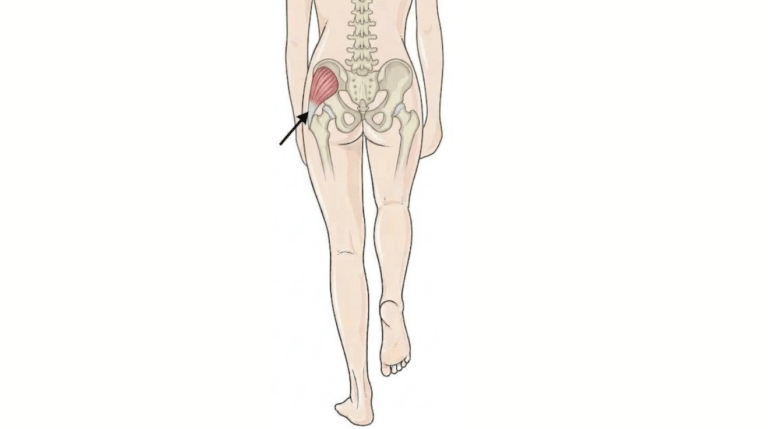


- Hypermobile hip exercises we use, and why clamshells aren’t one of them - 17 October 2026
- Is Fibromyalgia a Disability in the UK, and Can You Claim PIP? - 14 October 2026
- Fibromyalgia and Central Sensitisation, What Is It in Plain English? - 8 October 2026
This article is part of our comprehensive guide to hypermobility and Ehlers-Danlos syndrome.
If you’ve got to the point where you think twice before reaching up to a high shelf, or you plan a walk around where you could sit down if a knee decides to go, then none of this is going to be news to you. It’s got a name in the research though, kinesiophobia, which is a fairly clumsy word for something quite simple, a settled expectation that moving is about to cause pain, or damage, or another dislocation, or a fall [1][2]. And it matters a great deal more than most people are ever told, as how much somebody with hypermobility can actually do day to day, is predicted better by fear, catastrophising, anxiety and worry about falling than it is by how much pain they’re in [3].
Now, the bit that almost every article on the subject gets wrong is the second half of it. A good chunk of that caution isn’t a distortion and it isn’t a thinking error in need of correcting, as shoulders that sublux, ankles that go on a curb you’ve walked down a thousand times, and a joint position sense that runs genuinely blurry are all real, measurable things, and a nervous system that has learned to be careful around them has learned something true [4][5]. The trouble is that the caution outgrows the danger, spreads to movements that were never risky in the first place, and eventually starts costing you a great deal more than it ever saves.
The useful part is what the evidence says will shift it, and the short version, unfortunately, is that exercise on its own is not reliably the answer, which is probably not what your physio told you.
What Kinesiophobia Actually Means
It isn’t a dislike of exercise and it isn’t the same thing as not fancying the gym, it’s a threat judgement about one specific movement: this is likely to hurt me, or injure me, or put me back where I was in March [1][6]. It sits inside a bigger idea called fear avoidance, which is around twenty five years old now and has been tested to death in general chronic pain, and it runs like this. Pain arrives, the movement that came before it gets marked as dangerous, that movement then gets avoided, the world shrinks a little, and the disability that follows tracks the avoidance rather than the tissue [1][7].
You may well have met the measurement side of this without ever being told what it was. There are questionnaires that ask you to agree or disagree with statements along the lines of “my body is telling me I have something dangerously wrong”, and the score comes out as a rough band rather than as a diagnosis [1]. It’s a screening tool, so a high score doesn’t mean you’re frightened of movement in some character sense, it means enough of your answers pointed that way that somebody ought to be asking about it. Among those with hypermobility symptomatic enough to be in a study at all, most score above the line where it gets treated as clinically relevant [6][8].
And in hypermobility it takes shapes that the general chronic pain work doesn’t really capture. It isn’t a vague fear of exertion, it’s a fear of a shoulder coming out mid reach, of a rib going while you bend to load the dishwasher, of pain that turns up without warning and doesn’t follow any rule you can work out, and of not being able to get back what an afternoon out has cost you [9][10].
Why The Caution Isn’t Irrational
This is where most of the advice falls over, as it treats the caution as the primary problem and goes straight to reassurance, and reassurance doesn’t survive contact with a body that has genuinely let you down.
Now, balance and falls in hypermobility are not a small part of this, as women with the hypermobility type of Ehlers-Danlos syndrome come out with poorer balance, slower walking, a lot more falls, and noticeably less confidence in their own balance than people without it [4]. That pattern has since been mapped across the wider work on joint hypermobility, where balance and falls have been measured in a lot of different ways and the direction has stayed much the same [11].
Then stack up everything else feeding into it: joints that give way, injuries that keep happening, pain that doesn’t settle, muscle that isn’t holding what it used to, a sense of joint position that isn’t reliable, and fatigue sitting over the whole lot. That combination produces repeated unpleasant experiences of moving, and repeated unpleasant experiences are exactly how anything learns that something is unsafe [6][12].
So, when somebody with hypermobility says stairs make her nervous, that isn’t a belief in need of correcting, it’s a summary of the last ten years. Any plan that opens by telling her she’s safer than she thinks is going to lose that argument, and lose it fairly quickly, as she’s got actual evidence and the plan has only got a platitude.
A fair amount of it gets taught from the outside as well. Restricted activity, stigma and long delays before anybody puts a name to any of it all sit in the same picture for adults with hypermobility spectrum disorders [13], and where pain services exist at all, they go underused [14]. After enough of that, a reluctance to trust the next person handing over a sheet of exercises isn’t really a symptom of anything, it’s just a track record. And there’s a second layer sitting underneath the falls, which is the one that explains why the wariness feels like it’s coming from the body rather than from the head.
What Happens To Your Sense Of Where Your Joints Are
Ask somebody to say where their hand is without looking at it, and you can separate out two quite different things, as you can ask whether they’re right on average, and you can ask how much their answers scatter from one go to the next. Those are different questions, and in hypermobility they come apart. People with Ehlers-Danlos syndrome were less precise rather than less accurate, so the answers landed around roughly the right place but with a much wider spread [5][15]. And the size of that spread wasn’t explained by how much pain somebody happened to be in [5].
That last part matters more than it looks, as it means the blurriness isn’t simply pain getting in the way of concentrating, which is the explanation most people are offered, if they’re offered one at all.
It isn’t only hands either, as elbow and knee position sense came out worse in those with hypermobility than in people without hypermobility, while grip strength and the functional tests looked much the same [16]. Which is a strange combination until you think about what a brain actually does with a signal it can’t quite trust, as it doesn’t stop moving, it compensates, by gripping harder, bracing everything at once, watching the foot go down, and keeping movements small and controlled and inside a range it can supervise. From the outside that looks like a perfectly normal performance, and from the inside it costs an absolute fortune.
And that’s where the fatigue starts to make a bit more sense. Holding a joint steady with muscle, all day, because the passive structures aren’t doing as much of it and the signal coming back isn’t sharp enough to trust, is genuinely expensive work (and nobody ever hands you the invoice for it, which is half the problem). It doesn’t show up on a strength test, and it doesn’t look like effort from the outside either. Which is roughly why so many of those with hypermobility get told they’re simply deconditioned, when what they’ve actually been doing is the hardest available version of every ordinary movement for about fifteen years. That’s our reading of it though, rather than a finding.
There’s one genuinely encouraging finding buried in here, and it tends not to get quoted. The machinery for updating that sense of where a limb is appears to be intact, as when the ability to recalibrate was tested directly, it was preserved [17]. So the problem is the quality of the signal rather than a broken capacity to learn, and a system that can still be retrained is a very different prospect to one that can’t.

Why The Fear Outlives The Injury
The part that makes no sense at all from the inside is why the wariness spreads. You subluxed a shoulder doing one specific thing, and two years later you’re careful with the whole arm, then careful with anything overhead, then careful with the arm on the other side.
That spread has been produced deliberately under controlled conditions though, which is how we know it’s a property of the learning rather than a personality trait. Fear attached to one painful movement generalises outwards to movements that resemble it, and it generalises differently in people already living with chronic widespread pain than in people who aren’t [18]. Avoiding a movement doesn’t just fail to help either, it actively increases how threatening that movement feels afterwards, even where the movement was ambiguous rather than dangerous [19]. And fear and avoidance don’t spread in quite the same pattern as one another, which is part of why somebody can tell you honestly that she isn’t frightened of a movement while still not doing it [20].
All of that was done in back pain and fibromyalgia rather than in hypermobility though, so it’s a reason to suspect the same thing is happening to you rather than a reason to be certain of it.
Running alongside that is a change in how the whole system handles potentially harmful input. In hEDS and HSD you get more widespread tenderness than the joints on their own would explain, and repeated pressure tends to build rather than settle, so the fifth poke feels worse than the first [21][22]. The same pattern turns up in hypermobile teenagers [23]. None of which means the pain is manufactured or that the joints are fine, it means the system that flags potential harm is running at a lower threshold, which makes a movement genuinely more likely to hurt, and which in turn makes avoiding it a sensible prediction rather than a phobia.
Where Fatigue Comes Into It
This is the finding that surprises people, and it was the first one done directly in this population. In joint hypermobility syndrome and the hypermobility type of Ehlers-Danlos, fear of movement went closely with overall fatigue severity, and it did not go with pain intensity or with quality of life [2].
Which is worth sitting with for a second, as it changes who you’d actually be looking for. The person most likely to be avoiding movement is not necessarily the one in the most pain, it’s the one who is most exhausted.
The loop that was proposed to explain it is straightforward enough: pain leads to strategies for avoiding pain, the strategies mean doing less, doing less costs you conditioning and stamina, and the tiredness that follows makes everything feel harder and more threatening, which feeds the avoidance all over again [2]. In hypermobile children and teenagers the same cluster shows up, with fatigue, pain getting in the way of life, distress about the pain, and avoidance all travelling together [24].
In our opinion that changes the order you’d sensibly do things in. If the avoidance is riding on exhaustion rather than on pain, then a programme that only pushes load is going to keep colliding with the thing actually driving it, and every session turns into another unpleasant experience of moving, which is precisely the ingredient the whole loop runs on. Getting the energy cost of a session down to something you can genuinely repeat matters a great deal more, early on, than getting the session harder.
There’s one caution to put on that loop though. The link that has held up best across this whole literature is the one between fear, catastrophising, hypervigilance and disability, and the simpler story, where you avoided movement, got weaker, and the weakness is what disabled you, has held up a great deal less consistently than that [25]. Losing conditioning is real and it’s worth addressing, it just doesn’t appear to be doing the heavy lifting here [26].
Fear Of Falling Is A Separate Thing
Fear of hurting and fear of falling get bundled together, and they shouldn’t be, as they behave differently and they answer to different things.
When catastrophising, anxiety and fear of falling were all put in together to see what predicted disability in hEDS and HSD, they added real explanatory weight on top of pain severity, and fear of falling was among the strongest of them [3]. Which fits the balance work, where confidence in your own balance was lower quite separately from the actual balance scores [4][11].
Practically, that means a plan aimed entirely at pain will walk straight past it, as somebody can be perfectly willing to load a joint and still not walk to the shop in the rain, and no amount of graded strength work addresses the second thing. The second thing is about the ground, the light, the shoes and whether anybody would find her.
It’s also the fear that quietly decides the shape of a week, as it doesn’t stop one movement, it removes whole categories of outing. Anywhere with steps, anywhere crowded enough to get knocked, anywhere the floor might be wet, anywhere you can’t sit down at short notice (pubs with nothing but high stools have a great deal to answer for). That gets read from outside as somebody becoming withdrawn, and it’s usually nothing of the sort, it’s a risk calculation being run on every single invitation.
Anxiety, Mood, And Why None Of This Makes It Psychological
The obvious worry first, as naming fear as part of the picture is not a polite route to saying the pain is in your head. Biology, psychology and circumstance all load the same system, and not one of them makes the pain any less real or any less physical. Hypermobile tissue is more compliant, joints really do sublux, and the hurt is genuine. What the psychology changes is how much of your life the same amount of hurt takes off you.
With that said, the associations are consistent enough to be worth knowing about. In adolescents and young adults, hypermobility on its own was much less impairing than hypermobility combined with anxiety, and it was the combination that went with more fatigue and more catastrophising [27]. Among adults with hEDS, those with high anxiety and those with low anxiety differ across a whole range of psychosocial and health measures, so the anxiety isn’t just sitting quietly alongside [28]. And across generalised joint hypermobility more broadly, anxiety is a recurring and clinically relevant finding rather than an occasional one [8].
Low mood is in there too, as depressive symptoms are common in HSD and hEDS, and they turn up alongside fatigue and pain catastrophising rather than on their own [29]. Those were all measured at a single point in time though, so they travel together, and that’s as much as can be taken from it.
There’s a smaller finding in here that I’ve always liked, as it says something about how this gets carried rather than how it gets scored. The language people with hEDS use about their own pain shifts as the pain gets worse, towards more negative and more dehumanising metaphors, more isolation, and less talk about looking after themselves [30]. If you’ve ever described your own body as a traitor, that shift is a fairly ordinary consequence of years of this.
Not Everything You’ve Stopped Doing Is Fear
When those with hypermobility and chronic pain were actually asked how they decide what to do, some of them did describe fear of pain, dislocation and injury. But a lot of them described something else entirely, flexible, contextual judgements weighing up what an activity was worth against what it was going to cost, shaped by how much control they had over it, how unpredictable the aftermath was, how much it mattered to them, and what it would cost emotionally as well as physically [31]. That isn’t phobic avoidance, that’s just planning.
Deciding to bring the shopping in over two trips because you know exactly what your shoulder does on the second bag is a strategy, and turning down a day out because the cost of it lands on your daughter’s birthday the following day is arithmetic. Neither of those is a distortion, and treating them as one is the fastest way there is to lose somebody’s trust.
It also explains something odd in the treatment data, as the questionnaires can’t tell those apart. A score labelled fear of movement is mixing genuine threat driven avoidance in with sensible injury avoidance, with fatigue management, and with pacing by what you actually value, which is very likely part of why some exercise programmes improve what people can do without moving the fear score at all [31][32].
And the world she’s moving through isn’t neutral either. The burden of hypermobility spectrum disorders in adults is musculoskeletal and psychological and social all at once [13], so some of what looks like avoidance from a treatment room is a perfectly rational response to having been dismissed, and some of it is a perfectly rational response to there being nobody useful left to ask.
What Actually Helps
Right, the practical part, and the single most useful finding across all of this is that exercise on its own is not reliably enough. A home based shoulder programme for those with hypermobility and shoulder instability improved shoulder function and the measures that go with it, and it left fear of movement more or less exactly where it found it, which led to the suggestion that supervised care with more than one discipline in it might be what fear actually needs [32]. That’s one programme in one joint, so don’t over read it, but it does fit the wider pattern, as exercise is by far the most studied treatment for fear of movement and the approaches that combine it with something else are used a great deal less than they probably should be [33].
Programmes That Combine Physical And Psychological Work
This is where the direct hypermobility evidence is strongest, and it’s still not strong. A combined physical and cognitive behavioural programme for a small group of women with hypermobility type Ehlers-Danlos was workable and safe, and it improved what they could do, their strength, their endurance, how much they took part in life, and their fear of movement, while pain itself moved less than any of those [34]. Similar multidisciplinary work with hypermobile adolescents in chronic musculoskeletal pain points the same way [35], and a structured rehabilitation programme for hEDS held onto its benefits across several outcomes at both short and medium follow up [36].
Ordinary Pain Rehabilitation Programmes
Now, this one is worth knowing if you’ve ever been turned away, or told that a general programme wouldn’t really suit you. People with Ehlers-Danlos and hypermobility spectrum disorders going through interdisciplinary pain rehabilitation improved much like every other chronic pain group in the same programmes [37]. That’s a record of what happened to people rather than a test of what caused it, so read it as reassurance rather than proof, and the practical version is straightforward enough, in that you don’t have to wait for a hypermobility specific programme to appear near you before you start.
Rehabilitation Aimed At Retraining Body Sense
Three months of neurocognitive therapeutic exercise for hypermobile Ehlers-Danlos with chronic low back pain brought down pain, fatigue, disability and fear of movement together [38]. Given what’s known about joint position sense being imprecise while still being trainable, that’s the approach that makes the most mechanistic sense to us, and in our opinion it’s also the one with the least behind it so far, so treat it as promising rather than as settled.
Online And Community Movement Programmes
An online Pilates programme adapted for hypermobility produced modest improvements against a waiting list in how much hypermobility interfered with life, in awareness of the body, and in fear of movement, and those improvements were still there six months later [39]. Two caveats came with it though. Overall physical activity levels didn’t actually rise, and roughly one in six of the people doing it reported a flare or some discomfort, none of it severe [39]. A community movement programme built for people with EDS had participants describing better awareness of their own body, more confidence, and feeling free of the fear of moving, which is an early look from a small group rather than a result to lean on [40].
Graded Exposure, Which Is The One Nobody Offers You
Graded exposure means working out which specific movements you’ve marked as dangerous, and then doing them, deliberately, in an order you choose, arranged so that what you expect to happen and what actually happens come apart, and it isn’t graded strength work with a fancier name.
In practice it’s a lot duller than it sounds (and it doesn’t sound especially thrilling to start with). You pick one movement you’ve stopped doing, you write down what you think will happen if you do it, and you make that prediction specific enough that it could turn out to be wrong. Not “it’ll hurt”, but “my shoulder will come out” or “I’ll be in bed all day tomorrow”. Then you do a version of it small enough that you’re reasonably confident of getting through it, and afterwards you write down what actually happened. Then you do it again, and again, in the same conditions. The exercise isn’t the point, the gap between the prediction and the outcome is the point, and it has to be repeated often enough for the prediction to move.
With hypermobility there’s an extra step to build in though, as some of your predictions are going to be correct. A shoulder that genuinely does come out under a certain load is not a belief in need of updating, it’s information about where to start. So the version you pick has to be one where the prediction is honestly testable rather than one you’re bracing your way through, and if it keeps coming true, that isn’t the approach failing, it’s the approach telling you the step was too big.
In chronic low back pain, graded exercise and graded exposure produced much the same modest improvements as each other, and the interesting part was what moved alongside them, as falling catastrophising went with the improvement in disability and falling low mood went with the improvement in pain [41]. Physiotherapy with graded exposure built into it beat standard physiotherapy on fear, pain, disability and mood over a short block of treatment [42]. And changes in catastrophising, in fear avoidance beliefs, and in how much somebody believed she could cope, carried the improvement in disability more than symptom relief did [43]. Exposure work of this kind has been shown to lower fear and raise function in back pain when it’s done properly [44], and there’s a reasonably clear practical account now of how to move somebody from treating movement as a threat to treating it as safe [45].
All of that exposure work sits in back pain and chronic spinal pain rather than in hypermobility though, so it’s a reason to suspect it transfers rather than a reason to promise that it does, and the transfer is genuinely not automatic in a group where a share of the caution is correct.
Where You’re Starting From Changes What You Get Out Of It
How much fear somebody brought with her at the start influenced how well she did out of treatment for chronic spinal pain [46]. In people with hypermobile shoulders specifically, psychological factors and how long the symptoms had been going were associated with how much benefit came out of an exercise based programme [47]. So if a programme hasn’t worked for you, that isn’t automatically a verdict on you or on the programme, and the fear is one of the few parts of it that can be addressed head on.
One limit across all of the above, and it’s the reviewers’ own summary of it rather than ours: the psychological treatment work in Ehlers-Danlos and hypermobility spectrum disorders is small in scale, thinly described, and mostly uncontrolled [48].
What To Do With Any Of This
None of what follows is a programme, and none of it replaces somebody who can actually watch you move. It’s what the evidence above points at, written as things you can go and do.
– Go after the thing you’ve stopped doing, not the thing you’re weakest at: the strength work tends to get built anyway, and the movement you’ve quietly deleted from your life is the one carrying the fear, which usually isn’t the one a strength assessment flags up. Write down three things you used to do and don’t any more, and be specific enough that you could tell afterwards whether you’d done one.
– Make it predictable before you make it harder: most of what makes a movement frightening in hypermobility is not knowing what it’s going to cost you, so repeat the same small version of it in the same conditions until the aftermath stops being a surprise, and only then change one thing about it. Predictability is what’s doing the work there, not load.
– Separate the fear of hurting from the fear of falling: they need different answers, and a plan that only treats pain will leave the second one completely untouched [3]. If it’s the ground, the light, the shoes or the being on your own that stops you, say so out loud, as that’s a solvable problem and nobody is going to solve it while it’s filed under anxiety.
– Judge it on confidence rather than on reps: what carried the improvement in disability in the exposure work was the change in catastrophising, in fear avoidance beliefs and in how capable somebody felt, rather than symptom relief [43]. So the question after six weeks isn’t whether it hurts less, it’s what you’re willing to do now that you weren’t willing to do then.
– Plan for a flare instead of being ambushed by one: roughly one in six of the people on that online Pilates programme reported a flare or some discomfort, and none of it was severe [39]. Knowing that in advance is the difference between a flare being information and a flare being proof that you were right to stop in the first place.
– Ask for the fear to be written into the plan by name: exercise is the most studied treatment here and the combined approaches are the underused ones [33], so it’s a perfectly reasonable thing to ask for, and if you’re handed exercise alone and told the confidence will follow, it might, and it also very much might not [32].
– Keep the pacing you’ve already worked out: the judgements you make about what an activity is worth against what it costs are not the problem, and they’ve been described as exactly that, judgements, by those with hypermobility asked directly [31]. What’s worth a look is the stuff you cut without ever really deciding to.
The thing worth pulling apart in all of that is the caution you chose from the caution that simply arrived. The first sort you built on purpose, over years of paying attention to a body that needed it, and it’s doing a job. The second sort attached itself to movements that were never the problem in the first place, and that’s the bit to go after.
The Fibro Guy

References
[1] Vlaeyen, J.W.S. and Linton, S.J. (2000) ‘Fear-avoidance and its consequences in chronic musculoskeletal pain: a state of the art’, Pain. https://doi.org/10.1016/s0304-3959(99)00242-0
[2] Celletti, C., Castori, M., La Torre, G. and Camerota, F. (2013) ‘Evaluation of Kinesiophobia and Its Correlations with Pain and Fatigue in Joint Hypermobility Syndrome/Ehlers-Danlos Syndrome Hypermobility Type’, BioMed Research International. https://doi.org/10.1155/2013/580460
[3] Chuchin, J.D. and Ornstein, T.J. (2023) ‘Fear avoidance, fear of falling, and pain disability in hypermobile Ehlers-Danlos syndrome and hypermobility spectrum disorders’, Disability and Rehabilitation. https://doi.org/10.1080/09638288.2023.2268520
Read More[4] Rombaut, L., Malfait, F., De Wandele, I., Thijs, Y., Palmans, T., De Paepe, A. et al. (2011) ‘Balance, gait, falls, and fear of falling in women with the hypermobility type of Ehlers‐Danlos syndrome’, Arthritis Care & Research. https://doi.org/10.1002/acr.20557
[5] Clayton, H.A., Jones, S.A.H. and Henriques, D.Y.P. (2015) ‘Proprioceptive precision is impaired in Ehlers–Danlos syndrome’, SpringerPlus. https://doi.org/10.1186/s40064-015-1089-1
[6] van Meulenbroek, T., Huijnen, I.P.J., Simons, L.E., Conijn, A.E.A., Engelbert, R.H.H. and Verbunt, J.A. (2020) ‘Exploring the underlying mechanism of pain-related disability in hypermobile adolescents with chronic musculoskeletal pain’, Scandinavian Journal of Pain. https://doi.org/10.1515/sjpain-2020-0023
[7] Luque-Suarez, A., Martinez-Calderon, J. and Falla, D. (2018) ‘Role of kinesiophobia on pain, disability and quality of life in people suffering from chronic musculoskeletal pain: a systematic review’, British Journal of Sports Medicine. https://doi.org/10.1136/bjsports-2017-098673
[8] van Die-de Vries, J.E., Rameckers, E., Calders, P., Engelbert, R.H., Ramaekers, S.P., Goossens, M.E. et al. (2025) ‘Role of Anxiety in Individuals with Generalized Joint Hypermobility: A Systematic Review’, Archives of Rehabilitation Research and Clinical Translation. https://doi.org/10.1016/j.arrct.2025.100467
[9] Bennett, S.E., Palmer, S., Walsh, N. and Moss, T. (2018) ‘THU0718-HPR The psychosocial impact of joint hypermobility syndromeand ehlers-danlos syndrome (HYPERMOBILITY TYPE): a qualitative interview study’, Annals of the Rheumatic Diseases. https://doi.org/10.1136/annrheumdis-2018-eular.2107
[10] Simmonds, J.V., Herbland, A., Hakim, A., Ninis, N., Lever, W., Aziz, Q. et al. (2017) ‘Exercise beliefs and behaviours of individuals with Joint Hypermobility syndrome/Ehlers–Danlos syndrome – hypermobility type’, Disability and Rehabilitation. https://doi.org/10.1080/09638288.2017.1398278
[11] Wang, Y., Strutton, P.H. and Alexander, C.M. (2025) ‘Falls and balance impairment; what and how has this been measured in adults with joint hypermobility? A scoping review’, BMC Musculoskeletal Disorders. https://doi.org/10.1186/s12891-025-08318-3
[12] Golińska, Z., Zając, M., Rurkowska, J., Drelich, K., Polczyk, J., Ogorzałek, F. et al. (2026) ‘Balancing Risk and Benefit: Is Physical Activity Protective or Harmful in Hypermobile Ehlers-Danlos Syndrome and Hypermobility Spectrum Disorders?’, Quality in Sport. https://doi.org/10.12775/qs.2026.65.74000
[13] Clark, N.L., Johnson, M., Rangan, A., Kottam, L. and Swainston, K. (2023) ‘The biopsychosocial impact of hypermobility spectrum disorders in adults: a scoping review’, Rheumatology International. https://doi.org/10.1007/s00296-023-05298-2
[14] Berg, K., Dockrell, D. and Matheson, R. (2024) ‘Translating Research into Change: Reporting the Lived Experience of hEDS and HSD in Scotland’. https://doi.org/10.2218/ed.9781912669837
[15] Clayton, H.A., Cressman, E.K. and Henriques, D.Y.P. (2013) ‘Proprioceptive sensitivity in Ehlers–Danlos syndrome patients’, Experimental Brain Research. https://doi.org/10.1007/s00221-013-3656-4
[16] Akaras, E., Deniz, G., Eymir, M. and Sönmez, M. (2025) ‘The effects of joint hypermobility on strength, proprioception, and functional performance’, Scientific Reports. https://doi.org/10.1038/s41598-025-24199-x
[17] Clayton, H.A., ’t Hart, B.M. and Henriques, D.Y.P. (2021) ‘Sensing hand position in Ehlers-Danlos syndrome’, Somatosensory & Motor Research. https://doi.org/10.1080/08990220.2021.1973403
[18] Meulders, A., Jans, A. and Vlaeyen, J.W.S. (2015) ‘Differences in pain-related fear acquisition and generalization’, Pain. https://doi.org/10.1016/j.pain.0000000000000016
[19] van Vliet, C.M., Meulders, A., Vancleef, L.M.G. and Vlaeyen, J.W.S. (2020) ‘Avoidance behaviour performed in the context of a novel, ambiguous movement increases threat and pain-related fear’, Pain. https://doi.org/10.1097/j.pain.0000000000002079
[20] Glogan, E., Meulders, M., Pfeiffer, L., Vlaeyen, J.W.S. and Meulders, A. (2022) ‘Alike, But Not Quite: Comparing the Generalization of Pain-Related Fear and Pain-Related Avoidance’, The Journal of Pain. https://doi.org/10.1016/j.jpain.2022.04.010
[21] Di Stefano, G., Celletti, C., Baron, R., Castori, M., Di Franco, M., La Cesa, S. et al. (2016) ‘Central sensitization as the mechanism underlying pain in joint hypermobility syndrome/Ehlers–Danlos syndrome, hypermobility type’, European Journal of Pain. https://doi.org/10.1002/ejp.856
[22] De Wandele, I., Colman, M., Hermans, L., Van Oosterwijck, J., Meeus, M., Rombaut, L. et al. (2022) ‘Exploring pain mechanisms in hypermobile Ehlers‐Danlos syndrome: A case–control study’, European Journal of Pain. https://doi.org/10.1002/ejp.1956
[23] Schubert‐Hjalmarsson, E., Fasth, A., Ickmans, K., Söderpalm, A. and Lundberg, M. (2024) ‘Exploring signs of central sensitization in adolescents with hypermobility Spectrum disorder or hypermobile Ehlers‐Danlos syndrome’, European Journal of Pain. https://doi.org/10.1002/ejp.4754
[24] Sokol, O.E., Biggs, E.E., Berger, A.S., Simons, L.E. and Bhandari, R.P. (2025) ‘The Relationship Between Fatigue, Pain Interference, Pain-Related Distress, and Avoidance in Pediatric Hypermobile Ehlers–Danlos Syndrome’, Children. https://doi.org/10.3390/children12020170
[25] Leeuw, M., Goossens, M.E.J.B., Linton, S.J., Crombez, G., Boersma, K. and Vlaeyen, J.W.S. (2006) ‘The Fear-Avoidance Model of Musculoskeletal Pain: Current State of Scientific Evidence’, Journal of Behavioral Medicine. https://doi.org/10.1007/s10865-006-9085-0
[26] Buryk-Iggers, S., Mittal, N., Santa Mina, D., Adams, S.C., Englesakis, M., Rachinsky, M. et al. (2022) ‘Exercise and Rehabilitation in People With Ehlers-Danlos Syndrome: A Systematic Review’, Archives of Rehabilitation Research and Clinical Translation. https://doi.org/10.1016/j.arrct.2022.100189
[27] de Vries, J., Verbunt, J., Stubbe, J., Visser, B., Ramaekers, S., Calders, P. et al. (2021) ‘Generalized Joint Hypermobility and Anxiety in Adolescents and Young Adults, the Impact on Physical and Psychosocial Functioning’, Healthcare. https://doi.org/10.3390/healthcare9050525
[28] Baeza-Velasco, C., Bourdon, C., Montalescot, L., de Cazotte, C., Pailhez, G., Bulbena, A. et al. (2018) ‘Low- and high-anxious hypermobile Ehlers–Danlos syndrome patients: comparison of psychosocial and health variables’, Rheumatology International. https://doi.org/10.1007/s00296-018-4003-7
[29] Fletcher, E.K.S., Fischer, A.L. and Manocha, R.H.K. (2025) ‘Depressive symptoms are highly prevalent and associated with fatigue and pain catastrophizing in the Hypermobility Spectrum Disorders and hypermobile Ehlers Danlos syndrome: a cross-sectional study’, Rheumatology International. https://doi.org/10.1007/s00296-025-05869-5
[30] Camerota, F., Mariani, R., Cordiano, G., Di Trani, M., Lodato, V., Ferraris, A. et al. (2023) ‘The Language of Pain in the Hypermobile Ehlers–Danlos Syndrome: Metaphors as a Key to Understanding the Experience of Pain and as a Rehabilitation Tool’, Brain Sciences. https://doi.org/10.3390/brainsci13071042
[31] Schmidt, A., Corcoran, K., Grahame, R. and de C Williams, A.C. (2014) ‘How do people with chronically painful joint hypermobility syndrome make decisions about activity?’, British Journal of Pain. https://doi.org/10.1177/2049463714554112
[32] Spanhove, V., De Wandele, I., Malfait, F., Calders, P. and Cools, A. (2022) ‘Home-based exercise therapy for treating shoulder instability in patients with hypermobile Ehlers-Danlos syndrome/hypermobility spectrum disorders. A randomized trial’, Disability and Rehabilitation. https://doi.org/10.1080/09638288.2022.2076932
[33] Bordeleau, M., Vincenot, M., Lefevre, S., Duport, A., Seggio, L., Breton, T. et al. (2022) ‘Treatments for kinesiophobia in people with chronic pain: A scoping review’, Frontiers in Behavioral Neuroscience. https://doi.org/10.3389/fnbeh.2022.933483
[34] Bathen, T., Hångmann, A.B., Hoff, M., Andersen, L.Ø. and Rand‐Hendriksen, S. (2013) ‘Multidisciplinary treatment of disability in ehlers–danlos syndrome hypermobility type/hypermobility syndrome: A pilot study using a combination of physical and cognitive‐behavioral therapy on 12 women’, American Journal of Medical Genetics Part A. https://doi.org/10.1002/ajmg.a.36060
[35] Meulenbroek, T., Conijn, A., Huijnen, I., Engelbert, R. and Verbunt, J. (2020) ‘Multidisciplinary treatment for hypermobile adolescents with chronic musculoskeletal pain’, Journal of Rehabilitation Medicine – Clinical Communications. https://doi.org/10.2340/20030711-1000033
[36] Hakimi, A., Bergoin, C., De Jesus, A., Hoorelbeke, A., Ramon, P., Florea, O. et al. (2023) ‘Multiple Sustainable Benefits of a Rehabilitation Program in Therapeutic Management of Hypermobile Ehlers-Danlos Syndrome: A Prospective and Controlled Study at Short- and Medium-Term’, Archives of Physical Medicine and Rehabilitation. https://doi.org/10.1016/j.apmr.2023.06.012
[37] Molander, P., Novo, M., Ringqvist, Å., Hållstam, A., Hesser, H., Löfgren, M. et al. (2024) ‘Interdisciplinary pain rehabilitation for patients with Ehlers-Danlos syndrome and hypermobility spectrum disorders’, Journal of Rehabilitation Medicine. https://doi.org/10.2340/jrm.v56.12431
[38] Celletti, C., Paolucci, T., Maggi, L., Volpi, G., Billi, M., Mollica, R. et al. (2021) ‘Pain Management through Neurocognitive Therapeutic Exercises in Hypermobile Ehlers–Danlos Syndrome Patients with Chronic Low Back Pain’, BioMed Research International. https://doi.org/10.1155/2021/6664864
[39] Russek, L., Di Bon, J., Herbland, A., Vivlamore Zion Higgins, C., Jandrew, T., Adams, A. et al. (2026) ‘An Online Pilates Program for People with Hypermobility: A Pragmatic Clinical Trial Looking at Function, Interoception, Kinesiophobia, and Physical Activity Levels’, Journal of Multidisciplinary Healthcare. https://doi.org/10.2147/jmdh.s564972
[40] Kosma, M., Erickson, N., Hinerman, A.L. and Anderson, I.A. (2025) ‘Reasons for Participating in the EDS-HEART Program: Holistic and Performative Within a Supportive Community’, International Journal of Environmental Research and Public Health. https://doi.org/10.3390/ijerph23010055
[41] George, S.Z., Wittmer, V.T., Fillingim, R.B. and Robinson, M.E. (2010) ‘Comparison of Graded Exercise and Graded Exposure Clinical Outcomes for Patients With Chronic Low Back Pain’, Journal of Orthopaedic & Sports Physical Therapy. https://doi.org/10.2519/jospt.2010.3396
[42] Kang, J.W., Zhang, Y.H., Yuk, Y.S. and Lim, H.W. (2025) ‘The effects of psychologically informed physical therapy on kinesiophobia, pain, disability, depression, and anxiety in patients with chronic low back pain: an intervention study focusing on graded exposure’, Journal of Physical Therapy Science. https://doi.org/10.1589/jpts.37.556
[43] Ryum, T. and Stiles, T.C. (2023) ‘Changes in pain catastrophizing, fear-avoidance beliefs, and pain self-efficacy mediate changes in pain intensity on disability in the treatment of chronic low back pain’, PAIN Reports. https://doi.org/10.1097/pr9.0000000000001092
[44] Boersma, K., Linton, S., Overmeer, T., Jansson, M., Vlaeyen, J. and de Jong, J. (2004) ‘Lowering fear-avoidance and enhancing function through exposure in vivo’, Pain. https://doi.org/10.1016/j.pain.2003.03.001
[45] Caneiro, J.P., Smith, A., Bunzli, S., Linton, S., Moseley, G.L. and O’Sullivan, P. (2021) ‘From Fear to Safety: A Roadmap to Recovery From Musculoskeletal Pain’, Physical Therapy. https://doi.org/10.1093/ptj/pzab271
[46] Van Bogaert, W., Coppieters, I., Kregel, J., Nijs, J., De Pauw, R., Meeus, M. et al. (2021) ‘Influence of Baseline Kinesiophobia Levels on Treatment Outcome in People With Chronic Spinal Pain’, Physical Therapy. https://doi.org/10.1093/ptj/pzab076
[47] Dolsø, M., Juul-Kristensen, B., Skou, S.T., Søgaard, K., Søndergaard, J., Juhl, C.B. et al. (2023) ‘Psychological factors and symptom duration are associated with exercise-based treatment effect in people with hypermobile shoulders: A secondary analysis of a randomised controlled trial’, Musculoskeletal Science and Practice. https://doi.org/10.1016/j.msksp.2023.102798
[48] Song, J.Z., Luong, D., Feldman, E.C.H., Tran, S., Perrier, L., Eubanks, K. et al. (2023) ‘Psychological interventions for individuals with Ehlers-Danlos syndrome and hypermobility spectrum disorder: a scoping review’, Orphanet Journal of Rare Diseases. https://doi.org/10.1186/s13023-023-02799-y