
- Fibromyalgia and Central Sensitisation, What Is It in Plain English? - 8 October 2026
- Which supplements are worth taking when you’re hypermobile - 4 October 2026
- Hypermobile Wrists: Why They Hurt, Which Brace to Use, and How to Build Control - 4 October 2026
This article is part of our comprehensive guide to exercise and rehabilitation for hypermobility.
Pilates comes up more than anything else. Last week alone I had three conversations about it, and all three started the same way: someone had been told by their physio to give it a go. So they did. Now they’re six months in and they want to know if they’re actually doing the right thing, or whether their physio just ran out of ideas.
Somewhere along the way, pilates became the default recommendation for chronic pain. Ask anyone in the hypermobility or fibromyalgia community what exercise they should be doing, and you’ll hear the same word back, near universally, from physios, from online communities, from wellness accounts that talk about it like a constitutional right. The Pilates studio market alone was valued somewhere around fifteen billion globally in 2024, and a fair chunk of that is people in pain who got pointed at a reformer and told it would fix them.
Now, here’s the thing. The evidence behind that recommendation is more interesting, and a good deal more complicated, than the recommendation is, and very little of the popular conversation goes anywhere near it. Some of it is encouraging. Some of it is pretty weak. And for one population in particular, the controlled evidence base was, until very recently, roughly nothing at all.
This post is long, and it needs to be, because we’re covering three conditions and the research that sits behind all three. We’re going to go through the individual trials, the systematic reviews, what they found, how good the methods were, and what the honest verdict is. There’s a bit at the start on how to read exercise research, because most people can’t, and that is most of why the marketing keeps winning.
We’re not going to tell you pilates is wonderful and you should sign up for a class tomorrow. We’re not going to tell you it’s useless either. The honest answer, with this kind of question, involves sitting with a bit of complexity.
If you want the honest version of what the evidence shows, here it is.
A Brief History of a Man and a Method
Most people who recommend pilates couldn’t tell you much about Joseph Pilates the person, or how his method actually developed, or why the thing being sold in most high street studios has very little to do with what he originally built, and that gap matters more than it sounds, so bear with me here.
Joseph Hubertus Pilates was born on 9 December 1883 in Mönchengladbach, in what was then the Kingdom of Prussia, and he was, by all accounts, a sickly child. Asthma, rickets, and rheumatic fever feature heavily in the accounts he and his students gave of his early years. The story he later told was that these illnesses drove his obsession with physical conditioning, and whether or not that’s the kind of clean origin narrative that gets tidied up over time, the physical results were real: the adult Joseph Pilates became a gymnast, a boxer, and a circus performer. He reportedly trained Scotland Yard officers in self defence around 1912, though that specific claim has never been confirmed by archival evidence, so treat it accordingly, and the boxing and circus work are better attested.
He arrived in England around 1912, and when the First World War began, his German nationality made him an enemy alien, so he was interned on the Isle of Man, at Knockaloe camp, arriving on 12 September 1915. This is where the foundational story of his method takes shape, and whether the exact details are accurate or somewhat mythologised, the underlying claim is plausible: a physically obsessed man in a prison camp with time on his hands and an interest in rehab would almost certainly have improvised resistance equipment. The bedstead spring origin story is what it is: a compelling founding myth, probably grounded in something real, impossible to verify now.
After the war he returned briefly to Germany, then emigrated to New York in 1926, and on the boat he met Clara, the woman who would become his partner in life and work. They opened a studio on Eighth Avenue, eventually sharing a building with several New York City dance companies, and that proximity to the dance world shaped everything about how the method spread. Dancers, notoriously, are in constant pain and constant need of conditioning, so they adopted Joseph Pilates’ method enthusiastically, and that association with dance has never really left the pilates brand.
He called his method Contrology, not Pilates, and he wrote two books, ‘Your Health’ in 1934 and ‘Return to Life Through Contrology’ in 1945, and taught until he died, on 9 October 1967, at Lenox Hill Hospital in New York, aged 83, of emphysema. He was a heavy cigar smoker for most of his adult life, which is a biographical detail worth filing.
After his death, a group of his original students, now called the Pilates Elders, spread the method. As they did, the name changed: ‘Contrology’ became ‘Pilates’ in common usage, and over time that surname became a brand, a franchise, and eventually an industry. What exists today under the pilates label is not one thing, but several quite different things.
Classical Pilates stays close to what Joseph Pilates actually taught: specific sequences, specific equipment (the reformer, the Cadillac, the Wunda chair, the ladder barrel), relatively strict adherence to the original choreography.
Contemporary Pilates incorporates modern exercise science and physiotherapy principles, with more flexibility in progression and modification and less rigidity about traditional sequences.
Clinical Pilates is generally delivered by physiotherapists and is explicitly oriented toward rehab. This is the version most likely to show up in research, and most likely to be recommended for people managing pain or injury.
Fitness studio Pilates and its more extreme cousin, megaformer Pilates, are basically group exercise classes with impressive equipment and varying amounts of individual attention, and these are not the same intervention as clinical Pilates in any meaningful sense, though the research literature tends to blur them all together under the single word ‘Pilates’.
That blurring matters, and it matters a lot. In a trial title, the single word ‘Pilates’ can describe a physiotherapist led clinical rehab programme with individually tailored progressions, or it can describe a group reformer class in a trendy fitness studio where the instructor has a weekend certification, and the evidence from one does not cleanly transfer to the other.
The other thing worth holding before you read any of what follows: Joseph Pilates was a self taught fitness genius, not a clinician, not a researcher, not a physiotherapist. He developed a remarkably sophisticated physical conditioning system, and there is a coherent theoretical argument for why many of its principles are useful in rehab. But his method was, at its core, a fitness method. It has been retrofitted into clinical practice in ways that he did not design and would probably not have recognised, and a lot of what we believe about ‘Pilates for X’ is built on clinical intuition, what people report back, and theoretical extrapolation, not a deep bench of randomised controlled trial evidence, and that’s worth keeping in mind as we look at the data.
How to Read Exercise Research
Before we look at the actual studies, a few minutes on methodology, because this is the bit most people skip, and it’s the bit that makes everything else make sense. I’d rather you understood the tools than took my word for what the research says, so this section is worth sitting with.
The study design tells you how much to trust the answer.
What is a randomised controlled trial (RCT)? An RCT takes a group of people, randomly assigns them to either the treatment group or the comparison group, and then measures what happens. Random allocation is the crucial bit. You’d think that would be obvious. You’d be surprised how many exercise trials skip it. It means that on average both groups start in the same condition, so any difference at the end is more likely to be caused by the treatment. RCTs are the gold standard for asking the question ‘does this treatment work?’
Why blinding matters, and why exercise trials can’t actually pull it off. In a drug trial, you can give people identical looking tablets so neither the person nor the researcher knows who got the active drug and who got the placebo. That’s blinding, and it keeps expectation from inflating the numbers. In an exercise trial, you cannot blind participants: if you’re doing Pilates, you know you’re doing Pilates, and your enthusiasm, your expectation, and the social experience of group exercise all influence how you feel at the end. This is called performance bias, and it is baked into every exercise trial that has ever been run. It doesn’t make the research worthless, but it does mean that some of what looks like ‘the Pilates effect’ might actually be ‘the effect of doing structured exercise with an attentive instructor while expecting to feel better’.
The comparator is everything. When a trial shows that Pilates beats the comparator group, the question is always: what was the comparator? If you compare Pilates to a waitlist (people who wait months for treatment), you’re comparing active exercise to near inactivity, and nearly anything would beat that. If you compare Pilates to a home exercise booklet, you’re comparing supervised, structured sessions to unsupervised reading material, again a very easy bar to clear. The interesting comparisons are the ones where Pilates is tested against another real, active exercise intervention, because those tell you whether there is something specifically about Pilates, or whether you’d get the same result from any supervised exercise done three times a week.
MCID: the minimum that actually matters. Statistics can show that a difference is real (statistically significant), but that doesn’t mean the difference is big enough that you’d feel it in daily life. The minimal clinically important difference, or MCID, is the smallest change that a person would actually notice as meaningful, the threshold between ‘technically better on a scale’ and ‘genuinely better in the real world’. A trial can show a statistically significant improvement that is still below the MCID, and in that case the honest answer is: it changed the numbers, but probably not someone’s morning.
Intention to treat vs per protocol: intention to treat analysis includes everyone who was randomised, even people who dropped out or stopped exercising, while per protocol analysis only includes people who completed the programme. The intention to treat result is more conservative and more honest about what would happen in the real world, where people miss sessions and drop out, and studies that report per protocol results on highly adherent participants tend to look more impressive than the real world picture.
Systematic reviews and meta-analyses: not magic, just pooling. A systematic review collects all the trials on a topic and synthesises them, and a meta-analysis does this mathematically, pooling the results to get a combined estimate. The quality of this pooled estimate depends entirely on the quality of the studies that go in: rubbish trials pooled together produce a more precise estimate of a rubbish finding. The GRADE framework (Grading of Recommendations, Assessment, Development and Evaluations) rates the certainty of a body of evidence on a four level scale: Very Low, Low, Moderate, and High. Most of the pilates literature sits at Low to Moderate, and none of it is High.
Heterogeneity: when pooling makes things worse, not better. I² (I squared) is the measure of how much the included studies disagree with each other. If I² is low, the studies are telling a consistent story and pooling them makes sense. If I² is above roughly 75 percent, the studies are so different from each other that the pooled number becomes misleading rather than informative. Several pilates meta-analyses have I² values above 90 percent, which means the headline pooled effect is essentially a statistical fiction, an average across wildly different studies that shouldn’t be averaged, and when you see a meta-analysis with extreme variability between trials (I² above 75 or 80 percent), treat the pooled number with real scepticism.
With all of that in mind, the actual evidence.
Pilates for Chronic Low Back Pain: Study by Study
Chronic low back pain is where the pilates research base is deepest. ‘Deepest’ is relative, but there are genuine RCTs here, a Cochrane review, and enough individual trials to form a picture, and on this one condition there is more to go on than anywhere else in this piece.
I want to walk you through each study properly rather than just summarise it, because that means you’ll see both what the headline finding was and why the headline finding might not be the whole story.
The Individual Trials
Rydeard 2006 [1]
This is the study that started this literature in earnest, so it gets cited constantly, and constantly in ways that flatter it a bit too much. The question was whether a pilates programme could reduce pain and disability in physically active adults with chronic nonspecific low back pain, compared with carrying on with usual care.
The design was a two arm RCT: 39 participants, Pilates three times a week for four weeks plus a daily home programme, versus usual care (physician consultation and whatever other healthcare the person was already receiving), with a PEDro quality score of 8 out of 10, which is well above average for this literature. Randomisation was adequate, allocation concealment was confirmed, and the protocol had longitudinal follow up at 3, 6, and 12 months.
The Pilates group showed statistically significant improvements in pain and disability versus usual care at 4 weeks, which is the headline that gets cited in virtually every pilates article on the internet. I’ve seen it referenced in wellness blogs, PT clinic handouts, and at least one GP surgery poster. It’s the kind of finding that gets laundered into ‘pilates is evidence based for back pain’ without anyone mentioning the 39 participants or the strawman comparator. What’s good about this trial for its era: solid PEDro score, active longitudinal follow up, some methodological seriousness for 2006. And here is what’s less good: the sample of 39 people is very small, making the results prone to statistical noise. The usual care comparator is weak, a minimum rather than an active exercise programme. And the follow up claim that effects were maintained at 12 months is within group change in the Pilates arm only, with substantial attrition and no between group data. The 12 month claim is about the Pilates group versus its own starting point, not versus the usual care group, and that distinction matters a lot.
Neither primary outcome (pain or disability) crossed the prespecified MCID, so statistically significant, but not necessarily meaningful in daily life. A decent early RCT that asked a reasonable question, with a comparator that was a strawman, a sample too small to draw firm conclusions from, and a long term follow up claim that doesn’t say what it gets cited to say.
Miyamoto 2013 [2]
This one asked whether adding modified Pilates to an educational booklet beats the booklet on its own. The design: 86 participants, two arms (Pilates versus educational booklet plus phone calls), 12 sessions over 6 weeks, 6 month follow up, zero dropout, blinded assessor, preregistered protocol, and a PEDro score of 8 out of 10. By the standards of this literature, this is a methodologically serious trial.
At 6 weeks, the Pilates group had pain scores about 2.2 points lower on a 10 point scale, and disability scores about 2.7 points lower on a 24 point scale, both statistically significant. By 6 months, neither difference survived, with no significant between group difference remaining.
Zero dropout is extraordinary in a pain trial, and the registered protocol, blinded assessors, and transparent power calculation are genuine methodological virtues. The not so good: the booklet plus phone calls comparator is a famously weak baseline, because an educational pamphlet with twice weekly check in calls is not an exercise programme. Pain just barely crossed the MCID of 2 points on the 10 point scale at 6 weeks, disability did not, and all the gains were gone by 6 months. Competently executed, clinically modest, and honest, and the 6 month null result, which gets glossed over in most secondary citations, is arguably the most important finding.
Cruz-Díaz 2016 [4]
Now, here’s where it gets interesting, and not entirely in a good way. The question was whether adding clinical Pilates to standard physiotherapy beats physiotherapy alone in postmenopausal women with chronic low back pain.
The design: roughly 100 participants (there is an unexplained discrepancy between numbers in the abstract and secondary citations), three arms (mat Pilates plus PT, apparatus Pilates plus PT, PT alone), one year follow up, PEDro 8 out of 10, assessor blinded, intention to treat analysis, with an active comparator (standard physiotherapy rather than a booklet), which makes this, on paper, among the strongest designs in the CLBP Pilates literature.
Effect sizes of around 3 for pain and above 2 for disability at 6 weeks: these are, to put it plainly, implausibly large. An effect size above 2 is an enormous result, larger than almost anything in this literature, and larger than most pharmaceutical pain trials, and the entire field of musculoskeletal exercise research rarely produces numbers in this range. The genuine active comparator, one year follow up, and assessor blinding are all good, but there is no published limitations section in the paper, which is itself a red flag. The PT content in the comparator arm is not described. The sample size discrepancy between abstract and secondary citations is unexplained. Effect sizes this large in a modestly sized trial require independent replication before they can be trusted, and at that size the likeliest explanation is not that Pilates is revolutionary, but that something about the design inflated the numbers.
Miyamoto 2018 [3]
The strongest trial in this set, and the one that gives the most practically useful finding. It asked whether dose matters: once, twice or three times a week for chronic low back pain.
The design: 296 participants across four arms (one, two, or three sessions per week versus educational booklet), 6 week intervention with follow up at 6 and 12 months, blinded assessors, preregistered, PEDro 8 out of 10, and the largest pilates frequency trial in the published literature.
All three frequency arms beat the booklet only group at 6 weeks on pain and disability scores, but only the twice per week group crossed the MCID for both outcomes. Once a week didn’t reach clinical significance on either measure. Surprisingly, three times a week was not better than twice a week on pain or disability, suggesting that beyond two sessions there are diminishing returns, and effects were not maintained at 6 or 12 months versus the minimal intervention. Largest trial in this set, four arm design, preregistered, adequate power, and a useful answer to a question worth asking. The booklet comparator again means no active exercise comparator, so we still don’t know whether Pilates is better than any other structured exercise.
Tottoli 2024 [5]
The most pragmatic and, honestly, most honest pilates trial in this set. It asked whether supervised Pilates beats a credible home based exercise programme. The design: 145 participants, mat Pilates versus home exercises with booklet and remote supervision, 6 weeks of treatment, 6 month follow up, prespecified MCID thresholds, blinded assessor, and intention to treat analysis. That is the right question about what matters in practice.
At 6 weeks, the Pilates group had lower pain scores and lower disability scores than the home exercise group, both statistically significant, and quality of life scores also favoured Pilates. At 6 months, the pain and disability advantages were gone, and only the quality of life advantage persisted (barely). The authors themselves stated, in print, that although Pilates was statistically superior for pain and disability, the differences were not considered clinically relevant: pain and disability differences did not reach the prespecified MCID, and only quality of life crossed the threshold.
There is also a substantial problem with the comparator arm: only about half of the home exercise participants actually completed at least half their sessions. This is not a minor detail, because the trial is partially comparing supervised Pilates against unsupervised exercise that a lot of people didn’t actually do. The ‘victory’ over home exercise may be largely a victory over poor adherence, not a victory over matched home exercise. A decent piece of work with honest reporting, let down by an adherence failure in the comparator arm and results that the authors themselves acknowledge as not clinically meaningful for pain and disability.
The Systematic Reviews
Wells 2014 [6]
A 14 trial narrative review using the McMaster quality tool, not the standard Cochrane risk of bias approach. The tool treats all quality items equally, which doesn’t privilege the methodological features (allocation concealment, blinding, ITT) that most strongly predict whether results are real. Four of the included studies were unpublished academic theses, which received less peer scrutiny than published work. I² values across the main comparisons were 83 to 90 percent (extreme variability between trials), which correctly prevented the authors from pooling results. No GRADE assessment was applied, so the review can’t tell you how confident to be in its conclusions.
The directional conclusions, Pilates beats minimal intervention short term and appears roughly equivalent to other exercise, are broadly consistent with better conducted reviews, but the methodology has aged, and the conclusions modestly exceed what the data support on functional outcomes. A useful 2014 survey of the field, but not the place to anchor clinical recommendations.
Patti 2015 [7]
This one needs to be addressed directly, because it gets cited more than it deserves to. It mixes RCTs, cohort studies and prior systematic reviews into one synthesis without separating them. That is a basic methodology error you would flag in a Master’s thesis: if you include the results of previous systematic reviews alongside individual RCTs without distinguishing them, you create the illusion of a larger, more diverse evidence base than actually exists, and you can double count the same underlying studies.
There is no named risk of bias tool, and EMBASE (the major European biomedical database) was not searched. The conclusions are broadly directionally correct, that Pilates beats minimal intervention and is probably no better than other exercise, but this review cannot be cited as primary evidence because its methodology is too compromised to trust the specifics. It has been cited around 300 times in the literature, which tells you more about citation culture than about methodological merit, and it should not be used as a primary evidence source for that reason.
Yamato 2015 Cochrane [8]
This is the anchor. The Cochrane review is the gold standard in this literature, and its findings are what everything else should be read against. Ten trials, 510 participants total, Cochrane risk of bias applied to every trial, full GRADE assessment, multilingual search with no English restriction, seven trials rated low risk of bias, three high risk, and GRADE ratings ranging from Low to Moderate, with no comparison achieving High certainty.
Pilates is better than minimal intervention (waitlist, booklets, near inactivity) for short term pain and disability, at Low to Moderate certainty. When compared against other exercise, Pilates shows no meaningful advantage on disability (no significant difference, Moderate certainty), and for pain, the heterogeneity between studies was so extreme (I² of 74 to 86 percent, substantial to considerable) that it was not appropriate to pool the results at all.
The Cochrane review also explicitly demonstrated something that often gets buried: none of the individual trials reached the MCID for pain. The headline pooled pain improvement was statistically significant but below the clinical significance threshold, and for disability, three of the ten trials showed clinically meaningful improvements, but the majority did not. No trial in the review assessed outcomes beyond 6 months. The most rigorous evidence in this literature, and it shows Pilates beats doing very little or nothing, at moderate certainty for intermediate outcomes, but it does not show Pilates beating other structured exercise in any clinically meaningful way.
Franks/Thwaites 2023 [9]
Right, so this review asked a targeted mechanistic question: does Pilates specifically improve core muscle activation, which is supposedly the mechanism underlying its benefit? Eight RCTs, 437 participants total, and the GRADE ratings for every single outcome were: Very Low, every one of them. Core muscle activation measured by ultrasound came back Very Low, by surface electromyography (sensors on the skin that detect electrical muscle activity) also Very Low, and the same for pain and disability, every outcome rated Very Low.
Here is the detail that the authors did not flag but should have: the largest effect sizes in the review came from one of the lower quality trials. In this literature, as in many others, lower quality studies tend to produce larger apparent effects, because their methodological weaknesses inflate the results, and an inverse quality and effect relationship, where worse methods produce more impressive numbers, is a well documented phenomenon and a warning sign that the biggest effects may be the least reliable. The core strengthening mechanism remains unconfirmed, and the marketing claim that Pilates specifically activates your core in ways that other exercise doesn’t is, based on the best available evidence, not established.
The Chronic LBP Verdict
Here is the honest summary of the chronic low back pain literature. Pilates is more effective than doing very little, at Low to Moderate certainty, and it does not consistently beat other structured exercise when exercises are matched for dose and supervision. The alleged mechanism (core stabiliser activation) is unconfirmed by the research. Effects fade by 6 months when supervised sessions stop, and no trial has run long enough to tell us what happens over a year or two. The marketing of Pilates for back pain has outpaced the evidence by a comfortable margin.
That doesn’t mean it doesn’t work, it means the evidence base is smaller and less certain than the market suggests, and Pilates is a reasonable exercise choice for chronic low back pain, just not a uniquely superior one.
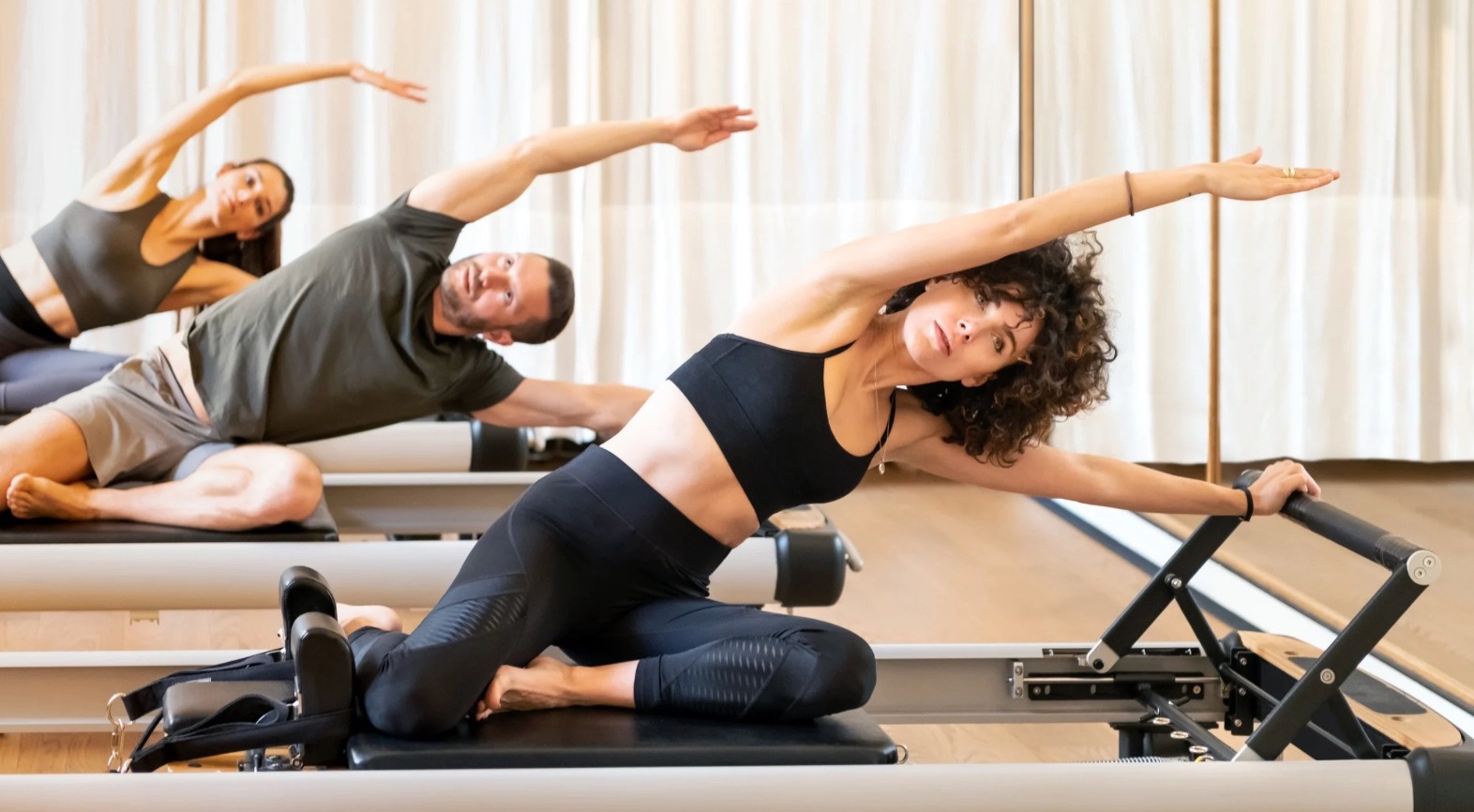
Pilates for Hypermobility: The Evidence, the Gap, and the First Decent Trial
What Is Hypermobility?
If you’re reading this with EDS or hypermobility spectrum disorder, you probably know this bit already, possibly better than I do in some cases. But the labels matter for reading the research, so bear with me while I lay them out.
Joint hypermobility means joints that move beyond the normal range. Somewhere between 3 and 20 percent of the population has this (estimates vary wildly depending on how you measure and what cutoff you use), and for most people it’s a benign trait. For some, it comes with pain, fatigue, joint instability, and a range of systemic symptoms.
The Beighton score is the most commonly used clinical tool for assessing hypermobility, giving a score out of 9 based on specific joint movements, and the Brighton criteria combine the Beighton score with symptoms to reach a diagnosis. The 2017 international reclassification (Malfait and colleagues) is the framework most researchers now use [24].
Under the 2017 framework, the relevant labels are: hypermobile Ehlers-Danlos syndrome (hEDS), which requires meeting specific genetic and clinical criteria; hypermobility spectrum disorder (HSD), which is the diagnosis for people who have symptomatic hypermobility but don’t fully meet hEDS criteria; and the older, pre 2017 label joint hypermobility syndrome (JHS), which many people diagnosed before 2017 still carry. These are clinically overlapping and diagnostically complex, and the research literature uses all three labels, sometimes interchangeably, which makes comparing studies difficult.
The Null Baseline
Until 2026, the controlled evidence base for Pilates in hypermobility was, by a generous reading, nothing, and by a strict reading, also nothing. I want you to understand how complete that gap actually was, because it changes how you read the recommendation that circulated for years about pilates being good for hypermobility.
A 2014 systematic review [19] covering the physio evidence for joint hypermobility syndrome found three clinical trials from the entire literature, three, and the total sample across all three was roughly 131 people, spanning a wrist splint crossover trial with four participants, a proprioception exercise RCT, and a children’s physiotherapy trial. Pilates was not mentioned anywhere in any of them, not once.
A 2018 review [20], applying tighter quality filters specifically to hEDS rehab, found one eligible study: a cohort of 12 women who completed a multidisciplinary rehab programme, rated poor quality on the Newcastle-Ottawa quality scale, with no control group. The authors’ conclusion was unambiguous: there was no evidence based medicine literature on hypermobile Ehlers-Danlos syndrome rehab. Not limited evidence. Not preliminary evidence. No evidence. Pilates was absent.
A 2020 review [16], the field’s most comprehensive pre 2021 synthesis, found 11 studies with roughly 600 participants across controlled trials and cohort studies, and no named exercise modality, including Pilates, appeared in any of the included studies. The conclusion was that controlled trial evidence for conservative management was ‘weak’, and that no modality could be recommended over another.
A 2021 review [17] restricted to RCTs only in hEDS found six trials, six, and the total sample across all six was 216 people. Durations ranged from four to eight weeks, and the interventions covered proprioception training, spinal stabilisation, combined exercise, and inspiratory muscle training, but Pilates appeared in none of them. A discrepancy between quality scores in two internal tables of this review was not acknowledged by the authors, and one of the included studies is a 2019 inspiratory muscle training RCT on which the lead author of the review was also an author. The structural set up, an author appearing on a paper included in a review they led, is the kind of thing a reader is entitled to weigh when interpreting that review’s quality ratings, independent of any COI declaration the published paper may or may not contain.
A 2023 scoping review [18] mapped the broadest available picture: 28 studies across 23 years, 630 participants, predominantly female, mean age around 26 years. Therapeutic exercise and motor function training were classified as ‘efficacious’, though a scoping review is not designed to formally establish efficacy the way a systematic review is, so that word carries less weight than it sounds, and Pilates was absent from all 28 studies, not underrepresented, absent.
The pattern across those five reviews is consistent. Not one of them found a trial that named Pilates as the intervention, and between them their searches cover the physiotherapy literature in this population back to 2000 [16][17][18][19][20]. Whatever anybody was told about Pilates being good for hypermobility over those years, it was not coming out of that literature. It was coming out of clinical habit, studio marketing, and people who had tried it and felt better.
Then, in 2026, the IMM trial happened, and that changed things.
The Russek/Di Bon 2026 Trial [22]
In 2026, a trial was published in the Journal of Multidisciplinary Healthcare that moved the evidence picture for the first time, not finally, not definitively, but for the first time, there was a study large enough to actually say something.
The ‘Strengthen Your Hypermobile Core’ programme is a 5 module video series based on the Integral Movement Method (IMM), developed by Jeannie Di Bon. The IMM is a modified Pilates approach designed specifically for people with symptomatic hypermobility, orienting exercises toward controlled range, proprioceptive awareness, and avoiding end range loading, and the programme is delivered online, asynchronously, meaning participants work through prerecorded videos at their own pace.
The trial enrolled 671 people, of these 420 completed analysis: roughly 200 in the Pilates group (allocated immediately) and 220 in the waitlist group (allocated to wait eight weeks before receiving the programme). Allocation was by order of sign-up, not by randomisation, because the first 268 to complete the intake surveys were placed in the immediate Pilates group and the rest went to the waitlist. This matters: it makes this a quasi experimental controlled trial, not a randomised controlled trial, despite the ‘pragmatic clinical trial’ label in the abstract.
The Pilates group improved on the Bristol Impact of Hypermobility (BIoH) questionnaire by a mean of around 25 points. To put that in plain terms: the formal effect size statistic (partial eta squared of 0.114) translates to a moderate to large effect, meaning the improvement was not marginal noise, it was a meaningful shift in the scores. Body awareness also improved significantly, kinesiophobia (fear of movement on the TSK-11) improved significantly within the Pilates group, but the between-group difference at 8 weeks was not significant and was below the 4-point clinically meaningful threshold, and physical activity levels did not change. Improvements in hypermobility impact and body awareness were sustained at 6 months in the Pilates group.
What’s good about this trial first, because there is real good here. This is, by some distance, the largest study of a Pilates programme in symptomatic hypermobility ever conducted, and it’s not close. The prior controlled evidence base peaked at 12 people in a single cohort study, and 420 analysed participants is an order of magnitude larger than anything that came before. The pragmatic design, delivered entirely online, is ecologically valid for how people actually access exercise in 2026, and the authors are commendably candid about every limitation. The statistically significant and sustained improvements in hypermobility impact and body awareness are meaningful signals.
Now the less good, because this matters for how much weight to put on the result.
The allocation method (order of sign-up) introduces self selection variables that random allocation would have controlled, because people who sign up early for a programme tend to be more motivated, more digitally connected, and potentially more familiar with the provider, and these characteristics also predict better exercise outcomes.
The comparator is a waitlist, and as we discussed in the methods primer, a waitlist is the weakest possible comparator. It captures expectation effects, natural variation over time, and the frustration of waiting (which can worsen symptoms), as well as the actual effect of not exercising. A strong comparator for this trial would have been an active intervention: an equivalent dose of generic online physiotherapy exercises, or a structured walking programme, or any other organised exercise delivered online three times a week. Without that, we cannot tell whether the result is specifically about this IMM programme, or about any structured online exercise programme delivered three days per week with attentive instruction.
Attrition was enormous: 671 enrolled, 420 analysed, which is 251 people who dropped out before contributing to the analysis, and of these, roughly 125 set up accounts but completed zero modules. Online exercise programmes routinely lose large proportions of participants, so this isn’t unique to this trial, by any means, but it does mean the result speaks to the motivated, adherent subgroup who stuck with it, not to everyone who tried.
Around 96-97 percent of participants were women (97.5 percent in the Pilates arm, 95 percent in the waitlist arm), so the findings cannot be generalised to men with hypermobility, something we see time and time again with research in the hypermobile space.
The intervention designer is a co-author and owns the intellectual property of the programme. This is properly declared in the paper, and the research team was responsible for data collection and analysis. However, a fully independent replication by a research group with no commercial stake in the programme would carry considerably more weight. This is how science normally works: the people who develop an intervention tend to run the first studies on it, and then independent groups replicate. The independent replication hasn’t happened yet, and until it does, this result carries the uncertainty that comes with all first studies.
The primary outcome (BIoH) was developed and validated by researchers connected to the same network that ran this trial. A 25 point improvement on a 360 point scale represents roughly 7 percent of the total scale range, and the MCID for the BIoH has not been firmly established in this population. Whether that 7 percent improvement translates to a meaningfully better morning or a meaningfully better day at work, we don’t yet know.
The qualitative companion study [23] gives us something useful, though. It explored what participants with hypermobility conditions actually experienced during the programme, using written survey responses analysed thematically, and the analysis identified four themes around facilitators and barriers (physical experience, mind body experience, instruction quality and accessibility, and physical and mental barriers) and two outcome themes (physical outcomes and mind body outcomes).
What participants valued: exercises specifically designed to avoid hyperextension and end range loading, the sense of psychological safety during exercise, accessible online format, and instructor credibility. What they found difficult: pain exacerbation (present in a meaningful minority, consistent with the roughly 17 percent adverse event rate in the quantitative trial), inability to modify exercises independently in real time, the range of ability levels the online format had to serve, and discouragement when symptoms fluctuated unpredictably.
The conflict of interest in this study is worth being clear eyed about. The second author developed the programme being studied, and that programme is her commercial intellectual property. A third author is affiliated with the commercial platform hosting the programmes. The lead author has disclosed being an unpaid scientific advisor to that same platform. These relationships are acknowledged in the paper, not hidden, but they are structural conflicts that make an independent replication important, not merely desirable.
What Those with Hypermobility Actually Need from Movement
Here’s where I want to slow down, because this is the bit that the marketing almost always gets wrong, and getting it wrong matters quite a lot if you’re someone with hEDS or HSD who’s been told to go try a pilates class. We’ve had people come to us who’ve been doing reformer pilates for two years and wondering why they feel worse, not better, and when you actually look at what they were doing in those sessions, the answer is usually obvious: light springs, fast tempo, lots of ‘go further’ cueing. All of the things that matter for proprioceptive retraining, done backwards.
Your brain works out where a joint is from the signal coming back off the mechanoreceptors in muscle, tendon, skin and joint capsule. That sense, proprioception, is what lets you catch your balance without looking at your feet, and what tells you a joint is heading somewhere it shouldn’t. Laxer connective tissue degrades that signal before it gets anywhere near the brain, because the tissue housing those receptors behaves differently under load. The reading is noisier, the prediction built on it is worse, and the protective response that follows arrives slightly late, or slightly wrong.
Strength on its own doesn’t fix that. You can build a lot of muscle around a hypermobile joint and still have it stray into ranges where the protection arrives late, because the shortfall was never how much force was available. It was how good the information was. What improves the information is slow, controlled, sensory rich movement at loads and ranges the joint can actually report on, done often enough to be worth something. That is a signal and strategy problem rather than a strength problem, and it is the part of the case for Pilates that genuinely holds. Precision, controlled range, attention to where the joint is, deliberate tempo: that is the right sort of input. The reason it isn’t any Pilates class is that a class built on going further, stretching more and maximising range spends most of its time in exactly the range the joint reports on worst. End range loading in a lax joint doesn’t sharpen anything.
In practical terms, the conditions under which Pilates is likely to help a hypermobile body are fairly specific: a knowledgeable instructor who understands connective tissue conditions, heavier reformer springs if using a reformer (which limit how far the carriage travels), slow tempo throughout, no cueing towards end range, private or very small group format, and several weeks of consistency before judging whether it’s working.
The conditions under which it’s likely to cause problems: group reformer in a trendy fitness studio, megaformer classes designed for athletic performance, any format where the instructor cues ‘go further’ or ‘feel the stretch’, deep spinal flexion drilled into joints that are already lax, fast tempo without attention to joint position.
The Hypermobility Verdict
The IMM trial is a genuine signal. It’s the first adequately powered study to test a Pilates programme in symptomatic hypermobility, and it shows meaningful improvements in how participants score their condition impact and body awareness, sustained over 6 months, and that is not nothing. In a field that had zero before, a first signal is important.
It is not the final word either, and the authors are candid about why. With a waitlist on the other side, the trial cannot separate this programme from any organised online exercise done three times a week with somebody credible on the screen. Nobody without a stake in it has repeated it. And the trial reports no established MCID for the BIoH in this population, so a 25 point improvement on a 360 point scale is a real number whose practical meaning the trial cannot tell you. “Pilates works for hypermobility” is a bigger sentence than one quasi experimental trial can carry.
What Pilates Misses: Motor Learning and Readiness Tone
There is something the standard Pilates recommendation misses, and it’s worth its own section. The case for Pilates in hypermobility rehab, such as it is, rests on slow, controlled, precise movement sharpening proprioception and motor control. That argument isn’t wrong. It’s incomplete, and what it leaves out is two of the things that matter most: how a movement actually gets learned, and what we call readiness tone.
Start with how a movement actually gets learned. The frame we teach from, and it is a frame rather than a law, describes an arc. First you freeze, locking down as many joints as you can and moving as one stiff unit, because cutting the number of things you have to manage is the safest strategy available when you’ve no good model yet. Think of somebody learning to ski: arms braced, knees welded together, getting down the hill on sheer tension. Then you free, as neighbouring joints start cooperating and it smooths out. Then you exploit, letting your own tissue and your own momentum do some of the work, which is what skilled movement actually is. The older stage models say much the same thing from the inside, from thinking about every step, to refining it, to it running on its own. Take any of them as a decent map rather than an explanation. A review of seven of these models found them built on quite different assumptions about what is being learned and how [25], so picking one and forgetting the rest is how people end up very confident about very little. The motor learning piece goes through the lot of them properly.
Here is the problem. A steady diet of slow, controlled, predictable Pilates, done the same way every session in the same room at the same tempo, trains the first part of that arc very well. It does much less for the middle, where errors start correcting themselves and the movement begins to be yours, and almost nothing for the end, where the pattern holds up while you’re tired, distracted, or carrying something awkward. Parking at the start, which we see constantly in rehab, keeps a movement safe in the studio and fragile everywhere else. What the nervous system has learned is how to do that exercise, in that room, at that speed.
The other half of it is variation, which is where the “vary it” advice in modern rehab comes from. The idea underneath is that your brain doesn’t save a recording of a movement. It builds a rule, then sets the speed, the force and the limb to suit whatever is in front of it, which is why you can sign your name on a whiteboard having only ever signed it on paper. If that’s right, practising a spread of versions should build a better rule than drilling one version. That idea gets sold with a lot more confidence than it has earned, so here is what a direct test of it looked like. Forty two university students spent four weeks learning to putt a golf ball. Everybody got better during training. At retention, one and three weeks later, the groups who had practised with variation held onto it and the group who had practised the identical thing did not, and the differences between the various amounts of variation came to nothing at all [26]. That is golf, in students, in one study, so take the direction and leave the number. The direction is modest and it is enough: some variation beats none, and there is no case for piling more on. A programme that runs the identical rep, at the identical speed, on the identical mat, every week, sits at the none end of that.
Real life doesn’t serve neat repetition. People trip on kerbs. They lift a toddler off the floor with their back half turned. They reach for something on a high shelf without setting up first. A body trained only on the slow, controlled and predictable will meet conditions that are faster, heavier or less expected, and there is no particular reason to expect the studio version of the movement to turn up when they do. Not because the training was harmful. Because it was one setting.
Readiness tone is the second gap, and it runs straight into what Pilates instructors actually say. The short version: can you produce the right amount of force, in the right muscles, at the right moment, and then let go of it again. That is not the same as active tone, which is the low level background activity the nervous system runs to keep you upright and ready. Active tone is about how much. Readiness is about how precisely, how quickly, and whether you can come back down again. One caveat, and it matters: readiness is a teaching idea, not a validated category, and if anybody offers to measure yours, they have made the measurement up. The muscle tone piece sets all three out.
The distinction matters here, because a hypermobile nervous system often isn’t short of tone at all. In pain free hypermobile adults doing nothing more demanding than standing still, the muscles on both sides of the knee were switched on together more than in the control group [27]. In hypermobile children landing from a jump, the calf took over a job the hamstring would normally do, and the muscles around the knee gripped harder in the moment before the foot hit the floor [28]. That is co contraction, and it is what gripping a joint between two opposing muscles looks like on a readout. Both are small studies of one task each, and neither of them says that every hypermobile body is braced everywhere all the time, which is a claim that gets made far too easily, including by us in the past. What they do point at is a grading problem rather than a shortage of effort. The system is managing the joint by squeezing it, which works, and which is exhausting.
Pilates instruction language runs straight into that. “Engage the core.” “Switch on your glutes.” All of it is aimed at producing more, layered onto a system that is often already squeezing. For somebody compensating by gripping, that can reinforce the pattern rather than train them out of it. The letting go is the harder half, and almost nothing in a standard class trains it. You end up with a person who switches on beautifully in a quiet studio and comes apart the moment conditions change, because the timing and the grading were never the thing being practised.
None of which means Pilates has no place. Early on, with an instructor who understands connective tissue and keeps the work away from end range, it delivers exactly the slow, attentive, information rich movement that a joint reporting badly needs, and that part is real. The mistake is treating the start of the arc as the whole programme, or expecting a method built on uniform, predictable movement to supply variation it was never designed to supply. On its own it is an incomplete answer to the actual problem. It works best as one part of something broader that also varies the conditions, and that trains the grading and the timing of muscle activity rather than only the generating of it.
Pilates for Fibromyalgia: What a Literature Built on a Pilot Study Looks Like
What Is Fibromyalgia?
Fibromyalgia is a complex chronic condition characterised by widespread musculoskeletal pain, fatigue, sleep disruption, and cognitive difficulties, or brain fog as most of the people I work with tend to call it. Current understanding frames it as a condition of central sensitisation, meaning the nervous system has become more reactive over time, so the same input from the body produces more pain than it once did. The American College of Rheumatology 2010 diagnostic criteria, which most modern trials use, rely on symptom severity scores rather than requiring a formal clinical examination of tender points.
FM affects roughly two to four percent of the population globally, predominantly women, though it also affects men, and there is no cure. The evidence supported management strategies include aerobic exercise, sleep improvement, cognitive behavioural therapy, and selected medications. Exercise, broadly, works, and the question for this section is whether Pilates specifically is the exercise to choose.
The Trials
Altan 2009 [10]
Right, so here’s the one where I need you to pay attention to how a study gets misused over time, because the FM pilates literature has been built almost entirely on this single paper, and the paper’s own title announces it as a pilot study. Pilot. That word means ‘designed to test feasibility and inform a future adequately powered trial, not to establish efficacy’. Not ‘this proves the thing works’. Not ‘cite freely as evidence’. A pilot. And yet here we are.
50 women with FM were randomly allocated to 12 weeks of supervised group Pilates three times a week, or a home relaxation and stretching programme monitored once monthly. At 12 weeks, the Pilates group had improved on pain, FIQ (the Fibromyalgia Impact Questionnaire, a 0 to 100 scale measuring how much fibromyalgia affects daily life), and quality of life, while the control group showed minimal change. Those improvements crossed the MCID for FIQ, but three months after stopping the sessions, the between group advantage had largely faded, and the effects required continued supervised exercise to be maintained.
Here is the methodological problem: no power calculation, no formal allocation concealment, no intention to treat analysis. The home exercise control was barely supervised, monitored by a single clinic visit once a month, which means the Pilates group received attentive group supervision three times a week while the control group received near nothing. Any benefit found in the Pilates group could reflect the effect of receiving structured exercise, group social contact, regular expert attention, and expectation, none of which are Pilates specific.
The fact that this study has been cited hundreds of times as evidence that Pilates ‘works’ for fibromyalgia tells you more about citation culture than it does about Pilates. A pilot study demonstrating a signal is reason to design a powered definitive trial, not reason to conclude efficacy. Fifteen years on, the most recent meta-analysis of this literature could still only find six trials to pool [14]. Historically significant as the first study, insufficient as evidence of efficacy, and it should be cited as a preliminary signal from a pilot, not as a demonstration that Pilates works for FM.
de Medeiros 2020 [12]
The strongest individual trial in this set. It didn’t ask whether Pilates beats doing nothing. It asked whether mat Pilates is equivalent to warm water aquatic aerobic exercise in Brazilian women with FM.
The design: 42 women, mat Pilates versus aquatic aerobic exercise at 31°C, 12 weeks, 2 sessions per week, registered protocol (ClinicalTrials.gov), sealed opaque envelopes for allocation, blinded assessor, blinded statistician, and intention to treat analysis. For the FM Pilates literature, this is methodologically exemplary, and here is what they found: both groups improved significantly in pain and overall FM impact, with no statistically significant between group differences on any outcome. Some differential patterns: quality of life and fear avoidance improved more in the Pilates group, while sleep quality and pain catastrophising improved more in the aquatic group, but these differential effects came from groups of only 21 women each and require replication before being taken seriously.
The headline is the between group null finding: mat Pilates and warm water exercise produced comparable outcomes, and this is a positive finding for Pilates in the specific sense that aquatic aerobic exercise has one of the most well established evidence bases for FM, and demonstrating equivalence to it, in a properly controlled trial, is a meaningful result. The limitation is that neither arm is compared to no exercise, and we cannot attribute the improvement to either programme specifically, versus the nonspecific effects of structured supervised exercise with regular expert contact.
Çağlayan 2021 [11]
This one set one to one clinical Pilates against group clinical Pilates in women with FM. There is no no treatment arm, both groups got Pilates, so the question is delivery format rather than whether Pilates works at all.
Both arms improved on FIQ above the MCID, with large effect sizes (both groups produced an effect size above 1, meaning the improvement was roughly equivalent to a full standard deviation shift in scores, which is large), and the one to one arm showed a somewhat larger FIQ improvement than the group arm, with this between group difference being statistically significant.
But 12 of the 28 originally enrolled in the one to one arm dropped out before the study ended, leaving 16 who completed it, mostly because fixed individual scheduling was incompatible with their work obligations, while only 2 of the 28 in the group arm dropped out, leaving 26 completers. This asymmetric dropout means the one to one completers are almost certainly a motivated, schedule flexible subgroup, not representative of who would generally attend individual Pilates for FM, and the advantage of one to one over group is likely inflated by this survivorship bias.
The practical takeaway from this study is actually that group format retains participants better than individual scheduling in working age women with FM, which is useful information for service planning. The FIQ improvements above MCID in both arms, against no control group, tell us that supervised Pilates is associated with symptom improvement, but cannot attribute that improvement to the method rather than to the supervision, the attention, or the expectation.
Eseoğlu 2024 [13]
This was a Turkish trial of 30 sedentary women with FM comparing mat Pilates against electromuscular stimulation exercise over 8 weeks. Both groups improved, and there were no significant between group differences on primary outcomes. The sample is far too small to draw conclusions from, and EMS is not a standard or guideline recommended FM treatment. This is a comparison between two relatively unestablished interventions in a very small group, interesting as a proof of concept that EMS might warrant further investigation, but contributing very little to the Pilates for FM evidence base.
Nithuthorn 2024 Meta-analysis [14]
This is the most comprehensive meta-analysis of the FM Pilates literature available, covering six RCTs and 265 participants total (this is the entire global evidence base pooled), which is approximately the sample size of a single small phase II drug trial.
The headline FIQ finding: pooled mean difference of 7.28 points on the 100 point scale (statistically significant). But the variability between the included studies was extreme: I² of 95.7 percent. To put this plainly: when the I² sits at 95.7 percent, it means almost all of the variation in results between studies comes from the studies being fundamentally different from each other, not from chance, and that level of inconsistency makes the pooled number misleading rather than informative.
The sensitivity analysis restricted to the three trials using current ACR 2010 diagnostic criteria (176 participants, I² of zero, which is excellent) produced an FIQ improvement of around 7.7 points, sitting right at the MCID boundary. This is the more credible finding, and it suggests that in people diagnosed under current criteria, supervised Pilates may produce FIQ improvements that just cross clinical significance. The meta-analysis also included Altan 2009, the pilot study, as an efficacy trial, and including a pilot in an efficacy meta-analysis compounds the original methodological error.
On pain (VAS), the pooled improvement was about 0.7 points on a 10 point scale, statistically significant but well below the roughly 2 point MCID for FM pain, and the tender point and algometric score outcomes showed no significant effect. Valuable as a systematic catalogue of the evidence, which clearly shows how thin the base is. The headline FIQ result is undermined by extreme heterogeneity, and the sensitivity analysis is more credible.
Rodríguez-Domínguez 2025 NMA [15]
The largest and most methodologically sophisticated synthesis in the FM exercise literature: 51 RCTs, nearly 2,900 women, 15 different exercise types, network meta-analysis (NMA) comparing them against each other directly and indirectly. Pilates ranked second for short term pain reduction, behind aquatic exercise, and resistance training dominated for long term outcomes.
But the Pilates node in this network is based on only two studies, one of which is the Altan 2009 pilot, and the confidence interval for the Pilates estimate spanned 32 points on a 100 point scale, which reflects just how thinly the evidence is spread. The evidence quality for Pilates was formally rated Low by the CINeMA framework. The short term heterogeneity across the whole network was I² of 84.7 percent (extreme), and the transitivity assumption, the formal requirement that trials’ populations are comparable enough to allow indirect comparisons, was tested and not formally rejected, but with this much heterogeneity across the network, the assumption is fragile.
The most comprehensive synthesis available, and it ranks Pilates well for short term pain, but that ranking rests on two trials (one a pilot), rates the evidence as Low quality, and comes with a confidence interval wide enough to drive a reformer through. No long term Pilates data existed in this network at all.
The Fibromyalgia Verdict
Let me be specific about what the FM Pilates literature can and can’t support.
Short term supervised group Pilates, 8 to 12 weeks, produces FIQ improvements that often cross the MCID in women with FM, and that is the clearest positive finding, but those effects wash out rapidly after sessions stop: Altan 2009 showed this clearly, and no subsequent trial has demonstrated durable benefit beyond a few months after stopping. None of the pooled trials showed superiority over other structured supervised exercise, and the best head to head comparison in the set, against aquatic aerobic exercise, found equivalence [12]. A protocol for a proper head to head trial of modified Pilates against aerobic exercise in fibromyalgia, cost effectiveness analysis attached, was published back in 2019 [21]. That is the comparison this literature actually needs.
The mechanism is most plausibly general, with exercise induced descending pain modulation (the brain’s natural pain dampening system, activated by aerobic exercise), sleep improvement, and reduction in fear avoidance are all plausible contributors, and none of these mechanisms are Pilates specific. Aquatic exercise has at least as good evidence and possibly better. Aerobic exercise broadly has stronger long term evidence, and resistance training dominates for long term outcomes in the best available synthesis.
The entire global FM Pilates literature pools to around 265 participants across six trials. To put that in perspective, a single phase III drug approval trial for a chronic condition typically requires hundreds of participants per arm, so this literature is, in drug trial terms, pre phase III. It’s hypothesis generating, not practice defining, and most of the commentary walks straight past that. “Do pilates, it’s evidence based” is the sort of line that gets said. The evidence is thinner than the sentence.
Every trial in that pooled set was run in Brazil or Turkey [14]. Context matters: healthcare systems differ, what else somebody is being prescribed differs, and so do attitudes to exercise as a treatment.
What Good Research in This Space Would Look Like
At some point in the next several years, you’ll probably see new trials on Pilates for hypermobility or FM, and here is how to spot the ones worth taking seriously.
The sample size needs to be adequate. That means well above 100 per arm, ideally more. The IMM trial at 200 per arm is a start, and for a definitive trial that could shift clinical guidelines, you’d want larger.
The comparator needs to be active. Waitlists and booklets tell us Pilates beats near inactivity, which is a low bar. The question worth answering is whether Pilates beats generic supervised exercise, yoga, or any other organised movement practice at a matched dose.
Follow up needs to be long. Twelve months minimum, ideally 24. FM and hypermobility are lifelong conditions, and a trial measuring outcomes at 6 to 12 weeks tells us about acute responses, not about how to manage something you’ll have for decades.
The intervention needs to be described precisely. Which type of Pilates? Mat or reformer? What dose, what frequency, what instructor qualifications? A trial called ‘Pilates RCT’ where the sessions run from 30 minutes to 90 minutes at one to three times per week with instructors of varying qualifications is not testing one intervention, it’s testing a category.
The trials need to be independent. A research team with commercial stakes in the programme they’re testing will produce the first studies, and those studies are worth reading. But the field needs independent groups with no relationship to the programme developer to replicate the findings.
UK or Western European population data would be useful. The current literature is almost entirely Brazilian and Turkish, and people with FM in the UK are likely on different medication combinations, have different healthcare access, and were diagnosed under different criteria from people recruited through Brazilian hospitals. What works in Rio Grande do Norte may or may not generalise to Bradford.
Prespecify the MCID. Tottoli 2024 did this and should be praised for it. Prespecifying what counts as a clinically meaningful result before collecting data prevents post hoc reframing of null results as positive.
Before getting excited about a headline finding, these are the questions to ask: what was the comparator, was the MCID prespecified, was the trial independent, and how many participants actually completed the study?
Practical: If You’re Going to Try Pilates
For Chronic Low Back Pain
Pilates is a reasonable exercise choice, and the evidence supports it over doing very little. It is probably not meaningfully superior to other structured supervised exercise at an equivalent dose, and the exercise you do consistently will beat the theoretically superior exercise you don’t do. Given a choice between Pilates and another supervised class you actually like, take the one you’ll turn up to.
Twice a week appears to be the sweet spot from the dose response literature [3], because once a week produces smaller gains while three times a week offers no additional benefit over twice per week on pain and disability outcomes.
Don’t expect the effects to persist if you stop, because the maintenance problem is consistent across all the trials, and if exercise is the treatment, continuing exercise is the treatment continuing.
For Hypermobility
This is where instructor quality matters most, because Pilates done badly can worsen things. Start private if you can, find an instructor who understands connective tissue conditions and knows the difference between controlled range and maximised range. If using a reformer, heavier spring settings (which resist the carriage and limit range) are generally better than light spring settings. Avoid formats that cue towards end range loading or flexibility maximisation, and aim for slow, deliberate, precision focused movement throughout.
Give it 6 to 8 weeks of consistent attendance before judging, because proprioceptive retraining takes time, and you’re not going to feel different after two sessions.
Be realistic about online programmes, because the IMM trial shows online delivery can work [22], but the inability to get real time correction when your technique drifts is a genuine limitation, particularly when technique precision is the therapeutic mechanism.
For Fibromyalgia
Any consistent supervised exercise helps. The evidence for Pilates specifically is limited and geographically skewed, but the signal is positive for short term symptom improvement. Aquatic exercise has equivalent or possibly better evidence and may be a better first option if it’s accessible to you. Pick what you’ll actually attend regularly, because the exercise you consistently do will always outperform the theoretically superior exercise you quit after three weeks.
Group format retains participants better than individual scheduling in the FM literature [11], and supervised exercise generally outperforms unsupervised home exercise, at least in the short term, so both observations support looking for a group class rather than a home programme, if group exercise is accessible.
Across All Three Conditions
Instructor quality matters more than the modality. A knowledgeable instructor running a small, attentive Pilates class where they know your history and can modify for your specific joints is a meaningfully different intervention to a large group reformer class where the instructor doesn’t know your name, and the research literature blurs this distinction constantly. You shouldn’t.
Be sceptical of any programme making remarkable claims about what Pilates can do for complex chronic conditions. The evidence is encouraging in places, modest in others, and absent for some of the specific claims, and you now have enough context to spot the difference.
Frequently Asked Questions
Is Pilates evidence based for hypermobility?
This requires a careful answer, and I’ll give you a careful one.
Before 2026, the honest reply was: no, there is no controlled evidence specifically for Pilates in hypermobility, not thin evidence, no evidence. Every systematic review covering this population confirmed that Pilates as a named intervention did not appear in any included trial.
The 2026 IMM trial [22] changed this, partially, and it is now possible to say: there is one reasonably large study showing improvements in hypermobility impact scores and body awareness after an 8 week online Pilates programme, with effects sustained at 6 months, which is a meaningful upgrade from nothing. But it’s a single study, with a quasi experimental design, a waitlist comparator, enormous attrition, around 96-97 percent female participants, and a structural conflict of interest (the programme developer is a co-author). Evidence based in the full clinical sense requires independent replication with an active comparator, and we’re not there yet. Theoretically sound, and now with a first promising signal: that’s the accurate characterisation.
What does the IMM trial actually tell us?
It tells us that an online, asynchronous Pilates programme designed specifically for hypermobility, delivered over 8 weeks with a target of three sessions per week, produces measurable improvements in how participants score their condition impact and body awareness, compared to a waiting period. It also tells us that physical activity levels don’t change, and that kinesiophobia (fear of movement) improved significantly within the Pilates group but the between-group difference was not statistically significant and didn’t cross the 4-point clinically meaningful threshold.
What it cannot tell us is whether those improvements are due specifically to the IMM approach, or to any organised online exercise programme delivered with equivalent frequency and attention. The trial has no active comparator, and improvements above a waitlist could reflect the effect of structured movement, the effect of community belonging in a programme designed for people like you, the effect of expectation, or any combination or even all three.
The qualitative companion [23] adds texture: participants valued the hypermobility specific design, the emphasis on not pushing into end range, and the sense of being understood, and these are specific features that generic exercise wouldn’t provide. But that qualitative finding is generated by a study co-authored by the programme developer. The honest verdict: encouraging first evidence in a previously empty field, and independent replication is needed before stronger claims can be made.
Is reformer or mat Pilates better?
The research literature has not answered this clearly, and mat Pilates and apparatus Pilates (reformer) were compared in postmenopausal women with LBP [4] and no significant difference was found between the two formats, only that both were better than physiotherapy alone (with the caveat that the effect sizes in that study were implausibly large).
At a mechanistic level, reformer Pilates offers adjustable spring resistance, which for a hypermobile body is actually useful: heavier springs limit the range of motion and provide more resistance throughout the movement, which can improve the quality of proprioceptive input without allowing end range loading. This is a theoretical advantage for the hypermobility population specifically.
For FM, the most rigorous trial [12] used mat Pilates and found equivalence to aquatic aerobic exercise, and most FM research has used mat based protocols.
In practice, reformer is more expensive to access, requires specialist equipment, and has higher entry barriers, while mat Pilates is accessible almost anywhere. The evidence does not support paying significantly more for reformer over mat, and the quality of instruction and the specificity of the approach to your condition matters more than whether there’s a carriage.
How often should I do Pilates?
For LBP, the dose response literature [3] suggests twice per week is the sweet spot. Once a week produces smaller but still statistically meaningful benefits, and three times a week offers no measurable advantage over twice per week on pain and disability, which is probably the most practically useful single finding in the CLBP Pilates literature.
For hypermobility and FM, we don’t have equivalent dose response data. The IMM trial targeted three sessions per week, and the FM trials ranged from two to three sessions per week. Two to three supervised sessions a week, sustained for 8 to 12 weeks, is the dose that produced the findings we do have. Below that, none of these trials tested it.
Will Pilates make my hEDS or HSD worse?
It depends almost entirely on how it’s delivered, and Pilates that avoids end range loading, moves at a controlled tempo, uses spring settings that resist rather than encourage range of motion, and is taught by an instructor who understands connective tissue conditions is unlikely to cause harm and may produce genuine benefit based on the IMM trial evidence [22].
Pilates in a group reformer class with light springs, fast tempo, and cueing towards maximal range can absolutely worsen hypermobility symptoms. The emphasis on ‘stretching further’ and ‘feeling the range’ that characterises fitness oriented Pilates is the opposite of what hypermobile joints need, and the qualitative data from the IMM study [23] shows that participants specifically valued the absence of end range cueing and the emphasis on controlled range.
So: condition specific clinical Pilates with a knowledgeable instructor, probably not harmful and potentially helpful. General fitness reformer Pilates with high volume, high speed classes: worth being genuinely cautious, not just cautious as a disclaimer.
Is Pilates better than yoga for fibromyalgia?
There is no adequately powered head to head trial: one study comparing Pilates to yoga for FM found Pilates superior for FIQ by about 14 points, but that was a single small study included in the Nithuthorn 2024 meta-analysis [14], and the meta-analysis as a whole was undermined by extreme heterogeneity (I² of 95.7 percent) for the FIQ outcome.
The network meta-analysis [15] covers 15 exercise types but doesn’t include yoga as a distinct node in most analyses. The honest answer: we don’t have the data to say. Both involve supervised movement, progressive loading, and attentive instruction, and both have some theoretical rationale in FM. The variable that matters is which one you’ll attend and which your symptoms tolerate, because neither has a clear evidence advantage over the other.
I had a bad experience in a reformer class. Does that mean Pilates isn’t for me?
Almost certainly not. A bad experience in a large group reformer class with a generic programme and limited individual attention means that specific format isn’t for you, because the word ‘Pilates’ covers a huge range of actual experiences, from one to one clinical rehab to 20 person megaformer circuits, and these are not the same intervention.
If you have hypermobility or a chronic pain condition, a general fitness studio reformer class is not the appropriate starting point. It wasn’t designed for you and the instructor likely wasn’t trained for your situation. A negative experience there doesn’t tell you anything about whether a properly adapted clinical Pilates programme with a knowledgeable practitioner would help. Finding the right practitioner is the first step, not finding the right equipment.
In Closing
Look, the Pilates industry is large, mostly well intentioned, and full of instructors who genuinely care about the people they work with. I’ve met plenty of them. Some are excellent clinicians in everything but name. The evidence base it operates within is more complicated, and more limited, than the industry’s marketing suggests, and I think it’s important to say that plainly rather than dress it up.
Pilates beats doing very little for chronic low back pain, and it doesn’t appear to beat other structured supervised exercise. The core strengthening mechanism hasn’t been confirmed, and effects fade when sessions stop. For fibromyalgia, the short term FIQ improvements are real, but the studies that show them are small, geographically concentrated, and built on a foundation that starts with a pilot study being misused as efficacy evidence for 15 years. For hypermobility, we now have a first signal from a reasonably large study, with all the caveats that a first signal deserves.
None of this means Pilates doesn’t work, it means the evidence is interesting, the picture is complicated, and the claims sometimes run ahead of what the data actually shows.
There is a particular pattern in this literature worth naming explicitly: the tendency for secondary sources, whether that’s practitioners, health writers, or social media accounts, to cite the headline finding from a study without engaging with the limitations section. You’ll see ‘Pilates reduces pain in fibromyalgia’ sourced to Altan 2009 without any mention of the fact that this was a pilot study of 50 people with a barely supervised control group, run 15 years before an adequately powered replication appeared. You’ll see ‘studies show Pilates improves hypermobility’ when, until 2026, not a single study had tested it in that population at all. The gap between what a study shows and what people say it shows is where most of the misinformation lives.
In practice, the people making these claims are not, for the most part, being deliberately dishonest. They genuinely believe Pilates helps, often because they’ve seen it help people, and clinical experience is real data, lived experience is real data. But neither is a substitute for a well designed controlled trial, and conflating them is how an industry ends up marketing a method as definitively evidence based when the honest characterisation is ‘promising, with a lot of unanswered questions’.
What you now have is, and I appreciate that this is a long article to get here, enough context to evaluate new claims critically. When a practitioner tells you the research shows Pilates is evidence based for your condition, you can ask: which studies, what comparator, did the results reach clinical significance, how long was the follow up? Those questions will, rapidly, separate honest practitioners from ones who are leaning on the general reputation of a method rather than specific evidence.
The research is moving. The IMM trial is a real development, and the FM network meta-analysis is the most comprehensive synthesis this literature has produced, and more and better studies are coming. When they arrive, you’ll be able to read them properly.
That’s the actual goal here: not ‘do Pilates’ or ‘don’t do Pilates’, but understanding what the evidence shows, understanding how to read it, and making better decisions with that knowledge.
The same gap between headline and detail turns up in why traditional strength training often falls short for hypermobile bodies and in the broader evidence on exercise and fibromyalgia. And if what’s actually stopping you is hesitation rather than a shortage of evidence, that is a different problem, dealt with in why fear of movement develops and what helps.
References
[1] Rydeard, R., Leger, A., Smith, D. (2006) Pilates-Based Therapeutic Exercise: Effect on Subjects With Nonspecific Chronic Low Back Pain and Functional Disability: A Randomized Controlled Trial. Journal of Orthopaedic & Sports Physical Therapy, 36(7), 472-484. doi: 10.2519/jospt.2006.2144
[2] Miyamoto, G.C., Costa, L.O.P., Galvanin, T. et al. (2013) Efficacy of the Addition of Modified Pilates Exercises to a Minimal Intervention in Patients With Chronic Low Back Pain: A Randomized Controlled Trial. Physical Therapy, 93(3), 310-320. doi: 10.2522/ptj.20120190
[3] Miyamoto, G.C., Franco, K.F.M., van Dongen, J.M. et al. (2018) Different doses of Pilates-based exercise therapy for chronic low back pain: a randomised controlled trial with economic evaluation. British Journal of Sports Medicine, 52(13), 859-868. doi: 10.1136/bjsports-2017-098825
Read More[4] Cruz-Díaz, D., Martínez-Amat, A., Osuna-Pérez, M.C. et al. (2016) Short- and long-term effects of a six-week clinical Pilates program in addition to physical therapy on postmenopausal women with chronic low back pain: a randomized controlled trial. Disability and Rehabilitation, 38(13), 1300-1308. doi: 10.3109/09638288.2015.1090485
[5] Tottoli, C.R., Ben, Â.J., da Silva, E.N. et al. (2024) Effectiveness of Pilates compared with home-based exercises in individuals with chronic non-specific low back pain: Randomised controlled trial. Clinical Rehabilitation, 38(11), 1495-1505. doi: 10.1177/02692155241277041
[6] Wells, C., Kolt, G.S., Marshall, P. et al. (2014) The Effectiveness of Pilates Exercise in People with Chronic Low Back Pain: A Systematic Review. PLoS ONE, 9(7), e100402. doi: 10.1371/journal.pone.0100402
[7] Patti, A., Bianco, A., Paoli, A. et al. (2015) Effects of Pilates Exercise Programs in People With Chronic Low Back Pain. Medicine, 94(4), e383. doi: 10.1097/MD.0000000000000383
[8] Yamato, T.P., Maher, C.G., Saragiotto, B.T. et al. (2015) Pilates for low back pain. Cochrane Database of Systematic Reviews, 2015(7). doi: 10.1002/14651858.CD010265.pub2
[9] Franks, J., Thwaites, C., Morris, M.E. (2023) Pilates to Improve Core Muscle Activation in Chronic Low Back Pain: A Systematic Review. Healthcare, 11(10), 1404. doi: 10.3390/healthcare11101404
[10] Altan, L., Korkmaz, N., Bingol, Ü., Gunay, B. (2009) Effect of Pilates Training on People With Fibromyalgia Syndrome: A Pilot Study. Archives of Physical Medicine and Rehabilitation, 90(12), 1983-1988. doi: 10.1016/j.apmr.2009.06.021
[11] Çağlayan, B.Ç., Keskin, A., Gür Kabul, E. et al. (2021) Effects of clinical Pilates exercises in individuals with fibromyalgia: A randomized controlled trial. European Journal of Rheumatology, 8(3), 150-155. doi: 10.5152/eurjrheum.2020.20037
[12] de Medeiros, S.A., de Almeida Silva, H.J., do Nascimento, R.M. et al. (2020) Mat Pilates is as effective as aquatic aerobic exercise in treating women with fibromyalgia: a clinical, randomized and blind trial. Advances in Rheumatology, 60(1). doi: 10.1186/s42358-020-0124-2
[13] Eseoğlu, İ., Yılmaz, A., Anıl, B. et al. (2024) Effects of Electro-Muscle Stimulation Exercise Combined with Mat Pilates on Pain, Anxiety, and Strength in Sedentary Females with Fibromyalgia: A Single-Blind Randomized Controlled Trial. Journal of Personalized Medicine, 14(7), 697. doi: 10.3390/jpm14070697
[14] Nithuthorn, C., Chaipichit, N., Jeeraaumponwat, T. et al. (2024) Effect of Pilates on Pain and Health-Related Quality of Life in Fibromyalgia Patients: A Systematic Review and Meta-Analysis. Journal of Clinical Medicine, 13(23), 7447. doi: 10.3390/jcm13237447
[15] Rodríguez-Domínguez, Á.J., Rebollo-Salas, M., Chillón-Martínez, R. et al. (2025) The most effective therapeutic exercises for pain intensity in women with fibromyalgia: A systematic review and network meta-analysis. Brazilian Journal of Physical Therapy, 29(4), 101226. doi: 10.1016/j.bjpt.2025.101226
[16] Palmer, S., Davey, I., Oliver, L. et al. (2020) The effectiveness of conservative interventions for the management of syndromic hypermobility: a systematic literature review. Clinical Rheumatology, 40(3), 1113-1129. doi: 10.1007/s10067-020-05284-0
[17] Reychler, G., De Backer, M., Piraux, E. et al. (2021) Physical therapy treatment of hypermobile Ehlers-Danlos syndrome: A systematic review. American Journal of Medical Genetics Part A, 185(10), 2986-2994. doi: 10.1002/ajmg.a.62393
[18] Garreth Brittain, M., Flanagan, S., Foreman, L. et al. (2023) Physical therapy interventions in generalized hypermobility spectrum disorder and hypermobile Ehlers-Danlos syndrome: a scoping review. Disability and Rehabilitation, 46(10), 1936-1953. doi: 10.1080/09638288.2023.2216028
[19] Smith, T.O., Bacon, H., Jerman, E. et al. (2014) Physiotherapy and occupational therapy interventions for people with benign joint hypermobility syndrome: a systematic review of clinical trials. Disability and Rehabilitation, 36(10), 797-803. doi: 10.3109/09638288.2013.819388
[20] Corrado, B., Ciardi, G. (2018) Hypermobile Ehlers-Danlos syndrome and rehabilitation: taking stock of evidence based medicine: a systematic review of the literature. Journal of Physical Therapy Science, 30(6), 843-847. doi: 10.1589/jpts.30.847
[21] Franco, K.F.M., Franco, Y.R.d.S., Salvador, E.M.E.S. et al. (2019) Effectiveness and cost-effectiveness of the modified Pilates method versus aerobic exercise in the treatment of patients with fibromyalgia: protocol for a randomized controlled trial. BMC Rheumatology, 3(1). doi: 10.1186/s41927-018-0051-6
[22] Russek, L.N., Di Bon, J., Herbland, A., Higgins, C.V.Z., Jandrew, T.R., Adams, A.M., Simmonds, J. (2026) An Online Pilates Program for People with Hypermobility: A Pragmatic Clinical Trial Looking at Function, Interoception, Kinesiophobia, and Physical Activity Levels. Journal of Multidisciplinary Healthcare, 19. doi: 10.2147/JMDH.S564972
[23] Russek, L.N., Di Bon, J., Simmonds, J., Nation, C.S., Higgins, C.V.Z., Jandrew, T.R. (2025) A qualitative study exploring participants’ feelings about an online pilates program designed for people with hypermobility disorders. Journal of Bodywork and Movement Therapies, 42, 1148-1158. doi: 10.1016/j.jbmt.2025.03.002
[24] Malfait, F., Francomano, C., Byers, P., et al. (2017) The 2017 international classification of the Ehlers-Danlos syndromes. American Journal of Medical Genetics Part C, 175(1), 8-26. doi: 10.1002/ajmg.c.31552
[25] Schöllhorn, W.I., Rizzi, N., Slapšinskaitė-Dackevičienė, A., Leite, N. (2022) Always Pay Attention to Which Model of Motor Learning You Are Using. International Journal of Environmental Research and Public Health, 19(2), 711. doi: 10.3390/ijerph19020711
[26] Schmidt, M., Kemena, M., Jaitner, T. (2021) Null Effects of Different Amounts of Task Variation in Both Contextual Interference and Differential Learning Paradigms. Perceptual and Motor Skills, 128(4), 1836-1850. doi: 10.1177/00315125211022302
[27] Greenwood, N.L., Duffell, L.D., Alexander, C.M., McGregor, A.H. (2011) Electromyographic activity of pelvic and lower limb muscles during postural tasks in people with benign joint hypermobility syndrome and non hypermobile people. A pilot study. Manual Therapy, 16(6), 623-628. doi: 10.1016/j.math.2011.07.005
[28] Junge, T., Wedderkopp, N., Thorlund, J.B., Søgaard, K., Juul-Kristensen, B. (2015) Altered knee joint neuromuscular control during landing from a jump in 10-15 year old children with Generalised Joint Hypermobility. A substudy of the CHAMPS-study Denmark. Journal of Electromyography and Kinesiology, 25(3), 501-507. doi: 10.1016/j.jelekin.2015.02.011