

- Why ADHD and Hypermobility Keep Turning Up Together - 16 September 2026
- Hypermobility and Early Development: Milestones, Motor Delay, and Predictions - 12 September 2026
- Fibromyalgia and Itching: Why It Happens, What the Science Actually Says, and What You Can Do About It - 9 September 2026
This article is part of our comprehensive guide to living with fibromyalgia.
We have some fantastic news to share with you all around some fibromyalgia self-defence, which we know is going to be absolutely brilliant for our clients!
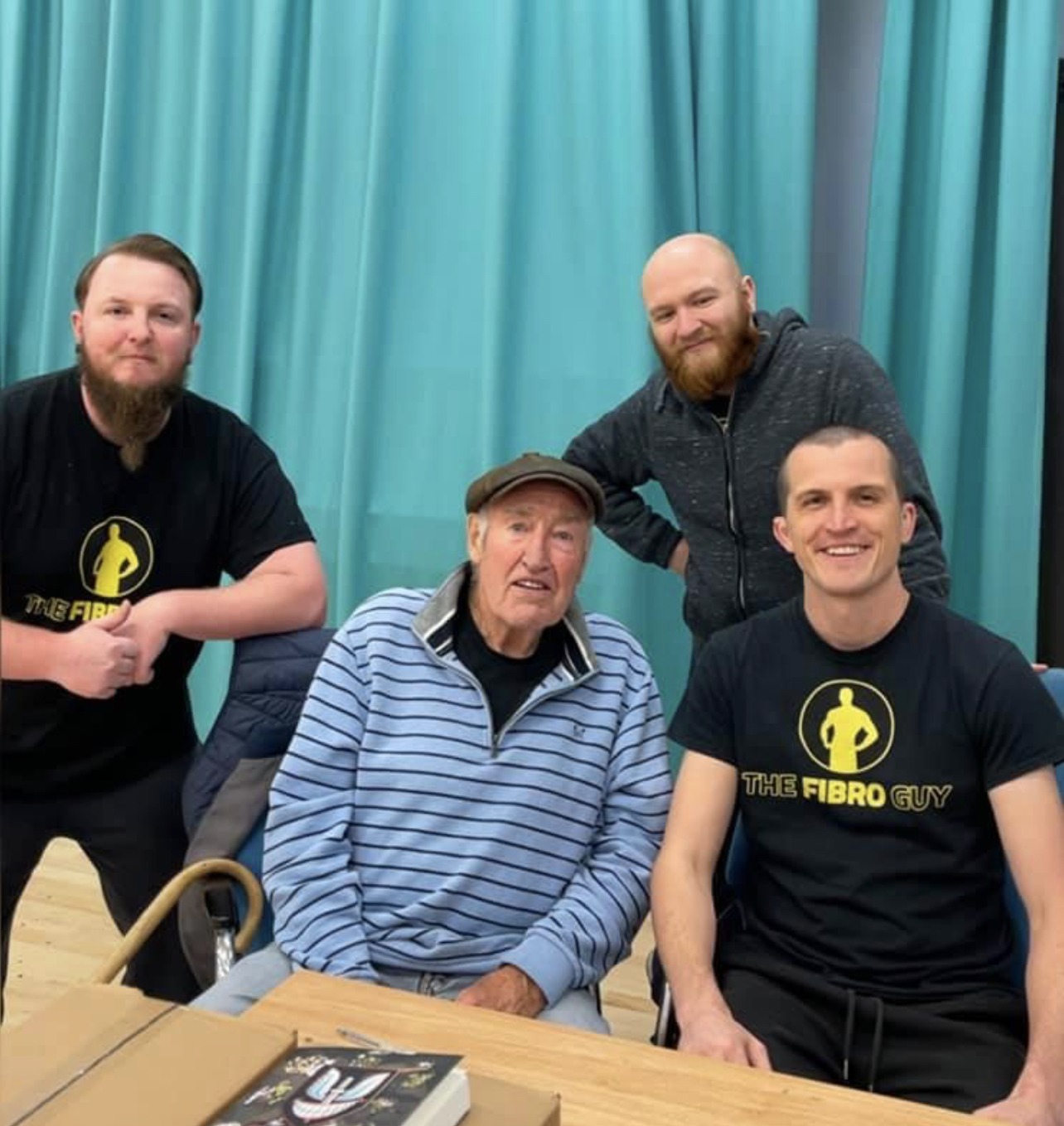
This weekend was the first time that practitioners from all studios have been able to meet in person whilst on a course. At our course, we even got to meet SAS legend “Lofty” Wiseman. As you’ll know, Adam is ex-Army, so this was a great honour.
But what course were we on, and more importantly why?
*Before we go any further, we would like to warn you that some of the information below may be traumatic and may cause distress because of its nature:
*Trigger warning: Domestic Abuse*
As you all know, we work with individuals diagnosed with chronic pain conditions every single day. Things like trauma can play a huge part when it comes to chronic pain. With working with as many people as we do, we often identify patterns.
One such pattern is previous Domestic Abuse in some of our clients’ history.
Pain is thought to be more common among survivors of violence because traumatic events appear to physiologically lower their pain thresholds [1]. Neurons have the capacity to change function, chemical profile, or structure because of neuronal plasticity.
Traumatic events can trigger these physiologic changes, and create a hypersensitivity to subsequent stimuli.
Hypersensitivity often translates into increased pain. Some consider this hypersensitivity a major evolutionary advantage, in that it makes an individual more aware of potential danger. However, the increased pain that accompanies hypersensitivity makes day-to-day living difficult for women who have experienced violence [2].
Research published since the blog was first written has strengthened this picture considerably. A 2021 UK primary care cohort study found that women exposed to domestic abuse had significantly higher rates of fibromyalgia and other central sensitisation syndromes compared to those without such a history [3]. A systematic review and meta-analysis from 2024 confirmed that women with a history of violence have approximately twice the odds of developing chronic pain (OR 2.08, 95% CI 1.80-2.41) and 1.68 times the odds of developing fibromyalgia specifically [5].
It can limit the activities that our clients participate in, inhibit their ability to exercise, work, or perform basic household tasks, and even make it difficult to care for children.
Chronic pain can also interfere with sleep, making daytime fatigue a problem too. Indeed, chronic pain can influence every aspect of a person’s life.
With our programmes the aim is recovery, simply put, to allow you to enjoy your life and feel more confident day to day.
This is why we feel that training in Fibromyalgia self-defence is a fantastic opportunity for our clients to feel safer and more capable, whilst doing their programmes and afterwards; especially for those who do come from a background of abuse.
We fully understand the implications that abuse can have on an individual, and we have made a lot of steps recently to be able to fully support our clients from this background, to the best of our ability. We feel that our programmes and approaches are truly trauma-informed. So, with all this being said, we are extremely excited to announce some major changes to The Fibro Guy going forward:
1. Fibromyalgia self defence: Each studio now has a BTEC Level 3 qualified self-defence instructor for any clients that wish to learn practical skills to keep them safe and who wish to feel more confident. We recently underwent self-defence training with the UK’s leading self-defence training provider, “NFPS Ltd”, guided by Mark Dawes and his fantastic team, alongside input from SAS legends “Ginge” Johnson and “Lofty” Wiseman.
The world at the moment is not a safe place, mostly (and sadly) for women. With the recent deaths of Sarah Everard and the 80+ women since that received little of the same public attention, we here at The Fibro Guy know that the world needs a colossal shift to allow women to feel safe and to not have to live their lives in fear. We want to make sure that we can play our part in making women feel safe not just in our personal lives, but whilst also at work. That’s why from now on, all our clients can receive self-defence lessons free of charge included in their programmes.
It’s worth noting that movement-based training is also increasingly supported by the research when it comes to fibromyalgia specifically. A 2024 systematic review and meta-analysis found that traditional martial arts training (including Tai Chi and Qigong) significantly reduced fibromyalgia impact scores, improved pain, reduced fatigue, and improved sleep quality compared to control groups [6].
2. Social worker: We have our very own on-site Social Worker, who will act as our new Safeguarding Lead. She will be available for advice, guidance and general support if needed by clients.
3. Counselling: Lastly, we are currently supporting a member of the team through their FDA in Counselling. This is so our clients who feel they may benefit from counselling whilst on programme can do so at no extra cost. We fully appreciate that timescales on the NHS and availability for sessions can be somewhat limited and we don’t want that to be a barrier for our clients who may benefit from therapeutic support.
As you can see there are lots of changes happening here at The Fibro Guy, and we hope to see you all soon. We’re especially excited to start some tailored Fibromyalgia self-defence!
—The Fibro Guy Team—

Looking for more?
Did you know we also have a YouTube channel with lots more incredible recovery stories? You can find it here.
Another favourite story of ours is Courtney’s, you can watch it here.
Many more recovery stories can be found here.
References
- Kendall-Tackett, K.A. (2000). Physiological correlates of childhood abuse: chronic hyperarousal in PTSD, depression, and irritable bowel syndrome. Child Abuse & Neglect, 24(6), 799–810. doi: 10.1016/S0145-2134(00)00136-8
- Woolf, C.J. & Salter, M.W. (2000). Neuronal plasticity: increasing the gain in pain. Science, 288(5472), 1765–1769. doi: 10.1126/science.288.5472.1765
- Chandan, J.S. et al. (2021). The association between exposure to domestic abuse in women and the development of syndromes indicating central nervous system sensitization: A retrospective cohort study using UK primary care records. European Journal of Pain, 25(5), 1057–1068. doi: 10.1002/ejp.1750
- Kaleycheva, N., Cullen, A. et al. (2021). The role of lifetime stressors in adult fibromyalgia: systematic review and meta-analysis of case-control studies. Psychological Medicine, 51(1), 1–11. doi: 10.1017/S0033291720004547
- Uvelli, A., Coluccia, A. et al. (2024). The association between violence against women and chronic pain: a systematic review and meta-analysis. BMC Women’s Health, 24(1), 330. doi: 10.1186/s12905-024-03097-w
- Mao, S. et al. (2024). Effects of Traditional Chinese Martial Arts and Stretching Exercises on Symptoms of Fibromyalgia: A Systematic Review and Meta-Analysis. Perceptual and Motor Skills, 131(6). doi: 10.1177/00315125241291080

The Full Body Fibro Tool Box
The tool box brings together education on pain and movement alongside a wide range of practical movement, stretching and sensory based resources. Rather than offering a single plan or set of rules, it gives you options you can return to and use as needed.
Martial arts training is just one example of movement helping fibromyalgia symptoms, and it sits alongside the wider evidence we’ve written about on why exercise gets a bad reputation in fibromyalgia. If you want a more structured way to build movement into your week, our self-paced online fibromyalgia programme was built with exactly this in mind.