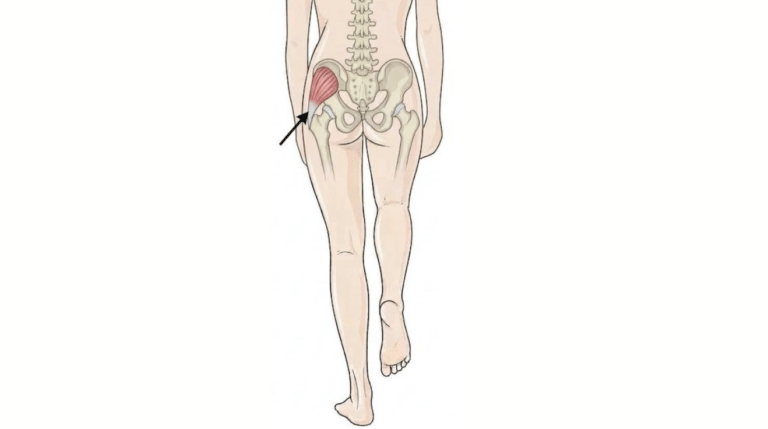


- Hypermobile hip exercises we use, and why clamshells aren’t one of them - 17 October 2026
- Is Fibromyalgia a Disability in the UK, and Can You Claim PIP? - 14 October 2026
- Fibromyalgia and Central Sensitisation, What Is It in Plain English? - 8 October 2026
This article is part of our comprehensive guide to living with fibromyalgia.
Low dose naltrexone, usually just called LDN, is an old prescription drug taken at roughly a tenth of the dose it was built for, on the theory that it does a completely different job at that size. You’ve most likely heard about it from somebody else with fibro, rather than from a doctor, and most people either state it as a miracle or with a heavy warning attached to it.
What it is, and why the dose seems so odd
Naltrexone was made in 1963 as an opioid blocker, a drug that parks itself on the receptors opioids work through, so that the opioids can’t get at them, and it went on to be licensed for opioid dependence and then for alcohol use disorder [1][2]. At the dose that it’s licensed at, 50 to 100 mg, it sits on the mu opioid receptors, and brings craving and relapse down [3]. At 1 to 5 mg it gets prescribed “off licence” for chronic pain and inflammatory conditions [3].
Take less of most drugs and you get a smaller version of the same effect, half a paracetamol for half the job. LDN, however, is sold the opposite: that below a certain point it stops doing the thing that it was built for, and starts doing something else entirely. Drugs genuinely can behave like that, so this isn’t some fringe idea. What it does mean though, is that everything you’ve ever read about naltrexone at its normal dose, is describing a different situation from the capsule somebody in a Facebook group is telling you about.
It’s not a painkiller and it’s not an alternative medicine, and it gets sold to this community as both. Nothing about it numbs anything, so if you take it expecting the feeling codeine gives you, you’ll have written it off by teatime. And it’s an ordinary prescription drug with decades of licensed use behind it, being given for something it isn’t licensed for, which is perfectly normal and an entirely legal thing for a doctor to do.
What’s it supposed to be doing in there?
The main explanation is about glia, and it’s a good story that nobody has caught happening in a person yet.
Your nervous system isn’t only nerve cells. Packed in around them is a whole supporting cast, and one family of those, the microglia, work as the immune cells of the brain and spinal cord. Leave them quiet and you’d never know they were there. Switch them into an active state and they start releasing chemicals that make the nerve cells around them easier to set off, and what comes out of that is a package you’ll recognise immediately: more pain from less provocation, fatigue, broken sleep, flat mood, and the general sense of having flu without having caught anything. That last part is the ordinary thing an immune system does to an animal it wants to keep still and rest, which is exactly why it feels so much like being ill.
The proposal is that a small dose of naltrexone quietens those cells down by blocking TLR4, one of the switches that turns them on [4].
In a dish and in animals, that holds up. Naltrexone and its mirror image molecule both block TLR4 and reverse pain behaviour in nerve injury models [5]. A mirror image molecule is the same atoms built the other way round, a left hand against a right, and the mirrored version can’t touch an opioid receptor at all, so whatever it’s doing there, it isn’t doing it through opioid receptors. In people, though, it has never been caught at it. No chronic pain trial has shown LDN changing TLR4 signalling after a dose [4]. And no fibromyalgia trial has shown the drug engaging that target in the people actually swallowing it [6].
The second explanation is a rebound. Block the opioid receptors briefly, the argument runs, and the body answers by turning its own opioid signalling up once the block lifts. It gets repeated everywhere, and the direct human evidence for it is missing [4]. A mouse study that went looking for the route through the body’s own endorphin system didn’t find it either [7].
Fibromyalgia got picked for a reason, though. It’s increasingly understood as a problem in how the nervous system handles the signal, rather than ongoing tissue damage alone [4]. And brain scans in fibromyalgia show raised levels of a marker that tracks glial activity, spread widely rather than sitting in one spot [8]. That’s about as close as anybody currently gets to seeing glial activation in a living person, and it points more at the microglia than at the other support cells [8]. So, on paper, the drug and the condition fit each other rather well. But, on paper is where the fit has remained.
Does it actually work?
It worked in the small early trials and stopped working as the trials got bigger, and thats about the whole shape of it.
Ten women took 4.5 mg a day and their symptoms came down by more than 30% against placebo, along with improvements in how much pressure and heat they could take before they hurt [9]. Then thirty one women, same dose, and pain fell 28.8% on the drug against 18.0% on the dummy capsule, with mood and life satisfaction improving and nothing serious happening to anybody [10]. About a third of them counted as responders, meaning their pain came down enough to be a real change, against about one in ten of those on the dummy [10]. Which, is why everybody started talking about this drug in the first place.
Then the trials got bigger. Fifty eight people, and no clinically relevant effect on pain at all [11]. Ninety nine women on 6 mg a day, and no superiority over placebo for pain there either [12]. The gap between the drug and the placebo came out at about a third of a point on a nought to ten pain scale [12]. Then the longest run anybody has done, 4.5 mg a day for twelve months [13]. The difference at three months was half a point in favour of the placebo, and there was no significant difference at any stage across the year [13].
The responder numbers from that year long trial are the ones worth knowing bout, because they answer the question people actually ask, which is whether it did anything for anybody. Around one in ten of those on the drug got a 30% improvement in their pain, against closer to one in five of those on the placebo [13].
More of them improved on the dummy capsule, than improved on the drug, and that’s worth sitting with for a moment. Because pain isn’t read straight off the tissue. It’s produced by a system that takes context, expectation and what you’re paying attention to into account, so in a condition that swings about as much as fibromyalgia does, starting something new with a bit of hope attached, produces a change you can genuinely feel and a questionnaire can genuinely pick up. Even in the trial that worked, the placebo arm still improved by 18.0% [10]. All it means is that a drug has to beat that rather than match it.
That same trial turned up one more thing that’s worth a quick peek. The people who believed they had been given the real drug sometimes reported better outcomes, even though their guesses about which capsule they were on were no better than chance [13].
The pooled analyses don’t agree with each other either, and the disagreement is mostly about which trials got counted. Pool four of them and pain scores come out lower on LDN than on placebo by about nine tenths of a point, with no benefit at all on the broader score that covers how much fibromyalgia takes out of your day [14]. Pool them differently, with the newer negative trials included, and although people improved from where they started, that didn’t translate into beating the dummy capsule [15]. A pooled result is only ever as good as what goes into it, and what went in later were the bigger studies.
Away from pain, nothing much has moved at all. Tenderness, fatigue, sleep, mood, memory and stiffness were all looked at in the follow up analysis of one of the larger trials, and not one of them separated from placebo [16]. Memory has flickered once or twice and hasn’t held up [12][16]. So if fatigue is the symptom you’d most want shifted, this isn’t the drug that has been shown to shift it.
Neither of the confident answers survives all that. The largest and longest trials have not shown it beating a dummy capsule on pain [11][12][13], and the people who did well in the early trials were real people who did well. Both of those are true at the same time. What follows from them is that any real benefit is either small, or it’s sitting in some subgroup that responds while the average doesn’t, and that subgroup is currently a hypothesis rather than a finding [13].
What are the side effects?
This is the part the drug does well, and it’s most of the reason it has stayed around despite the trial record.
The first few weeks
Vivid dreams are the signature one. They turn up soon after starting, usually alongside broken sleep or insomnia, and often with nausea, dizziness and headache for company [17]. When the trials were pooled, vivid dreams and nausea were the only two that happened significantly more often on the drug than on the dummy capsule, while headache, diarrhoea, dizziness and serious events were no different [14].
Across a full year on it, side effects were common in the people on the drug and common in the people on the placebo, and almost all of them were mild and passed [13]. That overlap is worth understanding, because fibromyalgia already comes with broken sleep and fatigue of its own, and pinning either of them on the capsule is genuinely difficult [13]. When people do stop taking it, it’s usually because it isn’t doing anything rather than because it’s doing harm [18].
Is it safe to take for years?
The longest controlled look at that is twelve months, and nothing serious over those twelve months was put down to the treatment [13]. Pool the serious events across the trials of naltrexone taken by mouth and there’s no excess over the dummy capsule either [19].
That is reassuring, and it’s also the edge of what can be said. The reviews that have gone looking are straightforward about it: safety specific research is thin, there is very little evidence in higher risk groups, and pregnancy, liver impairment, kidney impairment, a suppressed immune system and ongoing opioid use are all places where they can’t tell you much [20]. Nothing worrying has turned up, and nobody has gone looking as hard as you would want. So if you’re pregnant, hoping to be, or you’ve got liver or kidney trouble, that’s the gap to make your prescriber say out loud rather than wave past.
Drink, your other medication, and weight
Opioids are the one that matters, and the only one of the three that could land you in hospital.
Naltrexone blocks opioid receptors, so if your body is dependent on an opioid and you drop an opioid blocker on top of it, you can be thrown straight into withdrawal, and the small dose can still do that [17]. The standard approach is an opioid free gap before you start, and that principle carries over to the low dose version even though nobody can give you the size of the risk [21]. The same thinking applies around surgery, where it gets stopped before opioid pain relief and restarted once the opioids stop [22]. So if you’re on codeine, tramadol, a morphine patch or anything in that family, this is a conversation with a prescriber rather than something to order off a website, and how long that gap needs to be is one of the things you’re going in to ask. The trials mostly excluded people who were taking opioids, so they can’t tell you much about that situation either [4].
Alcohol is the easy one. A drink won’t make you ill on it, and naltrexone is used in alcohol treatment precisely because it brings craving and relapse down [3]. Nothing in the evidence points to a disulfiram like interaction between naltrexone and alcohol [23]. On the liver, the full licensed dose doesn’t appear to raise serious liver risk at the recommended amounts, including in many people who already have cirrhosis [24]. And figures taken from the full dose are likely to overstate how often anything happens at a tenth of it [24].
Weight is the fear a lot of people bring with them, and given what else gets handed out for fibro, it’s an earned one. It hasn’t been shown to do either thing. There is no convincing controlled evidence of consistent weight gain or weight loss on LDN at 1 to 6 mg a day [4]. If you’ve seen naltrexone attached to weight loss somewhere, that’s a different product altogether: naltrexone combined with bupropion at a far higher naltrexone dose, and nearly all of the weight data belongs to that combination rather than to the small dose on its own [25].
What dose, and how would you get hold of it?
4.5 mg once a day is the dose nearly every fibromyalgia trial has used, usually taken at night about an hour before sleep [1]. If somebody has handed you that number, that’s where it came from.
It’s a convention more than a conclusion, though. The dose finding work that exists does suggest 4.5 mg as a sensible dose to test [26]. Outside the trials, people have settled anywhere from a tenth of a milligram up to 6 mg a day, with no trial having compared a fixed dose against building up gradually [27]. In practice the common pattern is to start well below the trial dose and work up over weeks, and that is clinic habit and review opinion rather than something tested against the alternative [4]. If the dreams or the insomnia are what’s bothering you, moving the dose to the morning is the usual answer [1]. So treat 4.5 mg as the number the research used rather than as your number.
Getting hold of it is the other half of the question, and the awkwardness there is practical. There is no ordinary commercial low dose version generally available, so it usually has to be made up to order by a compounding pharmacy, which is a pharmacy that mixes a medicine for you rather than handing over something ready made [1]. Whether you can get that where you live, and who pays for it, is a question for whoever is holding the prescription pad.
What is worth knowing before you walk in is what the prescribing guidance asks of the person writing it, because it tells you what a good version of that conversation looks like. They should tell you plainly that the use is off licence, go through what is known and what isn’t about both the benefits and the harms, write down why they’re doing it, record how long you’ll be on it and how it will be monitored, and take consent that reflects what a reasonable person would want to be told [28]. If you get all of that, you’re being prescribed for properly. If you get a shrug, you’re not.
The short version
What it is: an old opioid blocking drug, used off label for chronic pain and inflammatory conditions at 1 to 5 mg, which is a fraction of the dose it’s licensed at, on the grounds that it appears to behave differently at that size [3].
What it’s meant to do: quieten the immune cells of the nervous system by blocking TLR4, which holds up in cells and in animals [5]. No fibromyalgia trial has shown it happening in a person [6].
Pain: the small early trials were positive [9][10]. The larger and longer ones were not [11][12][13].
Everything else: tenderness, fatigue, sleep, mood, memory and stiffness have not separated from placebo [16].
Side effects: vivid dreams and nausea are the two that happen more often on the drug than on the dummy capsule [14]. Across a full year almost all of them were mild and passed [13].
Long term safety: nothing serious was put down to the treatment across twelve months [13]. Beyond that the evidence is thin [20].
The one real risk: an opioid blocker dropped on top of an opioid can throw you into withdrawal, and the low dose version can still do that [17].
Dose: 4.5 mg once a day at night is the dose nearly every fibromyalgia trial has used [1], and not necessarily yours.
So, is it worth asking about?
It’s a reasonable thing to ask about and a poor thing to pin your hopes on, and those two sit together perfectly well.
It appears to be well tolerated [20], the clearest risk by far is the opioid one [17], and the largest and longest trials have not shown it beating a dummy capsule for pain [11][12][13]. Anybody telling you it’s a miracle and anybody telling you it’s snake oil are both saying a good deal more than they know. A cheap, old, off licence drug with a credible story behind it and an unconvincing trial record is a fair thing to spend part of an appointment on, and a bad thing to build a year around.
If you do decide to try it, work out beforehand what you’re measuring and by when, and write it down before you start rather than afterwards. Sleep, step count, how many bad days in a fortnight, whatever it is you’d most want back. That isn’t cynicism about your own improvement. It’s so that in three months’ time you can actually tell, instead of trying to remember what October felt like. Feeling better on a new capsule and the capsule working are two different things [10], and what separates them is a note you made at the start, not ten minutes with somebody asking how you’ve been getting on.
Adam
References
[1] Younger, J., Parkitny, L. and McLain, D. (2014) ‘The use of low-dose naltrexone (LDN) as a novel anti-inflammatory treatment for chronic pain’, Clinical Rheumatology. https://doi.org/10.1007/s10067-014-2517-2
[2] Capata, M. and Hartwell, K.J. (2021) ‘Chapter 14. Opioid Antagonist Treatment of Opioid-Related Disorders’, The American Psychiatric Association Publishing Textbook of Substance Use Disorder Treatment. https://doi.org/10.1176/appi.books.9781615373970.kb14
[3] Rupp, A., Young, E. and Chadwick, A.L. (2023) ‘Low-dose naltrexone’s utility for non-cancer centralized pain conditions: a scoping review’, Pain Medicine. https://doi.org/10.1093/pm/pnad074
Read More[4] McKenzie, A., Bittar, T., Dombrower, R., Raman, D., Hussain, H., Theeraphapphong, N. et al. (2026) ‘Low-Dose Naltrexone in Chronic Pain Management: Mechanisms, Evidence, and Clinical Implications’, Journal of Personalized Medicine. https://doi.org/10.3390/jpm16030151
[5] Hutchinson, M.R., Zhang, Y., Brown, K., Coats, B.D., Shridhar, M., Sholar, P.W. et al. (2008) ‘Non‐stereoselective reversal of neuropathic pain by naloxone and naltrexone: involvement of toll‐like receptor 4 (TLR4)’, European Journal of Neuroscience. https://doi.org/10.1111/j.1460-9568.2008.06321.x
[6] Partridge, S., Quadt, L., Bolton, M., Eccles, J., Thompson, C., Colasanti, A. et al. (2023) ‘A systematic literature review on the clinical efficacy of low dose naltrexone and its effect on putative pathophysiological mechanisms among patients diagnosed with fibromyalgia’, Heliyon. https://doi.org/10.1016/j.heliyon.2023.e15638
[7] Metz, M.J., Daimon, C.M. and Hentges, S.T. (2021) ‘Reported Benefits of Low-Dose Naltrexone Appear to Be Independent of the Endogenous Opioid System Involving Proopiomelanocortin Neurons and β-Endorphin’, eneuro. https://doi.org/10.1523/eneuro.0087-21.2021
[8] Albrecht, D.S., Forsberg, A., Sandström, A., Bergan, C., Kadetoff, D., Protsenko, E. et al. (2019) ‘Brain glial activation in fibromyalgia – A multi-site positron emission tomography investigation’, Brain, Behavior, and Immunity. https://doi.org/10.1016/j.bbi.2018.09.018
[9] Younger, J. and Mackey, S. (2009) ‘Fibromyalgia Symptoms Are Reduced by Low-Dose Naltrexone: A Pilot Study’, Pain Medicine. https://doi.org/10.1111/j.1526-4637.2009.00613.x
[10] Younger, J., Noor, N., McCue, R. and Mackey, S. (2013) ‘Low‐dose naltrexone for the treatment of fibromyalgia: Findings of a small, randomized, double‐blind, placebo‐controlled, counterbalanced, crossover trial assessing daily pain levels’, Arthritis & Rheumatism. https://doi.org/10.1002/art.37734
[11] Bested, K., Jensen, L.M., Andresen, T., Tarp, G., Skovbjerg, L., Johansen, T.S.D. et al. (2023) ‘Low-dose naltrexone for treatment of pain in patients with fibromyalgia: a randomized, double-blind, placebo-controlled, crossover study’, PAIN Reports. https://doi.org/10.1097/pr9.0000000000001080
[12] Due Bruun, K., Christensen, R., Amris, K., Vaegter, H.B., Blichfeldt-Eckhardt, M.R., Bye-Møller, L. et al. (2024) ‘Naltrexone 6 mg once daily versus placebo in women with fibromyalgia: a randomised, double-blind, placebo-controlled trial’, The Lancet Rheumatology. https://doi.org/10.1016/s2665-9913(23)00278-3
[13] Rodríguez‐Freire, C., Navarrete, J., Rozadilla‐Sacanell, A., Sanabria‐Mazo, J.P., del Pino‐Gaya, B., Borràs, X. et al. (2026) ‘Efficacy of Low‐Dose Naltrexone in Women With Fibromyalgia Syndrome: A 12‐Month Randomised, Double‐Blind, Placebo‐Controlled Single‐Centre Clinical Trial ( INNOVA Study)’, European Journal of Pain. https://doi.org/10.1002/ejp.70321
[14] Vatvani, A.D., Patel, P., Hariyanto, T.I. and Yanto, T.A. (2024) ‘Efficacy and safety of low-dose naltrexone for the management of fibromyalgia: a systematic review and meta-analysis of randomized controlled trials with trial sequential analysis’, The Korean Journal of Pain. https://doi.org/10.3344/kjp.24202
[15] Ologunowa, A., Otoo, M.N., Caffrey, A.R., Buchanan, A., Eze, U.J. and Vyas, A. (2025) ‘Efficacy of Low-Dose Naltrexone in Treating Patients with Fibromyalgia: systematic Review and Meta-Analysis’, Journal of Pain & Palliative Care Pharmacotherapy. https://doi.org/10.1080/15360288.2025.2496526
[16] Nielsen, M.J., Vaegter, H.B. and Bruun, K.D. (2026) ‘Symptom Response to Low-Dose Naltrexone in Fibromyalgia: An Exploratory Analysis of the Randomized Placebo-Controlled FINAL Trial’, Pain Management Nursing. https://doi.org/10.1016/j.pmn.2026.07.020
[17] Toljan, K. and Vrooman, B. (2018) ‘Low-Dose Naltrexone (LDN)—Review of Therapeutic Utilization’, Medical Sciences. https://doi.org/10.3390/medsci6040082
[18] Driver, C.N. and D’Souza, R.S. (2023) ‘Efficacy of Low-Dose Naltrexone and Predictors of Treatment Success or Discontinuation in Fibromyalgia and Other Chronic Pain Conditions: A Fourteen-Year, Enterprise-Wide Retrospective Analysis’, Biomedicines. https://doi.org/10.3390/biomedicines11041087
[19] Bolton, M., Hodkinson, A., Boda, S., Mould, A., Panagioti, M., Rhodes, S. et al. (2019) ‘Serious adverse events reported in placebo randomised controlled trials of oral naltrexone: a systematic review and meta-analysis’, BMC Medicine. https://doi.org/10.1186/s12916-018-1242-0
[20] Gouda, A.H.K., Aitcheson, N.E.C. and Steadman, K.J. (2026) ‘Low-Dose Naltrexone: What is the Evidence? A Narrative Review’, Advances in Therapy. https://doi.org/10.1007/s12325-026-03612-5
[21] Guerzoni, S., Pellesi, L., Pini, L.A. and Caputo, F. (2018) ‘Drug-drug interactions in the treatment for alcohol use disorders: A comprehensive review’, Pharmacological Research. https://doi.org/10.1016/j.phrs.2018.04.024
[22] Leimer, E.M., Orhurhu, V., Barreveld, A.M., Kohan, L. and Emerick, T. (2024) ‘Low-dose naltrexone in the perioperative period’, Regional Anesthesia & Pain Medicine. https://doi.org/10.1136/rapm-2024-105831
[23] Haass-Koffler, C.L., Akhlaghi, F., Swift, R.M. and Leggio, L. (2017) ‘Altering ethanol pharmacokinetics to treat alcohol use disorder: Can you teach an old dog new tricks?’, Journal of Psychopharmacology. https://doi.org/10.1177/0269881116684338
[24] Ayyala, D., Bottyan, T., Tien, C., Pimienta, M., Yoo, J., Stager, K. et al. (2022) ‘Naltrexone for alcohol use disorder: Hepatic safety in patients with and without liver disease’, Hepatology Communications. https://doi.org/10.1002/hep4.2080
[25] Carr, M.M., Lou, R., Macdonald-Gagnon, G., Peltier, M.R., Funaro, M.C., Martino, S. et al. (2023) ‘Weight change among patients engaged in medication treatment for opioid use disorder: a scoping review’, The American Journal of Drug and Alcohol Abuse. https://doi.org/10.1080/00952990.2023.2207720
[26] Bruun-Plesner, K., Blichfeldt-Eckhardt, M.R., Vaegter, H.B., Lauridsen, J.T., Amris, K. and Toft, P. (2020) ‘Low-Dose Naltrexone for the Treatment of Fibromyalgia: Investigation of Dose–Response Relationships’, Pain Medicine. https://doi.org/10.1093/pm/pnaa001
[27] Marcus, N., Robbins, L., Araki, A., Gracely, E. and Theoharides, T. (2024) ‘Effective Doses of Low-Dose Naltrexone for Chronic Pain – An Observational Study’, Journal of Pain Research. https://doi.org/10.2147/jpr.s451183
[28] Aagaard, L. and Kristensen, K. (2018) ‘Off-label and unlicensed prescribing in Europe: implications for patients’ informed consent and liability’, International Journal of Clinical Pharmacy. https://doi.org/10.1007/s11096-018-0646-4