
- Hypermobile hip exercises we use, and why clamshells aren’t one of them - 17 October 2026
- Is Fibromyalgia a Disability in the UK, and Can You Claim PIP? - 14 October 2026
- Fibromyalgia and Central Sensitisation, What Is It in Plain English? - 8 October 2026
Most of what gets written about chronic pain and intimacy assumes a fairly narrow picture: two cisgender people in a monogamous straight relationship, one of whom is unwell. That misses a lot. Queer, trans and polyamorous people make up a meaningful slice of the chronic illness community, and the practical issues they work through around sex, partnership and disclosure look different in places that matter. This piece is for those readers, and for anyone whose situation doesn’t fit the default template.
The approach here is to relay what people in these communities actually say about their own experiences, supported where useful by what the research shows. We’re not going to tell anyone what their body or relationship should look like. The advice that follows is drawn from threads in r/asktransgender, r/actuallesbians, r/butchlesbians, r/polyamory, r/disability and r/cfs, alongside published work on chronic pain in LGBTQ+ populations.
When it comes to context first: why this section exists
LGBTQ+ people experience higher rates of chronic pain than the general population, and trans and gender diverse people specifically report the highest rates within that group. A 2024 review in The Journal of Pain on chronic pain risk in transgender people concluded that “transgender individuals experience higher rates of social stigma and discrimination than their cisgender counterparts, and these factors have been linked to an increased prevalence of chronic pain, depression, and stress” [4]. A 2024 study in Anesthesia and Analgesia surveyed 136 LGBTQ+ people with chronic pain through LGBTQ+ listservs and social media (a self-selected community sample, not a representative population), and found that 80% rated their worst pain at 7 out of 10 or higher, that half (47%) had high adverse childhood experience scores, and that trans and gender diverse participants reported significantly higher current pain scores than cisgender participants [3].
This isn’t because of who anyone is. It’s because of what they go through. Minority stress, discrimination in healthcare, delayed diagnosis, higher rates of childhood adversity, and the autonomic and immune consequences of long term stress are all well documented contributors to chronic pain risk. A 2026 biopsychosocial review of chronic pain in trans and gender diverse youth makes the same point and notes that gender affirming care appears to help with some of the factors associated with pain, such as anxiety, depression and quality of life, not worsen them [1]. The same review is explicit that the long term effects of these treatments on chronic pain outcomes themselves remain unclear, and that no studies to its knowledge have directly examined chronic pain endpoints [1].
The relevance for intimacy is direct. If you’re carrying chronic pain into your sex life and you’re also queer, trans, polyamorous, or some combination, you’re working through layers of experience that the average chronic illness guidance simply ignores. The community has worked out a fair amount on its own.
Trans women and intimacy on oestrogen
This section is paraphrased from r/asktransgender threads, particularly the threads on HRT and sexual function. Trans women describing their own experiences. The themes are remarkably consistent.
Spontaneous arousal tends to reduce, and the felt motivation for sex shifts toward the emotional and sensory side rather than the strictly physical. One person in the r/asktransgender HRT libido thread put it as “Things become a lot more mental on E rather than straight physical on T”. The same shift surfaces across years on HRT. After three and a half years on hormones, one user described their desire as being “more about feeling close and touching each other than merely having an orgasm”.
For trans women with chronic pain on top of this, the practical implications are useful. Longer warm up and foreplay isn’t a workaround, it’s just how things work. Sensual touch becomes more important and direct genital focus less so. That actually lines up well with the kind of intimacy that works for people with widespread pain, allodynia or fatigue conditions, where extended slow contact tends to be easier than short intense sessions anyway. Skin sensitivity also tends to increase on oestrogen, with some users describing genital tissue feeling “a bit raw” after extended use, which makes good lubrication and a lighter touch more relevant rather than less.
Erectile function tends to require regular use to maintain. The community consensus, paraphrased from r/asktransgender: if you want to keep that function, use it. Long periods of abstinence accelerate the changes. That has implications for someone whose pain is so severe that intimacy has dropped to nothing for months at a stretch, and it’s worth raising with whoever is prescribing your hormones if it matters to you.
One thing that comes up consistently and is worth flagging: trans women with fibromyalgia or hypermobility are dealing with two separate layers of skin sensitivity, the HRT skin softening on one side and pain related allodynia on the other. Background data here is thin, though one 2026 study did find that females with hEDS self-report more sexual problems than chronic pain controls without hypermobility [2]. The advice that lands well in those threads is light touch protocols, hypoallergenic lubricants without fragrance or warming agents, and slower sessions with more breaks. Anything that would be useful for allodynia generally applies here, and we covered that in our piece on allodynia in fibromyalgia.
Trans men and intimacy on testosterone
A pattern that shows up repeatedly in dysautonomia and chronic illness threads is trans men describing testosterone as one of the things that meaningfully changed their relationship with sex. Several reported going from effectively asexual or zero libido to functional libido after starting T. One r/dysautonomia thread on sexual life with dysautonomia includes specific accounts of testosterone changing the picture for people whose libido had cratered before transition or before chronic illness took hold.
Ready to work through this with structure and support?
The Hypermobility Live Workshop is four weeks of breaking down the frameworks we use in our studios, with live Q&A so you can ask about your specific situation. Two free courses are included.
That’s not a clinical recommendation, it’s a community pattern. The broader observation worth taking from it: chronic illness can suppress libido through several different mechanisms (fatigue, autonomic dysregulation, hormone shifts, medication effects), and people with very low libido on a background of chronic illness sometimes have low testosterone driving it. That’s worth a conversation with a doctor regardless of gender, because testosterone deficiency in the context of chronic illness is reasonably common and reasonably treatable, and is sometimes missed.
For trans men using packers or wearing binders with chronic pain, the community advice is what you’d expect. Bind for shorter periods, take breaks, and don’t bind during heavy physical exertion or sex itself if it limits breathing or worsens rib pain. Binder fatigue is real and surfaces in r/asktransgender threads regularly. For anyone with rib instability from hypermobility, costochondritis flares, or POTS, binding around the chest can amplify the cardiovascular and musculoskeletal load, and the same principles around pacing and gradual exposure that we use elsewhere apply.
Lesbian and queer women
One of the clearer practical threads in r/actuallesbians on chronic joint pain notes that scissoring and tribbing tend to be hard on the hips, particularly for those with hypermobility, and recommends side lying alternatives or strap on configurations that don’t require sustained hip extension or external rotation under load. The mechanics here are exactly what we covered in our sex positions and biomechanics piece. Any position that loads the hip near end range of abduction or external rotation, with the partner’s weight transferring through that position, is going to be the first to cause trouble for a hypermobile pelvis.
Stone tops with EDS describe a specific set of issues around sustained posture, particularly during manual or oral stimulation. One r/ehlersdanlos discussion on sex and EDS goes into detail on the hand and forearm load involved in extended manual stimulation, with practical suggestions including a hand strap to ease grip strain when using a dildo, holding rather than wearing a harness, and choosing positions at the start that you can hold for the duration rather than transitioning mid session. The point that comes through is that being on top with chronic pain is workable if you choose your geometry well, and brutal if you don’t.
The sex swing recommendation reappears here. From the r/butchlesbians disabled sex advice thread: “A sex swing might be worth trying. You can stand upright and use your arms to assist in moving the swing, reducing the need to rely entirely on hip motion”. Same general principle as for any tops with chronic pain. If the hip can’t take the load, the harness arrangement and the equipment should take it instead.
What also keeps coming up in r/actuallesbians threads on chronic illness and dating is something quite different. Several chronically ill lesbians report that queer communities tend to be more comfortable with disability and accessibility conversations than straight dating contexts do. “A significant intersection exists between queer and disabled communities, leading to higher levels of acceptance and respect”. That tracks with broader observations about overlap between LGBTQ+ and disability communities, and it might be one of the few aspects of dating with chronic pain that gets easier in queer spaces.
Two disabled partners
An underrepresented configuration: both people in the relationship have a chronic illness or disability. The r/disability thread on managing intimacy between two disabled partners is one of the more useful threads on the entire topic of sex with chronic illness, because it strips away the assumption that one person is the well one and the other is the unwell one. Their two most cited tools across the responses were constant communication and a sense of humour.
The practical content of the thread is also worth a read for anyone in this situation. Taking turns rather than trying to both be active. Verbal direction instead of physical leading. Creative division of who does what based on whose body is doing what on a given day. Acknowledging that some days nothing physical is going to happen and that’s not the relationship failing.
The pattern that comes through is that two disabled partners often have a more honest baseline conversation about energy, capacity and what’s possible than mixed couples do. There’s less guilt, less performance, less guessing at whether the partner is enjoying themselves. We covered the communication side in our piece on couples communication with chronic pain.
Polyamory and chronic illness as a structural fit
This is the one that tends to surprise people. Polyamory shows up in chronic illness threads more often than you’d expect, not as a lifestyle preference but as a practical structure that lets someone with very limited energy be in meaningful relationships without trying to be everything to one person.
The framing comes through clearly in r/polyamory threads. “I cannot handle a traditional monogamous relationship because I don’t have enough time and energy to keep my partner happy and myself healthy”. The argument isn’t that polyamory is better, it’s that for someone with severe ME/CFS, severe POTS, or comparable limits, the monogamous expectation that you meet all of one person’s relational and sexual needs while also looking after your own health is mathematically impossible. Distributing the load across more than one relationship makes the maths work.
Several people in those threads describe seeking what they call “part time” relationships specifically. Emotionally meaningful but low in logistical demand. Once a week contact. Allowance for last minute cancellations without it being a relationship crisis. Partners who have their own primary attachments elsewhere. That structure is closer to “kitchen table polyamory” than “primary partner with secondaries”, and it tends to fit chronic illness because no one is depending on the unwell person to provide the full bandwidth of a primary relationship.
For anyone considering it, the standard polyamory hygiene applies (and isn’t trivial): everyone involved needs to know, agree, and consent to the arrangement, including consent that’s specifically informed by the chronic illness picture. Polyamory practised badly is just cheating. Practised well, with explicit agreements and honesty, it can be a workable structure for people whose health doesn’t fit the monogamous template.
The kink side of this comes up too. r/chronickinksters is flagged in r/cfs threads as a resource for people exploring power exchange dynamics where the person with less physical capacity directs rather than performs. That’s a structural fit for chronic fatigue specifically. The mental and verbal side of dominance can be done lying down. The physical demand sits with the other person.
Disclosure and dating
The disclosure piece for LGBTQ+ chronic pain people overlaps with what we’ve covered for everyone in our disclosure and dating piece, but a few specific notes from the threads here.
Chronically ill lesbians on r/actuallesbians strongly endorse early honest disclosure as a filtering tool. “I would be honest and transparent about health challenges from the very beginning of dating because the situation is not changing”. Same thread suggests explicitly vetting potential partners for their comfort with taking breaks during intimacy and with last minute energy crashes. The argument is the same one chronic illness people make everywhere: better to learn early that someone isn’t a fit than to put energy you don’t have into building something that won’t work.
For trans people dating with chronic pain, the disclosure load is genuinely higher. There’s the chronic illness disclosure, the trans disclosure, and often a third layer around hormonal effects on libido or function. The community advice that surfaces in r/asktransgender threads on dating: separate the disclosures, lead with what’s most relevant to that specific person at that specific stage, and don’t treat any of them as confessions. None of these are problems to apologise for. They’re information the other person needs to make their own choices.
Medication and HRT interactions
One practical note. Many of the pain medications and chronic illness drugs used in this community have interactions with hormone therapy that aren’t well known, including effects on contraceptive hormones, oestrogen metabolism, and testosterone clearance. We covered the broader medication picture in our pain medication for hypermobility and EDS piece. The short version: anyone on HRT plus chronic pain medications, including over the counter NSAIDs taken regularly, should make sure both prescribers know about the full picture. Some interactions are minor, some matter, and it’s not safe to assume your pain clinic and your hormone clinic are reading each other’s notes.
What to take away
When it comes to LGBTQ+ communities and chronic pain, the first thing to say is that the higher rates of chronic pain in these communities are not a feature of who anyone is. They’re a feature of what gets done to those communities through stigma, discrimination and delayed care, and the long term physiological consequences of that. The implications for intimacy follow from that picture, not from any clinical pathology of identity.
Trans women on oestrogen often find that intimacy shifts toward the emotional and sensory rather than the strictly physical, which lines up surprisingly well with what works for many people with widespread pain. Trans men on testosterone sometimes find libido returns where chronic illness had taken it. Binding and packing with chronic pain need the same pacing logic that applies elsewhere.
Lesbian and queer women with chronic joint pain have practical workarounds for the positions that are hardest on hypermobile hips, including side lying, strap on geometries that don’t require hip extension under load, and hand straps to ease grip strain. Stone tops with EDS face a specific set of sustained posture issues that benefit from choosing positions you can hold rather than transitioning through.
Two disabled partners often have an easier baseline conversation about capacity and energy than mixed couples do, because the assumptions are out in the open from the start. Polyamory shows up as a structural fit for people whose energy can’t carry a full monogamous relationship, when practised with explicit agreements and honesty.
And the standard chronic pain rules still apply across all of this. Pace what you can. Communicate. Use whatever support, equipment or position changes make things work. The right partner doesn’t need any of this softened or apologised for. The wrong partner isn’t the audience to write for.
References
- Han, G.T., Basch, M., Chen, D. and Zeltzer, L., 2026. Chronic pain in transgender and gender diverse youth: a biopsychosocial perspective. Frontiers in Pain Research. doi: 10.3389/fpain.2025.1709268.
- Neville, C., Wilson, F.C., Fairweather, D., Caywood, M.K., Gegoutchadze, K., Rozen, L.E., Farahani, N.A., Shufelt, C., Knight, D.R., Gajarawala, S. and Bruno, K.A., 2026. Females with hypermobile Ehlers-Danlos syndrome self-report more sexual problems than chronic pain controls without hypermobility, males, or patients with hypermobile spectrum disorders. Frontiers in Reproductive Health. doi: 10.3389/frph.2026.1753684.
- Shirsat, N., Finney, N., Strutner, S., Rinehart, J., Higgins III, K.E. and Shah, S., 2024. Characterizing chronic pain and adverse childhood experiences in the lesbian, gay, bisexual, transgender, or queer community. Anesthesia and Analgesia. doi: 10.1213/ANE.0000000000006922.
- Stocking, S.Q., Webb, C.K., Miller, G.H., Thomeer, M., Goodin, B. and Sorge, R.E., 2024. Understanding risk of chronic pain development and related mental health disparities among transgender people: a review of current literature and future directions. The Journal of Pain, 37(Suppl), p.104681. doi: 10.1016/j.jpain.2024.104681.
Is there something missing from this guide?
If there’s an LGBTQ, trans or polyamorous experience of chronic pain that we haven’t covered well enough, let us know. We read every email and use the suggestions to shape what we put out next.
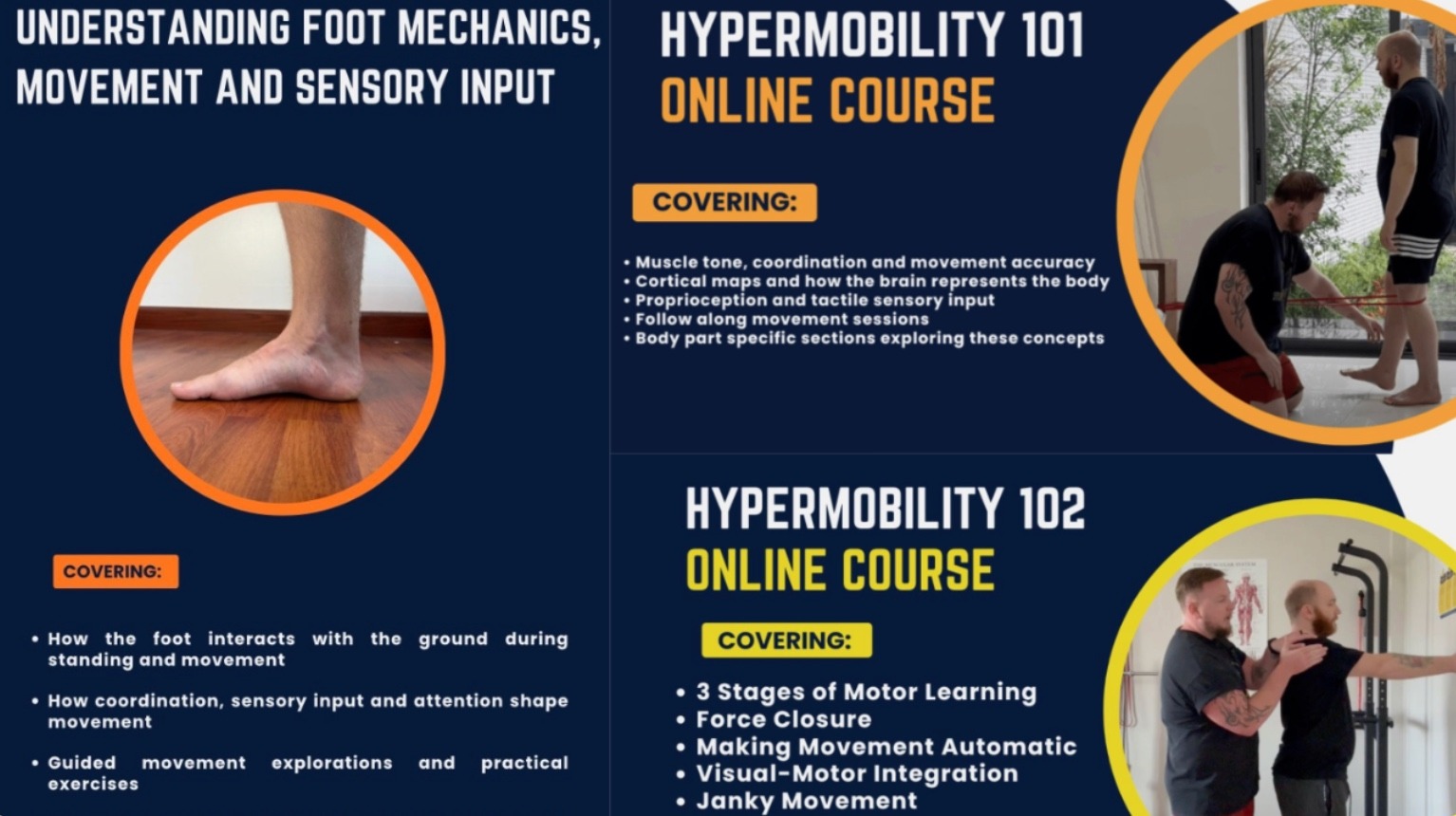
The Hypermobility Fundamentals Bundle
The Hypermobility Fundamentals Bundle is a structured education and movement pathway that starts at the bottom and builds upwards, grounded in motor learning and sensory motor science. Designed for people with hypermobility and persistent pain, it focuses on how strength and stability are organised and learned by the nervous system, beginning with the feet and progressing through sensory input, coordination, and motor learning. The courses are intended to be completed in sequence, with each one establishing the concepts and skills needed for the next.
— The Fibro Guy Team —