

This article is part of our comprehensive guide to exercise and rehabilitation for hypermobility.
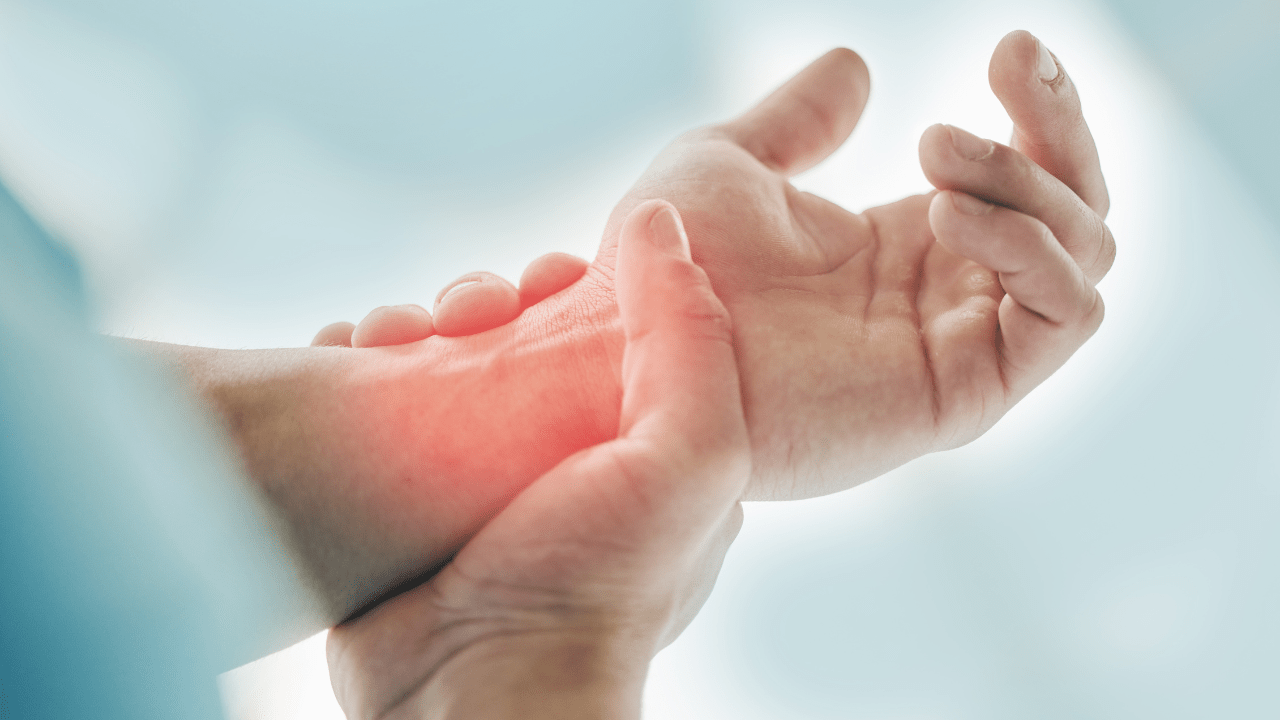
Wrist pain is a pretty common struggle for many with hypermobility, particularly those with Ehlers-Danlos Syndrome (EDS). Talk to anyone with hypermobility, or do a quick search on Reddit, and you will find some very common themes.
Many describe a persistent struggle with pain and instability, particularly during activities that require wrist strength or repetitive motions, such as typing or lifting objects, with this pain sometimes being accompanied by sensations of tingling or burning.
Another common theme is the journey toward an accurate diagnosis. Some recount being initially misdiagnosed with conditions like carpal tunnel syndrome, while others have faced scepticism from healthcare providers who don’t fully understand the impact that hypermobility can have. Obviously, this can lead to frustration and a sense of being dismissed, further complicating the path to effective treatment.
To manage their symptoms, many folks turn to a combination of medical interventions and lifestyle adjustments. Wrist braces and splints are frequently used to provide stability and alleviate pain during activities. Physical therapy is another cornerstone of management, with exercises tailored to strengthen the wrists and forearms, helping to reduce the frequency and severity of pain. In addition to conventional treatments, some find relief through alternative methods such as compression gloves, kinesiology tape, and heat therapy.
However, there is one thing that always gets left out of the conversation: how to get the hypermobile wrist bones back in place!
Because honestly, it’s very simple, and it’s something I show people all the time, it gives pretty much instant relief, and it’s something you can keep in your toolbox for when you need it.
So, let’s have a quick look at the wrist, why it causes issues, and what you can do to help quickly!

Ready to work through this with structure and support?
The Hypermobility Live Workshop is four weeks of breaking down the frameworks we use in our studios, with live Q&A so you can ask about your specific situation. Two free courses are included.
The structure of the wrist
The carpal bones are eight little bones that are organised in two rows. They make up a complicated and flexible joint that is the wrist. A variety of motions, including bending, straightening, and turning, are made possible by these bones, which link the forearm to the hand. The ligaments that attach these bones together provide the wrist the support and stability it needs to work properly, falling into two primary categories of wrist ligaments: Intrinsic and the Extrinsic.
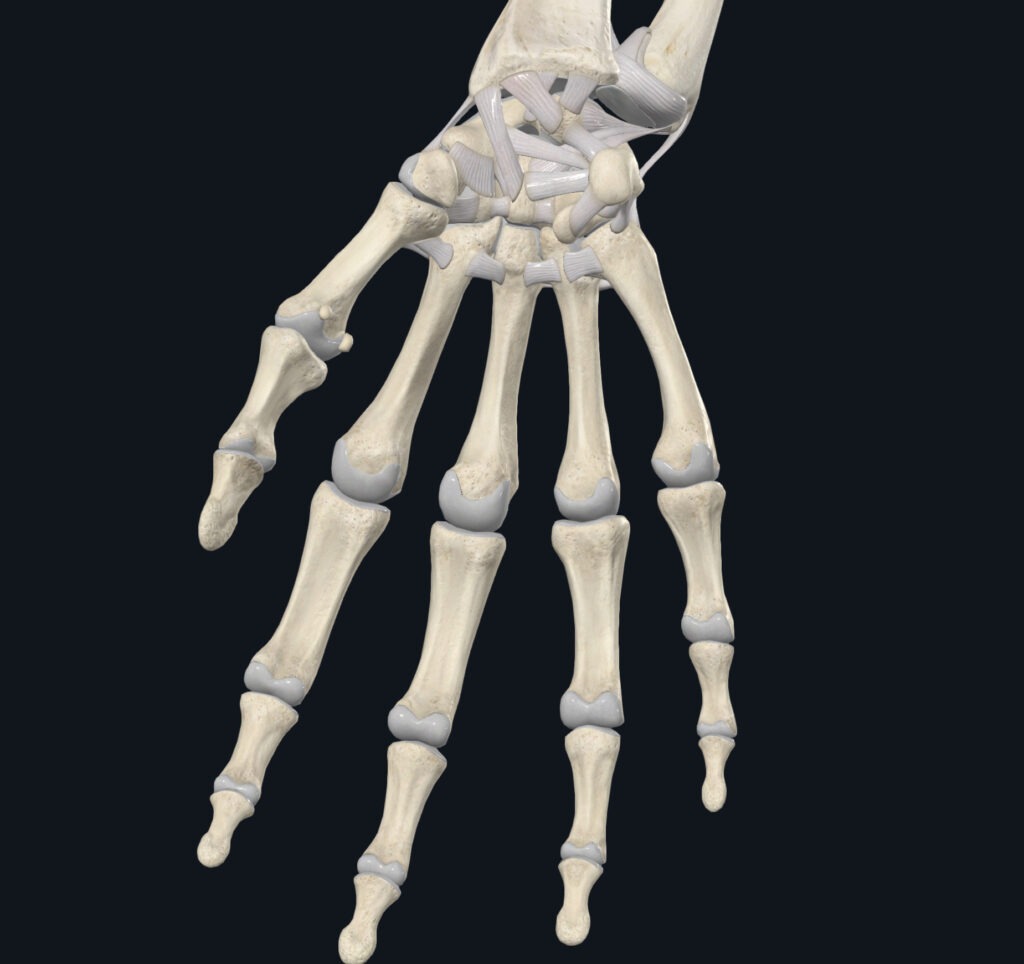
Carpal bones and forearm bones (radius and ulna) are connected via extrinsic ligaments. In addition to guiding wrist motions, these ligaments offer general stability. The ulnar and radial collateral ligaments, the dorsal and volar radiocarpal ligaments, and others are prime examples.
Conversely, the carpal bones are connected to one another by **intrinsic ligaments**. The complex motions of the wrist would not be possible without them, as they keep these bones in proper alignment.
Despite their differences in function and location, both ligament types play an important part in wrist stability and function.
Why Does Wrist Pain Occur in Hypermobile Individuals?
These ligaments tend to be loose or excessively pliable in those with hypermobility, and because of this ligament laxity, the wrist bones are not held firmly in place as they should be by either the extrinsic or intrinsic ligaments. This causes an abnormal amount of motion between the bones, which ultimately causes the joints to become unstable, result in some people walking around with a permanently subluxated (partially dislocated) wrist all day…. sometimes for months!
Wrist muscles and tendons then must work harder to maintain joint stability when ligaments aren’t doing their job. Muscle soreness, overuse injuries, and pain can all result from this heightened stress. The irritation of the surrounding systems, including tendons, nerves, and blood vessels, can worsen wrist pain and restrict hand function when the bones of the wrist are not properly aligned.
What does the research say?
Usurpingly, good high quality is very lacking in this department. Which, unfortunate, seems to be the case with a lot of things to do with hypermobility or Ehlers Danlos syndrome. Unfortunately, research funding goes to the more “sexier” areas of research like classification.
Among some of the research I did managed to find, was a pilot study looking at how common chronic wrist hypermobility (CWH) is in adults and its effects on wrist strength, movement, and function. It also explored whether these effects are different between men and women. The researchers tested 55 adults with healthy wrist movement and no recent injuries. They found that 64.4% had CWH, mostly in women (74%). Common issues included midcarpal instability (96.5%), scapholunate instability (39%), and benign joint hypermobility syndrome (BJHS), which was more frequent in women.
Those with CWH had weaker grip strength, reduced wrist stability, and poorer wrist function compared to those without CWH. Interestingly, there were no significant differences between men and women in wrist function or movement.
With such small returns in studies, I decided to think outside of the box a little and look towards wrist issues in gymnasts. After all, hypermobility in gymnasts is notably high compared to other athletes, with some studies showing a Beighton score of 4/9 or greater was found to be 24.6% among gymnasts. Likewise, another study, this time focusing on pre-school children who participated in gymnastics training, found that the prevalence of hypermobility was 51.1% among gymnasts, compared to 27% in sedentary children.
This all makes sense when you think about how people are drawn towards things they are naturally good at. I mean these figures would be much more shocking if they were for something like Rugby!
Using gymnast I did find some interesting research, including, a fairly recent study investigated dorsal wrist pain in gymnasts when X-rays show no abnormalities. The researchers analysed wrist movements using MRI images in gymnasts with and without pain, as well as in adults with no wrist pain.
They found that gymnasts with wrist pain had abnormal joint angles and more sliding (translation) of wrist bones at 90° extension. This condition is termed “gymnast’s lunate dyskinesia” and may help in understanding and treating wrist pain in athletes.
So, there you go, some interesting findings, but nothing amazing. Painful wrists appear to be more hypermobile…didn’t see that one coming!
Wrist exercise/movement
Ok, so we know about the structure of the wrist and what the research has to say about it. So, let me show you a little trick I found years ago. I’m not even sure where I found this, but it’s sat at the back of mind for years and it’s a good little exercise/movement for your toolbox.
Originally, I started using it for client who would experience pain in their wrist when weight bearing. Obviously, activities such as Yoga and Pilates are a fan favourite amongst the hypermobility population, and seeing as these activates regular require weight bearing through the wrist, a lot of people find that their wrist seem to pinch as the bones compress together, as they are not in the right place. So here is a super simple exercise/movement to put them back in place so you can get back to your Yoga or Pilates, I hope you enjoy.
Enjoyed Our Blog? Why Stop Here?
If you’ve found value in our posts, imagine what you’ll gain from a structured, science-backed course designed just for you. Hypermobility 101 is your ultimate starting point for building strength, stability, and confidence in your body.

FAQ on hypermobile wrists
How does hypermobility effect the wrist?
Having joints that can move more than the average range of motion is called hypermobility. A greater likelihood of wrist injuries like sprains and dislocations is associated with this enhanced pliability of the wrist joint. Although the majority of hypermobility patients may not encounter any difficulties, a small percentage may develop hypermobility spectrum disorder (HSD), a condition that can lead to discomfort and impaired mobility.
When people with hypermobility have wrist pain, what are the most typical reasons behind it?
Ligament laxity causes joint instability, which in turn causes wrist pain in hypermobile persons. The ligaments and cartilage in the wrist can become damaged due to the aberrant movement caused by this instability. Ehlers-Danlos Syndrome (EDS) and other connective tissue illnesses, as well as hereditary factors, can lead to hypermobility.
When it comes to hypermobility-related wrist pain, what part do splints and braces play?
Hypermobile wrists can benefit from the support and stability provided by splints and braces, which can lessen the likelihood of injury or aggravation caused by overuse. Activities that put strain on the wrists are common times for their use.
For people who are constantly on the go, what other options do you have for alleviating wrist pain?
Some non-traditional methods of treatment include kinesiology tape, cold laser therapy, heat therapy, and compression gloves. The goal of these techniques is to speed up the healing process while decreasing inflammation and pain.
To what extent is chronic wrist hypermobility (CWH) more common in males than in females?
According to research, CWH is more common in women than in men. Hormonal effects on collagen synthesis or other hereditary variables affecting connective tissue characteristics might account for this variation.
The Hypermobility Fundamentals Bundle
The Hypermobility Fundamentals Bundle is a structured education and movement pathway that starts at the bottom and builds upwards, grounded in motor learning and sensory motor science. Designed for people with hypermobility and persistent pain, it focuses on how strength and stability are organised and learned by the nervous system, beginning with the feet and progressing through sensory input, coordination, and motor learning. The courses are intended to be completed in sequence, with each one establishing the concepts and skills needed for the next.
Wrists rarely act alone when connective tissue is lax, and the same instability that lets them sublux under load often turns up in elbows that hyperextend further up the chain. Building the surrounding muscles to take on some of that job is covered in our broader exercise tips for hypermobility, and if you’re curious why the tissue itself behaves this way in the first place, it’s worth reading what the research actually says about fascia and hypermobility.