
- Fibromyalgia and Central Sensitisation, What Is It in Plain English? - 8 October 2026
- Which supplements are worth taking when you’re hypermobile - 4 October 2026
- Hypermobile Wrists: Why They Hurt, Which Brace to Use, and How to Build Control - 4 October 2026
This article is part of our comprehensive guide to living with fibromyalgia.
If you’ve got fibromyalgia and your head hurts most days, you’ve probably already been told it’s tension, or stress, or the way you sit at a laptop, akin to a shrimp. None of that really explains why your scalp is sore when nothings touching it, or why the copious amount of painkillers that used to work, have quietly stopped doing anything.
Two things are worth knowing before we get into it. The question that moves things along is how many days a month your head hurts, rather than which label the headache has been given. And if you’re taking something for your head on most days of the week, start there, because it may have stopped being the fix and become part of the problem.
Why the figures scatter
If somebody quotes you a number for how often headache and fibromyalgia go together, it will depend heavily on who got counted and where (like most things when it comes to research). Among those with fibromyalgia who’d gone looking for treatment, 76% reported ongoing headaches, and of those who had them, 63% were diagnosed with migraines [1]. Gather up the older work and the proportion with headache lands anywhere between 35% and 88%, a spread that says more about how each study defined the headache and where it recruited, than about your head [2]. A more recent fibromyalgia group put migraine specifically at 40.7% [3].
Ask it the other way round, counting how many people in a headache clinic meet the criteria for fibromyalgia, and the figures drop and scatter again. Fibromyalgia came out at 22.2% in one migraine clinic [4], and at 6.0% across a large hospital headache population [5]. Same overlap, different denominator, different results.
Having migraines goes with being diagnosed with fibromyalgia later on, and having fibromyalgia goes with being diagnosed with migraines later on [6]. Those are observations over time though, rather than proof that one causes the other, but they do see off the idea that the headache is something unlucky happening alongside.
Where the headache are coming from
Your nervous system doesn’t simply produce pain, it decides how loudly to yell it. Signals come up from the body and pass through relay stations, that can turn the volume up or down, long before you feel anything, and there’s a whole system running downwards from the brainstem, whose job is to damp things down. In ordinary circumstances it does that quietly all day everyday, which is why you can wear a watch, sit on a chair and brush your hair without any of it registering.
In fibromyalgia, both halves of that arrangement have shifted. The system is amplifying more than it should, and the damping from above is weaker also [7]. Nothing’s been damaged. The settings have just shifted, which is a different thing entirely, and it’s why ordinary pressure can arrive as pain while a scan of the painful bit comes back perfectly normal (as you will be more than acquainted with).
The word for the amplifying half is sensitisation. Sensitised doesn’t mean fragile and it doesn’t mean imagined. It just means the volume control has been left up.
The head and face have their own dedicated sensory system (the trigeminal system) and it shares its first relay station in the brainstem, with the nerves arriving from the top of the neck. Input from your neck and input from your scalp turn up at the same switchboard. If that switchboard is already running hot, a stiff neck, a long drive, a bad night or nothing identifiable at all can be enough to tip it.
Your head is also the one part of you that you can never put down. You can take weight off a knee. You can stop using a wrist. Your head sits on your neck all day whatever you do, and then spends the night pressed into a pillow.
And fibromyalgia alongside a headaches disorders isn’t a neutral extra. In people with migraine, those who also have fibromyalgia report more headache days, more intense headaches, more disability, and lower mood than those who don’t [8]. The very same pattern shows up also in tension type headaches: more frequent, more intense, and more disabling [9]. Which is a reason to treat the headache as a real part of the condition, rather than something to mention if there’s time at the end of an appointment.
Where it hurts
A band round the head
People describe a band round the head, or a weight sitting on top of it, pressing in from both sides rather than stabbing in one place. They describe head pressure too, and they usually mean a feeling of fullness rather than anything a gauge could measure. Dull, on both sides, and it doesn’t throb a bit…..or a lot.
Then there’s the other one: your head feels too heavy for your neck, and your shoulders have crept up towards your ears. Your head weighs what it has weighed for years. What changes is how much work holding it there feels like, and muscles held in a low grade clench all day, are muscles that start reporting it.
It also tends not to have a start. One of the reasons this gets dismissed is that it doesn’t behave like an attack. No clear beginning, no obvious trigger, no moment where it lifts and you can say that was it. More of a background setting that gets louder as the day goes on.
The back of the head and the neck
This is the region people most often get told is their posture, and it’s also where the measurements are clearest.
Press on someone with fibromyalgia with a pressure gauge and it starts to hurt sooner than it does in somebody without it, at every one of the classic tender spots, with the base of the skull, the front of the neck and the top of the shoulder among the most sensitive of the lot [10]. It isn’t only a neck finding, because the forearm and the palm come out lower too [11]. Whatever is going on isn’t confined just to the bits that hurt.
Low pressure thresholds over the neck and skull are repeatedly linked to two things at once: sensitisation in those shared neck and head pathways, and ongoing nociceptive input, meaning a steady signal arriving from painful muscles, trigger points or neck structures [12]. Studies of trigger points and referred pain suggest the neck muscles and the muscles around the skull are clinically relevant pain generators inside that wider sensitivity [13].
In headaches generally, pressure thresholds over the head and neck come out lower than in people without headache [14]. So if you have both, the neck is sensitive twice over, and neither explanation cancels out the other.
Behind the eyes, and the ice pick
Pain behind the eyes, retro-orbital pain, comes from the same trigeminal territory as the rest of the face. The eye socket, the forehead and the front of the scalp are all supplied by branches of the same nerve, so a sensitised system has no particular reason to stop at your eyebrow. Your eyes coming back fine at the opticians is not a contradiction either. Nothing is wrong with the eye. The sensation is being generated further back in the nerve, rather than in the thing it points at.
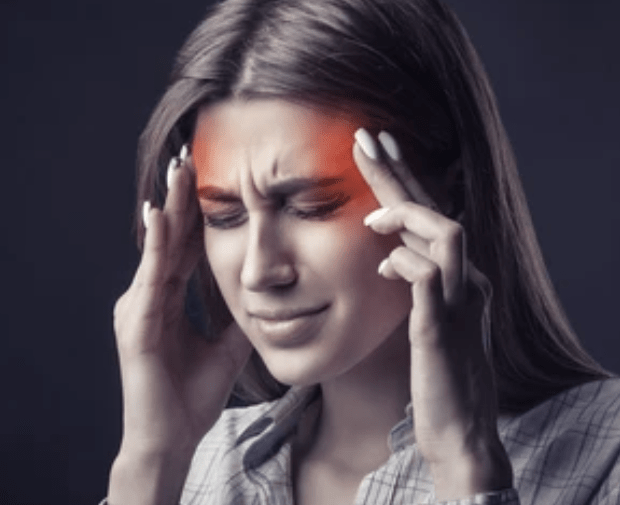
Why your hair hurts
Your hair hurting is a recognised thing also. It has a name, it has a mechanism, and there is nothing wrong with your actual hair.
What allodynia is
Allodynia means pain from something that shouldn’t hurt at all. A bedsheet, a shirt collar, a shower, a hand resting on your arm. The stimulus is harmless, but the system has decided to report it as being an issue.
In migraines, it’s been studied properly, and it’s described almost exactly the way you’d describe it to the doctor. It’s usually defined as pain from normally non-painful skin contact, and the examples the researchers use are combing your hair, showering, wearing glasses, and resting your head on the pillow [15]. There’s a validated questionnaire built out of those activities [16]. Somebody has sat down, written your symptom onto a form and used it to measure people.
It isn’t wishy washy, either. The sensitivity usually starts on the side of the head that hurts, and as the relay stations further in get drawn in, it spreads to the other side of the head and then off the head altogether, onto the arm or the trunk [17].
Why it feels like it’s coming from the root
This is the detail that makes people doubt themselves. People describe pain coming from the hair itself, from the roots, like a tight ponytail that’s been in all day and has only just come out. Except there’s no ponytail, and it doesn’t feel like sore skin, which is why it sounds mad when you say it out loud.
But, there’s actually a fairly straightforward anatomical reason for it. A hair follicle isn’t a passive hole with a hair in it. It’s wrapped in nerve endings and it’s a sensor in its own right. Every hair on your head is a small lever, and bending it moves the nerve endings coiled round the base, which is how you can feel an insect landing on your arm hair, before it ever reaches your skin. When the system reading those endings has its gain turned up, the signal arriving from follicles all at once, stops being background information, and it starts being reported as a potential problem.
The touch sensitivity measured in fibromyalgia is mostly a whole body finding rather than a scalp specific one, and in some people it includes allodynia to light moving touch [18]. There’s also the business of it not stopping when the touching does: skin pain, aftersensations from brushing and tactile unpleasantness are repeatedly documented in fibromyalgia, though the studies rarely test the scalp itself [19].
The touch fibres themselves are the other half of this, and two strands of work are running on them, both of them early. Altered signalling in the large, fast nerve fibres that normally carry ordinary touch, and antibody driven sensitisation of those same fibres, both appear relevant in subgroups rather than uniformly across fibromyalgia [20][21]. Separately, the loss of fine nerve endings in the skin is linked to the shape of someone’s fibromyalgia [22].
Taking the pressure off your scalp
If light touch is the thing that hurts, then whatever presses and pulls on your scalp all day is the obvious first place to look. Hair tied back tightly. The same parting every day. A hairband, a hat, headphones that clamp, a pillow your head has been pressed into all night.
Nobody should pretend that’s a cure. It’s free, reversible and available this afternoon, which is more than can be said for most of what gets suggested.
The bigger consequence is for conversations. “My scalp is allodynic” lands in an appointment in a way that “my hair hurts” does not, and it’s the same sentence. That shouldn’t be true, but it is.
Migraine, tension headache, or both
The two overlap a great deal, and the label matters less for what’s happening in your head than for what you can be offered.
Why the two blur
The classification doctors use to sort headaches separates migraine from tension type headache, then splits tension type headache again, by how often it happens, into infrequent, frequent and chronic. That same classification says outright that people with frequent headaches often have both at once, and that boundary cases are common [23].
Read that twice, because it changes the question. The system that defines these categories has written into itself that if you get headaches a lot, you probably don’t sit neatly in one box.
The numbers bear that out in a slightly chaotic way. One study reported fibromyalgia in 66.9% of people with chronic migraine [24]. A large Chinese hospital cohort reported 11.1% in chronic migraine [5]. Those were done in different countries, with different criteria, on different populations. If you’ve been told flatly which kind you’ve got, that was a clinical judgement rather than a measurement.
What the label does change
The first thing it changes is what you can be prescribed. Migraine has its own acute treatments, the ones you take when it starts, and its own preventives, the ones you take every day whether your head hurts or not, including the newer antibody drugs. None of them can be offered to you if the word migraine never appears in your notes. So if you get one sided pain, if it throbs, if you feel sick with it, if light or noise become unbearable, if you have to lie down, say those things specifically rather than saying you get bad headaches.
It also changes how your frequency gets read, and frequency is where the real decisions live.
What the label mostly doesn’t change is the mechanism underneath. Whichever box your headache goes in, the sensitised system underneath it is still the thing doing it, and the things worth trying are largely the same.
The painkiller rule that isn’t true
There’s a rule going round that if a shop bought painkiller clears your headache, it wasn’t a migraine. It’s nonsense, and it’s the kind of nonsense that stops people asking for proper treatment.
What does track with whether an acute treatment works is more interesting than that. Whether your skin has gone sensitive, goes along with how well acute migraine treatment works, though the relationship isn’t identical across every single study [25]. So what bears on whether a tablet gets on top of it, is how far along the sensitising has already got, rather than which label is on the headache.
Why it’s every single day
Count days a month, not hours
People want to know how long a fibromyalgia headache lasts, and hours is the wrong unit. There’s no distinct fibromyalgia headache with a set duration to quote at you. What there is, is a pattern that gets sorted by how many days a month it happens on, and that number turns out to matter enormously.
The clearest demonstration is a straight gradient. Among people with migraine, the proportion who also met criteria for fibromyalgia rose from 2.8% in those with nine or fewer headache days a month, to 6.2% in those with ten to twenty, to 14.5% in those with twenty one or more [26]. The more days your head hurts, the more likely fibromyalgia is part of the picture.
So the question to answer is how many days last month your head hurt at all, even a bit, even on days you got through fine. The line used in headache medicine is headache on at least fifteen days a month [23]. Below that line it’s episodic, meaning it comes and goes. Above it, it’s chronic, and chronic headache gets managed differently.
When the thing you take becomes part of it
Then count the second number: how many days a month you take something for your head. Any painkiller. The ones off the supermarket shelf included. Co-codamol included. Anything migraine specific included.
If headaches on most days and tablets on most days are both true of you, there’s a well described condition called medication overuse headache.
In the general population it’s uncommon, somewhere around one to two in every hundred people [27]. Among people who already have chronic headache it’s a different story, often between 30% and 70%, and more than half of those having headache on at least fifteen days a month meet the criteria [28]. In one group of people who had both chronic migraine and fibromyalgia, 90.3% had it [29].
Those are people in severe pain doing the obvious thing. You hurt, you take something, it takes the edge off, so when it hurts again you take something again, and the frequency creeps up over months in a way that’s close to invisible from the inside. There’s no villain in that story.
What’s happening underneath it all though, is that same amplification problem, just nudged further along. It appears to be a disorder of pain processing, involving the same weakened damping from above and the same central sensitivity, with the habit of taking something, reinforcing itself on top [30]. In animals, repeated exposure to migraine drugs alongside painful stimulation, disrupted the system that dampens pain down, and opioids did it faster and harder than the triptans, the migraine specific tablets. [31]. That’s animal work rather than a human trial, and it fits what turns up in clinics, where the opioid related cases are the hardest to shift.
The genuinely good news though, is that this reverses. In one trial, a complete stop did better than cutting down, with 70% back to episodic headache at six months against 42% in the cut down group [32]. A larger trial comparing three strategies found all of them reduced headache days, with withdrawal plus starting a preventive straight away producing the highest cure and conversion rates, although the main comparison between the groups didn’t reach significance [33]. For people overusing non opioid medication, starting one of the antibody preventives improved headache burden and brought on remission, even without a formal withdrawal first [34]. So the version with the best numbers behind it is stopping, rather than cutting down, with a preventive started at the same time, and that is the thing to go in and ask about.
Two warnings on all of that. Opioids, codeine containing tablets and tranquillisers are the exception, and guidance is to taper those or withdraw under supervision rather than stopping dead [35]. And none of this is a thing to do alone off the back of an article. It’s a conversation with your GP, and medication overuse headache is a recognised diagnosis rather than a telling off.
Working out whether this is you
Three numbers on a piece of paper, before your next appointment.
Headache days last month. Any headache, any severity, every one of them, however mild.
Treatment days last month. Days you took anything at all for your head. Not doses, days.
What you took. Specifically. Paracetamol, ibuprofen, co-codamol, a triptan, something with caffeine in it, something a friend handed you. Name the combination painkillers and anything containing codeine, because those are the ones a GP will want to hear about first.
Take those three in. A GP can do something with them inside a ten minute appointment. “I get a lot of headaches” gets you a sympathetic nod and not much else.
What helps
The fibromyalgia trials below measured fibromyalgia: pain, fatigue, sleep, quality of life. The headache trials were mostly run in people with migraine or tension type headache. So some of what follows is carried across from a neighbouring set of conditions, and it’s a sensible bet rather than a promise from from us.
Start with what’s in the cupboard
The medication count comes first, because it’s the one thing on this list with a decent chance of changing your situation in weeks, rather than months. Everything else works uphill while that’s running in the background.
Exercise, and which sort
Exercise is the best supported thing in fibromyalgia by a distance, improving pain, fatigue, sleep and quality of life across a large pile of trials, and the benefit sits with aerobic work, strength work, mind body approaches and combinations of those rather than with flexibility work alone [36]. Trial level data agree that resistance, functional, aquatic and supervised programmes reduce fibromyalgia pain or impact, though how long it lasts varies and the differences between types are usually modest [37]. In people with migraine, aerobic exercise can bring migraine burden and the number of migraine days down, and it’s been tested in people who also had tension type headache and neck pain [38].
In practice that’s duller than it sounds I know. Stretching is not the intervention. Something that raises your heart rate, done at a level you can repeat on a bad week, plus some strength work done consistently, is. Starting below what you think you can manage is the bit that survives contact with a flare, and that matters more than which programme you pick.
Sleep
If you aren’t sleeping, this is not the optional bit. Cognitive behavioural therapy for insomnia improves sleep quality, sleep efficiency and time spent awake in the night in people with fibromyalgia, and does it better than sleep hygiene advice [39].
Pain is where it gets more complicated. In one trial, insomnia symptoms improved while group level pain and mood didn’t, though around a third of people got a pain reduction big enough to matter, and the insomnia treatment looked better by six months [40]. Pooling the sleep work in fibromyalgia found no clear pain advantage for insomnia therapy over usual care [41]. In chronic migraine with insomnia, though, a short course of it increased sleep efficiency and total sleep time, and produced large reductions in headache frequency over the follow up, in a pilot sized study [42].
So: strong for sleep, uncertain for pain, promising for headache frequency on thin evidence. Worth doing just on the sleep alone though.
Neck work
You’ve probably been handed a sheet of neck exercises at some point, and what they do is narrower than you’d hope.
In fibromyalgia, hands on treatment reduced neck pain and tension, and in one trial didn’t improve sleep [43]. In migraine, neck strengthening on its own, tested against a convincing sham, didn’t reduce headache frequency or intensity, even though the muscles measurably changed [44]. That’s the null that matters. A photocopied sheet of neck exercises is a single ingredient, and the single ingredient is the thing that didn’t work.
What did work was combining things. Manual therapy plus neck exercises plus proper education about pain improved headache impact, frequency, intensity, neck disability and quality of life in migraine [45]. That pattern holds beyond migraine: multi part neck focused treatment can reduce headache in headache disorders other than fibromyalgia, though how much depends on the headache type and on what it was compared against [46]. Neck approaches seem to do better when they’re multi part and matched to the mechanism than when they lean on strengthening alone [44][45]. So if you’re asking a physiotherapist for something, ask for the combination: hands on work, exercise, and a proper explanation of why your pain system is behaving like this.
Which fits the mechanism. If the problem is a sensitised system rather than one tight muscle, treating the muscle alone was only ever going to do part of the job. It’s the same reason the behavioural side deserves more respect than it gets, because cognitive behavioural approaches improve fibromyalgia impact, disability and mood [47]. None of which means the pain is invented. The system doing the amplifying takes input from several places at once, and working on the muscular one alone leaves the rest of them untouched.
When a head symptom isn’t a fibromyalgia question
A short list, worth keeping somewhere you can find it. Fibromyalgia on your file is not a reason for a new symptom to go unexamined, and the worry that nobody will look is a fair one to have, so be specific when you ask.
Get seen the same day for a headache that arrives at full force within seconds, one that comes with a fever, a stiff neck or a rash, one that comes with weakness, numbness down one side or slurred speech, or any change in your vision. Get an appointment for a headache that’s genuinely new or clearly different from your usual pattern, one that’s reliably worst first thing and eases once you’re up and about, one that’s worse when you cough, bend or lie flat, or one that’s been getting steadily worse week on week.
The short version
Count two numbers before anything else. Headache days a month, and treatment days a month. If both are high, medication overuse headache is on the table, and it’s the most reversible of the lot [28][32].
The label matters less than you’ve been told. The classification itself says frequent headaches often contain both migraine and tension type headache [23]. Frequency is the thing that actually tracks with fibromyalgia [26].
Get migraine written down if it fits you. It’s the gateway to treatments you can’t otherwise be offered.
Your hair hurting has a name. Allodynia, usually defined using the exact activities you’d have used to describe it: combing, showering, the pillow [15].
Best return among the non drug options: exercise, which is the strongest evidence in fibromyalgia generally [36], and insomnia treatment, which is strong for sleep and less certain for pain [39][41].
Not supported: neck strengthening on its own for headache [44]. Combine it with hands on work and education, or spend the time elsewhere [45].
Your head hurting most days is not the price of admission for having fibromyalgia, and it isn’t something to simply absorb. Two things here do move: what you’re taking, and how consistently you move and sleep. Start with the counting. It’s free, it takes ten minutes, and it’s the single thing most likely to change what happens at your next appointment.
Adam
References
[1] Marcus, D.A., Bernstein, C. and Rudy, T.E. (2005) ‘Fibromyalgia and headache: an epidemiological study supporting migraine as part of the fibromyalgia syndrome’, Clinical Rheumatology. https://doi.org/10.1007/s10067-005-1121-x
[2] Stuginski-Barbosa, J., Dach, F. and Speciali, J.G. (2007) ‘Relação entre cefaléia primária e fibromialgia: revisão de literatura’, Revista Brasileira de Reumatologia. https://doi.org/10.1590/s0482-50042007000200006
[3] Castrillón Bustamante, D., Secco, A., Campos, O.P., Rodríguez Bossio, E. and Callahuara, N. (2021) ‘Frequency and severity of symptoms in patients with Fibromyalgia and Migraine’, Revista Argentina de Reumatología. https://doi.org/10.47196/rar.v32i2.357
Read More[4] Ifergane, G., Buskila, D., Simiseshvely, N., Zeev, K. and Cohen, H. (2006) ‘Prevalence of Fibromyalgia Syndrome in Migraine Patients’, Cephalalgia. https://doi.org/10.1111/j.1468-2982.2005.01060.x
[5] Dong, Z., Liu, K., Liu, H., Jia, Z., Gui, W., Dong, M. et al. (2023) ‘The prevalence and clinical features of fibromyalgia in Chinese hospital patients with primary headache: The survey of fibromyalgia comorbid with headache’, Headache: The Journal of Head and Face Pain. https://doi.org/10.1111/head.14443
[6] Penn, I.W., Chuang, E., Chuang, T.Y., Lin, C.L. and Kao, C.H. (2019) ‘Bidirectional association between migraine and fibromyalgia: retrospective cohort analyses of two populations’, BMJ Open. https://doi.org/10.1136/bmjopen-2018-026581
[7] Carneiro, B.D., Torres, S., Costa-Pereira, J.T., Pozza, D.H. and Tavares, I. (2025) ‘Descending Pain Modulation in Fibromyalgia: A Short Review of Mechanisms and Biomarkers’, Diagnostics. https://doi.org/10.3390/diagnostics15212702
[8] Onder, H., Hamamci, M., Alpua, M. and Ulusoy, E.K. (2019) ‘Comorbid fibromyalgia in migraine patients: clinical significance and impact on daily life’, Neurological Research. https://doi.org/10.1080/01616412.2019.1630164
[9] Ha, W.S., Cho, S., Kim, K.M. and Chu, M.K. (2026) ‘Pain beyond the head: clinical implications of body pain in migraine and tension-type headache in a population-based study’, The Journal of Headache and Pain. https://doi.org/10.1186/s10194-026-02334-x
[10] Maquet, D., Croisier, J., Demoulin, C. and Crielaard, J. (2004) ‘Pressure pain thresholds of tender point sites in patients with fibromyalgia and in healthy controls’, European Journal of Pain. https://doi.org/10.1016/s1090-3801(03)00082-x
[11] Lautenbacher, S., Rollman, G.B. and McCain, G.A. (1994) ‘Multi-method assessment of experimental and clinical pain in patients with fibromyalgia’, Pain. https://doi.org/10.1016/0304-3959(94)90046-9
[12] Alonso-Blanco, C., Fernández-de-las-Peñas, C., Morales-Cabezas, M., Zarco-Moreno, P., Ge, H.Y. and Florez-García, M. (2011) ‘Multiple Active Myofascial Trigger Points Reproduce the Overall Spontaneous Pain Pattern in Women With Fibromyalgia and Are Related to Widespread Mechanical Hypersensitivity’, The Clinical Journal of Pain. https://doi.org/10.1097/ajp.0b013e318210110a
[13] Alonso-Blanco, C., Fernández-de-las-Peñas, C., de-la-Llave-Rincón, A.I., Zarco-Moreno, P., Galán-del-Río, F. and Svensson, P. (2012) ‘Characteristics of referred muscle pain to the head from active trigger points in women with myofascial temporomandibular pain and fibromyalgia syndrome’, The Journal of Headache and Pain. https://doi.org/10.1007/s10194-012-0477-y
[14] Castien, R.F., van der Wouden, J.C. and De Hertogh, W. (2018) ‘Pressure pain thresholds over the cranio-cervical region in headache: a systematic review and meta-analysis’, The Journal of Headache and Pain. https://doi.org/10.1186/s10194-018-0833-7
[15] Mínguez-Olaondo, A., Quintas, S., Morollón Sánchez-Mateos, N., López-Bravo, A., Vila-Pueyo, M., Grozeva, V. et al. (2022) ‘Cutaneous Allodynia in Migraine: A Narrative Review’, Frontiers in Neurology. https://doi.org/10.3389/fneur.2021.831035
[16] Lipton, R.B., Bigal, M.E., Ashina, S., Burstein, R., Silberstein, S., Reed, M.L. et al. (2008) ‘Cutaneous allodynia in the migraine population’, Annals of Neurology. https://doi.org/10.1002/ana.21211
[17] Noseda, R. and Burstein, R. (2013) ‘Migraine pathophysiology: Anatomy of the trigeminovascular pathway and associated neurological symptoms, cortical spreading depression, sensitization, and modulation of pain’, Pain. https://doi.org/10.1016/j.pain.2013.07.021
[18] Rehm, S., Sachau, J., Hellriegel, J., Forstenpointner, J., Børsting Jacobsen, H., Harten, P. et al. (2021) ‘Pain matters for central sensitization: sensory and psychological parameters in patients with fibromyalgia syndrome’, PAIN Reports. https://doi.org/10.1097/pr9.0000000000000901
[19] Berwick, R.J., Andersson, D.A., Goebel, A. and Marshall, A. (2025) ‘Aftersensations and Lingering Pain After Examination in Patients with Fibromyalgia Syndrome’, Pain Medicine. https://doi.org/10.1093/pm/pnaf080
[20] Israel, M.R., Berwick, R., Vastani, N., Zheng, Q., Moore, W., Maurer, M. et al. (2025) ‘Aβ low threshold mechanoreceptors contribute to sensory abnormalities in fibromyalgia’, Brain. https://doi.org/10.1093/brain/awaf321
[21] Goebel, A., Krock, E., Gentry, C., Israel, M.R., Jurczak, A., Urbina, C.M. et al. (2021) ‘Passive transfer of fibromyalgia symptoms from patients to mice’, Journal of Clinical Investigation. https://doi.org/10.1172/jci144201
[22] Evdokimov, D., Frank, J., Klitsch, A., Unterecker, S., Warrings, B., Serra, J. et al. (2019) ‘Reduction of skin innervation is associated with a severe fibromyalgia phenotype’, Annals of Neurology. https://doi.org/10.1002/ana.25565
[23] Arnold, M. (2018) ‘Headache Classification Committee of the International Headache Society (IHS) The International Classification of Headache Disorders, 3rd edition’, Cephalalgia. doi: 10.1177/0333102417738202
[24] Cho, S., Sohn, J., Bae, J.S. and Chu, M.K. (2017) ‘Fibromyalgia Among Patients With Chronic Migraine and Chronic Tension‐Type Headache: A Multicenter Prospective Cross‐Sectional Study’, Headache: The Journal of Head and Face Pain. https://doi.org/10.1111/head.13191
[25] Lipton, R.B., Munjal, S., Buse, D.C., Bennett, A., Fanning, K.M., Burstein, R. et al. (2017) ‘Allodynia Is Associated With Initial and Sustained Response to Acute Migraine Treatment: Results from the American Migraine Prevalence and Prevention Study’, Headache: The Journal of Head and Face Pain. https://doi.org/10.1111/head.13115
[26] Liao, Y.H., Tzeng, Y.S., Chen, S.P., Ling, Y.H., Chen, W.T., Wang, S.J. et al. (2025) ‘Association between headache frequency and risk for fibromyalgia in patients with migraine’, Cephalalgia. https://doi.org/10.1177/03331024251317486
[27] Diener, H.C., Dodick, D., Evers, S., Holle, D., Jensen, R.H., Lipton, R.B. et al. (2019) ‘Pathophysiology, prevention, and treatment of medication overuse headache’, The Lancet Neurology. https://doi.org/10.1016/s1474-4422(19)30146-2
[28] Oh, S., Kang, J., Park, H., Cho, S., Hong, Y., Moon, H. et al. (2022) ‘Clinical characteristics of medication‐overuse headache according to the class of acute medication: A cross‐sectional multicenter study’, Headache: The Journal of Head and Face Pain. https://doi.org/10.1111/head.14363
[29] Sastre Real, M. and Díaz de Terán, J. (2020) ‘OnabotulinumtoxinA Is an Effective Treatment for Chronic Migraine in Patients With Comorbid Fibromyalgia’, Frontiers in Neurology. https://doi.org/10.3389/fneur.2020.575130
[30] Ashina, S., Terwindt, G.M., Steiner, T.J., Lee, M.J., Porreca, F., Tassorelli, C. et al. (2023) ‘Medication overuse headache’, Nature Reviews Disease Primers. https://doi.org/10.1038/s41572-022-00415-0
[31] Nation, K.M., Dodick, D.W., Navratilova, E. and Porreca, F. (2018) ‘Sustained exposure to acute migraine medications combined with repeated noxious stimulation dysregulates descending pain modulatory circuits: Relevance to medication overuse headache’, Cephalalgia. https://doi.org/10.1177/0333102418804157
[32] Carlsen, L.N., Munksgaard, S.B., Jensen, R.H. and Bendtsen, L. (2017) ‘Complete detoxification is the most effective treatment of medication-overuse headache: A randomized controlled open-label trial’, Cephalalgia. https://doi.org/10.1177/0333102417737779
[33] Carlsen, L.N., Munksgaard, S.B., Nielsen, M., Engelstoft, I.M.S., Westergaard, M.L., Bendtsen, L. et al. (2020) ‘Comparison of 3 Treatment Strategies for Medication Overuse Headache’, JAMA Neurology. https://doi.org/10.1001/jamaneurol.2020.1179
[34] Tepper, S.J., Dodick, D.W., Lanteri-Minet, M., Dolezil, D., Gil-Gouveia, R., Lucas, C. et al. (2024) ‘Efficacy and Safety of Erenumab for Nonopioid Medication Overuse Headache in Chronic Migraine’, JAMA Neurology. https://doi.org/10.1001/jamaneurol.2024.3043
[35] Diener, H.C., Kropp, P., Dresler, T., Evers, S., Förderreuther, S., Gaul, C. et al. (2022) ‘Management of medication overuse (MO) and medication overuse headache (MOH) S1 guideline’, Neurological Research and Practice. https://doi.org/10.1186/s42466-022-00200-0
[36] Kundakci, B., Kaur, J., Goh, S.L., Hall, M., Doherty, M., Zhang, W. et al. (2021) ‘Efficacy of nonpharmacological interventions for individual features of fibromyalgia: a systematic review and meta-analysis of randomised controlled trials’, Pain. https://doi.org/10.1097/j.pain.0000000000002500
[37] Larsson, A., Palstam, A., Löfgren, M., Ernberg, M., Bjersing, J., Bileviciute-Ljungar, I. et al. (2015) ‘Resistance exercise improves muscle strength, health status and pain intensity in fibromyalgia—a randomized controlled trial’, Arthritis Research & Therapy. https://doi.org/10.1186/s13075-015-0679-1
[38] Krøll, L.S., Hammarlund, C.S., Linde, M., Gard, G. and Jensen, R.H. (2018) ‘The effects of aerobic exercise for persons with migraine and co-existing tension-type headache and neck pain. A randomized, controlled, clinical trial’, Cephalalgia. https://doi.org/10.1177/0333102417752119
[39] Edinger, J.D., Wohlgemuth, W.K., Krystal, A.D. and Rice, J.R. (2005) ‘Behavioral Insomnia Therapy for Fibromyalgia Patients’, Archives of Internal Medicine. https://doi.org/10.1001/archinte.165.21.2527
[40] McCrae, C.S., Williams, J., Roditi, D., Anderson, R., Mundt, J.M., Miller, M.B. et al. (2018) ‘Cognitive behavioral treatments for insomnia and pain in adults with comorbid chronic insomnia and fibromyalgia: clinical outcomes from the SPIN randomized controlled trial’, Sleep. https://doi.org/10.1093/sleep/zsy234
[41] Abolhosseini, S., Malatesta, A., Asmundson, A.J.N., Gilron, I. and Salomons, T.V. (2025) ‘Analgesic benefits of pharmacological and nonpharmacological sleep interventions for adults with fibromyalgia: a systematic review and meta-analyses’, Pain. https://doi.org/10.1097/j.pain.0000000000003708
[42] Smitherman, T.A., Walters, A.B., Davis, R.E., Ambrose, C.E., Roland, M., Houle, T.T. et al. (2016) ‘Randomized Controlled Pilot Trial of Behavioral Insomnia Treatment for Chronic Migraine With Comorbid Insomnia’, Headache: The Journal of Head and Face Pain. https://doi.org/10.1111/head.12760
[43] Nadal-Nicolás, Y., Rubio-Arias, J.Á., Martínez-Olcina, M., Reche-García, C., Hernández-García, M. and Martínez-Rodríguez, A. (2020) ‘Effects of Manual Therapy on Fatigue, Pain, and Psychological Aspects in Women with Fibromyalgia’, International Journal of Environmental Research and Public Health. https://doi.org/10.3390/ijerph17124611
[44] Benatto, M.T., Florencio, L.L., Bragatto, M.M., Dach, F., Fernández-de-las-Peñas, C. and Bevilaqua-Grossi, D. (2022) ‘Neck-specific strengthening exercise compared with placebo sham ultrasound in patients with migraine: a randomized controlled trial’, BMC Neurology. https://doi.org/10.1186/s12883-022-02650-0
[45] Tolentino, G.D.A., Florencio, L.L., Pradela, J., Pinheiro-Araújo, C.F., Martins, J., de Cassia Cabral Norato, A. et al. (2025) ‘Effects of combining manual therapies, neck muscle exercises, and therapeutic education pain neuroscience in patients with migraine: a 3-armed randomized clinical trial’, Musculoskeletal Science and Practice. https://doi.org/10.1016/j.msksp.2025.103360
[46] Azhdari, N., Kamali, F., Vosooghi, O., Petramfar, P. and Rahimijaberi, A. (2022) ‘The effect of manual therapies on tension-type headache in patients who do not respond to drug therapy: a randomized clinical trial’, Journal of Manual & Manipulative Therapy. https://doi.org/10.1080/10669817.2022.2107446
[47] Bernardy, K., Klose, P., Welsch, P. and Häuser, W. (2017) ‘Efficacy, acceptability and safety of cognitive behavioural therapies in fibromyalgia syndrome – A systematic review and meta‐analysis of randomized controlled trials’, European Journal of Pain. https://doi.org/10.1002/ejp.1121