

- Beta Blockers for POTS: What the Evidence Actually Says - 10 August 2026
- Duloxetine (Cymbalta) for Fibromyalgia: What the Evidence Actually Says - 10 August 2026
- Gabapentin for Fibromyalgia: What the Evidence Actually Says - 7 August 2026
This article is part of our comprehensive guide to hypermobility and Ehlers-Danlos syndrome.
Aging with Ehlers-Danlos Syndrome (EDS) is a bit of a paradox. One factor that significantly affects how EDS progresses in women is the hormonal transition: the effects of hormonal changes during perimenopause can shift symptoms considerably. For some, hypermobility decreases over time as we retain less and less water, but that doesn’t always mean things get easier. Instead, pain, fatigue, and the many systemic complications often become more prominent in our lives. Like many of our clients, you may have wondered to yourself “does EDS actually get worse with age?”, and the answer really depends on the type of EDS and your individual circumstances and lifestyle.
EDS isn’t a degenerative condition in the way that some like Parkinson’s is, but that doesn’t mean it stays the same. The reality is that aging with EDS is highly individual, shaped by genetics, lifestyle, and access to proper management, in the same way some may be more predisposed to EDS weight gain, and some to weight loss. It isn’t uncommon for those with EDS and hypermobility to feel like they are playing the health care postcode/zip code lottery, wherein your location in the country, town or state, massively affects your access to proper car.
While some people find relief as their joints stiffen as they age, others develop new challenges like osteoarthritis, cardiovascular issues, worsening autonomic dysfunction, or they may find EDS flare ups increase.
In this article, I want to look at what the research says about aging with EDS, as well as the real-life experiences of those who have lived it, including our clients. So, If you’re wondering what the future holds, or indeed how to navigate it as smoothly as possible, then you are in the right place.

Ready to work through this with structure and support?
The Hypermobility Live Workshop is four weeks of breaking down the frameworks we use in our studios, with live Q&A so you can ask about your specific situation. Two free courses are included.
Aging with EDS/Hypermobility
The fact that EDS doesn’t fit neatly into the typical aging process, makes the whole topic unnecessary complicated, as for some, EDS symptoms stay relatively stable for years before suddenly escalating. Hormonal changes, cumulative joint damage, and even external stressors can all play a role in how EDS progresses, and not to mention, the EDS medical trauma that many experience over the years. Research tells us that different subtypes of EDS age differently, vascular EDS (vEDS), for example, carries an increased risk of life-threatening complications over time, whereas hypermobile EDS (hEDS) tends to be marked by chronic pain and early-onset osteoarthritis rather than a clear-cut decline.

So while EDS isn’t classified as a degenerative disease, that doesn’t mean it stays the same. How much it changes, and indeed how much control you have over that change, entirely depends on a range of factors, from genetics to proactive management. The good news, however, is that understanding how EDS evolves can help you make good informed decisions that may slow progression, manage symptoms more effectively, and improve quality of life, which is really what rehab is all about.
Does EDS Get Worse with Age?
Some research suggests that joint laxity in hypermobile Ehlers-Danlos syndrome (hEDS) tends to decline after the third decade of life, but that doesn’t mean symptoms improve. Instead, as connective tissue changes, the body shifts toward a different kind of instability: one marked by chronic stiffness, compensatory muscle tension, and increased joint degeneration. Beighton scores may drop with age, but that doesn’t mean joints are suddenly stable or pain-free. In fact, many find that as hypermobility decreases, pain actually increases, often due to years of microtrauma, proprioceptive deficits, and the body’s attempt to compensate for weakened connective tissue.
What starts as excessive movement in youth often transitions into a cycle of stiffness, fatigue, and joint deterioration in midlife, showing that aging with hEDS isn’t as simple as hypermobility fading away, it just changes form, and this can be true for many hypermobility symptoms. In fact, pain, fatigue, and musculoskeletal issues often increase as the body tries to compensate for unstable joints. Over time, the accumulation of microtrauma can lead to early onset osteoarthritis, chronic pain syndromes, and widespread muscle tension as the body works overtime to stabilise itself.
But it’s not just the musculoskeletal system that’s affected, many people with EDS find that systemic issues become more pronounced with age. Dysautonomia, often seen in conditions like Postural Orthostatic Tachycardia Syndrome (POTS) can worsen, leading to greater difficulties with temperature regulation, blood pressure instability, and fatigue. Gastrointestinal symptoms, including slow motility and pelvic organ prolapse, may also become more prominent. For those with vascular EDS (vEDS), the risk of arterial rupture and life-threatening complications increases over time, making early monitoring and intervention essential.
EDS doesn’t progress the same way for everyone, and that’s part of what makes it such a challenging condition to navigate. While some people report that they actually feel better as they get older, particularly if they’ve focused on building muscle strength and managing symptoms proactively, others experience a steady worsening of their symptoms, especially if they’ve gone years without a proper diagnosis or effective treatment plan.
How Different EDS Subtypes Progress with Age
Not all types of Ehlers-Danlos Syndrome age the same way(1). While hypermobile EDS (hEDS) is the most common and widely discussed, other subtypes, such as vascular EDS (vEDS) and classical EDS (cEDS), present their own unique challenges as the years go by. The way EDS progresses depends on the specific genetic mutation, the degree of joint instability, and the involvement of other body systems. Some changes are subtle, developing gradually over time, while others, particularly in vEDS, can be more severe and life-threatening.
Vascular EDS (vEDS): Increased Risk Over Time
Vascular EDS is often the most concerning in terms of age-related progression. Caused by mutations in the COL3A1gene, vEDS affects the body’s major blood vessels, making them fragile and prone to rupture. Research shows that by age 40, nearly 80% of individuals with vEDS experience arterial dissections or aneurysms(2). The risk of spontaneous organ rupture, particularly in the intestines and uterus, also increases with time.
For those with vEDS, pregnancy carries significant risks, with a maternal mortality rate of around 5% due to uterine rupture (3). However, recent studies on celiprolol, a beta-blocker used to reduce arterial stress, have shown promise in improving survival rates and reducing the frequency of major vascular events (4). While vEDS remains a serious and unpredictable condition, early diagnosis and regular cardiovascular monitoring can significantly impact long-term outcomes.
Hypermobile EDS (hEDS): Mobility Changes, But Pain Increases
Unlike vEDS, hypermobile EDS doesn’t come with the same life-threatening vascular risks, but that doesn’t mean the aging process is easy. Joint hypermobility often decreases with age, particularly after the mid-30s, as connective tissues stiffen over time. While this might sound like a good thing, the reality is that this often leads to a new set of problems, including muscle stiffness, chronic pain, and early-onset osteoarthritis.
Despite the decline in hypermobility, studies show that up to 90% of adults with hEDS experience worsening musculoskeletal pain, fatigue, and proprioceptive impairments as they age (5). Many also develop secondary conditions like dysautonomia (POTS), chronic fatigue syndrome, and mast cell activation syndrome (MCAS), which can significantly affect daily life. Strength training and neuromuscular rehabilitation can help slow these changes, but for those who don’t receive proper management early on, the effects of aging can be particularly challenging.
Classical EDS (cEDS): Fragile Skin and Long-Term Joint Instability
For individuals with classical EDS, caused by mutations in COL5A1 or COL5A3, skin fragility and wound healing problems tend to worsen over time. By the age of 50, around 60% of cEDS patients experience chronic wounds and atrophic scarring, particularly in areas of repeated friction (6). Joint instability often persists throughout life, although some individuals report fewer dislocations as ligaments stiffen with age. However, secondary complications like cervical spine instability and early-onset degenerative disc disease are common, requiring close monitoring and proactive intervention.

Each subtype of EDS comes with its own challenges, and the aging process looks different for everyone. While some individuals see symptoms stabilise or even improve with time, others face a steady accumulation of joint damage, pain, and systemic complications.
But what about the non-musculoskeletal aspects of EDS, like the heart, gut, and nervous system?
How Aging Affects Other Body Systems in EDS
Aging with Ehlers-Danlos Syndrome isn’t just about changes in joint mobility, other systems in the body are also affected, sometimes in ways that aren’t immediately obvious. Many people with EDS find that issues they were able to manage in their younger years become harder to control over time, particularly when it comes to the cardiovascular, autonomic, and gastrointestinal systems. As the body ages, these complications can become more pronounced, making it essential to monitor and manage them proactively.
Cardiovascular System: Increased Risks and Complications
While vascular EDS is the subtype most associated with cardiovascular issues, research shows that many individuals with hEDS and cEDS also develop heart-related complications as they age. Mitral valve prolapse, a condition where the heart’s mitral valve doesn’t close properly, has been reported in up to 21% of people with hEDS over the age of 40 (7). Additionally, aortic root dilation is more common in older EDS patients, which can increase the risk of aneurysms and require regular monitoring through echocardiograms.
For those with autonomic dysfunction (POTS and other forms of dysautonomia), aging can bring a worsening of blood pressure regulation, increased heart rate instability, and greater difficulty with temperature control. Some find that symptoms stabilize with age, while others develop more severe blood pooling and fatigue due to reduced vascular elasticity. As a result, many EDS patients in their 40s and 50s rely more heavily on compression garments, IV saline infusions, or beta-blockers to manage these symptoms.

Gastrointestinal Changes: Slower Motility and Increased Sensitivities
Gastrointestinal problems are common in EDS, but many people don’t realise how much worse they can become with age. Studies show that 40-60% of individuals with hEDS experience delayed gastric emptying, chronic constipation, or gastroparesis by midlife (8). This is partly due to connective tissue dysfunction in the gut, which affects peristalsis (the muscle contractions that move food through the digestive system).
Pelvic organ prolapse is also a growing concern, especially for women with EDS who have gone through multiple pregnancies. By age 50, around 13-75% of women with hEDS or cEDS experience some degree of pelvic organ prolapse, which can lead to urinary and bowel dysfunction (9). Many find that hormonal changes during menopause exacerbate these symptoms, as oestrogen plays a key role in collagen maintenance.
Neurological and Cognitive Changes: Brain Fog, Fatigue, and Sensory Processing Issues
For years, there have been reported brain fog, fatigue, and cognitive difficulties in EDS, but it’s only recently that researchers have started looking into the neurological effects of EDS as people age. Chronic pain and sleep disturbances appear to contribute to cognitive dysfunction, particularly in working memory and executive function. In fact, studies show that by age 50, health-related quality of life scores are 30% lower in people with hEDS compared to healthy controls, largely due to fatigue and cognitive issues (10).
Another area of concern is small fiber neuropathy (SFN), a condition that affects the small nerve fibers responsible for pain and temperature sensation (11). Many older EDS patients report a burning or tingling sensation in their hands and feet, which may be linked to long-term autonomic dysfunction and connective tissue instability in the nervous system.
These systemic changes mean that aging with EDS isn’t just about managing joints, it’s about taking a whole-body approach to care. While the effects of aging can’t always be stopped, early intervention, lifestyle adjustments, and medical monitoring can help slow the progression of symptoms and improve overall quality of life. So what can you do to stay ahead of these challenges?
How to Slow Progression and Improve Quality of Life
Aging with EDS isn’t something you can stop, but there’s a lot you can do to manage symptoms, reduce complications, and improve overall function. The key is proactive management, addressing issues before they become major problems and making adjustments based on how your body changes over time. While there’s no one-size-fits-all approach, research and lived experiences suggest that the following strategies can make a big difference. For the latest on this, see our article on the 2026 EDS criteria review.
1. Strength Training and Proprioception Work: Protecting Joints as You Age
One of the best ways to slow the musculoskeletal decline that comes with aging in EDS is to strengthen the muscles that support your joints. Low-impact strength training, resistance exercises, and proprioceptive rehabilitation help compensate for weakened connective tissue, reducing the frequency of subluxations and improving overall joint stability. After all if your brain doesn’t know where your joints are, it can’t contract, stabilise, and move them properly. So, ensuring that your body’s cortical maps (like google maps of your body) are up today, is extremely important. This way you will be much more stable and stronger, before you even touch a weight. Make sure you check out our hypermobility and exercise article which goes in-depth into cortical maps.
Studies show that structured resistance training can increase muscle strength by 20-30% in hEDS patients, leading to fewer dislocations and improved pain levels (12). However, traditional weightlifting may not be the best approach, many people with EDS benefit more from controlled, functional movements, so I would such starting with some tactile cues exercises: video below.
2. Hormonal and Nutritional Considerations: Managing Perimenopause and Beyond
Hormonal shifts, particularly during perimenopause and menopause, can have a major impact on EDS symptoms. Many women report that joint pain, fatigue, and autonomic dysfunction worsen as estrogen levels drop, as estrogen plays a key role in maintaining connective tissue integrity. Some find relief through hormone replacement therapy (HRT) or selective estrogen receptor modulators (SERMs), though this is highly individual and should be discussed with a specialist.
On the nutritional side, collagen production naturally decreases with age, but certain nutrients can help support what remains. Many EDS patients find that Vitamin C, copper, magnesium, and omega-3 fatty acids play a role in keeping tissues as strong and functional as possible. Additionally, avoiding inflammatory foods and managing conditions like MCAS (mast cell activation syndrome) can help reduce chronic pain and fatigue. Make sure you check out our EDS and Nutrition article we wrote with dietitian Katie Mednik.
3. Cardiovascular and Autonomic Monitoring: Staying Ahead of Systemic Complications
For those with vascular EDS (vEDS), regular cardiovascular monitoring is essential to detect arterial changes early. Imaging scans, such as echocardiograms and MRAs, can help track aneurysm risks, while medications like celiprolol have been shown to extend life expectancy in vEDS patients.
In hEDS, autonomic dysfunction often worsens with age, leading to more blood pressure instability, temperature regulation issues, and fatigue. Managing these symptoms requires a combination of lifestyle changes and medical interventions. Some strategies that have been shown to help include:
- Compression garments to improve circulation and reduce blood pooling.
- Increased salt and fluid intake to help stabilize blood pressure.
- Beta-blockers or fludrocortisone for those with severe POTS symptoms.
- Pacing strategies to manage fatigue and avoid post-exertional crashes.
4. Managing Gastrointestinal and Pelvic Floor Health
For many people with EDS, gut health becomes a bigger challenge with age. As motility slows, issues like chronic constipation, gastroparesis, and reflux become more common. Keeping the digestive system moving requires a combination of dietary adjustments, hydration, and in some cases, prokinetic medications.
Pelvic organ prolapse is another common issue, especially in postmenopausal women with EDS. Pelvic floor therapy can be a game-changer, helping to strengthen the muscles that support the bladder and intestines. Some also find that pessaries or surgical interventions are necessary for severe cases, though surgery should always be approached with caution due to poor wound healing in EDS.
5. Mental Health and Coping Strategies: Navigating the Emotional Side of Aging with EDS
Aging with a chronic condition can be mentally and emotionally exhausting, and many people with EDS experience grief, frustration, and fear about the future. Social isolation becomes a risk as mobility decreases, and some struggle with feeling like they are “losing themselves” as their body changes.
One of the most powerful tools in managing this process is community. Connecting with others who understand EDS, whether through support groups, online communities, or patient advocacy organizations, can make a huge difference. Cognitive-behavioral therapy (CBT) and mindfulness techniques have also been shown to help people with chronic pain adapt to life changes and develop a more sustainable approach to self-care.
6. Planning for the Future: Proactive Healthcare and Advocacy
One of the biggest challenges in aging with EDS is navigating the medical system. Many doctors are unfamiliar with how EDS progresses over time, and older patients often face diagnostic overshadowing, where new symptoms are dismissed as “just aging.” Being proactive about medical care means:
- Building a team of knowledgeable specialists (rheumatologists, cardiologists, autonomic specialists).
- Keeping records of past diagnoses, imaging, and treatments to advocate for proper care.
- Considering disability planning and mobility aids before they become urgent needs.
The good news is that EDS does not automatically lead to a steady decline. While challenges arise, those who take an active role in managing their symptoms often find ways to maintain a good quality of life. The key is understanding how the condition evolves and making adjustments before problems become unmanageable.
Aging with EDS isn’t always easy, but it’s possible to stay ahead of complications, make informed choices, and continue living fully. So what does all of this mean in the big picture? Let’s wrap it up.
One of the biggest challenges in aging with EDS is navigating the medical system. Many doctors are unfamiliar with how EDS progresses over time, and older patients often face diagnostic overshadowing, where new symptoms are dismissed as “just aging.” Being proactive about medical care means:
- Building a team of knowledgeable specialists (rheumatologists, cardiologists, autonomic specialists).
- Keeping records of past diagnoses, imaging, and treatments to advocate for proper care.
- Considering disability planning and mobility aids before they become urgent needs.
The good news is that EDS does not automatically lead to a steady decline. While challenges arise, those who take an active role in managing their symptoms often find ways to maintain a good quality of life. The key is understanding how the condition evolves and making adjustments before problems become unmanageable.
Aging with EDS isn’t always easy, but it’s possible to stay ahead of complications, make informed choices, and continue living fully.
So what does all of this mean in the big picture?
The research is clear: early intervention matters. Strength training keeping on top of your proprioception, cardiovascular monitoring, proper EDS nutrition, and autonomic management can all slow progression and improve long-term outcomes.
Additionally, Understanding the specific risks associated with your EDS subtype allows you to be proactive, rather than reactive, when new challenges arise. The right approach won’t stop aging, but it can change the trajectory of how EDS impacts your daily life.
So, does EDS get worse with age? It depends. But with the right approach, knowledge, and support, there’s every chance that your future will be one you can manage on your own terms.
FAQ on Ageing and EDS
No, Ehlers-Danlos Syndrome (EDS) is a genetic condition, meaning you are born with it. However, symptoms may not become noticeable until later in life. Many people with Hypermobile EDS (hEDS) experience a progression, starting with hypermobility in childhood, increasing pain and fatigue in early adulthood, and joint stiffness in later years. Similarly, Vascular EDS (vEDS) is sometimes only diagnosed after a major event like an arterial rupture. While you don’t “develop” EDS over time, it’s common for symptoms to worsen or become more apparent with age, hormonal changes, or injury.
Ehlers-Danlos Syndrome (EDS) can be diagnosed at any age, but delays are common. Symptoms often appear in childhood, yet many people don’t receive a formal diagnosis until their 30s, 40s, or even later. Research shows that males are more likely to be diagnosed between ages 5–9, while females often face delays, with diagnosis peaking between 15–19 years. Hypermobile EDS (hEDS) is frequently diagnosed decades after symptoms begin, sometimes not until the 50s or 60s. Vascular EDS (vEDS) is often only identified after a serious event, with a median diagnosis age of 41. While early diagnosis is possible, misdiagnoses and lack of awareness mean many people wait years for answers
People with hypermobile Ehlers-Danlos syndrome (hEDS) have a normal life expectancy. Unlike vascular EDS, which carries life-threatening risks, hEDS does not typically involve arterial rupture or organ fragility. However, hEDS can significantly impact quality of life due to chronic pain, joint instability, fatigue, and related conditions like POTS and MCAS. Managing these symptoms with proper care can help improve overall well-being and daily function.
A small percentage of people with hypermobile Ehlers-Danlos syndrome (hEDS) use a wheelchair, but it depends on individual symptoms. Severe joint instability, chronic pain, fatigue, and frequent dislocations can make mobility difficult, leading some to use wheelchairs either full-time or as needed. However, most people with hEDS do not require a wheelchair permanently. Many manage mobility challenges with braces, orthotics, or mobility aids like rollators. The need for a wheelchair varies from person to person and is based on the impact of symptoms on daily life.
Several conditions can mimic hypermobility and Ehlers-Danlos Syndrome (EDS), including Marfan syndrome, Loeys-Dietz syndrome, fibromyalgia, osteogenesis imperfecta, and neuromuscular disorders like Bethlem myopathy. These conditions share overlapping symptoms, such as joint laxity or chronic pain, but have distinct features requiring careful diagnosis. For a detailed breakdown, see our blog post on conditions often mistaken for hypermobility and EDS.
Hypermobility and Ehlers-Danlos Syndrome (EDS) are diagnosed through a combination of clinical evaluation, family history, and specific diagnostic criteria. For hypermobile EDS (hEDS), doctors assess joint hypermobility using tools like the Beighton score and look for additional symptoms such as chronic pain, skin changes, and systemic involvement. Genetic testing may be used for other types of EDS. For a comprehensive guide, visit our blog post on diagnosing hypermobility and EDS.
It’s completely understandable to feel like things are getting worse, especially when pain starts to feel louder or more unpredictable. But often, this isn’t because your joints are getting worse with age. It’s more about how your nervous system is processing everything.
As time goes on, the brain can start to misinterpret harmless sensations as potential threats. This shift in how the body filters sensory input is what can make things like touch, noise, or movement feel overwhelming. It’s not just about pain, it’s about a system that’s constantly on high alert and struggling to feel safe.
This is often tied to deeper changes in the way the nervous system amplifies and interprets sensory input, especially when feedback from the body becomes distorted or unreliable.
References:
- medlineplus.gov. (n.d.). Ehlers-Danlos syndrome: MedlinePlus Genetics. [online] Available at: https://medlineplus.gov/genetics/condition/ehlers-danlos-syndrome.
- Serwet Demirdas, Lisa, Lechner, R., Bos, J., Alsters, S.I.M., Baars, M.J.H., Baas, A.F., Özlem Baysal, van, Eelco Dulfer, Noor A.A. Giesbertz, den, H., Hilhorst-Hofstee, Y., Kempers, M.J.E., Komdeur, F.L., Loeys, B., Daniëlle Majoor-Krakauer, Ockeloen, C.W., Eline Overwater and Peter (2024). Vascular Ehlers-Danlos Syndrome: A Comprehensive Natural History Study in a Dutch National Cohort of 142 Patients. Circulation Genomic and Precision Medicine, [online] 17(3). doi:https://doi.org/10.1161/circgen.122.003978.
- Murray, M.L., Pepin, M., Peterson, S. and Byers, P.H. (2014). Pregnancy-related deaths and complications in women with vascular Ehlers–Danlos syndrome. Genetics in Medicine, 16(12), pp.874–880. doi:https://doi.org/10.1038/gim.2014.53.
- Nawarskas, J.J., Cheng-Lai, A. and Frishman, W.H. (2017). Celiprolol. Cardiology in Review, 25(5), pp.247–253. doi:https://doi.org/10.1097/crd.0000000000000159.
- van Meulenbroek, T., Huijnen, I.P.J., Simons, L.E., Conijn, A.E.A., Engelbert, R.H.H. and Verbunt, J.A. (2020). Exploring the underlying mechanism of pain-related disability in hypermobile adolescents with chronic musculoskeletal pain. Scandinavian Journal of Pain, 21(1), pp.22–31. doi:https://doi.org/10.1515/sjpain-2020-0023.
- Malfait, F., Wenstrup, R. and De Paepe, A. (1993). Classic Ehlers-Danlos Syndrome. [online] PubMed. Available at: https://pubmed.ncbi.nlm.nih.gov/20301422/.
- Rashed, E.R., Ruiz Maya, T., Black, J., Fettig, V., Kadian-Dodov, D., Olin, J.W., Mehta, L., Gelb, B.D. and Kontorovich, A.R. (2022). Cardiovascular manifestations of hypermobile Ehlers-Danlos syndrome and hypermobility spectrum disorders. Vascular Medicine (London, England), [online] 27(3), pp.283–289. doi:https://doi.org/10.1177/1358863X211067566.
- Upadhyaya, A., Jamshed Bomanji, Arshad, M., Vöö, S., Zarate-Lopez, N. and Asma Fikree (2024). P388 Delayed gastric emptying is not significantly increased in patients with hypermobile ehlers-danlos syndrome. Poster presentations, [online] pp.A289.1-A289. doi:https://doi.org/10.1136/gutjnl-2024-bsg.470.
- Nazemi, A., Shapiro, K., Nagpal, S., Rosenblum, N. and Brucker, B.M. (2023). Pelvic Organ Prolapse in Ehlers-Danlos Syndrome. Case reports in urology, [online] 2023, pp.1–5. doi:https://doi.org/10.1155/2023/6863711.
- Sokol, O.E., Biggs, E.E., Berger, A.S., Simons, L.E. and Bhandari, R.P. (2025). The Relationship Between Fatigue, Pain Interference, Pain-Related Distress, and Avoidance in Pediatric Hypermobile Ehlers–Danlos Syndrome. Children, [online] 12(2), p.170. doi:https://doi.org/10.3390/children12020170.
- Fernandez, A., Bérengère Aubry-Rozier, Mathieu Vautey, Berna, C. and Suter, M.R. (2022). Characterization of small fiber neuropathy in hypermobile Ehlers Danlos Syndrome. medRxiv (Cold Spring Harbor Laboratory). doi:https://doi.org/10.1101/2022.02.17.22271061.
- Zabriskie, H.A. (2022). Rationale and Feasibility of Resistance Training in hEDS/HSD: A Narrative Review. Journal of Functional Morphology and Kinesiology, 7(3), p.61. doi:https://doi.org/10.3390/jfmk7030061.
For more on this topic, you might also want to read about how EDS changes during pregnancy and beyond.
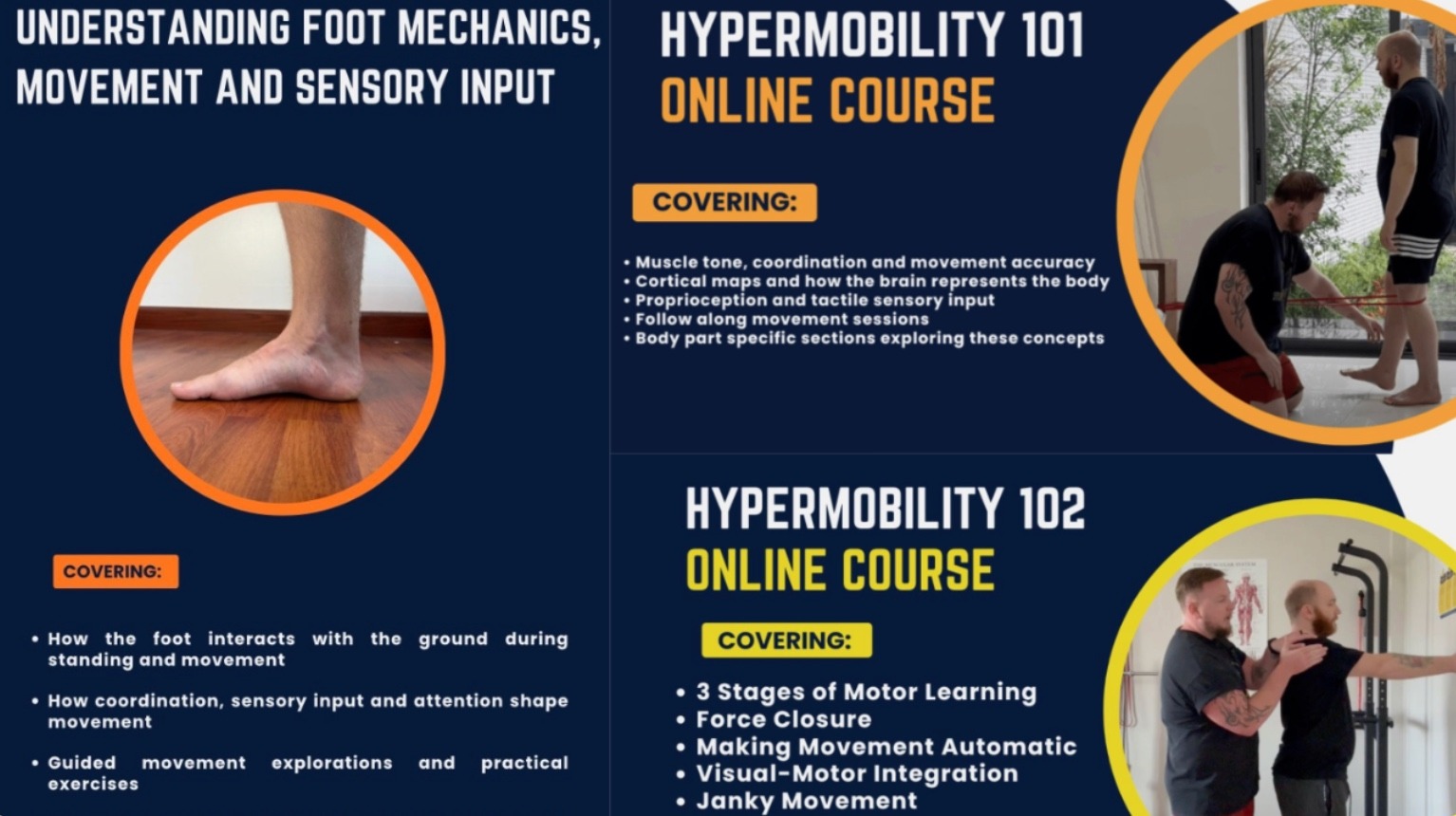
The Hypermobility Fundamentals Bundle
The Hypermobility Fundamentals Bundle is a structured education and movement pathway that starts at the bottom and builds upwards, grounded in motor learning and sensory motor science. Designed for people with hypermobility and persistent pain, it focuses on how strength and stability are organised and learned by the nervous system, beginning with the feet and progressing through sensory input, coordination, and motor learning. The courses are intended to be completed in sequence, with each one establishing the concepts and skills needed for the next.