

- Hypermobility and Early Development: Milestones, Motor Delay, and Predictions - 12 September 2026
- Fibromyalgia and Itching: Why It Happens, What the Science Actually Says, and What You Can Do About It - 9 September 2026
- Hypermobility in Children: Growing Pains, the Beighton Score, and What Actually Helps - 15 August 2026
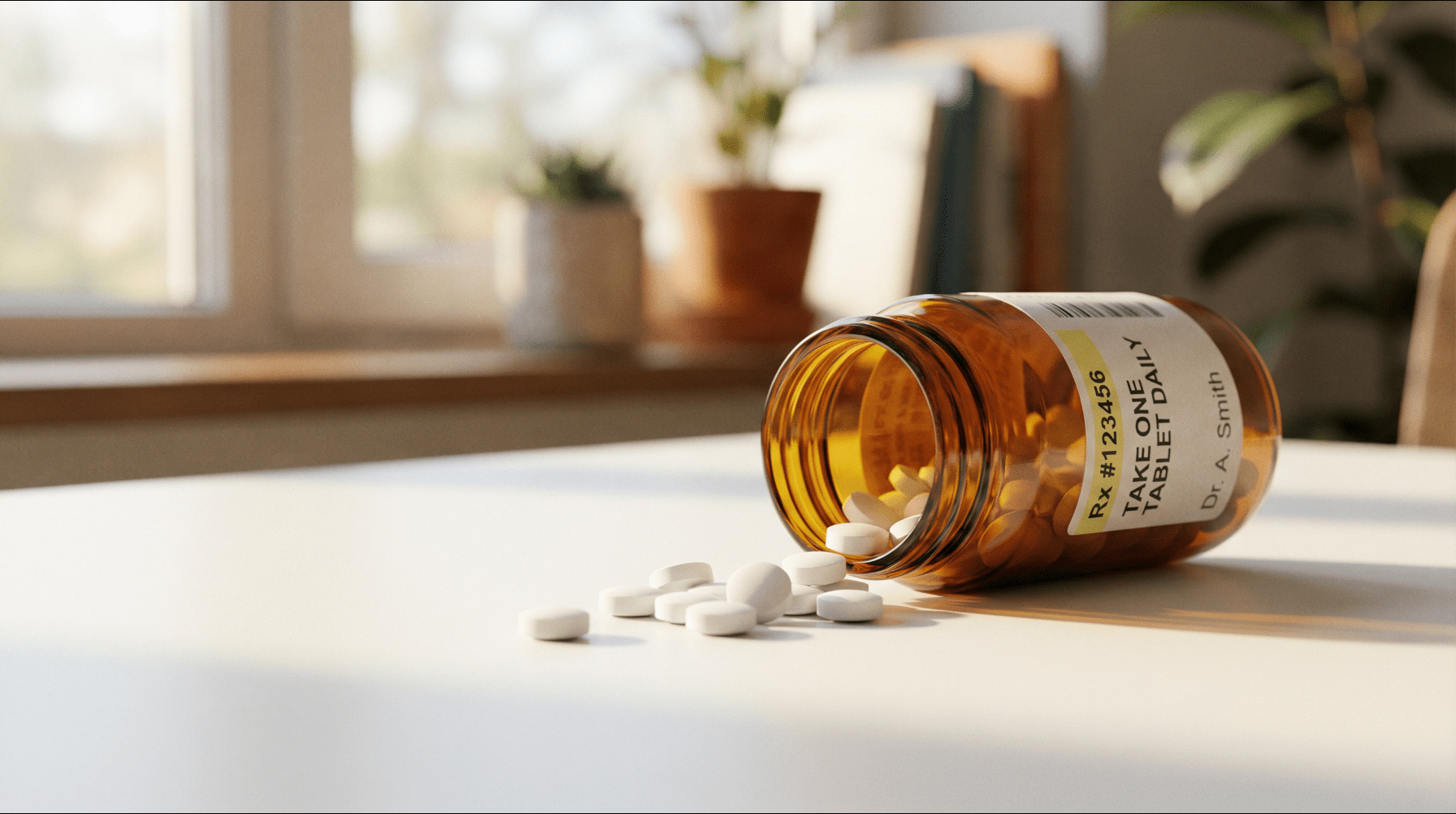
TONMYA (cyclobenzaprine HCl sublingual tablets) is the first FDA-approved fibromyalgia treatment since milnacipran in 2009, approved in August 2025. It works by targeting non-restorative sleep through 5-HT2A, alpha-1, H1, and M1 receptor antagonism. In clinical trials, the NNT (number needed to treat) is 7, meaning for every 7 patients treated, one additional patient achieves a 30% or greater reduction in pain compared to placebo. It isn’t a cure, costs around $1,900 per month without insurance, and comes with legitimate questions about whether it’s meaningfully different from low-dose oral cyclobenzaprine. Here’s the honest picture.
Sixteen Years is a Long Time to Wait
If you’ve been living with fibromyalgia for any length of time, you’ll know the peculiar frustration of watching treatment options stay frozen in time whilst everything else in medicine seems to move forward. The three FDA-approved fibromyalgia drugs, pregabalin, duloxetine, and milnacipran, were all approved between 2007 and 2009. For the past sixteen years, the answer to “what’s new in fibromyalgia treatment?” has essentially been: nothing. Off-label amitriptyline. Physio. Lifestyle changes. The same things your doctor probably mentioned the first time you sat in their office.
So when the FDA approved TONMYA in August 2025, it felt significant. And in a lot of ways, it is. But it’s also complicated, and if you’ve spent any time reading about it online, you’ll already have seen the two camps forming: the people who’ve tried it and call it life-changing, and the clinicians and researchers pointing out that it’s essentially a repackaged muscle relaxant that’s been available for decades. We’re going to give you all of it, properly, without the PR spin in either direction, because those with fibromyalgia deserve an honest look at what this drug actually is and what the data actually says.
Understanding the full context here matters more than just knowing whether TONMYA works. When it comes to fibromyalgia treatment, every decision sits within a bigger picture: the underlying mechanisms driving chronic pain, the way pain amplification processes respond (or don’t) to medication, and the evidence on how non-drug approaches compare to medication over the long term. This post fits into all of that.
What Is TONMYA and How Does It Work?
TONMYA is a sublingual (under the tongue) tablet containing cyclobenzaprine hydrochloride. Each tablet is 2.8mg, and you start by taking one at bedtime for the first two weeks, then move to two tablets (5.6mg total) nightly after that [1]. It’s made by a company called Tonix Pharmaceuticals, and it was launched commercially in the US in November 2025. However, the commercial launch is only part of the story. The more interesting question is what’s actually inside the drug, and how it’s supposed to work.
Now, the mechanism here is genuinely interesting, and it’s worth slowing down to explain it properly, because this is also where the “it’s just Flexeril with a new label” argument starts to get more complicated. The exact mechanism of action for TONMYA in fibromyalgia isn’t fully understood (which is true of most fibromyalgia drugs, to be fair). What we do know is that it antagonises several receptor types: 5-HT2A serotonin receptors, alpha-1 adrenergic receptors, H1 histamine receptors, and M1 muscarinic receptors [1]. The working hypothesis is that by acting on these receptors, it helps to restore normal sleep architecture, particularly the deeper, restorative stages of sleep that those with fibromyalgia are notoriously bad at reaching.
This is a plausible therapeutic target, the sleep angle isn’t just theoretical hand-waving. Non-restorative sleep, that experience of sleeping eight hours and waking up feeling worse than when you went to bed, is one of the most consistent features of FM and almost certainly a driver of the pain cycle rather than just a side effect of it. We’ve written a fair bit about the relationship between sleep and pain in fibromyalgia before, and for anyone wanting a deeper look at sleep physiology in this context, our comprehensive sleep guide goes into a lot more detail.
The sublingual delivery method is the other key thing to understand. Rather than swallowing a tablet that passes through the gastrointestinal system and liver before entering the bloodstream, sublingual tablets dissolve under the tongue and absorb directly through the mucous membrane into the blood. The claim from Tonix is that this bypasses what pharmacologists call first-pass hepatic metabolism, meaning the drug gets into your system faster, at a lower dose, and with less formation of a metabolite called norcyclobenzaprine, which is thought to be responsible for the next-day grogginess that makes standard-dose cyclobenzaprine so difficult to tolerate [1]. Whether this theoretical advantage holds up in practice is one of the genuine points of disagreement, and we’ll come back to it.
The Clinical Trial Data: RELIEF and RESILIENT
TONMYA’s FDA approval rested on two Phase 3 randomised controlled trials: RELIEF and RESILIENT. Both were double-blind and placebo-controlled, which is the gold standard for drug trials, and both produced statistically significant results. Let’s go through them properly.
The RELIEF Trial
The RELIEF trial (NCT04172831) enrolled 503 participants across 39 US sites over 14 weeks [2, 3]. Participants received either TONMYA or placebo and were assessed on a standard pain numerical rating scale. The result: TONMYA reduced pain scores by 1.9 points on average, compared to 1.5 points in the placebo group [3]. The difference of 0.4 points was statistically significant (p=0.01).
Now, 0.4 points on a 10-point scale. Before we get into the interpretation, let’s also note that 46.8% of those on TONMYA achieved a 30% or greater reduction in pain compared to 34.9% on placebo, with an odds ratio of 1.67 [3]. That means participants on TONMYA were about 67% more likely to achieve that clinically meaningful threshold than those on placebo.
However, the Patient Global Impression of Change (PGIC) outcome, which asks patients how much they feel their condition has changed overall, did not reach statistical significance in RELIEF [3]. That’s worth flagging because PGIC is considered one of the most patient-meaningful outcomes in fibromyalgia research. It’s not a small thing.
The RESILIENT Trial
The RESILIENT trial (NCT05273749) enrolled 457 participants across 33 sites and used the updated 2016 ACR fibromyalgia criteria [2]. This one was considerably more impressive. Pain score reductions were -1.8 (TONMYA) versus -1.2 (placebo), a difference of 0.65 points (p<0.001) [2]. The effect size came in at 0.38, which we’ll come back to when comparing this to existing drugs. More importantly, all six pre-specified secondary endpoints reached statistical significance, including the PGIC (which the RELIEF trial missed), FIQR symptom and function scores, sleep disturbance, fatigue, and daily sleep quality [2]. A post-hoc analysis also suggested pain relief began as early as day two [2].
So, two trials. One more modest, one quite convincing. The FDA weighed both and approved the drug. That’s the approved-drug reality.
However, it’s worth sitting with what these trials can and can’t tell us. Fourteen weeks is a short window. Fibromyalgia is a condition most people live with for decades, and the evidence we have on long-term drug efficacy for FM is, to put it charitably, fairly thin. We’ll come back to this when comparing TONMYA to the existing options.
The RALLY Trial: What Happened There?
There was a third trial: RALLY (NCT04508621). It ran to completion but failed its primary endpoint (p=0.115), and the data wasn’t considered in the FDA approval decision [3]. Tonix cited COVID-19 disruptions as a contributing factor, pointing to an unusually high rate of adverse event-related discontinuations (79% higher than in RELIEF) that likely reflected the challenges of running a clinical trial during a global pandemic. That explanation may well be legitimate, interrupted trial conduct during 2020-2022 was common across the industry, but it’s also worth noting that a completed trial that failed its primary endpoint isn’t the same thing as a trial that was abandoned midway through. The RALLY data doesn’t disprove TONMYA’s efficacy, but it doesn’t support it either, and that’s worth keeping in the full picture.
How Does TONMYA Compare to Existing Fibromyalgia Drugs?
There are currently three FDA-approved drugs for fibromyalgia: pregabalin (Lyrica, approved 2007), duloxetine (Cymbalta, approved 2008), and milnacipran (Savella, approved 2009). Amitriptyline is also widely used off-label and is often the first thing prescribed in the UK and much of Europe. Where does TONMYA sit in relation to these?
A 2026 review published in the Journal of Pharmacy Technology compiled comparative effect sizes for pain relief across all FDA-approved fibromyalgia drugs [4]. The numbers are striking for what they reveal about the modest efficacy picture across the board:
| Drug | Effect Size (Pain SMD) | Mechanism | Key Side Effects |
|---|---|---|---|
| TONMYA (cyclobenzaprine SL) | 0.38 | 5-HT2A, alpha-1, H1, M1 antagonism | Mouth numbness, taste changes, oral tingling, somnolence |
| Duloxetine (Cymbalta) | 0.36 | SNRI (serotonin + noradrenaline reuptake) | Nausea, dry mouth, somnolence, fatigue, constipation |
| Pregabalin (Lyrica) | 0.31 | GABA analogue, reduces calcium currents | Dizziness, somnolence, weight gain, oedema, blurred vision |
| Milnacipran (Savella) | 0.22 | SNRI | Nausea, hot flushes, dizziness, insomnia, sweating |
| Amitriptyline (off-label) | Moderate (Cochrane evidence) | 5-HT and NE uptake; histamine and cholinergic effects | Drowsiness, dizziness, concentration difficulties, dry mouth |
So TONMYA’s effect size of 0.38 is numerically the highest of any FDA-approved fibromyalgia drug [4]. But we should be honest about what those numbers mean. An effect size of 0.38 is modest. All four drugs in that table are modest. Likewise, all four have similar ceiling effects when it comes to what they can achieve for most patients. A December 2024 Cochrane overview on pharmacological therapies for fibromyalgia found that duloxetine, milnacipran, and pregabalin provide substantial pain relief in roughly 1 in 10 adults for 4-12 weeks, with no evidence of efficacy beyond 6 months [9]. That’s the reality of fibromyalgia pharmacology: we’re talking about tools that help some people some of the time, not solutions.
A February 2026 cost-effectiveness analysis published in JAMA Network Open examined duloxetine, pregabalin, milnacipran, and amitriptyline across multiple healthcare perspectives [5]. It found duloxetine 120mg to be the most cost-effective option overall, and notably, the study found that “no treatment” actually costs more in the long run due to downstream healthcare utilisation [5]. However, this study didn’t include TONMYA because it was published before the drug’s approval, so a direct comparison there isn’t possible yet, and any claims about TONMYA’s cost-effectiveness are speculative at this stage.
When it comes to amitriptyline specifically, our detailed guide on amitriptyline for fibromyalgia covers its evidence base and practical considerations in much more depth, including the side effect profile that makes it difficult for some people at higher doses. It’s also significantly cheaper than any of the newer options, which matters a lot when we get to the cost section. However, amitriptyline isn’t for everyone either, particularly at doses above 25mg where the anticholinergic burden becomes a real issue for a lot of people.
If you’re interested in the other end of the drug pipeline, the evidence for low-dose naltrexone in fibromyalgia is also genuinely interesting, though still early-stage. And for those curious about medication-related weight changes in fibromyalgia, pregabalin in particular carries a significant weight gain burden that affects quality of life and long-term adherence.
The “Repackaged Cyclobenzaprine” Critique
Right. Here’s where we need to be properly honest, because this critique has real substance and deserves serious engagement rather than being dismissed as competitor noise.
Dr Pradeep Chopra, a Harvard-trained pain specialist, published a detailed analysis of TONMYA on painri.com in October 2025, and his central argument is this: standard oral cyclobenzaprine at low doses (1-4mg at bedtime) is already available, already cheap, and achieves outcomes that aren’t meaningfully different from TONMYA [6]. His analysis is worth taking seriously. However, let’s look at his specific points in detail, because they’re worth understanding rather than just accepting or dismissing.
First, the bioavailability argument. Tonix’s claim is that sublingual delivery reduces first-pass metabolism and therefore reduces formation of the norcyclobenzaprine metabolite that causes next-day sedation. Chopra’s counter is that oral cyclobenzaprine already has 33-55% bioavailability, that the sublingual route offers only a modest improvement on this, and that given cyclobenzaprine’s long half-life of 18-37 hours, the absorption rate difference becomes clinically irrelevant at steady-state dosing [6]. In other words: by the time you’re taking it every night, your body’s blood levels are being maintained at steady state regardless of how you got the drug in. The route of administration matters much less at that point than the dose.
Second, the dose comparison. Chopra points out that simply halving the oral dose halves plasma concentrations, and the pharmacokinetics here are linear, which means low-dose oral cyclobenzaprine should achieve similar plasma levels to the sublingual version at similar doses, without the $1,900 monthly price tag [6].
Third, and this is where it stings a bit: the NNT for oral cyclobenzaprine is already in the range of 7-8 [6], which is very similar to TONMYA’s NNT of 7 from the pooled post-hoc analysis [2]. If two treatments produce the same NNT, the argument for paying 9,000% more for one of them had better be very strong.
Fourth, TONMYA adds new adverse effects that oral cyclobenzaprine doesn’t have: the oral hypoesthesia (mouth numbness) affecting 17-24% of users, abnormal taste in 4-12%, and oral tingling or tongue discomfort [1]. Some patients on Reddit report developing painful sores under their tongue. So the sublingual route isn’t simply delivering the same drug more cleanly. It’s trading some systemic side effects for local oral ones.
This is a legitimate critique. Anyone considering TONMYA who hasn’t already tried low-dose oral cyclobenzaprine at bedtime (which costs roughly $10-20 per month as a generic in the US) should arguably ask their prescriber about that option first. Is Tonix presenting a genuinely novel drug, or a clever reformulation of something already available? The honest answer is: probably somewhere in between.
The Counterarguments: Why TONMYA Might Still Be Worthwhile
However, the critique above isn’t the full story either, and the counterarguments are worth taking equally seriously.
The most compelling argument for TONMYA isn’t bioavailability theory. It’s the actual RCT data. The RESILIENT trial was a well-designed Phase 3 randomised controlled trial with pre-registered endpoints, rigorous blinding, and a significant result across all six secondary outcomes [2]. However, the older cyclobenzaprine studies are comparatively much lower quality, many of them small, short-duration, or methodologically weak trials from decades ago. The NNT comparison between TONMYA and oral cyclobenzaprine is therefore comparing apples with somewhat rotten oranges. TONMYA’s NNT of 7 comes from a 2026 pooled post-hoc analysis of 960 patients in two modern Phase 3 trials [2]. The oral cyclobenzaprine NNT estimates are based on older, much smaller studies in different populations. This isn’t an exact comparison.
The unblinding concern is also worth addressing. One of the criticisms levelled at the RELIEF and RESILIENT data was that the distinctive oral side effects (mouth numbness in up to 24% of participants) might have broken the double-blind, with patients guessing they were on the drug and thus reporting improvements they wouldn’t have reported otherwise. The American Fibromyalgia Syndrome Association’s analysis addressed this directly: pain improvements were statistically the same for participants who noticed oral symptoms and those who didn’t [7]. This suggests the blinding issue, real as it was, didn’t significantly bias the outcomes. However, it’s a question that’s impossible to answer definitively with post-hoc analysis alone, and the sceptical reader is entitled to hold it in mind.
The pooled NNT and NNH data from March 2026 is also genuinely reassuring when it comes to the risk-benefit calculation. The NNT for a 30% or greater pain reduction at week 14 is 7 (95% CI: 5-12), meaning roughly 7 people need to take the drug for one person to achieve that meaningful threshold [2]. The NNH for discontinuation due to adverse events is 26 (95% CI: 14-110) [2]. The Likelihood to be Helped or Harmed (LHH) ratio works out to 3.7, meaning a patient starting TONMYA is nearly four times more likely to achieve meaningful pain reduction than to discontinue due to side effects. That’s a reasonable profile.
And there are patients, real ones, who report real improvements. One Phase 3 trial participant described his wife’s response as dramatic: dramatic reductions in pain, increased energy, clearer thinking, and she was still active at 11pm when she previously couldn’t function past 8pm. Others report that the cognitive fog lifted within days. These aren’t cherry-picked pharmaceutical testimonials. They’re from Reddit threads where people are also freely reporting the failures, the next-day grogginess, the insurance nightmares, the tongue sores. The positive experiences appear real and significant for a subset of those who try it.
I’ll be honest: I find myself sitting somewhere in the middle on this one. The “it’s just Flexeril” argument is partially right and partially too reductive. But I’d want to know a lot more about the long-term data before I’d put this in the same category as a genuinely novel drug. For a condition that involves central sensitisation and complex neurological changes, the drug that helps at week 14 in a clinical trial and the drug that helps over years of real-world use aren’t necessarily the same thing. Fibromyalgia also turns out to be only about 10 percent heritable at the common variant level, so no drug is fixing a simple genetic fault here.
The Side Effects: What to Actually Expect
The main side effects in the clinical trials were localised to the mouth and mostly transient. Oral hypoesthesia (numbness in the mouth) was the most common, affecting 17-24% of participants [1]. Abnormal taste affected 4-12%, oral tingling or paresthesia around 5-7%, and tongue discomfort roughly 7% [1]. Most of these effects lasted less than 60 minutes and resolved on their own [1]. Systemic side effects (somnolence, dry mouth, fatigue) occurred but were less frequent than with oral cyclobenzaprine at standard doses.
In the real world, anecdotal reports include some people developing painful ulcers or sores under the tongue, which wasn’t a prominent signal in the trial data. How common this is at the population level isn’t clear yet, it’s early days for a drug that only launched in November 2025. Next-day grogginess is also reported by some users despite the theoretical pharmacokinetic advantages, which suggests the sublingual route doesn’t eliminate sedation for everyone.
Now, none of this means the side effect profile is unacceptable. Compared to the side effects of pregabalin (weight gain, significant cognitive dulling in some users, physical dependence) or the nausea that puts a lot of people off duloxetine in the first few weeks, mouth numbness that resolves within an hour looks fairly benign for most people. But we’re not here to minimise it for those who find it particularly difficult.
The low discontinuation rates due to adverse events, reflected in the NNH of 26, suggest most people can tolerate it. But “tolerate” and “tolerate well” aren’t the same thing, and for those with fibromyalgia who already deal with oral sensitivities, sensory processing differences, or conditions involving the autonomic nervous system, the mouth-based side effects may be more bothersome than the trial numbers suggest. Anyone dealing with blood pressure instability or autonomic symptoms should have a specific conversation with their prescriber about alpha-1 receptor antagonism, since TONMYA’s mechanism includes this pathway and it can affect cardiovascular regulation.
One additional point that’s particularly important given that roughly 90% of those with fibromyalgia are women: TONMYA carries a pregnancy warning. Animal studies showed potential embryofetal toxicity, including neural tube defects, at clinically relevant doses [1]. If you’re pregnant, planning a pregnancy, or of childbearing age without reliable contraception, this needs to be a very specific part of the conversation with your prescriber. It’s not a reason to dismiss the drug entirely, but it’s absolutely something you need to know about.
The Cost and Access Reality
This is where things get genuinely difficult for a lot of people. TONMYA costs approximately $1,900 per month without insurance in the US [1]. That’s about $22,800 per year for a drug where roughly 46% of patients achieve a 30% pain reduction in trials, though about 28-35% do so on placebo, meaning the net benefit over placebo applies to roughly 1 in 7 additional patients. Even with the Tonix manufacturer savings card, which can significantly reduce out-of-pocket costs for commercially insured patients, many people are finding the drug placed in the highest cost tier by their insurance company, requiring extensive prior authorisation, or simply not covered at all.
Some patients on Reddit report paying around $500 per month even after the savings card, others report being told their insurance won’t cover it for another six months, and some are simply being denied outright. This isn’t unusual for a brand-new drug, the prior authorisation process for new drugs in the US is notoriously brutal, but it means that for many of those with fibromyalgia who might benefit from TONMYA, access is a significant barrier right now. The situation will likely improve as the drug establishes itself and payer negotiations progress, but “likely to improve in future” doesn’t help someone trying to manage their symptoms today.
Compare this to generic cyclobenzaprine, which costs roughly $10-20 per month in the US, and you can see why the “repackaged old drug” narrative gains traction. It’s not just a pharmacological argument, it’s an access and health equity argument. If low-dose oral cyclobenzaprine at bedtime achieves similar results for most people at 1% of the cost, the case for prescribing a $1,900-per-month drug as a first-line option isn’t made simply by demonstrating modest superiority in trials.
However, the cost picture may change. New drugs almost always start expensive, especially in the US, and coverage tends to broaden as a drug establishes its real-world profile. We’re also only a few months into this drug being on the market, the situation in six to twelve months may look very different. But right now, the financial barrier is real, and it’s disproportionately affecting exactly the people who most need new options.
What the Patient Community Is Actually Saying
We spent time reading through the fibromyalgia subreddits, patient forums, and social media discussions around TONMYA, and the picture that emerges is genuinely mixed, which is exactly what you’d expect from a drug with modest effect sizes. Around 46% of trial participants responded meaningfully, but a similar proportion on placebo did too, and the net benefit over placebo applies to roughly 1 in 7 additional patients. That means the drug adds something real, but for many people the improvement won’t be dramatic, and those people are on Reddit too. The sheer variation in experience is itself useful information.
The positive reports are striking when they occur. Phrases like “after just one hour of sleep on Tonmya, I felt as if I’d had a full eight hours of restorative rest” and “a lot of the fog lifted” and “I can stretch more effectively now” appear repeatedly in the positive thread responses [7]. Some people describe an improvement in energy that they haven’t felt in years. One person, reporting a family member’s trial participation, described a dramatic shift in daily functioning that sounds exactly like the kind of response you’d hope for from a drug targeting sleep architecture.
But then there are posts like: “It didn’t help my sleep, made me extremely groggy the next day, and left my mouth feeling odd for hours.” And: “I developed painful sores under my tongue after two weeks and had to stop.” And the cost complaints, the insurance delays, the people who tried it for a month, noticed nothing, and went back to their previous regimen.
This is what a drug with a real but modest effect looks like in the real world, and it’s worth being honest about it. TONMYA isn’t going to be the answer for everyone with FM. But for a meaningful proportion of patients, it might be genuinely helpful in a way that existing options haven’t been. That’s not nothing.
I’ll also note, and this is the bit where we could easily go off on a tangent but I’ll try to keep it tight, that the sleep experience people are reporting as positive with TONMYA is almost exactly what the underlying mechanism predicts. If the drug really is improving the restorative quality of sleep, then better energy, clearer thinking, and more functional movement the next day are the downstream consequences you’d expect. This is how mechanism and outcome connect in a way that makes biological sense, which gives me slightly more confidence that the positive responders aren’t just experiencing placebo effects, even if placebo can’t be fully ruled out at an individual level.
Where Does Exercise Fit In All of This?
Here’s the part we always have to come back to, and I make no apology for saying it again, because the evidence demands it. When it comes to long-term fibromyalgia outcomes, exercise still outperforms any single pharmacological treatment. This isn’t a philosophical preference or a lifestyle sermon. It’s what the data says. And I genuinely understand that hearing “exercise” when you’re in significant pain can feel dismissive, it isn’t meant that way.
The best RCT evidence we have for fibromyalgia shows that aerobic exercise, resistance training, and multi-component exercise programmes produce meaningful and sustained improvements in pain, fatigue, sleep quality, and functional capacity that extend well beyond the 12-14 week windows these drug trials use [8, 11]. However, the Cochrane overview from December 2024 found that the three existing approved fibromyalgia drugs show no evidence of efficacy beyond six months [9]. Exercise, done appropriately and progressively, shows evidence of sustained benefit beyond that window [8, 11].
We’ve written extensively about why exercise works for fibromyalgia and how to approach it safely, and about the specific benefits of outdoor exercise for this population. There’s also good evidence for stretching as part of a structured programme. None of this is about telling people to “just move more” and ignoring the very real barriers that FM creates. Pacing is essential, and our complete guide to pacing for fibromyalgia and chronic pain is probably the most important companion piece to anything we write about treatment.
So where does TONMYA fit in a programme that includes movement and exercise? As a potential adjunct, not a replacement. The goal of a sleep-targeting drug like TONMYA, if it works for you, is partly to create the physiological conditions in which other interventions can be more effective. Better sleep means better recovery, lower systemic pain, and more capacity to engage with movement-based rehabilitation. If TONMYA helps you sleep better and that extra resilience means you can do ten minutes more gentle exercise on a given day, that’s a legitimate therapeutic benefit beyond the direct pain numbers in the trials. But it has to be part of a broader picture, not the whole answer.
The same applies to managing symptoms like fibromyalgia headaches, eye pain, or back pain that often come alongside the wider FM picture. No single drug addresses the full scope of what fibromyalgia involves, and anyone who tells you otherwise is overstating the evidence.
Is TONMYA Worth Trying? Practical Guidance for Those Considering It
This is the bit that matters most, and we’re going to be direct about it rather than hiding behind vague language. Here’s what we’d suggest thinking through if TONMYA is on your radar.
And just a note before we get into the practical points: nothing here is medical advice, and your specific situation matters. What follows is based on the evidence as we understand it in March 2026.
First, have you already tried low-dose oral cyclobenzaprine at bedtime? Given the genuine pharmacological overlap and the massive cost difference, this seems like a reasonable first step before pursuing TONMYA, especially given the criticisms we’ve outlined above. If you’ve tried it and found the next-day grogginess unmanageable, that’s actually one of the better arguments for TONMYA specifically, since the sublingual formulation is designed to address exactly that problem. If you haven’t tried oral cyclobenzaprine, that conversation with your prescriber is worth having.
Second, if you’re going to try TONMYA, the evidence suggests you’ll know whether it’s working for you within about two weeks [2]. The RESILIENT post-hoc analysis showed pain relief beginning as early as day two in some responders, and the clinical timeline for determining response appears to be around two weeks [7]. If there’s no meaningful change in sleep quality or pain after two to three weeks at the 5.6mg dose, the probability of a late response is low.
Third, the cost reality. If you’re in the US and don’t have insurance coverage, or if your plan places TONMYA in a high cost tier, the Tonix savings card exists and can help. But $500 per month is still $500 per month. It’s a significant ongoing cost for a treatment that may not work, and one that’s worth factoring into the decision alongside other things you might spend that money on in terms of your broader care.
Fourth, check in with your prescriber about any conditions that might interact with TONMYA’s mechanism. The alpha-1 receptor antagonism, in particular, has cardiovascular implications that are relevant for those with dysautonomia or cardiovascular instability or autonomic nervous system difficulties that often co-occur with fibromyalgia.
Fifth, and this is the thing we feel most strongly about: if TONMYA helps you, use that improved capacity to invest in the things that will help you most long-term. Better sleep from TONMYA is a platform to build from, not a destination in itself. The research on lifestyle factors that influence pain and on pain neuroscience is absolutely clear that medication alone, even well-evidenced medication, doesn’t address the central nervous system changes underlying fibromyalgia in the way that progressive, consistent rehabilitation does.
Understanding mast cell involvement in fibromyalgia, cognitive symptoms including brain fog, and temperature sensitivity all matters when thinking about what TONMYA can and can’t address. It’s a sleep-targeting drug. A lot of fibromyalgia symptoms, the itching, the cold intolerance, the chest wall pain, the nerve-like pain patterns, aren’t going to respond to improved sleep architecture alone. And for those of you dealing with overlapping conditions, our overview of pain medications in hypermobility and EDS and the fibromyalgia-osteoarthritis overlap give useful context on the broader pharmacological picture.
Frequently Asked Questions About TONMYA
When was TONMYA approved by the FDA?
TONMYA received FDA approval on 15 August 2025 and was commercially launched in the US in November 2025. It is the first new FDA-approved fibromyalgia treatment since milnacipran (Savella) was approved in 2009 [1].
Is TONMYA just a repackaged form of cyclobenzaprine?
TONMYA does contain cyclobenzaprine HCl, the same active ingredient as the muscle relaxant Flexeril, but delivered sublingually at a much lower dose (2.8-5.6mg vs 5-10mg for standard oral cyclobenzaprine) [1]. The manufacturer argues the sublingual route reduces first-pass metabolism and metabolite formation, reducing next-day sedation. Critics, including Harvard-trained pain specialist Dr Pradeep Chopra, argue that low-dose oral cyclobenzaprine at bedtime achieves similar outcomes at a fraction of the cost [6]. Both perspectives have merit, and the honest answer is that the pharmacological difference is real but whether it translates into a clinically meaningful advantage over low-dose oral cyclobenzaprine remains genuinely uncertain.
How many people respond to TONMYA?
Based on pooled data from the RELIEF and RESILIENT trials, approximately 46% of those on TONMYA achieved a 30% or greater reduction in pain, compared to roughly 28-35% on placebo [2]. The NNT (number needed to treat) is 7 [2], meaning for every 7 people who take TONMYA, 1 additional person achieves that clinically meaningful threshold compared to placebo. Around 22% achieve a 50% or greater reduction, compared to roughly 13% on placebo [2].
How much does TONMYA cost?
Without insurance, TONMYA costs approximately $1,900 per month in the US [1]. With commercial insurance and the Tonix manufacturer savings card, some patients report paying around $500 per month. Coverage is highly variable, and many insurance plans require prior authorisation or place the drug in a high cost tier. This is expected to improve as the drug becomes more established, but cost remains a significant barrier for many patients currently.
How long before you know if TONMYA is working?
Post-hoc analyses of the clinical trial data suggest some patients notice changes within the first two days, and a reasonable assessment window appears to be around two weeks at the full 5.6mg dose [2, 7]. If there’s no meaningful improvement in sleep quality or pain by two to three weeks at full dose, the probability of a late response is relatively low based on the available data.
A Final Word
TONMYA is a genuinely significant development for fibromyalgia, not because it’s a dramatic leap forward in efficacy (it isn’t), but because it’s the first new approved option in sixteen years in a condition where options have been desperately limited. That matters. The people who respond well to it, roughly 46% achieve meaningful pain reduction in trials, deserve to know it exists and to have access to it.
But we’d be doing you a disservice if we presented it as the breakthrough drug some of the press coverage has implied. It’s a sleep-targeting treatment with modest effect sizes that are numerically comparable to the existing options, and which may or may not be meaningfully superior to simply taking low-dose oral cyclobenzaprine at bedtime. The cost is a serious barrier. The long-term evidence doesn’t exist yet. And as with every pharmacological treatment for fibromyalgia, the evidence is clear that it works best as part of a broader programme rather than as the whole answer.
So: if you’re considering it, have the conversation with your prescriber. Ask about low-dose oral cyclobenzaprine first if you haven’t tried it. Know that the net benefit over placebo applies to roughly 1 in 7 additional patients, and that around 46% of trial participants experienced meaningful pain reduction. If you’re one of them, that’s a real and legitimate improvement in your life. And keep building the other things alongside it, the exercise, the pacing, the sleep hygiene, the rehabilitation. Because those are the things the evidence says will help you most over the years, not just the next fourteen weeks.
We’ll keep watching how TONMYA performs in the real world as more data comes in. It’s early days yet.
Living with Fibromyalgia? You Don’t Have to Figure It Out Alone
If you’ve read this far, you’re clearly someone who wants to understand what’s actually going on with your body rather than just accepting vague answers. That’s exactly the kind of person the Fibro Toolbox was built for.
It’s not a rigid programme you have to follow perfectly on your worst days. It’s a set of tools, education on pain and nervous system concepts, movement options, stretching, and sensory-based strategies, that you can pick up and use whenever you need them. Built specifically for the reality of living with fibromyalgia, where no two days are the same.

Check out the Fibro Toolbox here
– The Fibro Guy Team –