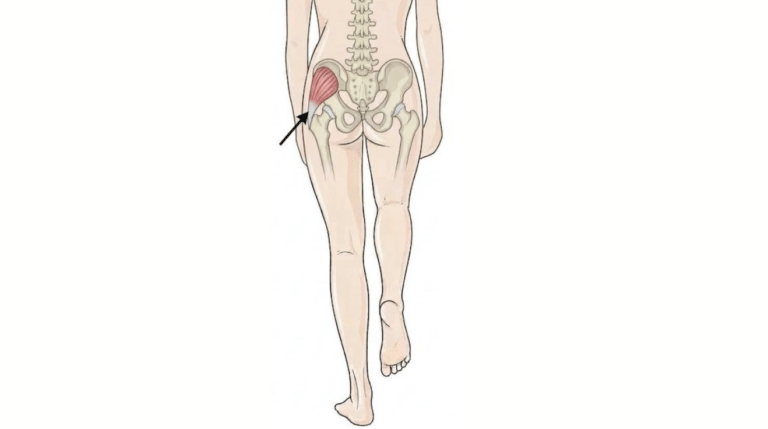

- Hypermobile hip exercises we use, and why clamshells aren’t one of them - 17 October 2026
- Is Fibromyalgia a Disability in the UK, and Can You Claim PIP? - 14 October 2026
- Fibromyalgia and Central Sensitisation, What Is It in Plain English? - 8 October 2026
This article is part of our comprehensive guide to hypermobility and Ehlers-Danlos syndrome.
Losing weight doesn’t appear to cause more subluxations, and the reason I can’t put that more strongly is that nobody has ever counted them. Not in hypermobile Ehlers-Danlos syndrome, not in hypermobility spectrum disorder, not in any group large enough to quote at you. What has been counted is pain, and that picture is a good deal less comfortable, because after major weight loss those with hypermobility don’t reliably get the relief everybody else gets, and some of them describe more joints hurting afterwards rather than fewer [1][2].
The thing that catches people out is that load and stability are two different jobs, and they don’t have to move in the same direction. Getting lighter genuinely reduces the force going through a knee, and that is measured and not in dispute [3]. But a hypermobile joint isn’t unstable because of what’s pressing down on it. It’s unstable because the ligaments, the capsule and the tendons holding it together are more compliant than they should be, and shifting body mass doesn’t change any of that [4][5]. Hypermobile EDS and HSD are connective tissue problems with joint instability built into them, so a smaller number on the scales leaves the tissue exactly as it was [6][7].
Which means you can take load off a joint and end up with less control of it, if the thing that was doing the controlling went down at the same time.
What Turns Up After Major Weight Loss
The direct human evidence comes down to two groups of people who’d had bariatric surgery, and not one subluxation was measured in either of them. What got measured was pain, and how people rated their own joints afterwards.
Those with hypermobility didn’t get the multi site pain reductions the non hypermobile ones got, and tended to keep the pain in the joints that carry the weight, so hips and knees mostly [1]. In a second group, looked at after the fact rather than followed forwards, those with hypermobility had increased or new pain in a greater number of joints after massive weight loss, and the differences turned up at the ankles, shoulders, hands and feet [2].
Read that list again, because it’s the interesting part. Ankles, shoulders, hands and feet. Two of those barely carry any weight at all, and if this were purely a loading story the knees and hips would move and the hands would sit still.
Some people also rated themselves as more hypermobile after surgery than before, which got read as increased awareness of instability rather than proof that anything structural had changed [1]. That distinction is easy to skate over and it’s worth slowing down on, because noticing your shoulder move in a way it has always moved is a different event from the shoulder starting to move further, and from the outside the two look identical. It’s also not a small thing to be told, when you have just reported that your joints feel worse, that what changed was your attention.
Hold all of it gently. It’s a small amount of evidence, it’s in people who had surgery rather than people who dieted, and it measures pain and self report rather than anything a clinician watched come out of a joint. None of it shows that intentional weight loss increases documented subluxation counts in hEDS or HSD, and the case for caution is indirect and built on mechanism [1][2].
There’s one feature of both studies that cuts in an awkward direction. The weight loss involved was large enough and fast enough to sit near the top of what a body can be asked to do, which is a sensible place to go looking for an effect, since if something is going to show up anywhere it will show up there. It’s a poor place to draw conclusions about somebody losing a stone over a year.
What it does do is close off the comfortable assumption. You can’t look at somebody hypermobile carrying extra weight and say the joints will settle once that’s off, because in the only groups anybody has followed, they largely didn’t. That isn’t the same as saying it’ll make things worse. It does mean the confident version of the advice was never earned.
Why a Subluxation Is Such a Hard Thing to Count
If the answer is that nobody has counted, the next question is why not, and it isn’t laziness. Counting subluxations is genuinely awkward, and the reasons it’s awkward explain the shape of everything else on this page.
Start with what the word covers. In hypermobile EDS and HSD the instability sits in the ligaments, the capsule and the tendons, and what comes out of that is a spread of events, subluxations, full dislocations, sprains and soft tissue injuries, turning up across a lot of joints rather than one troublesome one [4][5]. So it’s a category, not an event. A shoulder that goes fully out and needs putting back is one thing. A kneecap that tracks off and slides back on its own before you’ve finished the step is another. A rib that shifts when you turn over in bed and then hurts for three days is a third. All three get called a subluxation by the person they happened to, quite reasonably, and none of them produces the same record.
Then there’s the practical problem, which is that almost none of it happens in front of anybody who could write it down. A joint that goes and comes back has usually finished before you could get to a phone, and the scan afterwards shows a joint sitting exactly where it should be. So the record is nearly always a person saying what happened, which is perfectly good information and a genuinely difficult measurement.
On top of that sits the awareness problem, and it turned up directly in the bariatric work when people rated their own hypermobility differently afterwards [1]. That isn’t scepticism about what anybody reported. It’s that losing a lot of weight also changes how much you move, how much you look at your own body, what clothes you’re in, and how much attention you’re paying to a joint somebody has just told you ought to be feeling better. Any one of those would change how many events get noticed, without a single joint behaving differently.
None of which makes the reports wrong. It makes counting them properly a job that has to be designed on purpose rather than bolted onto the end of a weight loss trial, which is presumably why it has never been bolted onto the end of a weight loss trial.
And it leaves a gap with a very specific shape. Pain after weight loss in those with hypermobility has been measured twice, in small groups, with results that should make everybody pause [1][2]. Joints actually coming apart has been measured never. So anybody telling you the research shows weight loss causes subluxations is describing the first of those and calling it the second.
Why Lighter Isn’t Automatically Steadier
Weight loss does exactly what it says on the tin mechanically. Drop a kilo and the compressive and resultant forces at the knee go down, and so does the knee adduction moment while you walk [3]. That’s real, it’s measured in people with obesity related knee disease, and nothing here argues against it.
The part that gets left out is that muscle is doing a job in there too. Muscles work as shock absorbers and as dynamic stabilisers, and when they’re weak the shock absorption drops, the stress through the joint surface goes up, and control of the joint gets worse [3][8].
So there are two things being adjusted, not one. How much force arrives at the joint, which losing weight turns down. And how well the joint is held and steered while that force arrives, which losing weight doesn’t touch directly, though the usual way of going about it tends to turn that one down as a side effect. In somebody with ordinary connective tissue the first effect dominates and everything feels better. In somebody whose passive restraints were never holding much in the first place, the second is carrying an unusual share of the work, and taking anything off it gets noticed.
Which is why “just lose the weight” is such an unsatisfying thing to be handed in a ten minute appointment.

The Muscle Problem, and It’s the Best Supported One
Of the three explanations that could account for any of this, muscle loss has the most behind it, and it’s also the one you can do something about. That combination is rare enough to be worth saying out loud.
Muscle is the active stabiliser and a hypermobile joint leans on it harder than an ordinary one does. That’s not a fringe position. It’s the reason physical therapy for hypermobility spectrum disorders aims at strengthening the muscles around the joint, because those muscles are what improve mobility and dynamic control when the passive restraints are loose [9]. In hEDS, muscle strength tracks with how well somebody gets out of a chair, how far they walk in six minutes and how limited they are day to day, and proprioception complicates that relationship rather than sitting neatly beside it [10].
That last part gets skipped, and it’s the half that matters most to me in a studio. The signal coming out of a lax joint is worse before the muscle is even involved, so you’re asking a weaker system to steer using poorer information.
The proprioceptive side is reasonably well documented now. Hypermobile children have poorer knee position sense and weaker knee extensors and flexors than children who aren’t hypermobile [11]. In adults with generalised joint hypermobility much the same turns up at the elbow, the knee, the neck and the lower back, alongside smaller limits of stability, and in some of the work lower isometric strength in the legs or less endurance in the neck muscles [12][13][14][15].
So the baseline is already a bit compromised, before anything else happens.
Why a Hypermobile Joint Leans on Muscle Harder
It’s worth understanding why muscle matters disproportionately here, because it isn’t simply that there’s more work to do.
In a joint with ordinary connective tissue the passive restraints do a fair amount of the holding for free. The ligament reaches the end of its range and stops the movement. No decision, no energy, no delay. In a more compliant joint that end point arrives later and more softly, so a lot of what used to be a mechanical stop has to become an active one, which means muscle, which means the nervous system has to decide to do it and has to decide in time.
That’s a worse deal in three separate ways and they compound. It costs energy, which is part of why hypermobility and fatigue turn up together so reliably. It has a delay in it, because a reflex is quick but it isn’t instant, and a ligament is instant. And it depends on knowing where the joint currently is, which is exactly the information a laxer joint supplies less precisely [11][12][13].
What we see in the studios, over and over, is the obvious workaround: hold more or less everything a bit tighter all of the time, so the joint never gets near the range where the decision has to be made. It works, in that it keeps joints in. It’s expensive, in that it’s why so many of those with hypermobility are simultaneously hypermobile and stiff as a board. I’d call that a compensation rather than a fault, and it’s our reading of a pattern rather than anything anybody has run a trial on.
If that’s broadly what’s happening, then muscle isn’t a support act. It’s doing a job the tissue was supposed to do, badly paid and under time pressure, and anything that reduces how much muscle is available, or how well it’s informed, lands on joint stability rather than on general fitness.
Losing Weight Costs You Some Muscle
Weight loss isn’t fat loss, however much we’d all like it to be. In healthy younger adults eating a quarter less than usual for two years, the restricted group lost fat mass and fat free mass compared with the group eating freely [16]. In older adults with obesity doing much the same thing, a strategy built around supplementing protein still produced a modest loss of lean tissue while overall weight came down by about seven per cent [17].
That second one is worth sitting with, because it was actively trying to protect the muscle and still didn’t quite manage it. Protein helps. It doesn’t make the problem go away.
As for what losing muscle does to stability, the general population work is filed under sarcopenia, the generalised loss of muscle mass and function, and it’s associated with falls, instability, frailty and poorer outcomes after surgery [18][19]. In older adults measured on a force platform, having sarcopenia independently made postural stability worse [20]. And in people who’d had joints replaced, sarcopenia came with higher odds of the prosthetic dislocating or loosening [21].
That last finding is the closest thing in the literature to a mechanical stability signal, and it needs a caveat roughly the size of a bus. A prosthetic hip is not a hypermobile shoulder, the people in that work are older and have a different problem, and nobody is claiming the numbers transfer. What it supports is the general principle that low muscle reserve leaves a joint mechanically worse off, and that principle isn’t controversial. The size of the effect in a hypermobile twenty nine year old losing fifteen kilos is a different question and nobody has the faintest idea.
What That Adds Up To
Put the three findings side by side and you have a mechanism rather than a story. The active stabiliser matters more than usual in hypermobility. The signal it works from is already noisier than usual. And the standard way of losing weight reliably takes a slice off the active stabiliser.
That doesn’t prove the joints come apart more often, because nobody has counted. It’s a considerably better reason to be careful than a thread full of people saying it happened to them, and it points at something specific you can protect rather than a vague instruction to be cautious.
The Fat Pad Question
The second explanation is the one that gets mangled most often online, usually into your body fat was holding your joints together, so it’s worth being precise about what’s supported and what isn’t.
Some fat depots do a local mechanical job. The infrapatellar fat pad, the wedge of tissue sitting between the kneecap, the femur, the meniscus and the tibia, fills that space, helps distribute synovial fluid around it and absorbs impulsive loads going through the joint [22][23]. Modelled mechanically it behaves in a non linear and viscoelastic way, and its structure lets it deform so as to reduce stress in the surrounding tissue [22][23]. Fat pads taken from osteoarthritic knees show measurable stiffness and viscoelastic behaviour under both compression and shear, so this isn’t a theoretical property that vanishes in a real joint [24].
It’s also the explanation that got floated for what turned up in those with hypermobility after bariatric surgery, that adipose tissue might have some stabilising effect and rapid loss of it might reduce stability [1]. It was raised to explain an observation rather than tested, so it generates a question rather than answering one.
None of that means body fat protects hypermobile joints generally, and anybody telling you to stay heavier for the sake of your knees is well ahead of the evidence. Obesity raises joint load, raises the torques going through joints during ordinary movements like standing up from a chair, drives inflammatory signalling and increases osteoarthritis risk across knees, hips, ankles and other tissues [25][26][27], and that is a much larger and much more consistent body of work than anything about fat pads.
The supported claim is narrow and it deserves its narrow form. Some fat depots, particularly around the knee, have genuine passive mechanical functions, so losing them could in theory reduce local cushioning or space filling support even while total loading of the joint improves [24][28]. In theory, and in a knee. It hasn’t been shown happening in anybody hypermobile and it hasn’t been connected to a subluxation.
Ask what would have to be true for it to matter to you and the answer is quite a lot of things at once. The depot would have to be one that does a mechanical job, and most body fat isn’t. The loss would have to be big enough to change the geometry of the joint rather than just its weight. And the cushioning that went would have to matter more than the load that also went, in the same joint, at the same time. That’s three conditions stacked, and the direct evidence for all three in somebody hypermobile is zero.
Treat it as plausible and probably small. If somebody builds a whole argument on it, that’s usually a sign there wasn’t much better material behind it. It’s popular because it’s satisfying, in that it explains a confusing experience with a tidy physical picture, and the satisfying explanations are the ones I’d be most suspicious of.
Collagen, and What Eating Less Might Do to It
The third explanation is the least direct of the lot, and it’s where most versions of this question on the internet go furthest past what the research says. So slowly.
The reason anybody raises it is sound enough. The Ehlers-Danlos syndromes are disorders of collagen or of the wider extracellular matrix, its synthesis and its maintenance, and hEDS and HSD probably involve structural fragility in fascia, tendon and the supportive connective tissues [6][7][29]. If your connective tissue is already the weak link, then anything that puts the machinery for building and maintaining it under nutrient stress is at least worth asking about.
What’s actually been shown is in animals. In rats, restricting food reduced collagen production in articular cartilage, and it did so in proportion to how severe and how prolonged the deprivation was [30]. In a wound repair model, chronic caloric restriction decreased collagen accumulation in the new tissue along with measures related to crosslinking [31]. In adult mice, graded calorie restriction changed the elemental composition of bone collagen, which got attributed to the body mobilising its own proteins and to a genuine change in how the collagen was put together [32].
Three animal findings pointing the same way are more interesting than one on its own. They’re still three animal findings, nobody has tested whether any of it holds in people, and collagen turnover during weight loss hasn’t been looked at in anybody with hypermobility. Treat it as a reason to suspect something rather than a reason to believe it.
Bone during caloric restriction is closer to home, because there the human work exists and it disagrees with itself. In healthy younger adults eating a quarter less for two years, bone mineral density fell at the lumbar spine, the total hip and the femoral neck, and the markers of bone turnover shifted towards resorption [16]. In young adults carrying extra weight who did six months of it, there was no meaningful loss of total body or hip density despite resorption markers going up [33]. And in mice the effects go in opposite directions depending on whether you look at trabecular or cortical bone, and whether the animals are young or old [34].
So it depends on age, on duration, on the site you measure and on how much fat somebody was carrying to start with. That isn’t a satisfying answer and it’s the correct one, and anybody handing you a flat “weight loss weakens your bones”, or a flat “it doesn’t”, has picked whichever half suits them.
Weight Loss Isn’t One Thing
Something gets lost when this is discussed as though losing weight were one event with one set of consequences, because the three explanations above don’t apply equally to every route down.
The only direct human evidence in hypermobility comes from bariatric surgery, and surgery is the most extreme version of the thing. The loss is large, it’s fast, and it comes with an absorption change on top of the calorie change, so the two groups sitting closest to the question are also the two least like what most people reading this are doing [1][2]. That cuts both ways. It might mean the surgical results overstate what a slower dietary loss would do, or it might mean surgery got there first and showed the effect at a size big enough to see.
Dietary restriction is the route most of the mechanism research uses, and it’s where the lean tissue findings come from. Two years of eating a quarter less took fat mass and fat free mass off healthy younger adults [16], and a protein supplemented version in older adults with obesity still took a modest amount of lean tissue while overall weight dropped by around seven per cent [17]. It’s also the route the animal collagen findings map onto most directly, since those animals had their food restricted rather than an operation [30][31].
Drug driven loss is the newest route and the one with the least behind it in this context.
Then there’s the part nobody controls, which is where the fat actually comes off. You don’t get to choose, and the local mechanical roles some depots play, the knee fat pad being the best characterised, are properties of specific tissue in specific places [22][23][24]. Whether a given person’s weight loss takes much of that particular tissue, and whether it matters if it does, hasn’t been measured in a hypermobile knee.
So when somebody asks whether losing weight will make their joints worse, the more answerable question underneath it is usually how, how fast, and what’s being protected on the way. Those have partial answers. The original question doesn’t have one at all.
GLP-1 Drugs and Hypermobile Joints
This is the question we get asked most often now, and it’s usually phrased as “is Mounjaro going to wreck my shoulders”. The short version is that there’s no evidence either way, because nobody has looked.
The GLP-1 receptor agonists cause substantial weight loss and that part isn’t in doubt [35][36], and they’ve moved well beyond diabetes into obesity treatment and a widening set of other uses [37]. Whether they increase subluxations in hEDS or HSD hasn’t been tested. Nothing, in any form, in either direction, so if somebody tells you they do, or tells you they don’t, they’re telling you what they reckon.
What does exist is a tradeoff, and it’s worth understanding rather than being frightened of.
These drugs take lean mass along with fat. Up to 40 per cent of the weight lost on semaglutide, and up to 25 per cent of the weight lost on tirzepatide, has been attributed to lean body mass [38]. Those are the figures that do the rounds on social media with an alarmed caption, and they’re real, so I’m not going to pretend otherwise. Two points from the same source never travel with them, though. The lean mass loss may simply be proportional to how much weight is coming off, which is what happens with any large weight loss and isn’t a special property of the drug. And in some of the work, skeletal muscle index or grip strength held steady after an early dip [38].
A concern with an asterisk on it, then, rather than the muscle catastrophe it usually gets written up as.
The broader musculoskeletal signal is quiet. Pool together everything that’s been properly tested and there’s no difference between people taking a GLP-1 drug and people taking nothing in reported osteoarthritis, rheumatoid arthritis, osteoporotic fracture, synovitis or disc protrusion [39]. If these drugs were quietly wrecking joints at any scale, you’d expect something to show up there.
Come at it from rheumatology or from orthopaedics and you land in roughly the same place, which is that the anti inflammatory and metabolic benefits are plausible, and that long term safety, and how much of the effect is the drug rather than the weight loss, are both still open [36][38]. Bone is genuinely uncertain. In mice, and in people whose records were looked back over rather than followed forwards, the signals are mostly neutral to mildly adverse depending on who’s being looked at and on whether diabetes is in the picture [40][41]. The common side effects in the wider obesity work are mainly gastrointestinal, and a few other safety signals turn up in the pharmacovigilance reporting, none of them specific to hypermobility [42].
Nobody in any of that had hypermobility, or if they did, nobody wrote it down.
Which leaves the monitoring as the thing that decides how it goes. Starting a GLP-1 drug, how fast to lose weight on it, and keeping an eye on muscle, pain and bone along the way, all need a licensed clinician who knows you have hEDS or HSD. That isn’t me covering myself. It’s that the monitoring is the part that makes the difference, and it isn’t something you can do from a blog.
When Losing Weight Genuinely Helps
There’s a version of this article that talks somebody out of losing weight they’d be better off without, and that’s a worse outcome than the one I’m warning about, so the other half gets said just as clearly.
Weight loss helps, and helps a lot, where the problem is mainly load or obesity related inflammation. Carrying extra mass increases joint stress, increases loading through ligaments, raises cartilage contact stress, changes how you walk and drives inflammatory adipokine signalling in osteoarthritis [25][27][43]. In adolescents, being hypermobile and carrying obesity together produced a stronger association with knee pain than hypermobility on its own, which points fairly directly at extra mass amplifying symptoms at the joints taking the most mechanical punishment [44].
So if your knees are the problem and your knees are carrying a lot, weight loss is a reasonable thing to be doing, and the hypermobility doesn’t make it a bad idea.
Where it helps less, or can genuinely feel worse, is when the symptoms rest mostly on baseline tissue laxity, on dynamic stabilisation that wasn’t great to begin with, or on lean mass coming off quickly. That’s what came out of the bariatric groups in those with hypermobility, and it’s the only direct evidence there is [1][2]. It fits what turns up more widely, where instability risk tracks the underlying condition rather than the body carrying it, particularly for kneecap instability and the phenotypes that dislocate repeatedly [45][46].
The sorting question isn’t should I lose weight. It’s which of my problems is a load problem, and that’s one you can usually answer at home.
Sorting a Load Problem From an Instability Problem
This is the bit I’d spend a session on.
A load problem scales with how much force went through the joint and how long for, so it builds across the day. Worse after a long walk, better after a sit down, worse on stairs, worse carrying things, and fairly predictable, in that you can more or less forecast what a given day is going to cost you. That description fits the joints where obesity does measurable mechanical harm, mostly the knee and the hip, where extra mass raises joint stress, ligament loading and cartilage contact stress and alters the way you walk [25][43]. Take mass off that system and it improves, and being hypermobile doesn’t stop it improving.
An instability problem is an event rather than an accumulation. It happens at a particular position rather than after a particular amount, it often happens when you’re doing almost nothing, and the size of the pain afterwards bears no relationship to the size of the force that caused it. Reaching backwards. Rolling over. Sneezing. Standing up from a low chair while distracted. That’s the pattern that keeps turning up in hypermobility, where the risk tracks the underlying condition rather than the body carrying it, most clearly for kneecap instability and the phenotypes that dislocate over and over [45][46].
The distinction is worth the effort because weight loss works on the first list and doesn’t touch the second, and the advice you get almost never separates them. Being told to lose weight for a knee that aches after a day at a market stall is decent advice. Being told to lose weight for a shoulder that comes out when you reach into a cupboard is advice for a different joint and a different problem, and it’ll be marked down as your failure when it doesn’t work.
Most of those with hypermobility have both lists running at once, often in the same joint, which is exactly why “did losing weight help” so often gets answered with a long pause. Half of it got better and half of it got livelier, and that’s a genuinely difficult thing to have to report to somebody who wants a yes or a no.
Being Told to Lose Weight, and Then Not Believed
There’s a pattern we see often enough in the studios that it’s worth naming, and it’s clinical observation rather than anything published.
Somebody hypermobile is told, more than once, that their joint pain would improve if they were lighter. They do the work and the weight comes off, and then the shoulder starts going more often than it used to, or the fingers start doing things they didn’t do before, and when they mention it the response is usually some version of “well, that can’t be the weight loss”. Which is technically true, in that it hasn’t been shown to be, and completely unhelpful, in that it hasn’t been shown not to be either.
The gap in the evidence gets used as though it were a negative finding, and it isn’t one. What’s been done directly is two groups of people who’d had surgery, with pain measured rather than joints coming apart [1][2]. In that situation an absence of evidence means nobody looked, not that somebody looked and found nothing.
So if you’re in that position, the sentence you should be given is that this hasn’t been studied. It is a different sentence from “it doesn’t happen”, and it ought to be said as the different sentence it is.
What Actually Protects the Joint While the Weight Comes Off
Right, the practical part, kept inside what the evidence will carry.
The systems that could buffer instability during weight loss are the ones you can train. Closed chain exercise, proprioceptive training and strengthening all improve objective measures of control in those with hypermobility [47][48], and in that population it’s measured on outcomes rather than on somebody saying they feel better. It’s the strongest practical thing on this page.
What hasn’t been done is a test of whether doing that work during a period of weight loss protects against instability. It’s the obvious study and it doesn’t exist, so what follows joins two solid things with a line nobody has drawn yet, and you should read it that way.
Resistance work is the priority, not the optional extra: If muscle is the explanation with the most behind it, and muscle is the thing that reliably comes off alongside fat [16][17], then the strengthening isn’t a nice addition to the weight loss. It’s the part that decides how the weight loss goes. Starting it before the deficit rather than after is the sensible order, though that hasn’t been tested either.
Proprioceptive and closed chain work stands on its own merits: Both improve control measures in hypermobility [47][48], and since the signal from a lax joint is poorer before muscle enters the picture [11][12], this is the half of the problem strength alone won’t touch. It also doesn’t need a gym, which matters a great deal if fatigue is part of your picture.
Protein helps, and it doesn’t solve it: Building a restriction around supplemented protein in older adults with obesity still produced a modest loss of lean tissue while weight came down [17]. So protein is worth getting right and it isn’t a force field, and anybody quoting you a precise gram per kilo target for hypermobility specifically has made it up, because that work hasn’t been done.
Speed is the variable nobody has measured: Rapid loss is what got singled out as the possible problem after bariatric surgery [1], and in animals the collagen effect of restriction scaled with how severe and how long the deprivation was [30]. Both point the same way, towards slower being gentler. Neither is a human hypermobility finding, so treat it as a reasonable default rather than a rule.
Track the instability as well as the scales: If your joints are doing something different, write down what and how often. Nobody has counted subluxations through a period of weight loss in anybody, which means your own record is genuinely better data than anything published, at least for you.
That last one isn’t a throwaway. The reason this question has no answer is that the counting has never been done, and the counting isn’t technically difficult. It’s that nobody has thought hypermobile joints were interesting enough to count.
The Study That Would Settle This
The gap is narrow and specific, so it’s worth saying precisely rather than waving at it.
Nothing here shows that intentional weight loss increases documented subluxation or dislocation counts in hEDS or HSD. The evidence is indirect and built on mechanism, and what sits closest to the question in humans measures pain and self reported instability after surgery rather than joints coming out [2][1].
What would settle it isn’t complicated. Follow those with hypermobility through a period of weight loss, count subluxations before and after, and vary the kind, the speed and the composition of the loss. Whether different rates or different methods change actual subluxation frequency, rather than pain or the feeling of being less stable, is the open question, and it has been open the whole time [1][2].
Until somebody does that, you have a mechanism that makes sense, a small amount of human evidence pointing in an uncomfortable direction, and a lot of adjacent research that’s suggestive without being decisive. That’s enough to protect the muscle and take the loss slowly. It isn’t enough to tell anybody not to lose weight.
Adam

References
[1] Schubert‐Hjalmarsson, E., Albertsson, L., Englund, E. and Olsén, M.F. (2026) ‘Joint Pain Outcomes After Metabolic and Bariatric Surgery in Patients With and Without Hypermobility’, Obesity Science & Practice. https://doi.org/10.1002/osp4.70115
[2] Fagevik Olsén, M., Brunnegård, S., Sjöström, S., Biörserud, C. and Kjellby-Wendt, G. (2017) ‘Increased joint pain after massive weight loss: is there an association with joint hypermobility?’, Surgery for Obesity and Related Diseases. https://doi.org/10.1016/j.soard.2017.01.018
[3] Chen, L., Zheng, J.J.Y., Li, G., Yuan, J., Ebert, J.R., Li, H. et al. (2020) ‘Pathogenesis and clinical management of obesity-related knee osteoarthritis: Impact of mechanical loading’, Journal of Orthopaedic Translation. https://doi.org/10.1016/j.jot.2020.05.001
Read More[4] Gensemer, C., Burks, R., Kautz, S., Judge, D.P., Lavallee, M. and Norris, R.A. (2020) ‘Hypermobile Ehlers‐Danlos syndromes: Complex phenotypes, challenging diagnoses, and poorly understood causes’, Developmental Dynamics. https://doi.org/10.1002/dvdy.220
[5] Gajarawala, S.N., Pelkowski, J.N., Old, E.A., Ahmad, R., Clarke, S., Gehin, J. et al. (2026) ‘Complications and Management of Ehlers–Danlos Syndromes and Hypermobility Spectrum Disorders’, Orthopaedic Nursing. https://doi.org/10.1097/nor.0000000000001182
[6] Malfait, F., Castori, M., Francomano, C.A., Giunta, C., Kosho, T. and Byers, P.H. (2020) ‘The Ehlers–Danlos syndromes’, Nature Reviews Disease Primers. https://doi.org/10.1038/s41572-020-0194-9
[7] Wang, T.J., Stecco, A., Hakim, A.J. and Schleip, R. (2025) ‘Fascial Pathophysiology in Hypermobility Spectrum Disorders and Hypermobile Ehlers–Danlos Syndrome: A Review of Emerging Evidence’, International Journal of Molecular Sciences. https://doi.org/10.3390/ijms26125587
[8] Ewertowska, P., Trzaskoma, Z., Sitarski, D., Gromuł, B., Haponiuk, I. and Czaprowski, D. (2020) ‘Muscle strength, muscle power and body composition in college-aged young women and men with Generalized Joint Hypermobility’, PLOS ONE. https://doi.org/10.1371/journal.pone.0236266
[9] Carroll, M.B. (2023) ‘Hypermobility spectrum disorders: A review’, Rheumatology and Immunology Research. https://doi.org/10.2478/rir-2023-0010
[10] Scheper, M., Rombaut, L., de Vries, J., De Wandele, I., van der Esch, M., Visser, B. et al. (2016) ‘The association between muscle strength and activity limitations in patients with the hypermobility type of Ehlers–Danlos syndrome: the impact of proprioception’, Disability and Rehabilitation. https://doi.org/10.1080/09638288.2016.1196396
[11] Fatoye, F., Palmer, S., Macmillan, F., Rowe, P. and van der Linden, M. (2008) ‘Proprioception and muscle torque deficits in children with hypermobility syndrome’, Rheumatology. https://doi.org/10.1093/rheumatology/ken435
[12] Akaras, E., Deniz, G., Eymir, M. and Sönmez, M. (2025) ‘The effects of joint hypermobility on strength, proprioception, and functional performance’, Scientific Reports. https://doi.org/10.1038/s41598-025-24199-x
[13] ALMohiza, M.A. and Reddy, R.S. (2025) ‘Exploring the dynamics of stability and lumbar proprioception in hypermobility syndrome: a comparative and mediation analysis’, Journal of Orthopaedic Surgery and Research. https://doi.org/10.1186/s13018-025-05683-6
[14] Reddy, R.S., Tedla, J.S., Alshahrani, M.S., Asiri, F. and Kakaraparthi, V.N. (2022) ‘Comparison and correlation of cervical proprioception and muscle endurance in general joint hypermobility participants with and without non-specific neck pain—a cross-sectional study’, PeerJ. https://doi.org/10.7717/peerj.13097
[15] Ituen, O.A., Duysens, J., Ferguson, G. and Smits-Engelsman, B. (2024) ‘The strength of balance: Strength and dynamic balance in children with and without hypermobility’, PLOS ONE. https://doi.org/10.1371/journal.pone.0302218
[16] Villareal, D.T., Fontana, L., Das, S.K., Redman, L., Smith, S.R., Saltzman, E. et al. (2015) ‘Effect of Two-Year Caloric Restriction on Bone Metabolism and Bone Mineral Density in Non-Obese Younger Adults: A Randomized Clinical Trial’, Journal of Bone and Mineral Research. https://doi.org/10.1002/jbmr.2701
[17] Coker, R.H., Miller, S., Schutzler, S., Deutz, N. and Wolfe, R.R. (2012) ‘Whey protein and essential amino acids promote the reduction of adipose tissue and increased muscle protein synthesis during caloric restriction-induced weight loss in elderly, obese individuals’, Nutrition Journal. https://doi.org/10.1186/1475-2891-11-105
[18] Cruz-Jentoft, A.J. and Sayer, A.A. (2019) ‘Sarcopenia’, The Lancet. https://doi.org/10.1016/s0140-6736(19)31138-9
[19] Brzeszczynski, F., Brzeszczynska, J., Duckworth, A.D., Murray, I.R., Simpson, A.H.R.W. and Hamilton, D.F. (2022) ‘The effect of sarcopenia on outcomes following orthopaedic surgery’, The Bone & Joint Journal. https://doi.org/10.1302/0301-620x.104b3.bjj-2021-1052.r1
[20] Michel, E., Chorin, F., Guerin, O., Sacco, G. and Zory, R. (2025) ‘Assessing the impact of sarcopenia on balance in the elderly: an analysis using a force platform’, BMC Geriatrics. https://doi.org/10.1186/s12877-025-06755-2
[21] Sumbal, R., Abbas, M., Sheikh, S.M. and Sumbal, A. (2024) ‘Prevalence and Clinical Impact of Sarcopenia in Patients Undergoing Total Joint Arthroplasty: A Systematic Review and a Meta-Analysis’, The Journal of Arthroplasty. https://doi.org/10.1016/j.arth.2024.06.021
[22] Fontanella, C.G., Belluzzi, E., Pozzuoli, A., Favero, M., Ruggieri, P., Macchi, V. et al. (2022) ‘Mechanical behavior of infrapatellar fat pad of patients affected by osteoarthritis’, Journal of Biomechanics. https://doi.org/10.1016/j.jbiomech.2021.110931
[23] Fontanella, C.G., Macchi, V., Porzionato, A., Arduino, A., Fotso Fongang, J.V., De Caro, R. et al. (2020) ‘A numerical investigation of the infrapatellar fat pad’, Proceedings of the Institution of Mechanical Engineers, Part H: Journal of Engineering in Medicine. https://doi.org/10.1177/0954411920940839
[24] Pettenuzzo, S., Berardo, A., Belluzzi, E., Pozzuoli, A., Ruggieri, P., Carniel, E.L. et al. (2025) ‘Mechanical insights into fat pads: a comparative study of infrapatellar and suprapatellar fat pads in osteoarthritis’, Connective Tissue Research. https://doi.org/10.1080/03008207.2025.2502591
[25] Adouni, M., Aydelik, H., Faisal, T.R. and Hajji, R. (2024) ‘The effect of body weight on the knee joint biomechanics based on subject-specific finite element-musculoskeletal approach’, Scientific Reports. https://doi.org/10.1038/s41598-024-63745-x
[26] Cilli, M., Serbest, K. and Kayaoglu, E. (2021) ‘The effect of body weight on joint torques in teenagers: Investigation of sit-to-stand movement’, Clinical Biomechanics. https://doi.org/10.1016/j.clinbiomech.2021.105288
[27] Nedunchezhiyan, U., Varughese, I., Sun, A.R., Wu, X., Crawford, R. and Prasadam, I. (2022) ‘Obesity, Inflammation, and Immune System in Osteoarthritis’, Frontiers in Immunology. https://doi.org/10.3389/fimmu.2022.907750
[28] Fontanella, C.G., Carniel, E.L., Frigo, A., Macchi, V., Porzionato, A., Sarasin, G. et al. (2017) ‘Investigation of biomechanical response of Hoffa’s fat pad and comparative characterization’, Journal of the Mechanical Behavior of Biomedical Materials. https://doi.org/10.1016/j.jmbbm.2016.11.024
[29] Ritelli, M. and Colombi, M. (2020) ‘Molecular Genetics and Pathogenesis of Ehlers–Danlos Syndrome and Related Connective Tissue Disorders’, Genes. https://doi.org/10.3390/genes11050547
[30] Spanheimer, R., Zlatev, T., Umpierrez, G. and DiGirolamo, M. (1991) ‘Collagen Production in Fasted and Food-Restricted Rats: Response to Duration and Severity of Food Deprivation’, The Journal of Nutrition. https://doi.org/10.1093/jn/121.4.518
[31] Reiser, K., McGee, C., Rucker, R. and McDonald, R. (1995) ‘Effects of Aging and Caloric Restriction on Extracellular Matrix Biosynthesis in a Model of Injury Repair in Rats’, The Journals of Gerontology Series A: Biological Sciences and Medical Sciences. https://doi.org/10.1093/gerona/50a.1.b40
[32] Gutierrez, E., Mitchell, S., Hambly, C., Sayle, K.L., von Kriegsheim, A., Speakman, J.R. et al. (2024) ‘Carbon, nitrogen, and sulfur elemental and isotopic variations in mouse hair and bone collagen during short-term graded calorie restriction’, iScience. https://doi.org/10.1016/j.isci.2024.110059
[33] Redman, L.M. (2008) ‘Calorie Restriction and Bone Health in Young, Overweight Individuals’, Archives of Internal Medicine. https://doi.org/10.1001/archinte.168.17.1859
[34] Rinne, C., Soultoukis, G.A., Oveisi, M., Leer, M., Schmidt-Bleek, O., Burkhardt, L.M. et al. (2024) ‘Caloric restriction reduces trabecular bone loss during aging and improves bone marrow adipocyte endocrine function in male mice’, Frontiers in Endocrinology. https://doi.org/10.3389/fendo.2024.1394263
[35] Yao, H., Zhang, A., Li, D., Wu, Y., Wang, C.Z., Wan, J.Y. et al. (2024) ‘Comparative effectiveness of GLP-1 receptor agonists on glycaemic control, body weight, and lipid profile for type 2 diabetes: systematic review and network meta-analysis’, BMJ. https://doi.org/10.1136/bmj-2023-076410
[36] Bilgin, E., Venerito, V. and Bogdanos, D.P. (2025) ‘Glucagon-Like Peptide-1 (GLP-1) receptor agonists in rheumatology: A review of current evidence and future directions’, Autoimmunity Reviews. https://doi.org/10.1016/j.autrev.2025.103864
[37] Drucker, D.J. (2025) ‘GLP-1-based therapies for diabetes, obesity and beyond’, Nature Reviews Drug Discovery. https://doi.org/10.1038/s41573-025-01183-8
[38] Gatto, A., Liu, K., Milan, N. and Wong, S. (2025) ‘The Effects of GLP-1 Agonists on Musculoskeletal Health and Orthopedic Care’, Current Reviews in Musculoskeletal Medicine. https://doi.org/10.1007/s12178-025-09978-3
[39] Cao, M., Lin, C., Cai, X., Lv, F., Yang, W. and Ji, L. (2026) ‘The association between glucagon-like peptide-1 receptor agonists and reported musculoskeletal adverse events: a systematic review and meta-analysis of randomized controlled trials’, Therapeutic Advances in Musculoskeletal Disease. https://doi.org/10.1177/1759720X261428147
[40] Lv, F., Cai, X., Lin, C., Yang, W. and Ji, L. (2024) ‘Effects of Semaglutide and Tirzepatide on Bone Metabolism in Type 2 Diabetic Mice’, Pharmaceuticals. https://doi.org/10.3390/ph17121655
[41] Liu, Y., Walzer, D., Schmitz, S., Shukla, A.P., Ma, X., Chirko, D. et al. (2026) ‘Skeletal effect of semaglutide and tirzepatide in patients with increased risk of fractures’, The Journal of Clinical Endocrinology & Metabolism. https://doi.org/10.1210/clinem/dgag052
[42] Kim, T.H., Lee, K., Park, S., Oh, J., Park, J., Jo, H. et al. (2025) ‘Adverse drug reaction patterns of GLP ‐1 receptor agonists approved for obesity treatment: Disproportionality analysis from global pharmacovigilance database’, Diabetes, Obesity and Metabolism. https://doi.org/10.1111/dom.16376
[43] Runhaar, J., Koes, B.W., Clockaerts, S. and Bierma-Zeinstra, S.M.A. (2011) ‘A systematic review on changed biomechanics of lower extremities in obese individuals: a possible role in development of osteoarthritis’, Obesity Reviews. https://doi.org/10.1111/j.1467-789x.2011.00916.x
[44] Tobias, J.H., Deere, K., Palmer, S., Clark, E.M. and Clinch, J. (2013) ‘Joint Hypermobility Is a Risk Factor for Musculoskeletal Pain During Adolescence: Findings of a Prospective Cohort Study’, Arthritis & Rheumatism. https://doi.org/10.1002/art.37836
[45] Heighes, L.A., Abelleyra Lastoria, D.A., Beni, R., Iftikhar, A. and Hing, C.B. (2024) ‘The relationship between joint hypermobility and patellar instability: A systematic review’, Journal of Orthopaedics. https://doi.org/10.1016/j.jor.2024.05.009
[46] Kutschke, M.J., Albright, J.A., Winschel, J.M., He, E.W., Cruz, A.I., Daniels, A.H. et al. (2024) ‘Increased Risk of Patellofemoral Instability Events and Surgical Management in Patients With Joint Hypermobility Syndromes: A Matched Cohort Analysis’, Arthroscopy, Sports Medicine, and Rehabilitation. https://doi.org/10.1016/j.asmr.2024.100995
[47] Ferrell, W.R., Tennant, N., Sturrock, R.D., Ashton, L., Creed, G., Brydson, G. et al. (2004) ‘Amelioration of symptoms by enhancement of proprioception in patients with joint hypermobility syndrome’, Arthritis & Rheumatism. https://doi.org/10.1002/art.20582
[48] Yildiz, R., Yildiz, A., Camli, O., Akkaya, H., Aydin, M. and Basaran, Z. (2025) ‘Effect of Plantar Sensory Stimulation on Sensorimotor Organization in General Joint Hypermobility: A Randomized Controlled Study’, Healthcare. https://doi.org/10.3390/healthcare13202572