
- Hypermobility and Early Development: Milestones, Motor Delay, and Predictions - 12 September 2026
- Fibromyalgia and Itching: Why It Happens, What the Science Actually Says, and What You Can Do About It - 9 September 2026
- Hypermobility in Children: Growing Pains, the Beighton Score, and What Actually Helps - 15 August 2026
This article is part of our comprehensive guide to POTS and dysautonomia.
If you’ve spent any time at all in the EDS or POTS communities online, you’ll have come across the suggestion to try compression garments, as it comes up constantly, in Reddit threads, in Facebook groups, in waiting rooms, and in those leaflets your consultant hands you on the way out. “Try compression stockings.” And yet the moment you try to work out what to buy, how much compression you actually need, and whether the evidence supports any of it, things get confusing very quickly.
Some people swear by them, others tried compression socks and felt absolutely nothing, and some will tell you knee high stockings are pointless and that you need waist high. Then there are those dealing with sensory sensitivities that make wearing anything tight genuinely intolerable. The research itself is more encouraging than most websites manage to convey, however it’s also messier, smaller, and a great deal more dependent on the details than the confident advice would have you believe.
So, this article goes through the actual evidence for compression garments in hypermobility, Ehlers Danlos syndrome and POTS: what they do, why they might work, what the research has found, what it hasn’t, and what to look for if you decide to try a pair. We’ll be specific about where the evidence is strong and where it’s thin, as on this particular topic, the difference between the two is where most of the confusion lives.
Two Jobs, Not One
What gets lost in all of this is that compression isn’t one intervention at all. Compression garments are being asked to do two completely different jobs, in two overlapping groups of people, and the evidence for those two jobs is not the same strength, not the same design, and not even the same body region.
The first job is haemodynamic, and in POTS the question is whether squeezing the body reduces blood pooling enough to blunt the heart rate rise on standing. That one has been tested directly, in people who actually have POTS, with objective measurements, and the answer is reasonably clear [1].
The second job is sensory and mechanical. In hEDS and HSD, the question is whether a garment improves the quality of the information the nervous system is getting from the joint, and whether that then turns into less pain and fewer instability episodes. That one has been tested far less rigorously, in much smaller groups, mostly with custom made garments, and the answer there is promising rather than settled [2][4][5].
If you have both, which plenty of people do, you may well need two different garments doing two different things, as a shoulder compression top isn’t going to help your standing heart rate, and abdominal compression isn’t going to do anything at all for your wrist. Most of the disappointment we hear about compression comes from people who bought the garment for one job and then judged it on the other.
What Compression Garments Are, and What the Pressure Numbers Mean
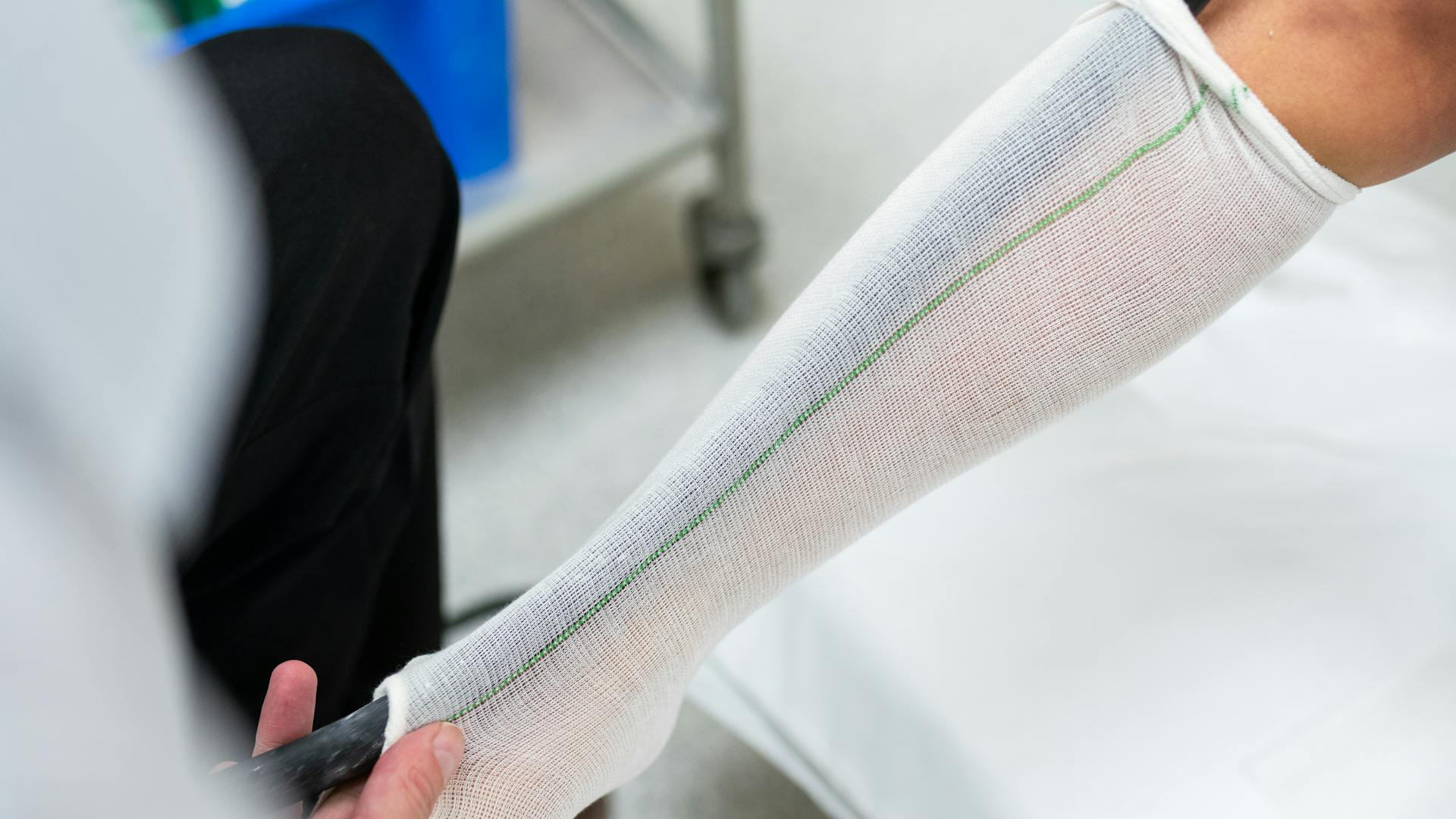
Compression garments are clothing that applies sustained mechanical pressure to the body, and they come in more shapes than most people realise: socks, stockings in knee high, thigh high and waist high lengths, leggings, shorts, abdominal binders, vests, gloves and full body suits (yes, really!).
That pressure is measured in millimetres of mercury, mmHg, and the commercial grades run roughly like this: around 15 to 20 mmHg is what you’ll find in over the counter support stockings, around 20 to 30 mmHg is the usual entry point for medical compression, and around 30 to 40 mmHg is firmer again, with anything above that generally being prescription territory for venous disease. Some garments are off the shelf, some are custom made, and the pressure they actually apply varies enormously.
Now, a caution about those numbers, as this is where a lot of confident internet advice falls apart. The hypermobility research does not establish an optimal pressure. The largest EDS cohort we have used custom made garments, and the pressure actually reaching the skin was never verified [2], and where balance was measured, no pressure is reported at all [5]. So anyone telling you that those with hypermobility should start at a specific mmHg figure is extrapolating from venous disease rather than reporting a finding from this population. For hEDS and HSD, nobody has worked out the right dose yet.
The POTS side has firmer numbers, though they’re about location as much as they are about pressure.
Compression for POTS, and Where It Needs to Go
The physiology here is fairly straightforward. When you stand, blood shifts downwards into the legs and, importantly, into the splanchnic circulation around the gut and abdomen, which reduces the volume returning to the heart, which in turn reduces stroke volume, so the heart rate climbs to compensate. In POTS that compensation is exaggerated and symptomatic.
Compression counteracts this by physically reducing the space available for blood to pool, and the evidence that it does is now direct rather than inferred. In 2025, people with POTS were given an abdominal compression garment and put through repeated active stand tests with it on and with it off across a single day, eighteen of them all the way through to the analysis. With the garment on, the rise in heart rate on standing was around 14 bpm lower, standing heart rate in the morning tests was 103 bpm with compression against 118 without, and symptom scores improved alongside it [1].
Note what was compressed there though, as it was the abdomen and not the calves, and that’s the finding the whole compression conversation has been slowest to absorb.
It matters because the abdomen holds a great deal of the blood that pools when you stand, and a knee high sock simply cannot reach it, on account of it being a sock. If your symptoms are being driven by splanchnic pooling, then compressing from the ankle to just below the knee is addressing a minority of the problem. The garments that perform best in the POTS research are the ones that include the abdomen, either as waist high compression or as a dedicated binder [1].
That 2025 result needs handling honestly though, as everyone acted as their own control, so there was no separate comparison group and no blinding at all. The whole protocol also ran across one single day, which tells you what happens while the garment is on rather than what happens after six months of wearing one [1]. That’s a real limitation, and it’s a fair description of most of the POTS compression work: short, mechanistic, and much better at demonstrating that the physiology responds than at demonstrating that people’s lives improve over a year.
The Number Everyone Quotes, and What It Actually Measured
There’s a number that circulates in POTS communities and it needs handling carefully, as it gets used to argue that compression doesn’t work. In 2024, 358 people with POTS or neurogenic orthostatic hypotension were asked about all of this, and 98% had tried at least one compression garment since diagnosis, while only 8.9% considered them effective at managing symptoms [3]. Read cold, that sounds like a verdict.
It isn’t, and the rest of the same numbers explain why. The compression most people were using was leg compression, at 65.4%, followed by shapewear at 20.1% (shapewear being compression that nobody calls compression), with abdominal compression right down at 13.4% [3]. So the overwhelming majority were using the garment type that the trial evidence says should work least well, and then rating it as ineffective.
There’s a second reason not to read that 8.9% as an efficacy result, as everyone was asked once, at a single point in time, with no control group and nobody’s heart rate measured anywhere [3]. It’s a very good description of what people own and what they think of it, it just isn’t a test of whether compression works, and it was never designed to be one. What it genuinely does tell us is that the products currently on the market are failing the people buying them, which is a real and useful finding, just not the one it usually gets quoted for.
So if you tried compression socks and got nothing from them, you have plenty of company, and the most likely explanation isn’t that compression doesn’t work for you, it’s that you were sold the wrong garment.

Compression for Pain and Joint Stability in hEDS and HSD
This is where the evidence is at its most encouraging and its most fragile, both at the same time. The largest and longest look at it followed people with non-vascular Ehlers-Danlos syndromes, 91% of them the hypermobile type, over two years with assessments every six months, and sixty seven were analysed for the main outcome. Pain in the most painful joint, on a 100 mm visual analogue scale, fell from 71.5 mm at baseline to 53.5 mm at six months and 45.7 mm at two years [2]. That’s a large and sustained drop, and functional independence improved too, from 117 to 119.8 on the Functional Independence Measure [2].
The instability findings need reporting a great deal more precisely than they usually are. Sprains decreased at every joint, but the decrease only reached statistical significance at the ankles and the knees, while dislocations and subluxations decreased significantly at the shoulders, knees, hips and wrists [2]. So it’s a real signal, it’s just joint specific rather than a blanket improvement everywhere.
And some things didn’t move at all. Fatigue was essentially unchanged over the two years, 5.8 to 5.7 on the Fatigue Severity Scale [2]. Balance on the Berg Balance Scale improved slightly but didn’t reach significance, at p equals 0.053 [2], and of the neuropathic pain measures, only pain from slight pressure reached significance [2].
Now, two things need saying plainly about all of that. There was no control group, so everybody was compared against their own baseline, which cannot separate the garments from concurrent physiotherapy, natural fluctuation or expectation [2]. And it was funded by the company that made the custom garments and supplied them to everyone taking part [2]. None of which makes the results wrong, it does mean they need independent replication before anyone treats them as settled, and that replication hasn’t happened yet.
In 2025, 20 adults with hEDS or HSD, 13 hEDS and 7 HSD, were looked back over at a mean follow up of roughly 4.4 months. Sixteen of the 20, so 80%, reported less pain, just over half of those with usable data reduced their painkiller use, and 40% reported better quality of life [4].
Two of the findings in there are more interesting than the headline percentages. The first is that response had nothing at all to do with how hypermobile anyone was, as the correlation between treatment response and Beighton score was essentially absent [4]. If you’ve been told compression is for the very bendy, that isn’t what the data shows. The second is that what did predict response was how long people wore the garments, as responders wore them significantly longer than non responders, and that was the strongest association in the study [4]. Which points at something we’ll come back to: the garment you can tolerate beats the garment that’s theoretically optimal.
The best designed work in this area split 36 people with hEDS, 32 of whom were analysed, at random between four weeks of physiotherapy and the same physiotherapy plus compression garments, and the compression group did better on dynamic balance. The often quoted large effect of 0.93 applies to one specific balance condition rather than to balance across the board though, and the improvements in the other conditions were a good deal more modest, somewhere in the range of about 0.5 to 0.64 [5]. Pain fell in both groups, with no significant difference between them [5], and average wear time was 10.4 hours a day [5].
That last bit deserves emphasis, as it’s frequently misreported. It doesn’t show compression reducing pain better than physiotherapy, it shows compression improving balance on top of physiotherapy, with both groups’ pain improving much the same. If pain is your main problem, that’s a meaningfully weaker claim than the one usually made on compression garment sales pages.
Shoulders, Specifically
The shoulder is the joint where compression has been tested most specifically, and in 2024 the conservative treatments for shoulder symptoms in hEDS and HSD were finally pulled together and graded. A custom compressive jacket reduced the proportion of people having joint instability episodes from 92% to 72% over four weeks [6]. It also produced a significant increase in external rotator power at higher speed, about 1.29 watts, with the interval around that running from 0.31 to 2.28 [6]. Pain dropped from 3.5 to 2.5 out of 10, though that change did not reach statistical significance [6].
The grading of that evidence was blunt. Half the studies weren’t randomised and lacked appropriate control groups, the compression work had methodological problems including limited outcome reporting and no baseline data, and significant knowledge gaps remain that prevent confident clinical application [6]. So, the direction is favourable and the quality is poor, and both halves of that sentence matter.
The Proprioception Question
The idea that compression helps hypermobile joints by improving sensory information, rather than by mechanically holding things in place, is far and away the most interesting theory in this area. It’s also the one most frequently overstated, including in the previous version of this very article.
Start with what’s solid, as proprioceptive precision genuinely is affected in EDS. Back in 2015, nine people with EDS were set a reaching task alongside 13 controls, and their accuracy was no different, with no significant group difference in absolute displacement error. Their precision was significantly worse though, with elliptical fit areas of 8.33 square centimetres against 4.90 in controls [7]. So the brain roughly knows where the hand is, the estimate is just noisier and less repeatable, which is less like a wrong signal and more like a signal with a bit of static on it.
Two details in there matter. Chronic pain scores did not predict proprioceptive precision, so this isn’t simply pain being distracting [7]. And, importantly, neither did Beighton score, as the correlation between how hypermobile somebody was and the size of their proprioceptive deficit was not significant [7]. That second null result gets misquoted as a positive finding surprisingly often, including on our own site in the past, and it isn’t one.
So the sensory problem is real. Does compression fix it though? That’s where the evidence gets a good deal thinner than the confident version suggests.
The small pilot usually cited involved six people with hypermobile EDS and six controls, testing compression garments and proprioceptive insoles, supplied by the manufacturer. Without vision, wearing both together improved anterior-posterior sway compared with the control condition [8], which is exactly the pattern you’d predict if the garments were adding sensory information, as removing vision forces greater reliance on what the body is reporting. The improvement only appeared in the anterior-posterior direction and not the mediolateral though, and anything above the corrected significance threshold is flagged as descriptive only, given how few people were in it [8]. Six people is six people.
Outside hypermobility, 27 studies and 671 people were pooled together in 2024, and compression garments significantly reduced absolute error in joint position sense, with a pooled effect of minus 0.64 and an interval from minus 1.09 to minus 0.18 [9]. That’s a genuine finding. Every other proprioceptive measure in there came back null though: constant error, variable error, threshold to detection of passive motion, and active movement extent discrimination [9]. The studies that went into it were mostly in healthy people and in orthopaedic groups such as post ACL reconstruction, and not one of them was in hEDS or HSD [9]. And only five of the 27 studies reported the pressure the garment actually applied [9].
So the fair summary is this: compression improves one specific measure of joint position sense in populations that aren’t ours, and it improves balance in one small trial in people who do actually have hEDS. That’s consistent with a sensory mechanism, it isn’t proof of one, and it doesn’t explain everything compression appears to do.
There’s a related point worth keeping, which is that in hypermobility, how well you can use your strength matters alongside how much of it you have. Line up 24 women with hypermobile EDS against 24 controls, and the EDS group had around 20% lower muscle strength and measurably poorer knee proprioception, with proprioception affecting the relationship between strength and disability on some measures but not on others [10]. That was all measured at one single point in time though, which can’t establish cause, and it doesn’t demonstrate that strength training works [10]. We mention it because it’s the reasoning behind why our exercise work focuses on control and not just load, but it’s a hypothesis about mechanism rather than a result about compression.
The On and Off Effect
One pattern comes up repeatedly from clinicians and from the people actually wearing them: the garment goes on and something changes within minutes, and when it comes off the symptoms come back. It isn’t a benefit that builds over weeks.
Six allied health professionals experienced with fabric orthoses for hypermobility were interviewed about exactly this, and their first theme was titled “it is immediate”, describing positive effects reported the moment the orthosis is first put on. A second theme proposed the mechanism as improved proprioception and realignment working together, and a third covered practical tips, with importance placed on collaborative assessment when fitting [11]. That’s six interviews and a thematic analysis though, offered up to inform further research rather than to establish effectiveness [11], so it’s clinical experience gathered rigorously, which is worth something, but it isn’t an outcome measurement.
Back in that 2025 retrospective group, the presence of an on and off effect did trend towards predicting response, at p equals 0.094, alongside similar non significant trends for female sex, a history of sprains, and impaired proprioception [4]. A trend in 20 people is a hypothesis.
We used to say here that you could use the on and off effect as a quick test of whether compression would work for you, which is a reasonable clinical hunch and not a validated test, and we shouldn’t have presented it as one. What the evidence actually supports is narrower, as benefits from compression in both POTS and hypermobility tend to be present while the garment is worn and to fade once it’s off [1][6]. The shoulder work is quite clear that four weeks of wear did not produce a lasting carryover once the jacket came off [6].
That state dependence is genuinely useful information, just not in the way we framed it before, as it tells you that compression is a support you use during the thing you need support for, rather than a treatment that changes your baseline. Which is no criticism of it at all, as reading glasses work exactly the same way.
Practical Guide: What to Look For
Compression Level
For POTS, the research clusters around abdominal or lower body compression rather than light socks, and the practical tension is between enough pressure to do something and enough comfort that you’ll actually wear the thing. Higher pressure garments are harder to get on, hotter, and a lot more likely to bother an already unhappy gut.
For hEDS and HSD, we have to be straight with you: there is no established pressure. The big two year cohort never verified the pressure its garments applied [2], the balance work doesn’t report one [5], and when everything on proprioception was pooled, most of the studies in that field hadn’t reported it either [9]. Anyone quoting you a precise starting figure for hypermobility is quoting custom rather than evidence.
Where to Compress
For POTS, this is the single most important decision you’ll make, and the answer is to include the abdomen [1], so waist high compression or a dedicated abdominal binder rather than knee high socks. If you’ve written compression off after trying calf length socks, this is the one thing worth revisiting.
For joint support in hEDS or HSD, the garment has to cover the joints you’re actually trying to help, which is obvious enough when it’s said out loud, but it does mean a pair of knee highs will do nothing whatsoever for shoulder or wrist instability, and the shoulder evidence specifically involved a garment built for shoulders [6].
Custom or Off the Shelf
Almost all the positive hypermobility studies used custom made garments [2][5][8], which is a real pattern, but it isn’t the same as evidence that custom beats off the shelf, as nobody has run that comparison. There is no head to head trial in this population.
So the sensible reading is that custom garments are simply what the evidence has been gathered on, and they’re also expensive and need a proper fitting (neither of which is a small ask). Trying an off the shelf garment first, to see whether you respond to compression at all, is a practical approach and one we’d suggest, though in our opinion that’s reasonable clinical judgement rather than a tested strategy.
Sensory Sensitivities
A lot of those with hypermobility also have altered sensory processing, and for some people, tight clothing isn’t mildly annoying, it’s genuinely intolerable. Seams, textures, heat and the sensation of pressure itself can all be far too much.
We want to be careful here though. The observation that sensory sensitivity predicts poorer compression adherence comes out of burns rehabilitation rather than hypermobility, and the direct hEDS evidence on this is sparse. The reasoning is plausible and the clinical pattern is familiar, but we’re extending it across populations, and you should know that.
The practical workarounds that circulate in the community, such as wearing garments inside out to keep the seams off your skin, are exactly that, community advice. They’re free to try and they may well help, there’s just no research behind them at all.
When to Put Them On
For POTS, the logic is to have the garment on before the pooling happens rather than after. Blood starts shifting the moment you’re upright, so putting compression on before you get out of bed makes considerably more physiological sense than putting it on at eleven in the morning, after you’ve already felt awful for three hours. Some people keep their garments next to the bed for exactly that reason.
That’s reasoning from the physiology rather than a tested protocol though, as nobody has run a trial comparing putting compression on before standing against putting it on later in the day. It’s sound reasoning and it costs you nothing to try, it just hasn’t been measured.
Getting Them On
This isn’t a minor practical footnote, it’s one of the main reasons compression fails in real life, and the research on it is a lot more interesting than you’d expect. Ask 19 adults prescribed medical compression hosiery how they get on, and 13 of them needed an assistive product to get the garments on and off, with others relying on an informal carer or on home care [12]. Two things in there are worth knowing. In several cases, no attention at all was paid to donning and doffing during the fitting appointment, and not one person went back to their compression therapist when getting the garment on remained difficult or became difficult over time [12].
Those people were being treated for lymphoedema and venous conditions rather than hypermobility, so we’re extending the finding. If anything though, the problem should be worse in hEDS and HSD, where finger instability, grip problems, thumb pain and fatigue are all common, and where you’re being asked to perform a fiddly two handed job first thing in the morning.
The practical version: donning aids exist and they do work, rubber gloves help with grip, some brands are considerably easier than others, and a garment you can’t get on by yourself has an effectiveness of zero, however good the data behind it is. If donning is the barrier, that’s a solvable problem, and it’s worth solving before you conclude compression isn’t for you.
Where the Evidence Is Weak
The state of this evidence needs several caveats at once, and the first is that the studies are small. The largest hypermobility cohort analysed 67 people [2], the balance work had 36, of whom 32 were analysed [5], the retrospective one had 20 [4], and the proprioception pilot had six [8]. At those sizes, a handful of people responding unusually well or badly moves the result.
Blinding is difficult rather than impossible, and the distinction matters. You can’t exactly hide from somebody that they’re wearing a compression garment, but the deeper problem is that this literature mostly hasn’t attempted credible sham comparators at all, and the intervention is visible to everybody taking part and often to whoever is assessing them too. That leaves expectation effects unaccounted for in very nearly every study here.
Independent replication is thin. A large share of the hypermobility work comes from a small number of specialist centres, and the biggest cohort of the lot was funded by the garment manufacturer and used that manufacturer’s product [2]. The garments and insoles in the pilot were provided by their manufacturer as well [8]. None of that is hidden, and none of it is unusual in device research, but it’s a reason to want the same results from a group with no commercial relationship.
The POTS evidence has a different weakness. It’s mechanistically stronger, with objective measurements and real physiological endpoints, it’s just short, as protocols run over minutes to hours, sometimes a single day [1]. So we can say with reasonable confidence that abdominal compression reduces orthostatic tachycardia while you’re wearing it, and we can’t say much at all about what a year of wearing one does to how you function.
And the pooled support for the proprioceptive mechanism comes from populations that aren’t ours [9].
Does any of that mean compression doesn’t work? No. Different designs, in different populations, using different outcome measures, keep pointing in the same direction, and that consistency is worth something even when each individual study is weak. We just can’t yet tell you who will benefit, how much, at what pressure, or for how long, and anyone who tells you otherwise is filling in gaps the research hasn’t filled.
Frequently Asked Questions
Do compression garments actually help hypermobility and EDS?
The evidence suggests they can, with the strongest signals for balance and for joint instability rather than for pain. Over two years, 67 people saw pain fall from 71.5 to 45.7 on a 100 mm scale, with dislocations and subluxations falling significantly at several joints, though there was no control group and it was funded by the garment manufacturer [2]. Where compression was added to physiotherapy and the allocation was made at random, dynamic balance improved more than physiotherapy alone, but pain improved equally in both groups [5]. So, promising, and not yet settled.
What compression level should I use for POTS?
The research points a good deal more clearly at where than at how much, and the trial evidence supports abdominal or waist high compression over calf length socks [1]. On pressure specifically, the usual medical grades start around 20 to 30 mmHg and go firmer from there, but the practical constraint is that the garment has to be tolerable enough to wear daily. A moderate garment you keep on beats a firm one in the drawer.
Why didn’t compression socks help me?
The most likely answer is coverage. Knee high socks miss the abdomen, which is where a great deal of the pooling happens, and abdominal compression is what the POTS trial evidence supports [1]. Back in 2024, when people were asked, the majority were using leg compression and only 13.4% were using abdominal compression, which goes a long way to explaining why perceived effectiveness in that survey was so low [3]. Before you conclude compression doesn’t work for you, it’s worth trying a garment that actually reaches the abdomen.
Can compression garments improve proprioception?
Partly, and a good deal less conclusively than you’ll read elsewhere. Pool 27 studies together and compression improved one measure, absolute error in joint position sense, while every other proprioceptive measure came back null, and those studies were in healthy and orthopaedic populations rather than in hEDS [9]. In hypermobility specifically, compression improved balance where people were allocated at random [5], and in a six person pilot with vision removed [8]. Consistent with a sensory mechanism, not proof of one.
How long should I wear compression garments each day?
In the balance work, wear averaged 10.4 hours a day [5]. The most useful finding on this comes from the retrospective cohort, where wear time was the strongest predictor of response, with responders wearing their garments significantly longer than non responders [4]. The practical implication is that comfort isn’t a luxury, it’s the thing that determines whether you get the dose at all. If a garment is intolerable, a lighter one you’ll actually wear is the better choice.
Are custom made compression garments worth the cost?
Most of the positive hypermobility research used custom garments [2][5][8], so that’s where the evidence sits. Nobody has compared custom against off the shelf in this population though, so we can’t tell you custom is better, only that it’s better studied. Trying off the shelf first, to find out whether you respond to compression at all, is a reasonable way to spend less money finding out, and we would suggest it, though that’s our opinion rather than a tested protocol.
Putting It All Together
Compression garments aren’t a cure, and the research doesn’t claim they are. What the evidence does support is narrower, and a great deal more useful, than the marketing.
For POTS, abdominal compression reduces the heart rate rise on standing and improves symptoms while it’s being worn, and that’s the best evidenced thing in here [1]. Knee high socks are the most commonly bought option and the least likely to do the job, so if compression has disappointed you, coverage is the first thing to change.
For hEDS and HSD, compression looks helpful for balance and for joint instability, with a reasonable signal for pain that hasn’t yet separated itself from physiotherapy or from expectation [2][4][5]. The studies are small, several are funded by manufacturers, and independent replication is still owed.
Across both, three things are consistent. Where you compress matters more than how hard you compress. Benefits are present while the garment is on and fade once it’s off, so this is a support rather than a cure. And the garment you can tolerate, and actually get onto your body, beats the one that’s theoretically ideal, as wear time is the one variable that repeatedly predicts whether anybody benefits [4][12].
If you’re considering compression, it’s worth running past your GP or physiotherapist, particularly for the custom options, which need a proper fitting. And if you’ve tried it and it did nothing at all for you, that’s a legitimate outcome rather than a personal failure, as not every intervention works for every person, and the research is nowhere near able to predict who’s who.
The Fibro Guy