
The Body Braid for Hypermobility: What the Evidence Actually Says (and What It Doesn’t)
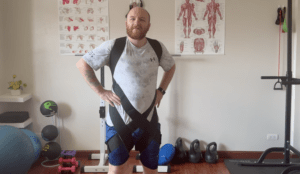
If you have hypermobility and spend any time online, you’ve almost certainly run into the Body Braid. It’s that spiral elastic garment, the one that


If you have hypermobility and spend any time online, you’ve almost certainly run into the Body Braid. It’s that spiral elastic garment, the one that

A deep, chronological, critical review of the research on Pilates for chronic low back pain, hypermobility, and fibromyalgia. What the trials actually show, what they don’t, and what to look for if you’re considering it.

Yoga gets recommended for almost everything that aches, but what does the research really say? We look at the history, the evidence, how it compares with tai chi and Pilates, and what it means for fibromyalgia and hypermobility.

What hypermobility and EDS community members actually use during intimacy to protect joints, plus what the evidence says about kinesiology tape, braces, compression and props.

Most sex advice assumes a body that does what it’s told. Bend here, hold this, support your weight on that joint for as long as

There’s a conversation that happens in a lot of relationships where one person has chronic pain. It goes something like this: the person with pain

This article covers: Toggle The disclosure question, and why nobody gives you a straight answer What the research actually shows about when to tell The
If you have hypermobility, fibromyalgia, POTS, endometriosis, or interstitial cystitis, and sex hurts, you are not unusual. You are also not broken, dramatic, or making

PCOS has been renamed PMOS in 2026. Here’s what that means if you’re hypermobile, and what the evidence actually says about the overlap.

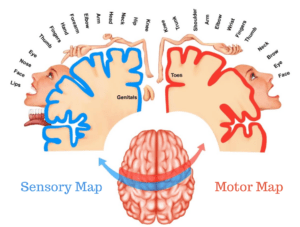
Your brain has a map of your body, and the map drives joint control, not the muscle. A look at cortical maps, proprioception, vestibular and visual inputs, why the signal goes fuzzy in hypermobility, and how to train for sharper joint awareness.

Constipation in hypermobility and hEDS is not a fibre problem, it’s mostly a sensation and coordination problem. Here’s what the evidence actually says about the mechanisms and what works.

Hypermobility comes with a strange contradiction: muscles that feel constantly tight, while also being told you have low tone. Once you understand how passive, active and readiness tone actually work, that contradiction makes sense, and so does why traditional ‘just get stronger’ advice keeps missing.