


If you’re reading this, chances are you’ve already been on quite the medication merry-go-round. You’ve probably sat in front of more than one doctor, explained your pain for the hundredth time, been handed a prescription, tried it, found it didn’t work (or made things worse), gone back, and started the whole process again. And again. And maybe once more for good measure.
Pain in hypermobile women is also shaped by metabolic and hormonal conditions, including PCOS, now renamed PMOS as of 2026. The inflammation and central sensitisation strands overlap with hypermobile pain biology in ways most pain conversations miss. Full breakdown in PCOS to PMOS and hypermobility.
It’s exhausting. And if we’re being honest, it’s one of the most frustrating parts of living with hypermobility or Ehlers-Danlos syndrome. The pain is complicated enough on its own, but when the medications that are supposed to help either do nothing or actually make you feel worse, it can feel like the system just wasn’t built for people like you. Because, well, in a lot of ways it wasn’t.
So, here’s what this article is going to do. We’re going to go through the major medication classes used for pain in those with hypermobility and EDS, look at what the actual evidence says (not what the leaflet says, not what a well-meaning GP says, but what the research tells us), be honest about what works, what doesn’t, and what sits somewhere in the murky middle. We’re also going to cover some things your prescriber might not know about, like local anaesthetic resistance, which now has proper clinical trial evidence behind it.
This is a beast of an article. I make no apologies for the length, because when it comes to pain medication for those with hypermobility, there’s a lot of ground to cover, and half-answers help nobody. We’re going to look at everything from paracetamol to opioids, from gabapentin to cannabis, and from low-dose naltrexone to mast cell medications. And yes, we’re going to talk about the elephant in the room too, the thing that consistently outperforms all of them.
If you’ve been let down by medication before, if you’ve been told “just try this one” more times than you can count, this article is for you. We’re going to be thorough, we’re going to be honest, and we’re going to give you the information you need to have better conversations with your prescriber.
If you’re ready, let’s get into it.
One quick note before we begin. This article is not medical advice. I’m not your prescriber, and I don’t know your medical history. What this article is, is a comprehensive review of the evidence so that you can have better, more informed conversations with the people who do prescribe your medication. Nothing here should be taken as a recommendation to start or stop any medication without talking to your healthcare team first. Right, disclaimer done. Now let’s actually get into it.
Why pain is different in EDS and hypermobility
Before we even get to medications, we need to understand why pain in those with hypermobility and Ehlers Danlos syndrome is so different from, say, a pulled muscle or a twisted ankle in the general population. Because this is the bit that gets missed constantly, and it’s the reason so many medications fail. If your doctor doesn’t understand why your pain is different, they’re going to keep prescribing medications that were designed for a different kind of pain. And then they’ll wonder why they don’t work. So this section matters, even if it feels a bit technical.
Most pain, the kind that happens when you stub your toe or burn your hand, is what’s called nociceptive pain. You damage tissue, specialised nerve endings called nociceptors detect it, they send signals up to the brain, and the brain produces pain so you stop doing whatever you were doing. It’s straightforward, it makes sense, and it generally responds well to standard painkillers. If you want to understand what actually causes chronic pain in this population, it gets a lot more complicated than that.
Then there’s neuropathic pain, which comes from damage or dysfunction in the nervous system itself. Think nerve compression, nerve damage, that sort of thing. Now, this type of pain tends to present as burning, shooting, tingling, or electric-shock-like sensations. It responds to a different class of drugs entirely, which is why things like gabapentin and pregabalin exist. However, even here, the response rates aren’t exactly stellar, as we’ll see later.
But here’s where it gets really interesting for those with hypermobility. There’s a third type of pain that’s increasingly recognised, and it’s called nociplastic pain. This is pain that arises from altered pain processing in the central nervous system, without clear evidence of tissue damage or nerve injury actually causing it. Your nervous system has essentially turned up the volume, and what should be a quiet signal becomes a screaming alarm. It’s why you can have pain that doesn’t match any imaging, doesn’t correspond to any obvious injury, and doesn’t respond to medications designed for either of the first two types. However, recognising that this type of pain exists is relatively new in mainstream medicine, and a lot of prescribers still aren’t thinking about it when they reach for the prescription pad.
A 2021 paper published in The Lancet Rheumatology documented central sensitisation in EDS amongst other conditions, noting that within individual pain conditions, there’s substantial variation among patients. They stressed the importance of individual assessment, because not everyone with EDS has the same pain mechanisms driving their experience. However, they also noted that central sensitisation predicts poor treatment outcomes, which, if you’ve tried multiple medications without success, probably doesn’t come as a massive surprise.
Likewise, Shanthanna and colleagues noted in 2018 that “although the initial pathology is commonly nociceptive, progression of EDS pain to a chronic state involves central sensitisation.” So you might start with a subluxation (nociceptive), but over time, the nervous system changes, the pain processing gets altered, and suddenly you’re dealing with something that paracetamol and ibuprofen were never designed to treat.
This is the fundamental problem. Most pain medications were designed for either nociceptive pain (NSAIDs, paracetamol, opioids) or neuropathic pain (gabapentin, pregabalin). But a significant proportion of the pain experienced by those with hypermobility and EDS is nociplastic, driven by central sensitisation and hyperalgesia, altered processing in the spinal cord and brain. And we simply don’t have great medications for that yet.
As one research group put it, current guidelines for treating chronic pain in EDS are lacking, with weak evidence for any individual component of a multidisciplinary approach. That’s from Whalen and Crone in 2022, and whilst it’s a bleak statement it’s an honest one. It doesn’t mean nothing works. It means the evidence hasn’t caught up with what’s needed. And that’s frustrating, but it’s better to know the truth than to be given false confidence.
Now, here’s a brief tangent that I think is worth making. When it comes to understanding your own pain, knowing which type (or types) you’re dealing with can actually be useful. If your pain is predominantly nociceptive, from identifiable tissue issues like recurrent subluxations, that’s going to respond differently than if your pain is primarily nociplastic. And many people with hypermobility have a mix of all three types, and this is one of the reasons a single medication rarely covers everything. It’s also why so many people end up on multiple medications at once, each targeting a different piece of the puzzle, sometimes with side effects that compound on each other. A fun time for nobody, as I’m sure many of you can attest. But understanding the picture helps.
So, does this mean medication is pointless? No. But it does mean we need to go in with realistic expectations, understand what each drug can and can’t do, and be honest about the fact that for most of these medications, there are no EDS-specific trials. We’re borrowing evidence from fibromyalgia, from chronic pain populations, from neuropathy research, and hoping it translates. Sometimes it does. Often it doesn’t.
Right then. With all of that as our foundation, let’s actually look at the medications.
NSAIDs: Ibuprofen, Naproxen, and the collagen question
If you’ve got pain, the first thing most people reach for is an NSAID. Ibuprofen, naproxen, diclofenac, you know the ones. They’re available over the counter, they’re cheap, and for a lot of pain conditions, they work reasonably well. Your GP will probably have suggested them at some point. And for a lot of people, they’re the first port of call before anything else gets considered. However, when it comes to hypermobility and EDS, the picture is more complicated than “take two ibuprofen and see how you feel.”
NSAIDs are the most commonly used pain medication in the EDS and HSD population. A 2025 study from the Mayo Clinic looking at 290 patients with hEDS and HSD found that NSAIDs were the most frequently used pain medication, with 45.6% of those with hEDS and 53.1% of those with HSD using them. Similarly, a large survey by Demes and colleagues in 2020 of over 500 EDS and HSD patients (conducted through the EDS Society) found that NSAIDs were used by 70-92% of participants alongside other treatments like acetaminophen, opioids, and physiotherapy.
So they’re popular. But here’s the question that matters: are they actually helping? Well, here’s the thing that rarely gets talked about. That same Mayo Clinic study found that less than 30% of patients reported improvement from any treatment modality. And patients with hEDS actually reported that oral medications made their muscle pain worse. Not just “didn’t help,” but actively worse. That’s a pretty significant finding when you think about it, isn’t it?
Now, why might that be? Well, there are a few things going on here, and this is where it gets particularly relevant for those with Ehlers-Danlos syndrome.
NSAIDs work by inhibiting an enzyme called cyclooxygenase, specifically COX-2, which is involved in producing prostaglandins that drive inflammation and pain. That’s great for acute inflammatory pain. Twisted ankle, swollen joint, that sort of thing. And it’s a favourite of A&E departments up and down the country. But COX-2 is also needed for something else: collagen remodelling. And this is where things get very interesting and, frankly, a bit concerning for this population.
A 2016 paper by Carroll in Exercise and Sport Sciences Reviews looked at the effect of NSAIDs on collagen synthesis. What they found was pretty eye-opening. NSAIDs reduce prostaglandin E2 production, which significantly decreased collagen synthesis in response to weight-bearing activity. Runners given indomethacin (a strong NSAID) before a marathon showed complete blunting of exercise-induced collagen synthesis in their patella tendons. Complete blunting. Not a reduction, not a dampening, a complete stop. Now, that’s a fairly dramatic finding.
Now, I need to be honest here. There’s no direct study looking at this effect specifically in people with EDS. The collagen synthesis research is from general populations, athletes mostly. So we can’t just point at this study and say “NSAIDs are definitely damaging connective tissue in EDS patients.” However, if you think about it for even a moment, the implications are pretty stark. EDS is a condition characterised by faulty collagen. The connective tissue is already compromised. If NSAIDs are preventing the body from making new collagen in response to activity, and you already have a condition where collagen production and quality is a problem, well, that’s not ideal, is it? The mechanism is there even if the direct EDS evidence isn’t.
There’s also the broader concern about muscle regeneration. A 2024 paper in the BMJ found that NSAIDs can impair muscle regeneration, leading to decreased repair and increased fibrosis. Again, for a population that already struggles with tissue quality and is trying to build muscle to support unstable joints, this is worth knowing about.
And then there’s the gut. NSAIDs are notorious for causing gastric issues, and gastric problems are already incredibly common in those with hypermobility and EDS. Adding a medication that can irritate the stomach lining, increase the risk of ulcers, and worsen existing GI symptoms isn’t exactly a winning combination. Especially when you’re already dealing with GERD or IBS, which a lot of people with hypermobility are. However, it’s worth noting that topical NSAID gels (like diclofenac gel) avoid many of the systemic issues whilst still providing local anti-inflammatory effects. They won’t help with widespread pain, but for a specific joint that’s flared up, they’re a more targeted option. Likewise, long-term NSAID use also carries renal concerns, which adds another item to the list of things to worry about.
Likewise, there’s the question of what happens when you’re taking NSAIDs regularly and also trying to exercise. If exercise is one of the most effective treatments for hypermobility (and it is, as we’ll discuss later), and NSAIDs are blunting the collagen synthesis response to that exercise, then you could theoretically be undermining your own recovery. That’s a frustrating paradox: the painkiller that makes exercise tolerable might also be reducing the benefit you get from it.
So, does this mean you should never take an NSAID? No. For acute, short-term use, they still have a place. If you’ve got a flare, a subluxation that’s caused genuine inflammation, or a specific injury, short-term NSAID use is reasonable. But regular, long-term use? When it comes to those with hypermobility, the evidence gives us real reasons to be cautious. The collagen synthesis concern is theoretical for EDS specifically, but the mechanism is sound enough to take seriously.
Paracetamol (Acetaminophen): The one everyone thinks is harmless
Paracetamol is the other go-to, the one that sits in everyone’s medicine cabinet, the one you take when you don’t want to take “real” painkillers. It’s used by about 35-44% of those with hEDS and HSD according to that Mayo Clinic study, making it the second most commonly used option after NSAIDs.
Here’s the problem though. Paracetamol is actually a potent COX-2 inhibitor. Yes, the same COX-2 that we just talked about being necessary for collagen synthesis. That same Carroll paper from 2016 looked at acetaminophen and found that chronic consumption in animal studies led to lower collagen cross-linking in both tendon and skeletal muscle. Exercise-induced collagen formation in skeletal muscle was negated in animals consuming acetaminophen.
I want to stress that this is animal data, not human. We can’t just copy and paste findings from rats onto people and call it done. However, the mechanism is there, and when it comes to a population where connective tissue integrity is already compromised, it’s worth knowing about. The researchers didn’t study this in hypermobile individuals, and we should be upfront about that. But the biological pathway is the same regardless of whether you have EDS or not.
The honest assessment? Paracetamol probably doesn’t do a lot for chronic pain in this population anyway. The evidence for paracetamol in chronic pain conditions has been getting weaker and weaker over the years, and for the complex, centrally-driven pain states seen in Hypermobility and EDS, it’s unlikely to make much of a dent on its own. But if you’re using it occasionally for a headache or during a flare-up, the world isn’t going to end. Just be aware that it’s not as “harmless” as its reputation suggests, particularly for long-term, regular use.
There’s something else I want to mention here, and it applies to both NSAIDs and paracetamol. When it comes to those with hypermobility, there’s often a pattern where people take these medications regularly, almost on autopilot, without ever really assessing whether they’re making a difference. If you’re taking paracetamol four times a day, every day, and your pain is still the same, it’s worth asking whether it’s actually doing anything at all. Sometimes the answer is that it takes the very slightest edge off, and sometimes the answer is that you’ve been taking it out of habit and hope rather than because it’s genuinely helping. Neither answer is wrong, but it’s a question worth asking. And it’s one that applies to a lot of the medications we’re about to discuss.
Gabapentinoids: Gabapentin and Pregabalin (Lyrica)
Right, let’s talk about gabapentin and pregabalin, because these are medications that a lot of people with hypermobility and EDS get prescribed, they’re medications that generate a lot of strong opinions, and they’re medications where the evidence doesn’t always match what you’ve been told.
Pregabalin was the first drug to receive FDA approval for fibromyalgia in the United States. It’s worth noting straight away that this approval only exists in the US. In Europe, pregabalin is not approved for fibromyalgia. Now, that’s a telling detail that doesn’t get mentioned enough. Why would European regulators look at the same evidence and come to a different conclusion? It tells you something about how convincing that evidence actually is. However, pregabalin is still widely prescribed off-label for pain across Europe, so the distinction is somewhat academic in practice.
So, how do they work? Gabapentin and pregabalin bind to a subunit of voltage-gated calcium channels in the nervous system, reducing the release of excitatory neurotransmitters. In theory, this calms down overactive pain signalling, which sounds like exactly what you’d want for central sensitisation. In practice, the results are less impressive than you’d expect.
A Cochrane review of 8 randomised controlled trials looked at pregabalin for fibromyalgia at doses of 300-600mg daily. It found that pregabalin provides pain reduction for a minority of patients. The number needed to treat for 50% pain relief was roughly 12. So let me put that in perspective: that means you’d need to treat 12 people to get one person who achieves a 50% reduction in pain. The other 11 either got no meaningful benefit or experienced side effects without adequate pain relief. Those aren’t great odds, are they?
However, a Bayesian network meta-analysis by Migliorini in 2022 compared different doses (300mg, 450mg, 600mg) for fibromyalgia. The higher doses weren’t dramatically better than the lower ones, which raises the question of whether pushing the dose up (and getting more side effects) is really achieving much. Sometimes more isn’t more, it’s just more side effects. However, some people do seem to respond better to higher doses, so it’s not a straightforward “don’t bother increasing” situation either. It needs to be individualised.
But here’s the finding that I think is most important for those with hypermobility. A study looking specifically at hEDS patients (Song and colleagues) found that 47% of those taking neuropathic modulators like gabapentin and pregabalin reported that the medications actually made their symptoms worse. Not “didn’t help.” Made things worse. Almost half. That’s a staggering number and one that should give everyone pause. When nearly half of the people taking a medication say it’s making them worse, that’s a signal that shouldn’t be ignored.
When it comes to side effects, the list is substantial. Weight gain is extremely common, and for those with hypermobility and EDS, this is particularly problematic. Extra weight means more load through already unstable joints, which means more pain, which means more medication. It’s a vicious cycle, and we’ve written about medication-related weight gain in detail before because it’s that important. Drowsiness is another common side effect, alongside brain fog, which is already a major problem for many with EDS. If you’re already struggling with brain fog and cognitive difficulties, adding a medication that makes those worse is a hard sell. Peripheral oedema and dependency concerns are also well-documented. And the dependency issue is one that doesn’t get talked about enough with these medications.
And then there are the cardiovascular risks, which are newer to the conversation and quite worrying. A large 2024 study by Pan and colleagues looking at over 105,000 fibromyalgia patients found that gabapentin was associated with an increased risk of peripheral vascular disease (HR 1.46), myocardial infarction (HR 1.31), heart failure (HR 1.27), deep vein thrombosis (HR 1.80), and pulmonary embolism (HR 2.23) over a 5-year period. Pregabalin was associated with deep vein thrombosis (HR 1.49) and pulmonary embolism (HR 2.24).

Ready to work through this with structure and support?
The Hypermobility Live Workshop is four weeks of breaking down the frameworks we use in our studios, with live Q&A so you can ask about your specific situation. Two free courses are included.
Now, this is an observational study, not a randomised controlled trial, so we can’t say these drugs cause cardiovascular events. There may be confounding factors. People on these medications might be more sedentary, might have other risk factors, might be on other medications that contribute. However, the numbers are large enough (over 105,000 patients is not a small study), and the findings consistent enough, that they warrant attention. Especially for those with hypermobility who may already have cardiovascular considerations, including conditions like POTS and other autonomic issues.
A separate study using Medicare data (Park and colleagues, 2023, looking at 238,809 patients) found that pregabalin users had higher rates of congestive heart failure hospitalisations compared to gabapentin users (HR 1.48). So even between the two drugs, there seem to be differences in cardiovascular risk.
As Walitt and colleagues noted in their 2014 review, pregabalin, duloxetine, milnacipran, and amitriptyline are all considered first-line treatments, but they have “mostly modest effect” with “only a minority of patients expected” to benefit. That’s from a review of the evidence, not from someone with an axe to grind.
I want to be clear here. Some people do genuinely find gabapentin or pregabalin helpful. If you’re one of those people, if it’s genuinely reduced your pain, improved your function, and the side effects are manageable, this isn’t me telling you to stop taking your medication. That’s a conversation for you and your prescriber, not something to decide based on a blog post. However, the honest picture is that these drugs help a minority, make things worse for a significant percentage, and carry side effects that are particularly problematic for those with hypermobility. If you’ve been prescribed one and haven’t noticed a benefit after an adequate trial (which is typically 8-12 weeks at a therapeutic dose), it’s absolutely worth having a conversation with your prescriber about whether continuing makes sense.
Amitriptyline: The old faithful
Amitriptyline is one of those medications that’s been around forever. It’s a tricyclic antidepressant, but at the low doses used for pain (typically 10-25mg at bedtime), it’s not being used for its antidepressant properties at all. At these low doses, it works on pain pathways, particularly by increasing the availability of serotonin and norepinephrine in the descending pain inhibition system. Think of it as giving your brain’s own volume-control-for-pain a bit of a boost. Now, that’s obviously a simplification, but it captures the general idea. It also has some action on sodium channels and histamine receptors, which contributes to its sedating effect.
If you’ve been prescribed amitriptyline for pain in Hypermobility or EDS, you’re far from alone. It’s one of the most commonly prescribed medications for fibromyalgia and chronic pain in this population, and it’s been used this way for decades.
So what does the evidence actually say? Well, there’s a Cochrane review on amitriptyline for fibromyalgia, and the findings are, frankly, a bit awkward. The reviewers stated: “There is limited evidence based on small numbers of small studies that amitriptyline may provide good pain relief in fibromyalgia.” The estimated number needed to treat was 4.1 for 50% pain relief, which sounds much better than pregabalin’s 12. But, and this is a big but, the authors classified the evidence as “very low quality” and stated directly: “We cannot trust either figure.”
That’s the Cochrane Collaboration, the gold standard for evidence review, saying they can’t trust their own numbers because the underlying studies are too small and too flawed. It’s an unusually honest admission, and I think it’s worth dwelling on for a moment. How often do you see the people doing the review actually say “we can’t trust what we found”? Not often.
Their best estimate was that roughly 1 in 4 additional patients get good pain relief compared to placebo. That’s a much better ratio than pregabalin. But 78% experience at least one adverse event, compared to 47% on placebo. The number needed to harm was 3.3, meaning for every 3 or so people who try amitriptyline, one will experience a side effect they wouldn’t have had on placebo.
Common side effects include drowsiness (which some people actually welcome, and I’ll come back to that), dry mouth, constipation, weight gain, and urinary retention. That drowsiness can be a double-edged sword. If you’re someone who struggles with getting to sleep, a medication that helps you drift off might actually be a bonus rather than a problem. Taking it an hour before bed can help with both pain and sleep, which is a rare two-for-one in this field. However, if you’re already fatigued and foggy during the day, adding more sedation on top isn’t ideal. It really does depend on the individual.
What I found particularly interesting in the Cochrane review was this statement: “Amitriptyline has been a first-line treatment for fibromyalgia for many years. The fact that there is no supportive unbiased evidence for a beneficial effect is disappointing, but has to be balanced against years of successful treatment in many patients.”
That’s essentially the reviewers saying: the formal evidence is rubbish, but loads of people seem to find it helpful anyway, so we can’t dismiss it. And honestly, that’s a pretty good summary of where we are with a lot of pain medications in this area. The formal evidence is weak, the clinical experience is stronger, and somewhere in between lies the truth. It’s one of those areas of medicine where the research hasn’t kept pace with clinical practice. However, the absence of evidence isn’t the same as evidence of absence, and that distinction matters here.
My honest take? And this is just my reading of the evidence, not a prescribing recommendation. Amitriptyline at low doses is one of the more reasonable options on the table for those with hypermobility and EDS. The side effect profile is manageable for most people, the cost is negligible, and while the evidence isn’t strong, the clinical track record is long. It’s not a wonder drug. But for some people, it takes the edge off enough to make a difference, especially if sleep is part of the problem. I do think it’s one of those medications where you should know within a few weeks if it’s doing anything for you. If after 4-6 weeks at an appropriate dose you’re not noticing any change, it’s probably not your answer. (For those interested in this sleep-pain angle, there’s also been new trial data on a bedtime cyclobenzaprine formulation for fibromyalgia that’s specifically designed around improving sleep architecture.)
Duloxetine (SNRIs): The serotonin-norepinephrine approach
Duloxetine, better known by the brand name Cymbalta, is a serotonin-norepinephrine reuptake inhibitor (SNRI). It’s FDA-approved for fibromyalgia, diabetic neuropathy, and chronic musculoskeletal pain. It works by increasing both serotonin and norepinephrine in the central nervous system, which in theory strengthens the descending inhibitory pain pathways. Basically, it helps the brain’s own pain-dampening system work more effectively. Whilst amitriptyline also acts on serotonin and norepinephrine, duloxetine does so through a different mechanism (reuptake inhibition rather than the broader pharmacological profile of a tricyclic), and the evidence base is somewhat different.
The evidence here is actually a bit better than for some of the other options, though that’s not saying an enormous amount when you consider the competition. A Cochrane review from 2014 found “moderate quality evidence” that duloxetine at 60mg and 120mg daily is effective for fibromyalgia and diabetic neuropathy. “Moderate quality” is about as good as it gets in this field, so take that as a relative win. However, “moderate” still means there are significant uncertainties, and we should keep that in perspective. A pooled analysis of four randomised controlled trials by Arnold and colleagues found that duloxetine at 60-120mg per day effectively improves fibromyalgia symptoms, with benefits going beyond just pain relief to include improvements in fatigue, physical function, and mood.
However, a 2024 meta-analysis by Ayub found something that tempers the enthusiasm. Duloxetine showed substantial short-term efficacy for fibromyalgia (with a standardised mean difference of -2.42, which is a large effect), but there were no consistent long-term benefits observed. So it may help in the short term but doesn’t necessarily maintain that benefit over time. That’s important to know, because chronic pain is, by definition, a long-term problem. A medication that works for three months and then stops working is better than nothing, but it’s not a long-term solution. However, some people do report sustained benefit, so it’s not universally true that the effect fades.
Bujak and colleagues in 2025 compared duloxetine with pregabalin and suggested that duloxetine may offer broader benefits due to its dual role in pain relief and mood stabilisation. Which makes sense when you think about it, because the relationship between pain and mood is incredibly tight in those with chronic conditions. We know that depression and anxiety amplify pain perception, and that chronic pain drives mood disturbance. If a medication can address both, that’s potentially more useful than one that only targets pain signalling. Likewise, the relationship between pain and how we process emotions is an area that deserves more attention.
When it comes to side effects, duloxetine has its own set of issues. Nausea is common, particularly in the first few weeks (and can be pretty rough, if I’m honest). Some people find that starting at a lower dose and building up slowly helps with this. However, for others it persists and is bad enough to stop the medication. And dizziness, insomnia, sexual dysfunction, and excessive sweating are all reported. And then there’s the discontinuation syndrome, which is worth knowing about before you start. Coming off duloxetine can cause withdrawal-like symptoms including dizziness, nausea, irritability, and something patients often describe as “brain zaps,” which is a strange and unpleasant electric sensation in the head. Now, this doesn’t happen to everyone, and it can be minimised with very gradual tapering, but it’s something you should know about upfront. This doesn’t mean you shouldn’t try it, but it does mean you shouldn’t stop it abruptly, and you should have a plan with your prescriber for tapering if it doesn’t work out.
Again, there are no EDS-specific trials for duloxetine. Every bit of evidence we have is from fibromyalgia or other chronic pain populations. But for those with hypermobility who also have significant mood symptoms alongside their pain, duloxetine might be worth discussing with your prescriber. It’s not perfect, nothing on this list is, but the evidence base is at least moderate, and for this field that counts for something.
Opioids: The complicated truth
Alright, opioids. This is probably the most contentious section in this whole article, and for good reason. There’s a lot of emotion, a lot of politics, and unfortunately not a lot of honest conversation in the public discourse around opioids and chronic pain. So let’s try to lay it out as fairly as we can. And I’ll try not to be preachy about it, because nobody likes that.
First, the patient experience. When it comes to what patients themselves report, opioids fare reasonably well. The Demes survey of over 500 EDS and HSD patients found that opioids were rated among the most efficacious treatments, with 10-24% rating them as extremely helpful. That’s alongside physiotherapy and marijuana. So there are clearly people with EDS for whom opioids provide meaningful relief. Dismissing their experience would be dishonest and disrespectful, and I don’t want to do either. However, patient-reported efficacy isn’t the whole story, and we need to look at the risks alongside the benefits.
But the risks are real, and for this population specifically, some of those risks are amplified. And ignoring those would be equally dishonest.
Let’s start with opioid-induced hyperalgesia. This is a phenomenon where prolonged opioid use actually makes you more sensitive to pain. Your pain system essentially adapts to the presence of the opioid and compensates by amplifying pain signals. Over time, you need more of the drug just to maintain the same level of relief, and if you try to reduce, the pain is worse than before you started. For those with hypermobility and EDS, where central sensitisation is already a major factor in how pain is processed, adding another mechanism that increases pain sensitivity is genuinely concerning. Does your brain really need another reason to turn the volume up? Probably not.
As Ramirez-Paesano and colleagues noted in 2023, patients with EDS experience “severe widespread pain that is difficult to relieve with opioids,” and opioid-induced hyperalgesia plus central sensitisation may explain why. They actually found benefits from opioid-free anaesthesia approaches, which is an interesting finding. If opioids are making the underlying sensitisation worse, then removing them might, paradoxically, be part of improving pain management.
Then there’s the overprescription problem. A 2024 study by Kelly and colleagues looked at 238 EDS patients who underwent total hip arthroplasty (from a database of 1.2 million patients) and found that EDS patients were significantly more likely to be prescribed opioids both before surgery (49.1% vs 34.7% in non-EDS patients) and after (59.7% vs 41.2%). That’s a big difference. But here’s the really concerning finding: opioid prescription in this group was associated with an 8 times higher dislocation risk post-surgery. Eight times. That’s a staggering association. Now, correlation isn’t causation (maybe the patients on opioids had more severe disease to begin with), but it’s a finding that deserves serious attention.
And then there are the cautionary tales in the literature. However, I should note that case reports are the lowest level of evidence, so we shouldn’t build an entire argument on them. Dwarakanath and Gunendran published a case report in 2023 titled “The Analgesic Mismanagement of a Patient with EDS,” documenting a 67-year-old woman who had been managed on opioids for a decade. The case highlighted the risks of long-term opioid management in EDS and the way these patients can end up on escalating doses without anyone stepping back to ask whether the approach is actually working. It’s a single case report, so we shouldn’t generalise too far from it, but it illustrates a pattern that many in this community will recognise.
When it comes to EDS-specific guidance, Carroll noted in their 2020 review of hypermobility spectrum disorders that “avoidance of opioids remains prudent.” That same hEDS patient study from Song found that 22% of patients reported opioids made their symptoms worse.
I’m going to say something that might annoy some people and validate others. Opioids are not evil. They have a legitimate place in medicine. For acute pain, post-surgical pain, and some specific scenarios, they can be appropriate and even necessary. However, for long-term management of chronic pain in EDS and hypermobility, the evidence really does suggest that the risks outweigh the benefits for most people. The combination of opioid-induced hyperalgesia, the risk of dependency, the side effects (constipation being particularly problematic when GI issues are already rampant in this population), and the fact that they often don’t even work well for nociplastic pain, makes long-term opioid use a questionable strategy for the majority.
If you’re currently on opioids, this isn’t me telling you to stop. That would be irresponsible, and abruptly stopping opioids can be dangerous. But it is worth having an honest conversation with your prescriber about whether they’re actually helping, whether the dose has been creeping up over time, and whether there are alternatives worth exploring. Sometimes the answer is that yes, for this particular person, opioids are the least bad option. But sometimes the answer is that they’re being continued out of habit rather than benefit.
This is also a good moment to mention something I think gets overlooked a lot when it comes to pain medication in general. There’s a difference between a medication that dulls the pain and a medication that actually improves your function and quality of life. If you’re taking something that makes the pain number go down by two points but you’re spending all day on the sofa because the side effects have knocked you sideways, is that really working? It’s a question worth sitting with. Likewise, the impact of medical trauma on how people relate to their medication and their pain is something that doesn’t get talked about nearly enough. We’ve also written about how childhood adversities shape the pain experience, and sometimes the relationship people develop with their pain medication is part of a much bigger picture.
Low-Dose Naltrexone (LDN): The one you might not have heard of
Right, if the last section was the most contentious, this one might be the most interesting. Low-dose naltrexone, or LDN, is a medication that’s been generating a lot of excitement, and whilst the evidence isn’t perfect, it’s one of the more promising options out there for chronic pain in conditions like fibromyalgia and, by extension, hypermobility and EDS.
Naltrexone at full dose (50mg) is an opioid antagonist, traditionally used to help with alcohol and opioid addiction. It blocks opioid receptors. But at low doses, typically 1.5-4.5mg, it appears to do something quite different. The mechanism isn’t fully understood yet, but the current thinking is that LDN works through several pathways.
First, there’s the transient opioid receptor blockade. The idea is that a brief, temporary blockade of opioid receptors causes a rebound upregulation of endorphins, your body’s natural painkillers. It’s a bit like briefly turning the tap off so the pressure builds, and when it comes back on there’s more flow. But the mechanism that’s getting the most attention is its effect on microglia. We’ve written about LDN for fibromyalgia in detail before, but the short version is this: microglia are immune cells in the central nervous system that, when activated, can drive neuroinflammation and pain amplification. LDN appears to modulate microglial activation, essentially telling these overactive immune cells to calm down. It also seems to act on Toll-like receptor 4 (TLR4) signalling, which is involved in central neuroimmune pathways that drive chronic pain.
A 2026 review by McKenzie and colleagues described LDN as a repurposed treatment with potential analgesic and anti-inflammatory properties, acting through these central neuroimmune mechanisms. What makes this particularly relevant for those with hypermobility is that it targets the central sensitisation component of pain, which, as we discussed at the start of this article, is the bit that most traditional painkillers miss entirely. It’s actually going after the right target. Not the nociceptors, not just the nerve signals, but the central immune-mediated amplification of pain. That’s a different approach entirely.
So what does the evidence look like? Is it strong? Honestly, it’s growing, but it’s not bulletproof yet.
A 2025 meta-analysis by Nazir and colleagues, pooling five randomised controlled trials, found that LDN was superior to placebo for alleviating fibromyalgia pain, with a standardised mean difference of -0.61. A sensitivity analysis pushed that figure to -0.87. No serious adverse effects were reported, though vivid dreams were significantly more common in the LDN group (risk ratio 2.41). Vivid dreams. As side effects go, compared to the weight gain, cardiovascular concerns, and brain fog of gabapentinoids, that’s fairly mild.
Vatvani and colleagues published a separate meta-analysis in 2024 with trial sequential analysis that confirmed efficacy, though the authors noted that the evidence remains limited in total quantity. We need more trials, with bigger sample sizes, to really nail down how effective LDN is and who it works best for.
Looking at clinical practice data, a 14-year retrospective study from the Mayo Clinic by Driver and D’Souza in 2023, looking at 115 chronic pain patients treated with LDN, found that 65% reported benefit in pain symptoms. The most common dose was 4.5mg daily. Adverse effects occurred in about 11% of patients, and 36% had discontinued by follow-up. Those are decent numbers. Not amazing, but better than what we see with a lot of other options.
Another study by Aalto in 2025, looking at 93 chronic pain patients, found that 53.8% reported symptom relief. Interestingly, the highest response rates were in patients with mast cell activation syndromes and arthritis, at 71.4%. Adverse effects were reported in 49.5%, though these were mostly mild things like nausea and fatigue that tend to settle over time.
The earlier work by Younger and Parkitny in 2017 showed that LDN reduced pro-inflammatory cytokines (IL-6, TNF-alpha, G-CSF) along with a 15% pain reduction and 18% symptom reduction in 8 women with fibromyalgia. Yes, that’s only 8 people, so we really can’t read too much into it. But the cytokine data is interesting because it gives us a potential biomarker and a mechanistic explanation beyond the opioid receptor story. The very first pilot trial by Younger and Mackey in 2009 included just 10 women, but it was the study that kicked the whole field off, and it’s encouraging to see how much the evidence has grown since then.
Now, the practical considerations. LDN can’t be taken if you’re currently using opioids. It blocks opioid receptors, so if you’re on opioids for pain, LDN is off the table unless you come off them first (which absolutely needs to be done carefully and with medical supervision). This is one reason the opioid section matters so much, because being on opioids can close the door to this option. In many countries, LDN requires a compounding pharmacy because it’s not commercially available at the low doses needed. This can make access tricky and expensive depending on where you are. Some people experience nausea, headaches, or vivid dreams when starting, but these tend to settle within a couple of weeks.
Is it a miracle cure? No, and I’d be suspicious of anyone who claimed it was. But when you look at the evidence compared to many of the other options on this list, LDN has a better safety profile, a plausible mechanism that actually targets the right pain pathways for this population, and response rates that are at least comparable to, if not better than, first-line medications. It’s one of the few options I’d say is genuinely worth discussing with your prescriber if you haven’t already.
Cannabis and CBD: Where the evidence actually stands
Cannabis-based treatments are becoming increasingly available and increasingly popular amongst those with chronic pain conditions, including those with hypermobility and EDS. But when it comes to the actual evidence, what do we know? Well, it’s starting to tell us something, but let’s not get ahead of ourselves.
Well, the most relevant data comes from Project Twenty21, a large UK-based observational study. Stafford and colleagues published findings in 2025 looking at 121 patients with hEDS and HSD who were treated with cannabis-based medicinal products. Over 12 months, they found statistically significant improvements in pain severity, quality of life, mood and depression, and sleep quality. Perhaps most notably, opioid analgesic use reduced significantly. At baseline, 45% of participants were using opioids, and there was a significant reduction at 3 months. Adverse events were mild and reported by just 5%.
However, the opioid reduction finding is interesting because it echoes something we see with LDN as well, the possibility that some treatments might be valuable not just for what they do directly but for what they allow patients to reduce or stop. If cannabis enables someone to come off opioids, the benefit isn’t just the cannabis itself, it’s the removal of the opioid-induced hyperalgesia and side effects.
Dickinson and colleagues in 2025 also published data from the UK Medical Cannabis Registry specifically looking at hEDS and HSD patients and evaluated clinical outcomes following cannabis treatment for hypermobility-associated chronic pain. Likewise, there are case reports. A 2021 case report by Dar documented an 18-year-old woman with EDS whose pain was “drastically reduced” after cannabinoid treatment, enhancing quality of life. And the Demes survey found that CBD derivatives were used by about 18-19% of hEDS and HSD patients, with some qualitative studies rating cannabis among the most useful complementary therapies.
So it sounds promising, right? Well, I want to pump the brakes a little here. And I say this not to be negative, but because I think honesty is more useful than hype.
Here’s the thing. Project Twenty21 is an observational study, not a randomised controlled trial. There’s no placebo group. We know that the placebo effect in pain studies is enormous, sometimes accounting for 30% or more of the reported improvement. We also know that people who seek out medical cannabis are often a self-selected group who believe it will help, which introduces bias. And the numbers are relatively small (121 is decent for this specific population, but it’s not thousands). And the follow-up period, while 12 months which is better than many studies, still doesn’t tell us about genuinely long-term effects over years.
There are also practical problems that are hard to ignore. Legality varies enormously, both between countries and within them. In the UK, medical cannabis is legal but access remains inconsistent and expensive. In the US, it varies by state. And quality and dosing consistency is a real issue. The CBD oil you buy in a health food shop is absolutely not the same as a prescribed cannabis-based medicinal product, and the amount of CBD (or THC) you’re actually getting can vary wildly between products and even between batches. This makes it really difficult for both patients and prescribers to know what they’re working with.
My honest position? The early evidence is encouraging enough to keep watching closely. For some people, cannabis-based treatments appear to be helpful, potentially even reducing the need for opioids, which would be a meaningful benefit. But we’re not at the point where I’d say “go and try cannabis” with the same confidence I’d discuss, say, LDN or amitriptyline. The evidence base just isn’t there yet when it comes to quality and quantity. It’s getting there. But it’s not there.
If you’re considering this route, do it through proper medical channels, not through self-medication. A prescriber who understands both your condition and the cannabis evidence can help you make an informed decision about whether it might be worth trying, what to try, and how to assess whether it’s actually working.
Local anaesthetic resistance: The thing your dentist needs to know
This section is different from the rest. It’s not about a medication you take for chronic pain management. It’s about a medication that’s supposed to work in specific situations, like dental procedures or surgery, and often doesn’t for those with EDS and hypermobility. And now, for the first time, we have proper clinical trial evidence to back up what patients have been saying for years. Possibly decades.
If you’ve ever had a dental procedure, a local injection for stitches, or a minor surgical procedure and felt that the anaesthetic just didn’t work properly, you are not imagining it. You are not being dramatic. You are not anxious. There is now evidence showing that local anaesthetic genuinely doesn’t work as well in EDS.
In 2026, Bourne and colleagues published what is arguably the landmark study on this topic. It was the first interventional study designed specifically to test local anaesthetic resistance in EDS. They enrolled 135 participants (91 with EDS, 44 healthy controls) and injected lidocaine (the most commonly used local anaesthetic), then tested sensation at set time points.
The results were striking. At 15 minutes after lidocaine injection, only 60% of EDS patients experienced adequate anaesthesia compared to 84% of controls. That difference was statistically significant (p=0.006). At 30 minutes, the gap widened further: just 53% of EDS patients had adequate anaesthesia versus 80% of controls (p=0.003). The anaesthetic was wearing off faster in the EDS group.
The authors concluded that patients with EDS experienced increased sensation with lidocaine, suggesting a shorter duration of effect. So, the anaesthetic wears off faster in people with EDS. This is a huge finding. For years, patients have reported feeling pain during dental work, during minor procedures, during stitches, and have been told it’s anxiety, it’s in their head, they need to relax. Now there’s a properly controlled, interventional study showing the difference is real and measurable.
This wasn’t the first evidence, mind you. Hakim and colleagues reported local anaesthetic failure in joint hypermobility syndrome back in 2005 in the Journal of the Royal Society of Medicine. A later dental study by Hakim in 2019 using a large cohort showed that people with EDS report dental procedure pain despite local anaesthetic use. A case report by Wloch described a patient who needed 32.5mg of hyperbaric bupivacaine over one hour intrathecally for a caesarean section, which is an enormous dose. And Nourissat and colleagues in 2024 found that local anaesthetic was badly tolerated or ineffective in 27.8% of wrist surgeries, 36.4% of shoulder surgeries, and a staggering 66.6% of elbow surgeries in EDS patients.
So why does this happen? The mechanism isn’t fully understood. Ralston and colleagues in 2024 suggested that true local anaesthetic resistance may be linked to mutations in voltage-gated sodium channels, which are strongly associated with hypermobility conditions. It may also be related to faster dispersal of the anaesthetic through the more lax connective tissue, or changes in tissue pH that affect how the anaesthetic works.
What does this mean practically? It means that if you have EDS or Hypermobility and you’re going in for any procedure that involves local anaesthetic, you need to tell your dentist, surgeon, or anaesthetist beforehand. Show them the Bourne 2026 paper if you need to. Print it out and hand it over. Seriously. The practical implications are straightforward: they may need to use more anaesthetic, administer top-ups more frequently, wait longer before starting the procedure, or choose a different anaesthetic agent. Some practitioners use longer-acting agents like bupivacaine, or add adrenaline to slow dispersal.
I actually think this might be the most immediately useful section in this whole article. You can’t change what your pain medication does retrospectively, but you absolutely can change how your next dental appointment goes by arming yourself (and your dentist) with this information. For those who want to look up the study themselves, the Bourne paper was published in Regional Anesthesia and Pain Medicine in 2026.
Whilst we’re on the topic of things your medical team needs to know about, it’s probably worth mentioning that many people with Ehlers Danlos syndrome also find that procedures involving connective tissue, whether that’s jaw work, back pain investigations, or even hip and knee procedures, don’t always go as smoothly as expected. Being your own advocate in these situations really does matter. And having the evidence to back up what you’re saying makes a massive difference to how seriously you’re taken.
Mast cell medications: When MCAS is part of the picture
This is going to be a shorter section, because it applies to a subset of those with hypermobility and EDS rather than everyone. But if it applies to you, it could be one of the most relevant sections in this article.
Mast cell activation syndrome (MCAS) is increasingly recognised as an overlap condition with hEDS. We’ve covered mast cells and their connection to chronic pain in detail before, as well as what MCAS actually is. The short version: mast cells are immune cells, centred in your connective tissue, that release a cocktail of inflammatory mediators including histamine, prostaglandins, cytokines, and other chemicals. In MCAS, they’re releasing too many of them too often. This can drive pain, flushing, GI symptoms, itching, and a whole host of other problems.
When it comes to medications for the mast cell component, there are a couple of interesting case reports worth mentioning. Rothka and colleagues published a 2024 case report showing that omalizumab (an anti-IgE medication, typically used for severe asthma and urticaria) provided systemic pain relief in a patient with hEDS. This is a single case report, so we absolutely cannot generalise from it, but it’s an intriguing proof-of-concept that targeting the mast cell and immune pathway might help with pain in some hEDS patients.
Shabbir and colleagues published a 2025 case report where montelukast (a leukotriene receptor antagonist) and cromolyn sodium (a mast cell stabiliser) helped in a patient who had the triple combination of complex regional pain syndrome, hEDS, and MCAS. Again, single case report, but it adds another data point to the emerging picture.
Now, if you have (or suspect you have) MCAS alongside your hypermobility, the standard mast cell medications, things like antihistamines (both H1 and H2 blockers), cromolyn sodium, and montelukast, may have a pain-reducing effect beyond their role in managing the typical MCAS symptoms. The Aalto LDN study we mentioned earlier also found the highest response rates in mast cell activation syndromes (71.4%), so there may be something interesting happening at the intersection of neuroinflammation, mast cell activity, and chronic pain.
This is very much an emerging area, and the evidence at this point consists of case reports and observational data rather than randomised controlled trials. But if you’ve tried the standard pain medications without success and you have features suggestive of MCAS (flushing, hives, GI symptoms that seem to come and go, reactions to foods or environmental triggers), it’s worth discussing with your medical team. The treatments are generally well-tolerated, and for some people, targeting the right mechanism makes all the difference.
The elephant in the room: Why exercise keeps winning
Right, we’ve spent thousands and thousands of words talking about medications. And now I need to tell you something that might be frustrating to hear, especially if you’re in pain right now and just want something, anything, to help.
Exercise consistently outperforms medication for pain management in this population.
I know. I know that’s not what you want to hear when you can barely get through the day, when your joints are subluxing, when you’re exhausted after walking to the kitchen, when you’re fatigued beyond belief and someone telling you to “just exercise” feels like the most dismissive, tone-deaf advice in the world. I get it. Believe me, having worked with and helped hundreds of people with hypermobility and EDS over the years, I understand exactly how that lands. It can feel like you’re being blamed for being in pain.
But the evidence is what it is. Across every survey and study of treatment efficacy in EDS and hypermobility, exercise is consistently rated as the most beneficial treatment across all pain types. Not by a small margin. Consistently and clearly. Remember that Mayo Clinic study that found less than 30% of patients report improvement from any treatment? The treatments that scored highest were movement-based, not pharmaceutical. We’ve covered the evidence for exercise in hypermobility extensively, and we’ve written specifically about practical exercise tips that actually work for this population.
Why does exercise work where medications often don’t? Well, think about what we covered at the start of this article. The pain in EDS and hypermobility is driven by central sensitisation, nociplastic mechanisms, altered pain processing. Exercise directly targets those mechanisms. It improves descending inhibition (your brain’s ability to turn down pain signals), it changes the neurochemical environment in ways that add colour to what we understand about pain modulation, it improves proprioception (which is often impaired in hypermobility and EDS, and which feeds into pain perception), it builds the muscular support that hypermobile joints desperately need, and it addresses the deconditioning that perpetuates the entire pain cycle.
Celletti and colleagues found in 2021 that hEDS patients’ low back pain was “commonly resistant to drug therapy,” but neurocognitive rehabilitation (which includes movement-based approaches) showed significant improvements. A Swedish study by Björk in 2025 using quality registry data confirmed that chronic pain has a significant impact on everyday activities in people with HSD and hEDS, reinforcing why effective management matters so much. When it comes to conditions like costochondritis, coat hanger pain, or sciatica in this population, the same pattern holds: targeted exercise and rehabilitation tend to outperform purely pharmaceutical approaches.
And here’s the bit I want to add from our own experience. We’ve noticed, across hundreds of clients over many years, that the people who get the best long-term outcomes aren’t the ones who find the perfect medication. They’re the ones who find a way to move regularly despite their pain, and then the pain gradually, slowly, sometimes maddeningly slowly, starts to improve. I’m not going to sit here and tell you it’s easy, because it’s not. Getting started with exercise when you have POTS is hard. Figuring out pacing so you don’t trigger a flare is hard. Trusting your body enough to push it gently when everything hurts is hard. But it works. It doesn’t work fast. It doesn’t work neatly. But it works more reliably than any medication on this list. However, and this is important, the type of exercise matters enormously. Generic “go for a jog” advice isn’t going to cut it for someone with unstable joints and central sensitisation. It needs to be appropriate, graded, and ideally supervised by someone who actually understands hypermobility. Likewise, if you’ve had bad experiences with exercise in the past (and a lot of people with hypermobility have, because they were given the wrong kind), that doesn’t mean exercise itself is the problem. It means the prescription was wrong, which is exactly the same issue we’ve been talking about with medication.
I’m not saying throw your medications away. I’m saying that if you’re relying solely on medication for pain management and you haven’t explored movement-based approaches, you’re likely missing the most effective tool available to you. Medication can be part of the picture. It can take the edge off enough to allow you to start moving. It can help with sleepso you have enough energy to exercise. It can manage mood so you have the motivation to keep going. But it’s rarely the whole answer, and waiting for the right pill to fix everything is, unfortunately, waiting for something that doesn’t exist yet.
Now, we sometimes think about it like this. Medication is the thing that opens the door. But exercise is the thing that actually walks you through it. You generally need both, but one without the other tends to fall short. And if you had to pick just one, the evidence is pretty clear about which one it should be.
There’s also something worth saying about supplements whilst we’re in this area. Things like creatine have some interesting evidence behind them for supporting exercise capacity and recovery in this population, and they don’t carry the same risk profiles as most pharmaceutical options. It’s not a medication per se, but it fits into the broader toolkit alongside diet, salt supplementation for POTS, and movement.
So, where does this leave us?
Let’s be honest about the overall picture, because I think it matters to look at this clearly.
Less than 30% of those with hEDS and HSD report improvement from any treatment modality. That’s from a study of 290 patients at the Mayo Clinic in 2025. When it comes to pain medication for those with Hypermobility and EDS, we’re not working with great options. Everything we’ve covered in this article has limitations, side effects, or both. There are no EDS-specific randomised controlled trials for most of these medications. We’re borrowing evidence from fibromyalgia, from chronic pain, from neuropathy, and hoping it applies. And as that 30% figure tells us, most of the time it doesn’t.
But that doesn’t mean medication is useless. It means we need to be smarter about it. It means knowing what each medication can realistically do, being honest about whether it’s actually helping (not just hoping it is), being willing to try alternatives if something isn’t working, and understanding that the goal isn’t “no pain” but “better function and quality of life.” And those are different things, and I think the distinction matters.
If I had to summarise the current landscape, it would look something like this.
NSAIDs: Useful short-term for acute inflammation. Problematic for long-term use, especially given the collagen synthesis concerns and GI risks. Not great for central sensitisation.
Paracetamol: Probably doesn’t do much for chronic pain in this population. The collagen concerns apply here too. Occasional use is fine.
Gabapentin and pregabalin: Help a minority, make things worse for nearly half. Significant side effects including weight gain, brain fog, and emerging cardiovascular concerns. Worth trying, but be honest with yourself about whether they’re actually helping after a proper trial period.
Amitriptyline: Reasonable option, especially at low doses. Evidence is weak but clinical track record is long. Particularly helpful if sleep is part of the problem.
Duloxetine: Better evidence than most, particularly short-term. May be worth considering if mood and pain are both significant. Discontinuation can be difficult, so plan for that.
Opioids: Complicated. Some patients rate them highly, but the risks of hyperalgesia, dependency, and overprescription are real. Best reserved for specific situations, not long-term management in most cases.
Low-dose naltrexone: Promising mechanism that targets the right pathways, decent early evidence, good safety profile. Worth discussing with your prescriber. Can’t be used alongside opioids.
Cannabis: Early evidence is encouraging but limited. Legality, quality, and dosing remain obstacles. If you go this route, do it through proper medical channels.
Local anaesthetic resistance: Now has clinical trial evidence. Tell your dentist and surgeon. Seriously. Print the Bourne paper.
Mast cell medications: Relevant if MCAS is part of your picture. Emerging evidence, generally well-tolerated.
Exercise: The most effective treatment we have. Not a medication, but it absolutely belongs on this list.
This is a lot of information, and I’m aware that for someone in the middle of it, just trying to get through each day, it can feel overwhelming. But here’s the thing I want you to take away from all of this. You deserve honest information. You deserve to know what the evidence actually says, not what a marketing department says, not what a well-meaning friend says, not what a social media post with a pretty infographic says. You deserve the messy, complicated, sometimes disappointing, but ultimately useful truth. Because that’s what allows you to make informed decisions about your own health.
So, talk to your prescriber. Take this article with you if it helps. Ask questions. If something isn’t working, say so. If something is making you worse, speak up. Your experience matters, and the data backs that up. In this population, patient-reported outcomes are often the most meaningful measure we have, because the clinical trials haven’t been done.
The research is moving, slowly but it’s moving. Every year we get a little more evidence, a little more understanding, and a few more options. The Bourne study on local anaesthetic resistance, the growing LDN evidence, the emerging understanding of nociplastic pain, these are all steps forward. And if you’re someone who has felt failed by the system, I want you to know that the evidence base is starting to catch up with what you’ve been experiencing all along.
If you’re looking for more information on specific aspects of managing pain and hypermobility, we’ve written extensively about how EDS changes as you age, the role of diet, how the brain processes pain and illness, the full range of symptoms, and even how EDS and hypermobility is diagnosed in the first place. There’s also our piece on heart rate variability and osteoarthritis, which may be relevant depending on your particular situation.
You’re not alone in this, you really aren’t. There are a lot of people going through exactly the same frustrations, asking the same questions, and trying to find their way through the same confusing landscape of medications, advice, and conflicting information. And whilst the medication landscape isn’t perfect, understanding it honestly is the first step towards using it well.
References
[1] Nijs J, George SZ, Clauw DJ, Diatchenko L, Entjes R, Guck A, et al. Central sensitisation in chronic pain conditions: latest discoveries and their potential for precision medicine. Lancet Rheumatol. 2021;3(5):e383-e392. PMID: 38279393 [2] Zhou Z, Rewari A, Shanthanna H. Management of chronic pain in Ehlers-Danlos syndrome: Two case reports and a review of literature. Medicine (Baltimore). 2018;97(45):e13115. PMID: 30407326 [3] Whalen JL, Crone J. Multidisciplinary Approach to Chronic Pain in Hypermobility Spectrum Disorders and Hypermobile Ehlers-Danlos Syndrome: A Literature Review. J Pain Res. 2022;15:2713-2726. PMID: 36124037 [4] Wilson M, Rao A, Bhatt N, Wilson C, Torres-Russell C, Wuollett C, et al. Treatment Patterns and Outcomes in Hypermobile Ehlers-Danlos Syndrome and Hypermobility Spectrum Disorder. Mayo Clin Proc Innov Qual Outcomes. 2025;9(3):100672. PMID: 41244748 [5] Demes JC, Reinstein E, Zhu JL, Lara-Corrales I, Pope E, Levy HP. Complementary and alternative treatments for heritable connective tissue disorders: a survey of 486 Ehlers-Danlos syndrome patients. Am J Med Genet A. 2020;182(11):2535-2545. PMID: 32909698 [6] Carroll CC. Analgesic Drugs Alter Connective Tissue Remodeling and Mechanical Properties. Exerc Sport Sci Rev. 2016;44(1):29-36. PMID: 26509485 [7] Cervoni E. Non-steroidal anti-inflammatory drugs may disrupt muscle and tissue repair. BMJ. 2024;386:q2030. PMID: 39288959 [8] Song B, Yeh P, Nguyen D, Ikpeama U, Epstein M, Harrell J. Ehlers-Danlos Syndrome: An Analysis of the Current Treatment Options. Pain Physician. 2020;23(4):429-438. PMID: 32709178 [9] Derry S, Cording M, Wiffen PJ, Law S, Phillips T, Moore RA. Pregabalin for pain in fibromyalgia in adults. Cochrane Database Syst Rev. 2016;9:CD011790. PMID: 27684492 [10] Migliorini F, Maffulli N, Eschweiler J, Knobe M, Tingart M, Colarossi G. Pharmacological management of fibromyalgia: a Bayesian network meta-analysis. Sci Rep. 2022;12(1):11739. PMID: 35840702 [11] Pan YQ, Chen WH, Cai WK, He GH, Yang ZL. Gabapentin, Pregabalin, and the Risk of Cardiovascular Events in Patients With Fibromyalgia: A Population-Based Cohort Study. PLoS One. 2024;19(7):e0307515. PMID: 39058736 [12] Park JW, Jung SY, Bae JH, Kim JY, Kim M, Park J, et al. Pregabalin Versus Gabapentin for the Risk of Heart Failure Hospitalization in Older Adults: A Population-Based Cohort Study. JAMA Netw Open. 2025;8(7):e2524451. PMID: 40748640 [13] Häuser W, Walitt B, Fitzcharles MA, Sommer C. Review of pharmacological therapies in fibromyalgia syndrome. Arthritis Res Ther. 2014;16(1):201. PMID: 24433463 [14] Moore RA, Derry S, Aldington D, Cole P, Wiffen PJ. Amitriptyline for fibromyalgia in adults. Cochrane Database Syst Rev. 2022;5:CD011824. PMID: 35658166 [15] Lunn MP, Hughes RA, Wiffen PJ. Duloxetine for treating painful neuropathy, chronic pain or fibromyalgia. Cochrane Database Syst Rev. 2014;1:CD007115. PMID: 24385423 [16] Arnold LM, Hudson JI, Wang F, Wohlreich MM, Prakash A, Kajdasz DK, et al. Comparisons of the efficacy and safety of duloxetine for the treatment of fibromyalgia in patients with versus without major depressive disorder. Prim Care Companion J Clin Psychiatry. 2009;11(5):237-244. PMID: 19956462 [17] Ayub N, Zahid H, Fatima S, Sohail F. A meta-analysis to assess the efficacy of non-opioid centrally acting medications used for the management of chronic pain. Front Pain Res (Lausanne). 2024;5:1398442. PMID: 39449766 [18] Bujak M, Rulewska N, Grabowski F, Siemko J, Neska D, Prystacka-Szar D, et al. Treatment of Fibromyalgia – duloxetine or pregabalin? J Educ Health Sport. 2025;80:57856. DOI [19] Ramírez-Paesano C, García-Orenes L, Alonso-Sardón M, Andrés-de Llano JM, Sánchez-de Vega MJ, Hernández JL. Opioid-free anaesthesia in patients with Ehlers-Danlos syndrome: A clinical case series and literature review. Orphanet J Rare Dis. 2023;18(1):207. PMID: 37491286 [20] Kelly TG, McCarthy MH, Bhatt JL, Moreau AD, Mehta N, Bloom DA, et al. Rates and risk factors for opioid prescriptions and dislocation following total hip arthroplasty in patients with Ehlers-Danlos syndrome. Arthroplasty Today. 2024;27:101390. PMID: 38690094 [21] Gunendran T, Dwarakanath M. The Analgesic Mismanagement of a Patient With Ehlers-Danlos Syndrome. Cureus. 2023;15(9):e45713. PMID: 37745744 [22] Carroll MB. Hypermobility spectrum disorders: A review. Rheumatol Immunol Res. 2023;4(2):60-68. PMID: 37637226 [23] McKenzie-Brown AM, Nampiaparampil DE, Okonkwo U, Bhatt T, Bhatt DL. Low-Dose Naltrexone for the Treatment of Chronic Pain: A Review of the Evidence and a Treatment Guide. J Pain Res. 2023;16:1817-1830. PMID: 37337611 [24] Nazir M, Bibi S, Altaf Z, Hassan A, Naseem HB, Akbar A, et al. Low-Dose Naltrexone Versus Placebo for Fibromyalgia: A Systematic Review and Meta-Analysis of 5 Randomized Controlled Trials. Ann Med Surg (Lond). 2025;87(6):3541-3547. PMID: 40337423 [25] Vatvani AD, Siddiqui ZA, Saroyan JM. Efficacy of Low-Dose Naltrexone in Fibromyalgia: Systematic Review and Meta-Analysis With Trial Sequential Analysis. Korean J Pain. 2024;37(4):338-348. PMID: 39344363 [26] Driver CN, D’Souza RS. Efficacy of Low-Dose Naltrexone and Predictors of Treatment Success or Discontinuation in Fibromyalgia and Other Chronic Pain Conditions: A Fourteen-Year, Enterprise-Wide Retrospective Analysis. Biomedicines. 2023;11(4):1087. PMID: 37189705 [27] Aalto RM, Tuominen I, Aho P, Peltoniemi MA. Low-Dose Naltrexone in Chronic Pain: A Real-World Study of 93 Patients. J Pain Res. 2025;18:2481-2490. PMID: 41399763 [28] Parkitny L, Younger J. Reduced Pro-Inflammatory Cytokines after Eight Weeks of Low-Dose Naltrexone for Fibromyalgia. Biomedicines. 2017;5(2):16. PMID: 28536359 [29] Younger J, Mackey S. Fibromyalgia symptoms are reduced by low-dose naltrexone: a pilot study. Pain Med. 2009;10(4):663-672. PMID: 19453963 [30] Stafford LV, Lynskey MT, Schlag AK, Nutt DJ, Eccles J. Medicinal cannabis in the treatment of hypermobile Ehlers-Danlos syndrome & hypermobility spectrum disorder: Real-world evidence from Project Twenty21. Drug Sci Policy Law. 2025. DOI [31] Dickinson T, Barber C, Aggett K, Nolan A, Mohammed HT, Price A, et al. Clinical Outcomes in Patients With Hypermobile Ehlers-Danlos Syndrome and Hypermobility Spectrum Disorder Treated With Cannabis-Based Medicinal Products: An Observational Study Using Data From the UK Medical Cannabis Registry. ACR Open Rheumatol. 2025;7(3):e70024. PMID: 40079426 [32] Dar OA. Medical cannabis as an alternative pain management strategy for a patient with Ehlers-Danlos syndrome. BMJ Case Rep. 2021;14(7):e242568. PMID: 34301703 [33] Bourne KZ, Bourne H, John J, Kim TY, Moran MF, Levine TD, et al. Local Anesthetic Resistance in Ehlers-Danlos Syndrome: A Randomized Controlled Trial. Reg Anesth Pain Med. 2026. PMID: 41775498 [34] Hakim A, Grahame R, Norris P, Hopper C. Local anaesthetic failure in joint hypermobility syndrome. J R Soc Med. 2005;98(2):84-85. PMID: 15684369 [35] Schubart JR, Schaefer E, Hakim A, Francomano CA, Mao H, Pentz A, et al. Resistance to local anesthesia in people with the Ehlers-Danlos syndromes presenting for dental surgery. J Dent Anesth Pain Med. 2019;19(5):261-270. PMID: 31723666 [36] Wloch K, Simpson M, Gowrie-Mohan S. Local anaesthetic resistance in a patient with Ehlers-Danlos syndrome undergoing caesarean section with continuous spinal anaesthesia. Anaesth Rep. 2020;8(1):56-58. PMID: 32537613 [37] Abihssira G, Gaber YA, Favrolt N, Coudreuse JM, Nourissat G. Local anaesthetic inefficacy and increased pain sensitivity in patients with Ehlers-Danlos syndrome undergoing orthopaedic surgery: a retrospective cohort study. Orphanet J Rare Dis. 2024;19(1):348. PMID: 39313806 [38] Ralston SR, Park A, Scheel-Sailer A, Gaebler G, Stein A. Local anesthetic resistance associated with variant in SCN9A: a case report with a proposed mechanism for pain dysregulation in hypermobility spectrum disorder. AME Case Rep. 2024;8:84. PMID: 39380859 [39] Jonik S, Rothka B, Nowak-Misiak M, Wrzosek M, Podgórska A. Omalizumab in Hypermobile Ehlers-Danlos Syndrome: A Case Report. Clin Case Rep. 2024;12(1):e8431. PMID: 38223517 [40] Shabbir Z, Mazdeyasnan L, McLain M. A Case of Complex Regional Pain Syndrome With Hypermobile Ehlers-Danlos Syndrome and Mast Cell Activation Syndrome: The Role of Unconventional Therapies. Cureus. 2025;17(7):e87898. PMID: 40809669 [41] Celletti C, Paolucci T, Maggi L, Volpi G, Billi M, Mollica R, et al. Pain Management through Neurocognitive Therapeutic Exercises in Hypermobile Ehlers-Danlos Syndrome Patients with Chronic Low Back Pain. Biomed Res Int. 2021;2021:6664864. PMID: 34124258 [42] Lindholm S, Petersson S, Molander P, Björk M. The Impact of Pain on Everyday Activities of People With Hypermobility Spectrum Disorders or Hypermobility Ehlers Danlos Syndrome. Eur J Pain. 2025;29(3):e70000. PMID: 39945031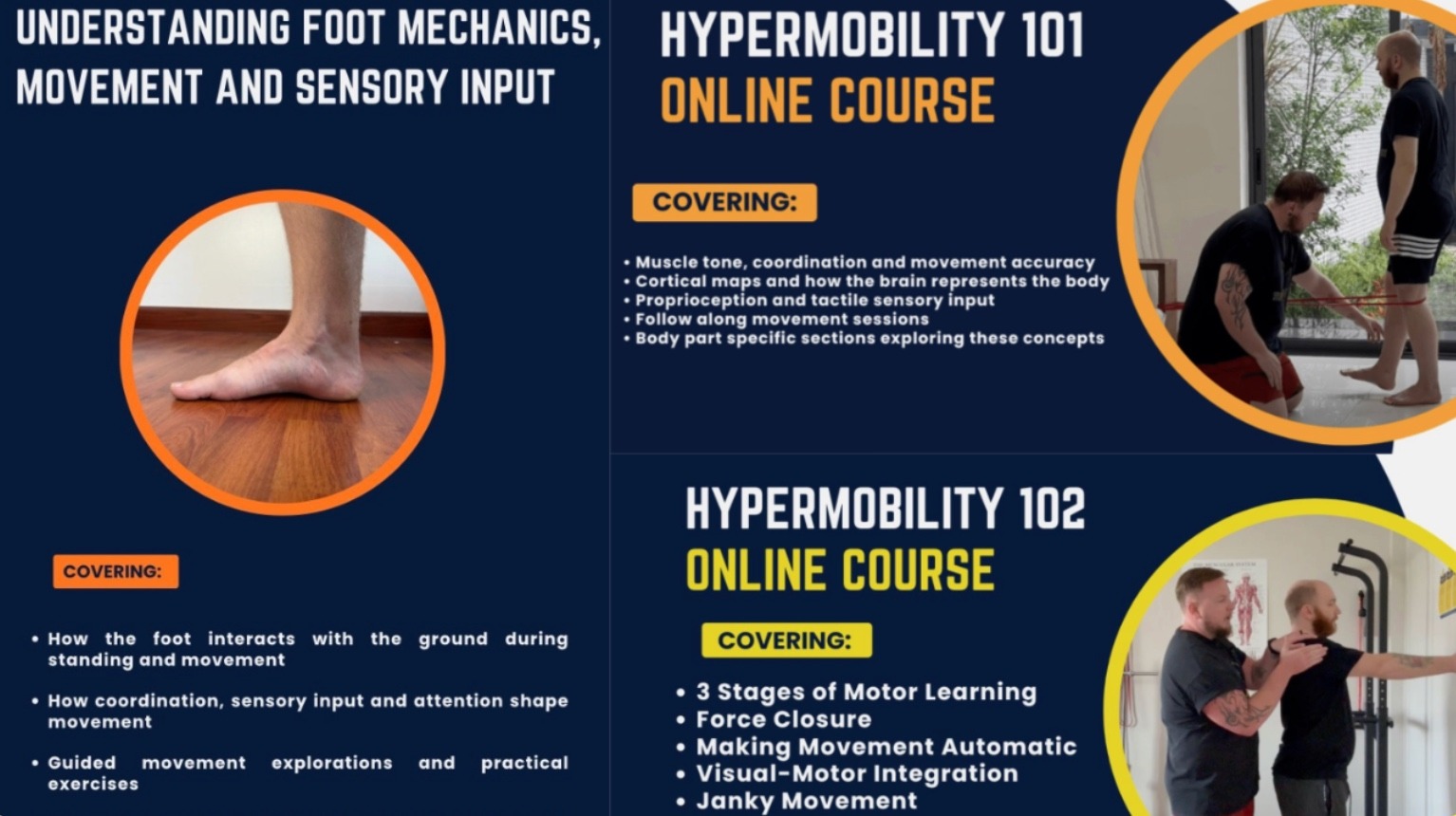
The Hypermobility Fundamentals Bundle
The Hypermobility Fundamentals Bundle is a structured education and movement pathway that starts at the bottom and builds upwards, grounded in motor learning and sensory motor science. Designed for people with hypermobility and persistent pain, it focuses on how strength and stability are organised and learned by the nervous system, beginning with the feet and progressing through sensory input, coordination, and motor learning. The courses are intended to be completed in sequence, with each one establishing the concepts and skills needed for the next.
— The Fibro Guy Team —