


Pregnancy is one of those things that most people describe as simultaneously wonderful and terrifying. Your body changes in ways you didn Many of the same hormonal mechanisms that affect hypermobility during pregnancy also play a role later in life, which is why menopause and hormonal changes in hypermobility deserve equal attention.’t think possible, you’re growing an actual human being, and the sheer volume of information, advice and unsolicited opinions you’ll receive from well-meaning family members is enough to make anyone’s head spin. Now, add Ehlers Danlos syndrome or hypermobility into the mix, and things get a whole lot more complicated. Suddenly, everything that’s already uncertain about pregnancy becomes even more uncertain.
If you’re reading this, chances are you’re either pregnant, thinking about becoming pregnant, or you know someone who is, and the reality of doing all of that with a connective tissue disorder has sent you searching for answers. And honestly? The information out there is thin. So thin. Really thin. When it comes to EDS and pregnancy, what you tend to find online is either incredibly vague, overly alarming, or it just doesn’t apply to your specific situation. There are a lot of well-meaning blog posts that essentially amount to “talk to your doctor,” which, whilst good advice, isn’t exactly what you were hoping for when you sat down at 2am with a cup of tea and a growing sense of worry.
So, this article is going to be different. We’re going to cover everything. And I do mean everything. From the biology of what happens to already-lax connective tissue when pregnancy hormones hit, through to labour, delivery, postpartum recovery, breastfeeding challenges, anaesthesia (a big one), and the emotional weight that comes with all of it. We’re going to look at what the research actually says, where it’s strong, where it’s weak, and what it means for you in practical terms.
This is a beast of an article. It’s long. It’s detailed. It’s meant to be. Because those with hypermobility and EDS deserve more than a pamphlet’s worth of information on something this important. We have worked with hundreds of people with hypermobility and EDS over the years, and pregnancy questions are amongst the most common we get. So, we wanted to put together something comprehensive, something you can actually use. For the latest on this, see our article on the 2026 EDS classification update.
So, if you’re ready, let’s get into it.
Why pregnancy is different when you have hypermobility or EDS
To really understand why pregnancy hits differently when you have a connective tissue disorder, we need to talk about a hormone called relaxin. Everyone produces relaxin during pregnancy, it’s not unique to those with hypermobility. It’s one of the body’s clever little mechanisms for preparing the pelvis and soft tissues for childbirth. Relaxin loosens ligaments, softens the cervix, and generally makes your connective tissue more pliable so that, when the time comes, a baby can actually fit through the birth canal. Without it, the process would be a lot more difficult for everyone. So far, so good, right? Relaxin does a useful job and everyone benefits from it.
Now, here’s the thing. If you already have Hypermobility or EDS, your connective tissue is already lax. Your ligaments are already stretchier than the average person’s. Your joints already have more movement than they probably should. So when relaxin comes along and loosens things even further, you’re essentially getting a double hit. It’s like taking an elastic band that’s already been stretched too many times and then pulling it even more. At some point, it stops bouncing back. And that’s essentially what’s happening when pregnancy hormones meet EDS.
A 2025 study following 28 pregnant women confirmed that relaxin levels contribute directly to ligament laxity and lumbopelvic pain during pregnancy, and that these changes track across all three trimesters. For those with hypermobility, this isn’t just an inconvenience, it can be genuinely destabilising. Joints that were borderline stable before pregnancy can become symptomatic. The pelvis, which was already prone to dysfunction, can become genuinely painful. And it’s not something you can simply exercise your way out of, because the hormonal environment is actively working against your ligaments. However, that doesn’t mean exercise is pointless during pregnancy. Far from it. We’ll come back to that.
But it isn’t just about joints, is it? Connective tissue is everywhere. It’s in your blood vessels, your gut, your skin, your pelvic floor, your organs. When you have a condition that affects the very fabric your body is built from, every system that pregnancy stresses is a system that was already under pressure. Your blood vessels need to handle a 50% increase in blood volume. Your pelvic floor needs to support the weight of a growing baby. Your skin needs to stretch considerably. And your gut, which might already be giving you grief, now has a uterus pushing up against it and slowing everything down.
And then there’s the autonomic nervous system. If you have POTS or other forms of dysautonomia alongside your hypermobility, pregnancy adds another layer of complexity entirely. The cardiovascular demands of pregnancy are significant for anyone, however when your autonomic nervous system is already a bit unreliable, those demands can push things in unexpected directions. Now, we’ll cover POTS during pregnancy in detail later on, because it deserves its own section.
Likewise, when it comes to the immune system, pregnancy naturally modulates immune function. Your body has to tolerate what is technically a foreign body growing inside it. For those with mast cell activation syndrome, which is common in the EDS population, this immune shift can change symptom patterns in ways that are hard to predict. Some people improve. Some get worse. Some find their symptoms shift in character entirely. And some find that symptoms they’d never had before suddenly appear, which can be incredibly confusing when you’re trying to work out what’s pregnancy-related and what’s MCAS-related.
So when it comes to pregnancy and EDS, the issue isn’t that pregnancy is inherently dangerous. For most people with hypermobile EDS, pregnancy is absolutely possible, with the right support it can go well. The issue is that the normal physiological changes of pregnancy interact with an already-altered connective tissue system in ways that need careful thought, planning, and management. This isn’t about fear, it’s about being properly prepared. There’s a massive difference between the two, and it’s one that doesn’t get acknowledged nearly enough in the medical literature.
What the research actually tells us about pregnancy outcomes
Right, let’s talk about the data. And I want to be upfront about something before we start: the research on pregnancy in Ehlers-Danlos syndrome and hypermobility is getting better, but it’s still not where we’d like it to be. A lot of what we have are surveys, retrospective studies, and case series. We’re not drowning in large randomised controlled trials, which is frustrating but not uncommon for rarer conditions. However, there are some important studies that give us a reasonable picture of what’s going on, and I think it’s worth walking through them honestly rather than cherry-picking the bits that sound either reassuring or alarming.
The biggest piece of work we have is a 2023 international survey of 947 women with hEDS and hypermobility spectrum disorder, covering 1,338 pregnancies. That’s a decent sample size for this population, and it gives us a fairly broad view. What they found was that the incidence of a number of complications was higher than in the general population. We’re talking about pre-eclampsia, eclampsia, premature rupture of membranes (PROM), preterm birth, antepartum and postpartum haemorrhage, hyperemesis gravidarum, shoulder dystocia, precipitate labour, caesarean wound infection, and postpartum psychosis. That’s a long list. And if you’re reading it whilst pregnant, I can imagine your heart rate just went up a bit. But before you panic, let’s look at the actual numbers and put them in context.
In terms of timing, 15.45% of births were preterm (before 37 weeks), 44.80% were born at term but before their due date, and 39.76% were born after the due date. The researchers estimated that 1 in 20 births could be affected by hEDS or HSD, which is actually a pretty significant figure when you think about it in terms of how many pregnant women might be walking around with undiagnosed hypermobility.
However, and this is important, this was a survey. The women were self-selected, they were recruited through EDS support groups and organisations, and there’s an inherent bias in that approach. People who’ve had difficult experiences are often more likely to respond to surveys about difficult experiences. That doesn’t mean the data isn’t valuable, it absolutely is. But we need to keep that context in mind when we’re interpreting the numbers. The true rates in the broader EDS population may be somewhat lower than what this survey captured.
Now, on the other end of the methodological spectrum, we have a nationally representative study from the US that looked at nearly 6 million births between 2016 and 2019, of which 1,016 were to women with an EDS diagnosis. This is a very different kind of study. It’s population-based, which means it captures a much broader picture without the self-selection bias. What they found was that EDS patients were more likely to have caesarean sections, postpartum haemorrhage, intrauterine growth restriction, and preterm delivery. Notably though, aortic aneurysmal rupture, which is one of those things that terrifies people when they google “EDS and pregnancy” at 3am, was not among the complications identified. And honestly, that’s worth knowing, isn’t it? Vascular complications are the thing people worry about most, and this large dataset didn’t flag them. However, it’s worth noting that this study captured all EDS subtypes together, and the vast majority of those 1,016 cases would have been hEDS. For those with vascular EDS, the picture is different, and specialist vascular monitoring during pregnancy is essential.
A 2020 review put it quite neatly: “Overall, pregnancy in EDS is well tolerated, with good outcomes. The rate of maternal and perinatal complications is higher and every pregnancy in these women remains a high-risk pregnancy.” Which I think is about as honest a summary as you’re going to get. It’s not doom and gloom. But it’s not pretending everything is the same as it would be without EDS, either.
There’s also an interesting angle when it comes to whether it’s the mother or the baby (or both) who has EDS. A 2022 study found that poor outcomes can differ depending on whether it’s the maternal or fetal EDS status driving them. Premature rupture of membranes was significantly increased in the group where a non-EDS mother was carrying an EDS-affected baby, 38.9% compared to 12.5-14.8% in other groups. So the baby’s own connective tissue status can actually affect the pregnancy membranes. Which makes biological sense when you think about it, the fetal membranes are partly fetal tissue after all. But it’s not something that most people, or indeed most clinicians, would think to consider.
A 2021 review also noted something reassuring: some complications, including PROM, may actually occur less often than was previously thought. The author pointed out that having a known diagnosis allows for anticipatory planning, which results in lower morbidity. In other words, knowing you have EDS and planning accordingly actually improves outcomes. Which is a pretty strong argument for the kind of preparation we’re going to talk about in the next section. So, knowledge isn’t just power when it comes to EDS and pregnancy. It’s protection.
So what does all this mean practically? It means that pregnancy with EDS carries some additional risks, but those risks are manageable with the right care. It means you should be treated as a high-risk pregnancy, not because something will definitely go wrong, but because being prepared for the possibility is sensible medicine. And it means that having a good team around you, one that actually understands what EDS symptoms look like and how to manage them, can make a genuine difference to outcomes.
Before you conceive: the preconception conversation
If you’re at the stage of thinking about pregnancy rather than already being pregnant, you’re actually in a really good position. Not because there’s a magic checklist that guarantees everything goes smoothly, there isn’t one, but because preparation matters enormously when it comes to EDS and pregnancy.
The first thing to think about is genetics. This is a conversation that a lot of people find difficult, and understandably so. Most forms of EDS follow an autosomal dominant inheritance pattern, which means that if you have it, there’s a 50% chance of passing it to each child. That’s a coin flip, for some people sitting with that reality is genuinely hard. Genetic counselling is something I’d strongly recommend for anyone with a confirmed EDS diagnosis who’s considering starting a family. Not because anyone is going to tell you what to do, that’s absolutely not what genetic counselling is about, but because having all the information laid out by someone who understands the genetics, the probabilities, and the implications can help you make the decision that’s right for you and your family.
Now, one question that comes up a lot is whether you can use IVF with preimplantation genetic testing (PGT) to select embryos that don’t carry EDS. For some forms of EDS where the specific genetic mutation has been identified, like vascular EDS, this is theoretically possible. However, for hypermobile EDS specifically, we don’t yet have a definitive genetic marker. The genetic basis of hEDS hasn’t been nailed down in the way it has for other subtypes. So PGT is not currently an option for hEDS. It’s one of those frustrating realities that comes with a condition where the genetics are still being worked out. Hopefully that will change in the future as research progresses, but for now, it’s not on the table. But does that mean you shouldn’t have children? Absolutely not. It just means you can’t genetically screen for hEDS at the embryo stage the way you can for some other conditions.
Another big preconception step is reviewing your medications. A lot of the medications that those with hypermobility and EDS take on a daily basis, whether for pain management, POTS, mast cell issues, or mental health, aren’t safe during pregnancy. Some need to be tapered off gradually rather than stopped suddenly. This is a conversation you need to have with your prescribing doctor well before you’re pregnant, not when you get a positive test. We’ve seen people scrambling to figure this out after the fact and it creates unnecessary stress during what’s already an anxious time. Planning ahead gives you time to find alternatives, to adjust to medication changes, and to stabilise before conception. However, if you’re reading this and you’re already pregnant and you haven’t done this yet, don’t panic. Just have that conversation with your doctor now rather than putting it off further.
And then there’s the team. Getting your healthcare team in place before pregnancy is, without exaggeration, one of the most important things you can do. You want an obstetrician who understands connective tissue disorders, or at the very least, is willing to learn about them. You want an anaesthetist who’s been briefed (we’ll get into why that matters in the anaesthesia section and trust me, it really matters). You want a physiotherapist who knows what they’re doing with hypermobile bodies. You want a midwife who’ll actually listen when you tell them something isn’t right.
I know that sounds like a lot, and I know that for many of those with hypermobility, getting one healthcare professional to take you seriously can feel like an achievement in itself. But this is one of those situations where putting in the work upfront genuinely pays off down the line. The 2024 expert guidelines for childbearing with hEDS specifically recommend a pre-pregnancy appointment with your obstetric team. Likewise, a 2018 case series and review came to the same conclusion. It gives everyone a chance to plan rather than react. And when it comes to EDS, reactive medicine is almost always worse than proactive medicine. You don’t want the first time your obstetrician hears about local anaesthetic resistance to be when you’re in active labour telling them the epidural has stopped working. Now, that might sound dramatic. But it happens more often than you’d think.
One more thing before we move on. If you haven’t already got a confirmed diagnosis, or if your diagnosis is vague and not properly documented in your medical records, now is the time to sort that out. Having “hypermobile” scribbled in a letter from 2015 is very different from having a clear EDS diagnosis with subtype in your notes. When you’re in labour and things are moving fast, the people looking after you need to be able to see immediately what they’re dealing with.
The first trimester
So, you’re pregnant. Congratulations, by the way. Also, possibly condolences, because the first trimester is often absolute rubbish for those with Hypermobility and EDS. Let’s talk about why.
Relaxin, that hormone we mentioned earlier, starts climbing almost immediately after conception. It peaks around 12 weeks, which is right in the thick of the first trimester. So even before you’re visibly pregnant, even before most people know, your connective tissue is already being affected. Joints that were manageable before may start feeling less stable. That background level of chronic pain that you’d learned to live with might ramp up. Subluxations that hadn’t happened in months might start reappearing. And because nobody can see that you’re pregnant yet, you can end up feeling like you’re going a bit mad wondering why your body has suddenly decided to misbehave.
And then there’s morning sickness. Or, as it should more accurately be called, “all day sickness that makes you question your life choices.” For those with hypermobility and EDS, there’s a higher-than-average risk of hyperemesis gravidarum, which is the severe end of pregnancy nausea and vomiting. Now, if you also have POTS, this gets particularly tricky. POTS management relies heavily on high fluid and salt intake, typically around 2.5 litres of fluid and up to 7 grams of salt per day. But if you can’t keep anything down, those fluid targets become almost impossible to hit. It’s a horrible catch-22: your body needs more fluids than ever, and it’s rejecting everything you put in.
One review found that hyperemesis gravidarum is 50-60% more likely in women with POTS. That’s not a small increase. If you’re struggling with severe nausea and you have POTS, being proactive about anti-emetics with your doctor is really important. So, getting on top of the vomiting isn’t just about comfort, it’s about maintaining the hydration your cardiovascular system needs to function. Dehydration in POTS doesn’t just mean feeling a bit rubbish. It can mean fainting episodes, significant tachycardia, and an inability to stand up without the room going sideways.
When it comes to medications during the first trimester, this is where that preconception medication review becomes critical. The first trimester is the period of organogenesis, when all the baby’s major organs are forming. It’s also the period of highest risk for teratogenic effects from medications. If you haven’t already discussed your medications with your doctor, now is the time. And I mean all of them. Not just the prescription ones, but supplements and over-the-counter things as well. Even creatine, which many of those with EDS find helpful, needs a conversation about pregnancy safety.
The fatigue during the first trimester can also be particularly brutal. Those with hypermobility are often no strangers to fatigue, obviously. But pregnancy fatigue layered on top of EDS fatigue is something else entirely. Brain fog, which many with EDS already experience, can intensify considerably. The temptation to just push through is strong, especially if you’re trying to keep your pregnancy quiet in those early weeks. But this is a time for pacing yourself carefully and being honest about your limits. You aren’t being lazy. Your body is growing a human whilst simultaneously dealing with a connective tissue disorder. That’s two full-time jobs.
I think there’s a weird perception that the first trimester is somehow the “easy” bit because you’re not visibly pregnant yet. For those with EDS, it’s often anything but. The hormonal changes are hitting hard, the nausea is relentless, the fatigue is overwhelming, and you might not even feel comfortable telling people why you’re struggling. It can be quite an isolating experience, if I’m honest. However, speaking to others in the EDS community who’ve been through it can help enormously. Sometimes just knowing that what you’re feeling is a recognised pattern rather than you being dramatic is enough to make it feel more manageable. Online support groups for EDS and pregnancy can be genuinely helpful here, even if you have to wade through some anxiety-inducing posts to find the good stuff.
Now, however, there is a bit of a silver lining for some. Not everyone gets worse in the first trimester. Some women with hEDS report that their joint symptoms actually improve somewhat, possibly due to the increased blood volume that begins early in pregnancy. It’s unpredictable, and that unpredictability is itself stressful. But it’s worth mentioning that “everything gets worse” isn’t the universal experience.
The second and third trimesters
If the first trimester is the hormonal ambush, the second and third trimesters are where the mechanical challenges really ramp up. As the baby grows, the physical demands on your body increase dramatically, and for those with hypermobility, this is when joint instability often reaches its peak.
Pelvic girdle pain is one of the most common complaints during the second and third trimesters for pregnant women in general, but for those with EDS, it can be significantly worse. Your sacroiliac joints, which connect your spine to your pelvis, are already prone to dysfunction when you have hypermobility. Now add the weight of a growing baby, the ongoing hormonal effects of relaxin, and the progressive change in your centre of gravity, and you’ve got a recipe for some pretty significant back and pelvic pain. Some women describe their pelvis as feeling like it’s “coming apart,” and whilst that’s obviously not literally happening, the instability can be severe enough that it certainly feels that way.
So, is there anything that actually helps? Well, the good news is that we’re starting to get evidence for what works. A 2025 randomised controlled trial of 42 pregnant women looked at the effects of an 8-week prenatal Pilates programme on ligamentous laxity and pelvic girdle pain. What they found was quite encouraging: the women who did the Pilates didn’t see a progression in ligamentous laxity or joint hypermobility, whereas the control group showed significant deterioration. The Pilates group also had significantly reduced activity limitations from pelvic girdle pain, with a large effect size.
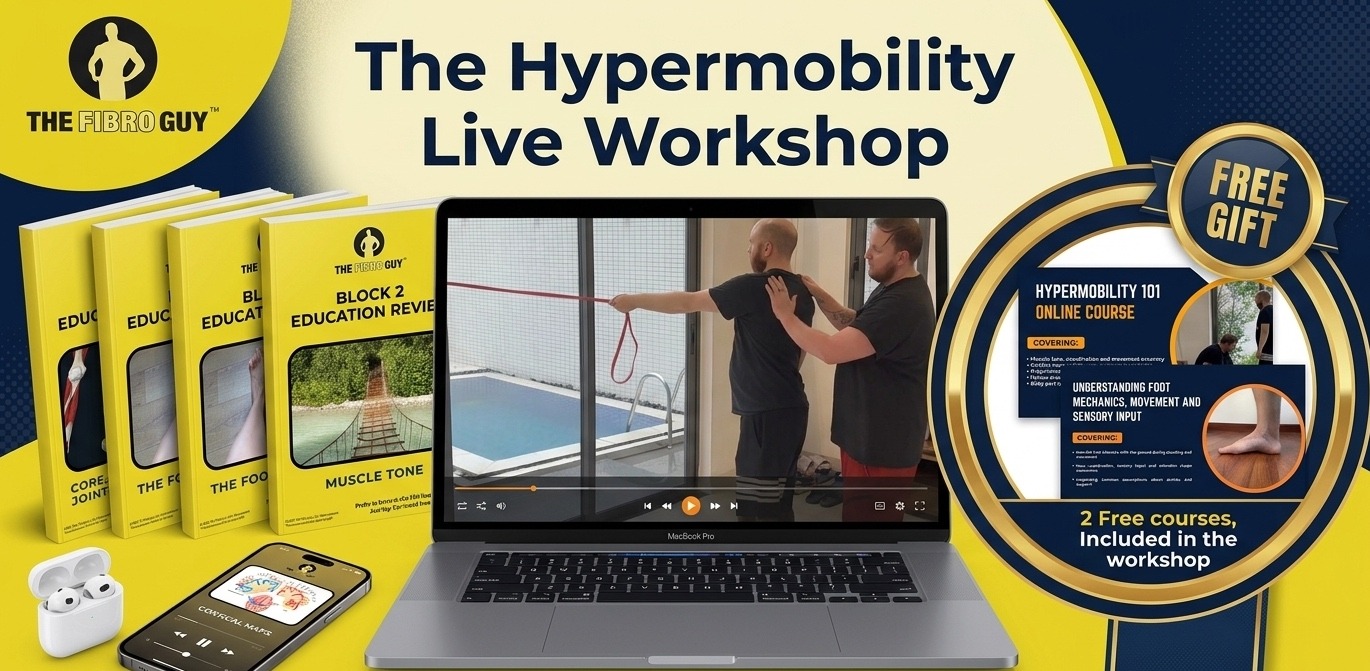
Ready to work through this with structure and support?
The Hypermobility Live Workshop is four weeks of breaking down the frameworks we use in our studios, with live Q&A so you can ask about your specific situation. Two free courses are included.
Now, 42 participants isn’t a huge sample, and this wasn’t specifically a study of EDS patients. But the principle makes sense and it aligns with what we’ve seen clinically. Controlled, stability-focused exercise that strengthens the muscles around your joints can help compensate for the ligamentous laxity that pregnancy causes. Whilst the ligaments are being undermined by hormones, the muscles essentially have to do the job that the ligaments can’t, and that’s even more true when those ligaments were already lax to begin with. If you’re looking for where to start with exercise when you have hypermobility, we’ve written about that extensively.
When it comes to managing joint instability during these months, the practical strategies are fairly straightforward but they do matter. Core and stability work adapted for pregnancy can help support the pelvis and lower back. Maternity support belts can provide some external stability for your SI joints. Now, whilst they’re not a permanent solution, they can make the difference between being able to get through the day and being completely floored by pelvic pain. Getting decent sleep becomes harder as the bump grows, and pregnancy pillows become less of a luxury and more of a necessity. Side sleeping with support between the knees can help keep the pelvis in a more neutral position and reduce the strain on the SI joints overnight.
I should mention here that rib subluxations can also become more frequent as the uterus expands and pushes the rib cage upward. It’s one of those things that doesn’t get talked about a lot in pregnancy literature, but it’s genuinely common in the later stages for those with hypermobility. A little tangent here, but we had one client who described her rib subluxations during the third trimester as feeling like her baby was “rearranging the furniture,” which is one of the more accurate descriptions I’ve heard. Likewise, costochondritis can flare during pregnancy, and the combination of the two can make even sitting comfortably feel like a challenge.
There’s also the matter of proprioception, which is your body’s ability to sense where it is in space. Those with hypermobility often already have impaired proprioception, and as your body changes shape throughout pregnancy, your proprioceptive system has to constantly recalibrate. This can make you feel clumsier, less stable on your feet, and more prone to trips and falls. It’s not just your imagination, your centre of gravity is genuinely shifting and your body’s feedback systems are struggling to keep up. So, being aware of this, taking extra care on stairs, wearing supportive footwear, and not being too proud to use a handrail are all simple things that can prevent a fall that would otherwise cause real problems.
One thing I want to be honest about is that for some people, the second and third trimesters can feel like an EDS flare-upthat just doesn’t end. Pain increases, fatigue worsens, joints feel unreliable, it can feel like your body is just done. It can be demoralising, especially when everyone around you is telling you how wonderful pregnancy is supposed to feel. And if you’re told one more time to “enjoy the glow” while your SI joint feels like it’s on fire and you can barely walk to the kitchen, it’s okay to want to throw something. If that’s where you are, you’re not doing anything wrong. Your body is dealing with a lot, and it’s perfectly fine to acknowledge that it’s hard.
However, it’s also true that this phase does end. The mechanical stress of pregnancy resolves after delivery, even if the recovery takes time. Keeping that endpoint in mind can help when things feel overwhelming. And when it comes to the worst days, remember that those with hypermobility have already proven they can manage difficult things. You’ve been doing it your whole life.
POTS during pregnancy
Postural Orthostatic Tachycardia Syndrome is one of the most common comorbidities in those with hypermobility and EDS, and it adds its own particular flavour of complexity to pregnancy. If you’re not familiar with POTS, we’ve written about it extensively, including a guide on how to approach exercise when you have POTS and a deep dive into why salt matters for POTS management.
So, what happens to POTS during pregnancy? Well, the answer is frustratingly variable. A 2022 review from the International Journal of Women’s Health found that roughly 60% of women with POTS actually saw their symptoms improve during pregnancy. Now, that might sound surprising at first. But it makes physiological sense when you think about it. Pregnancy naturally increases blood volume by up to 50%, and one of the core issues in POTS is reduced blood volume and poor venous return. So for many people, the expanded blood volume of pregnancy essentially does what all those fluids and salt and compression stockings have been trying to do all along.
However, around 12-15% remained stable, and 20-30% actually got worse. Those with more severe POTS before pregnancy were more likely to decompensate. So it’s genuinely unpredictable, and that uncertainty is itself stressful. You can’t know in advance which group you’ll fall into, which makes planning tricky. However, being aware of the possibilities means you can prepare for whichever scenario unfolds.
When it comes to managing POTS during pregnancy, the non-pharmacological approach remains the foundation. The same review recommended 2.5 litres of fluid per day minimum and increased salt intake of up to 7 grams per day. However, as we discussed in the first trimester section, hyperemesis can make this extremely difficult to achieve in practice. Compression garments, which are already commonly used in POTS management, can continue to be helpful during pregnancy. Likewise, avoiding prolonged standing is even more important when you’re pregnant, because the blood pooling in your lower limbs is competing with the blood supply needed for the uterus. What does that look like practically? It means sitting down when you can, not queueing in shops if you can avoid it, and being honest with your workplace about what you need. If you’re working during pregnancy with POTS, having a proper conversation with your employer about reasonable adjustments is important. Standing for hours is not a reasonable ask when your autonomic nervous system is struggling.
On the medication front, most POTS medications present some level of concern during pregnancy. Beta-blockers, midodrine, fludrocortisone: these all have varying safety profiles that need careful discussion with your specialist. The standout exception is pyridostigmine, which is classified as pregnancy category B, meaning animal studies have shown no risk and whilst there aren’t adequate studies in pregnant humans, it’s generally considered acceptable for use. For those who need pharmacological support during pregnancy, pyridostigmine is typically the first-line option. But, this is absolutely a conversation for your specific medical team, not a blog post. What works for one person with POTS may not work for another, and the decision needs to account for your specific symptoms, severity, and other medications.
During labour and delivery, POTS brings specific considerations that your team needs to be aware of. Pain and stress can trigger significant autonomic instability, including dramatic blood pressure swings and tachycardia that can look quite alarming on the monitors. The 2022 review recommended early epidural placement during labour specifically because controlling pain helps control autonomic symptoms. And when it comes to positioning during labour, left lateral is generally preferred over lying flat on your back, both for venous return and for POTS management. Likewise, continuous fetal monitoring is also recommended for women with POTS.
An interesting quirk that’s worth mentioning: some women with POTS find that the postpartum period is when their symptoms come roaring back. The blood volume that helped during pregnancy drops after delivery, and the combination of blood loss, sleep deprivation, dehydration from breastfeeding, and the physical demands of a newborn can trigger a significant POTS flare. Being prepared for this, having your fluids and salt strategy ready, knowing that it’s a possibility rather than a surprise, makes it considerably easier to manage. If you had POTS before pregnancy and you’ve been feeling pretty good during pregnancy, don’t assume that’s your new normal. Have a plan for the postpartum flip. And make sure whoever is looking after you postpartum knows about your POTS too, not just your obstetric team.
Also, and this is a slightly odd one, but coat hanger pain, which is that distinctive pain across the shoulders and back of the neck that comes with POTS and dysautonomia, can get worse postpartum. The combination of reduced blood volume and the physical postures involved in feeding and holding a baby can really set it off. It’s worth knowing about in advance so you can prepare strategies for it rather than being blindsided.
Mast cell activation and pregnancy
Mast Cell Activation Syndrome, or MCAS, is another one of those conditions that frequently travels alongside hypermobility and EDS. If you’re not sure what it is or you want to understand the mechanisms behind it, we’ve covered it in detail in our guide to mast cell activation syndrome and the connection between mast cells and chronic pain conditions.
Now, MCAS during pregnancy is one of those areas where the research is genuinely thin, and I want to be upfront about that. We don’t have large studies specifically looking at how MCAS behaves during pregnancy in EDS patients. What we do know is that mast cell activity can change during pregnancy, sometimes for the better and sometimes not. Some women report improvement in their MCAS symptoms, possibly because pregnancy naturally shifts the immune system towards a more tolerant state. It has to, in order to not reject what is technically half-foreign genetic material. Others find their symptoms get worse or change in character entirely. There’s no reliable way to predict which way it’ll go, which I know is not particularly helpful to hear. However, being prepared for either possibility is better than being surprised by it.
The bigger practical issue with MCAS and pregnancy is medication. Many of the medications used to manage MCAS need to be reviewed and potentially changed during pregnancy. Antihistamines, mast cell stabilisers, and other agents all have different safety profiles during pregnancy, and some that were perfectly fine before may need to be swapped for alternatives with better established safety data. This is another one of those areas where preconception planning really pays off, because the last thing you want is to find out at 6 weeks pregnant that your main symptom management strategy needs to change, and you’re left scrambling for alternatives whilst also dealing with morning sickness.
What I’d say about MCAS and pregnancy is this: make sure your team knows about it, make sure your medications have been reviewed for pregnancy safety, and keep a close eye on any changes in your symptoms. Document what’s changing and when, because patterns can be helpful for your medical team even if they’re not immediately obvious to you.
It’s also worth knowing that MCAS can affect things like temperature regulation, which can be more pronounced during pregnancy when your body is already running warmer than usual. Likewise, MCAS-related food sensitivities can shift during pregnancy, which adds yet another layer of complexity to the already-complicated question of what to eat when you’re pregnant. When it comes to diet during pregnancy with EDS, keeping things as stable and predictable as possible is generally the best approach. We’ve covered dietary considerations for those with hypermobility separately if you want more detail on that.
And one more thing on MCAS that deserves mentioning: if you’re having any kind of procedure during pregnancy, whether it’s a planned caesarean or something else entirely, make sure the anaesthetist knows about your MCAS. Some anaesthetic agents and medications used during surgery can trigger mast cell degranulation, and having a plan in place to manage potential reactions is important.
The big one: anaesthesia and pain relief
Right. This section is important. Genuinely, properly important. If there’s one part of this entire article I’d ask you to read carefully and possibly print out and take to your obstetric team, it’s this one.
There has been a long-standing observation in the EDS community that local anaesthetics don’t seem to work as well. For years, people with EDS have been reporting to their dentists, surgeons, and anaesthetists that the numbing wears off too quickly, that they can feel things they shouldn’t be able to feel, and that the standard doses just aren’t enough. For years, many of those reports were dismissed or met with scepticism, because the evidence base was weak. It was anecdotal. There wasn’t a proper clinical trial proving it. Well, now that’s changed. And it’s changed in a big way.
In March 2026, the first randomised controlled trial specifically investigating local anaesthetic resistance in EDS was published. This is genuinely a big deal. This isn’t a survey or a case series or an observational study. It’s an actual RCT, the gold standard of clinical evidence. The study, published in Regional Anesthesia and Pain Medicine, looked at 135 participants: 91 with EDS and 44 healthy controls. They injected standardised doses of lidocaine and then tested anaesthetic effectiveness at 5, 15, and 30 minutes.
Here’s what they found. At 5 minutes, there was no significant difference between the groups. Both the EDS group and the controls had similar levels of numbness initially. So the anaesthetic kicks in just fine. But at 15 minutes, only 60% of the EDS group had adequate anaesthesia compared to 84% of controls. That’s a statistically significant difference (p=0.006). And by 30 minutes, it was 53% of the EDS group versus 80% of controls (p=0.003). Among women specifically, the gap was even wider: 52% versus 89% at the 30-minute mark (p<0.001).
So what does this actually tell us? It tells us that the problem isn’t that local anaesthetics don’t work at all in EDS. They do. The initial onset is fine. The problem is that they wear off faster. The duration of the effect is shorter. This is a really important distinction because it changes how anaesthetists should approach the problem. It’s not about giving a completely different drug, it’s about redosing more frequently, using longer-acting agents where appropriate, and, critically, monitoring whether the anaesthesia is still working rather than just assuming it is because it was working 20 minutes ago.
Now, here’s why this matters so much for pregnancy and birth. If you’re having an epidural for labour, and the anaesthetic wears off faster than expected, you might experience breakthrough pain at exactly the time you need it most. If you’re having a caesarean section, adequate anaesthesia is obviously non-negotiable. Nobody wants to be lying on a table feeling things they shouldn’t be feeling, do they? And if you need an emergency procedure, the person administering the anaesthetic needs to know that the standard protocol might not be sufficient for someone with EDS.
Before this clinical trial, we already had suggestive evidence from other sources. A 2019 survey of 980 EDS respondents found that 88% recalled inadequate pain prevention during dental procedures, compared to 33% in non-EDS respondents. That’s a staggering difference. The survey also found that certain anaesthetic agents worked better than others in the EDS population: articaine had the highest success rate at 30%, followed by bupivacaine at 25% and mepivacaine at 22%. Whilst these numbers might look low, they’re important details for your anaesthetist to know about. Print them out if you have to. Seriously. Print them out.
Whilst I’m on the topic of dental anaesthesia, this is slightly tangential but I think it’s important enough to include. The local anaesthetic issue doesn’t just apply to labour and delivery. It applies to any dental work you need during pregnancy (and many people do need dental work during pregnancy, because pregnancy can affect your gums and teeth quite significantly), any minor procedures, any stitching up of tears postpartum. It’s a systemic issue with how your body processes these drugs, not just a labour-specific one. If you’re having dental work during pregnancy, make sure your dentist knows about this.
So, what should you actually do with all this information? First and foremost, request an antenatal anaesthetic review. The 2024 expert guidelines for childbearing with hEDS and HSD specifically recommend this. You should meet with the anaesthetist who’ll be managing your pain relief during labour and delivery, ideally well before your due date. This isn’t a courtesy call, it’s a clinical necessity. Second, make sure they know about the 2026 RCT findings. You’d be amazed how many anaesthetists haven’t come across this yet, it’s brand new research. Third, if you’re having an epidural, make sure there’s a clear plan for what happens if it stops working or doesn’t provide adequate coverage. “We’ll top it up” is a fine answer, but only if they’re actually going to be monitoring for breakthrough pain rather than assuming everything’s fine because the epidural is in.
A 2025 case report of a pregnant woman with classical EDS and POTS detailed how ultrasound-guided spinal anaesthesia and extended post-anaesthesia observation were used to manage her care successfully during a caesarean section. It’s a single case, obviously. But it illustrates the principle: when EDS is taken into account in the anaesthetic planning, good outcomes are absolutely achievable. The problems arise when it’s not taken into account. And unfortunately, it still isn’t taken into account nearly often enough. But that’s why you’re reading this, so you can make sure it is.
Labour and delivery
Alright, let’s talk about the birth itself. There are a lot of opinions floating around about whether women with EDS should have vaginal deliveries or elective caesareans, and as with most things when it comes to EDS, the answer is: it depends.
The 2024 expert guidelines are fairly clear on this point: vaginal birth is clinically preferable where there are no obstetric contraindications. The reasoning is straightforward. A caesarean is major abdominal surgery, and when you have a connective tissue disorder that affects wound healing, surgical recovery can be more complicated. The tissue is more fragile, wound infection rates may be higher (the 2023 survey found higher caesarean wound infection rates in the EDS group), and healing takes longer than it does for the general population. That doesn’t mean caesareans should be avoided at all costs. Sometimes they’re absolutely necessary and they can be life-saving. But the default assumption shouldn’t be “EDS means caesarean.” However, the default assumption also shouldn’t be “everything will be fine because most women deliver vaginally without problems.” It needs to be individualised, which is a word that gets thrown around a lot in medicine but genuinely applies here.
However, vaginal delivery in EDS comes with its own set of considerations, and this is where having a team that understands your condition really matters.
Precipitate labour is one of the risks that crops up repeatedly in the EDS literature. This is labour that progresses very rapidly, sometimes from nothing to delivery in under 3 hours. For someone who was expecting a long, gradual build-up, this can be genuinely frightening. The 2024 guidelines actually recommend anticipating a specific and somewhat unusual pattern: a protracted latent phase, where the early and less intense stage of labour seems to drag on, followed by precipitous active labour where everything happens very fast. In practical terms, this means making sure you get to the hospital in good time and that your birth plan accounts for rapid progression. Don’t assume you’ll have hours of active labour to get settled in. You might, or you might not.
Tissue fragility is another key consideration during delivery. The soft tissues of the birth canal, including the perineum, may be more prone to tearing in EDS. This is connective tissue, after all, and if your connective tissue is already more fragile than average, the mechanical stress of delivery poses a higher risk of tears. The 2024 guidelines recommend manual perineal protection during delivery, which is a technique where the midwife or obstetrician physically supports the perineum during the pushing stage to reduce the risk of severe tears. Your pelvic floor has been under a lot of stress throughout pregnancy, and protecting it during delivery is genuinely important for your postpartum recovery.
When it comes to pushing, there are different approaches, and this is worth discussing with your team beforehand. Some midwives prefer coached pushing, where you’re told when and how hard to push, whilst others prefer a more physiological approach where you follow your body’s own cues. For those with EDS, there isn’t a definitive “best” approach backed by evidence. But what I would say is that communication during this stage is key. If something doesn’t feel right, if you feel like something has shifted or given way that shouldn’t have, speak up immediately. Your team needs to know. Don’t worry about being a difficult patient. When it comes to your body, you are the expert on what feels normal and what doesn’t.
If a caesarean is needed, whether planned or emergency, the 2024 guidelines have some specific recommendations for EDS patients. They suggest using slow-dissolving sutures and tissue glue rather than standard sutures, because the tissue heals differently and doesn’t hold sutures as well. Careful surgical technique with particular attention to tissue handling is important, and extended monitoring afterwards is recommended. These aren’t huge asks. They’re just things that need to be in the notes so that whoever is performing the surgery knows about them.
There are also some things that the guidelines say aren’t routinely recommended for EDS patients, and this is worth knowing because you might hear them suggested. Prophylactic cerclage, which is a stitch placed in the cervix to prevent premature opening, doesn’t have evidence supporting its routine use in hEDS. Likewise, routine progesterone supplementation isn’t recommended. However, cervical length screening at the anatomic ultrasound is recommended, because catching any cervical changes early allows for appropriate intervention if it’s actually needed rather than doing things prophylactically “just in case.” Evidence-based medicine, not panic-based medicine, is the goal here. And that’s actually quite reassuring when you think about it, isn’t it?
One more consideration for labour: the risk of postpartum haemorrhage. Both the 2023 survey and the national database study flagged higher rates of postpartum haemorrhage in EDS patients. This makes sense given the connective tissue in blood vessel walls, and it means your delivery team should be prepared for it. Having blood products available and being ready to act quickly if bleeding is excessive are sensible precautions that should be part of the plan. However, it’s also worth saying that higher risk doesn’t mean certainty. Many women with EDS don’t experience significant haemorrhage. The preparation is precautionary, not prophetic.
After the birth: postpartum recovery
The baby is here. It’s wonderful. It’s terrifying. You’re exhausted. And your body, which has spent nine months being stretched and loosened and pushed to its limits, now needs to recover. For those with hypermobility and EDS, the postpartum period brings its own set of challenges that deserve proper attention, not just a cheerful “you’ll bounce back” from your GP six weeks later.
Let’s start with the pelvic floor. Even without EDS, pregnancy and childbirth put enormous strain on the pelvic floor muscles and connective tissue. With EDS, the pelvic floor was likely already somewhat compromised before pregnancy due to the connective tissue laxity that comes with the condition. We’ve written a comprehensive guide to pelvic floor issues in EDS that goes into much more detail, but the key point for postpartum is this: pelvic floor rehabilitation should be a priority, not an afterthought. Don’t wait until you’re having problems to get assessed. Get assessed early and start working on it.
Pelvic organ prolapse is a genuine risk that needs to be on your radar. A 2023 case series documented pelvic organ prolapse in EDS patients and highlighted the need for a multidisciplinary approach involving urogynecology, rheumatology, and physiotherapy. This isn’t to scare you, it’s to make the point that early assessment and intervention makes a real difference to outcomes. If you’re noticing a feeling of heaviness, pressure, or something “not right” in your pelvic area after delivery, don’t assume it’s just normal postpartum stuff that will sort itself out. Get it checked. It might be completely fine. But if it isn’t, catching it early gives you far more options than waiting until it’s causing significant problems.
Wound healing is another area where EDS makes things different from the general population experience. Whether you’ve had a tear, an episiotomy, or a caesarean, the healing process may take longer and may be more complicated. The tissue is fragile, scarring may be atypical (think wider, more prominent scars), and infection risk may be higher. Keeping wounds clean, following up promptly on any signs of infection, and being patient with the healing process are all important. This isn’t the time to compare yourself to your mate who had a caesarean and was back at the gym in six weeks. Your tissue is different. Your healing timeline will be different. And that’s okay. However, if healing seems to be taking an unusually long time or if you’re noticing the wound looking worse rather than better, don’t sit on it. Get it reviewed.
Now, there’s something that a lot of people don’t expect and that really should be talked about more: the laxity doesn’t necessarily just go away after delivery. A 2019 study found that pregnancy caused lasting changes in knee joint laxity, particularly for first-time mothers. The anterior laxity and compliance of the knee increased during pregnancy and didn’t fully return to pre-pregnancy levels afterwards. For those with EDS, who started with more laxity than average, this is significant. It means that the joint instability you experience during pregnancy may not completely resolve. Things might settle considerably, sure. But “back to exactly how it was before” isn’t guaranteed, and setting that expectation honestly is important.
When it comes to whether EDS can get worse over time, pregnancy can sometimes feel like a step change. Some women report that their baseline shifted after pregnancy and never quite went back. The research on this is still developing and we can’t say definitively whether pregnancy causes permanent worsening or whether it’s the lasting laxity changes combined with the physical demands of caring for a small child. But it’s a concern that’s commonly voiced in the EDS community and it deserves acknowledgement rather than dismissal.
Now, breastfeeding. This is a topic that comes up constantly and honestly it doesn’t get nearly enough airtime in the EDS conversation. A 2022 review in the International Breastfeeding Journal laid out the challenges really well. For those with EDS, breastfeeding can be complicated by multiple factors that most breastfeeding guides simply don’t mention.
First, joint subluxations during positioning. You’re holding a baby for hours at a time in positions that put sustained strain on your wrists, thumbs, and shoulders, all joints that are already prone to instability in hypermobility. Wrist subluxations during feeds are genuinely common and can make the whole experience painful and anxiety-inducing. Then there are proprioceptive difficulties that make it hard to find and maintain a comfortable position without constantly adjusting and readjusting. The baby needs to be in a specific position relative to the breast, and when your body’s position-sense is unreliable, achieving that consistently is harder than it sounds.
And then there’s Raynaud’s phenomenon. Raynaud’s syndrome, where blood flow to the extremities is reduced in response to cold or stress, is common in EDS, can also affect the nipples. However, during and after breastfeeding, Raynaud’s can cause intense, burning nipple pain as the blood flow constricts. If you’ve ever experienced Raynaud’s in your fingers, imagine that in your nipples. It’s genuinely miserable, and it can make breastfeeding feel impossible. If you’re dealing with cold intolerance and Raynaud’s, warm compresses before and after feeds, avoiding cold environments during feeding, and in some cases specific medication can help manage it.
The recommendations from the review include using multiple feeding positions rather than sticking to one that’s causing pain, pillow support to take the weight off your arms and reduce the load on unstable joints, and considering bracing for particularly unstable wrists. I know that sounds like a lot of kit for something that’s supposed to be “natural.” But the reality is that breastfeeding with EDS sometimes needs practical adaptations to work, and there’s nothing wrong with that.
And honestly, if breastfeeding doesn’t work for you despite trying, that’s okay too. The pressure to breastfeed is enormous and for some people with EDS the physical cost is too high. Fed is fed, your baby needs a parent who isn’t in constant pain more than they need breast milk. Don’t let anyone make you feel guilty about how you feed your baby.
The emotional side of pregnancy and EDS
We’ve covered a lot of the physical aspects of pregnancy with EDS, but I’d be doing this topic a real disservice if I didn’t talk about the emotional side. Because it’s significant, and it’s often the part that gets overlooked.
Let’s start with the numbers. The 2023 survey of 947 women with hEDS and HSD found higher rates of PTSD related to childbirth compared to the general population. And that’s not just “it was a difficult experience and I felt a bit shaken afterwards.” We’re talking about genuine post-traumatic stress disorder arising from the birth experience. When you consider the factors we’ve discussed throughout this article, pain that wasn’t adequately managed because anaesthetics wore off too quickly, feeling unheard by medical staff who didn’t understand your condition, rapid labour that felt out of control, postpartum complications that weren’t anticipated, it’s not hard to understand why.
Medical trauma is something that many people with EDS carry with them long before pregnancy enters the picture. Years of being dismissed, misdiagnosed, told that your symptoms are all in your head, or being gaslit by healthcare professionals who don’t understand your condition, can leave you with a deep distrust of medical settings and medical professionals. Walking into a labour ward carrying that history is genuinely difficult, it colours everything. You might find it hard to advocate for yourself during labour, or conversely, you might find it hard to let go of control and trust the people looking after you. Both responses are completely understandable, and neither one is wrong. But being aware of the pattern can help you work with it rather than against it.
And then there’s the guilt. This is one that doesn’t get talked about nearly enough, and it’s something I think really needs addressing. If you have EDS and you know it’s autosomal dominant, there’s a 50% chance your child will have it too. For some parents, this knowledge sits heavily. There can be a profound sense of guilt about potentially passing on a condition that has caused them so much difficulty, so much pain, so many limitations. I want to say clearly: that guilt is understandable, but it is not a reflection of having done something wrong. Every parent passes on their genetics. Nobody chooses what those genetics contain. And if your child does inherit EDS, they’ll have something you didn’t, a parent who understands the condition, who can spot the signs early, who can get them proper support from childhood rather than spending decades being told nothing is wrong.
The anxiety during pregnancy can be significant and relentless. Will the baby be okay? Will labour go well? Will the anaesthetic work? Will I recover? Am I going to be able to physically care for a newborn when my own body is struggling? Will my child have EDS? These aren’t irrational fears. They’re based in the genuine reality of living with a complex chronic condition. But they can become overwhelming, and when it comes to mental health during pregnancy, there’s no award for suffering in silence. So how do you manage anxiety that’s rooted in genuine risk rather than irrational worry? That’s a harder question than most people acknowledge, but it starts with having honest information (which you now have) and a support network that takes your concerns seriously.
However, I also want to say this. Whilst the emotional challenges are real, so is the resilience of those with hypermobility and EDS. You’ve been managing a difficult condition for years, you’ve been doing that long before pregnancy came along. You’ve learned to advocate for yourself, to push for answers, to adapt when things don’t go to plan. Those skills are exactly what good parenting requires. The same determination that got you a diagnosis, that got you the right help, that keeps you managing your condition day after day, that’s what you’ll bring to parenthood. And honestly, that’s not nothing.
If you’re struggling with your mental health during or after pregnancy, please, actively seek support. Perinatal mental health services exist for exactly this reason. A therapist who understands chronic illness can be incredibly valuable. And they do exist, even if they’re not always easy to find. And if your birth experience was traumatic, there are specific therapeutic approaches like EMDR and trauma-focused CBT that can help process that experience. You don’t have to just live with it. And you shouldn’t feel like you do.
There’s an interesting thing that happens sometimes after birth, where the worry shifts entirely from yourself to the baby. You start watching for signs of hypermobility in your child. Is that joint too bendy? Did they sit late? Is their skin too soft? Are they clumsy? This hypervigilance is completely understandable but it can rob you of the early parenting experience. It might help to know that even if your child does have EDS, early identification is actually a good thing. You’ll know what to look for. You’ll know where to go. And they won’t spend decades being told there’s nothing wrong like so many of us were. There’s a strange sort of silver lining in that, isn’t there?
Whilst I’m on the emotional side of things, childhood experiences and chronic pain are deeply interconnected, and being a parent who understands this gives your child a significant advantage. You already know that pain is complex and that emotional wellbeing matters. That knowledge will shape how you parent, and that’s a genuine gift.
What to actually do: a practical guide
Right, we’ve covered an enormous amount of ground. Let’s distil this into something you can actually action. If you have EDS or hypermobility and you’re pregnant or planning to be, here’s a practical guide to what needs doing.
Building your team
Get a referral to an obstetrician with experience in connective tissue disorders, or at the very least, one who’s willing to learn about your specific condition and how it affects pregnancy. Have a pre-pregnancy appointment or an early pregnancy appointment to establish a care plan. And don’t assume anyone has read your notes. Tell them directly what you have and what the implications are. Request an antenatal anaesthetic review. When it comes to EDS, this is not optional. Get it booked early. The 2024 guidelines recommend it, the 2026 anaesthesia RCT findings back up exactly why it matters. Find a physiotherapist experienced with hypermobility. Prenatal physio that’s been adapted for hypermobile bodies is different from standard prenatal physio. Consider pelvic floor physiotherapy starting in pregnancy, not just postpartum. If you have POTS, ensure your obstetric team is connected with either a cardiologist or a POTS-aware physician who can advise on management during pregnancy and delivery. If you have MCAS, have your medications reviewed for pregnancy safety well before you conceive.
What to tell your midwife and obstetrician
Tell them you have EDS or hypermobility. Don’t assume it’s in your notes, because it often isn’t. Tell them about your specific symptoms and comorbidities: POTS, MCAS, chronic pain, previous subluxations, any previous pregnancies and how they went. Tell them about local anaesthetic resistance and reference the 2026 RCT findings showing faster wear-off in EDS patients. Print the study details if you need to. Mention the risk of precipitate labour so they’re not caught off guard. Ask about perineal protection during delivery. Discuss wound healing concerns if a caesarean is a possibility.
Birth plan considerations
Include a note about local anaesthetic resistance and the need for more frequent redosing or longer-acting agents. Specify left lateral positioning for POTS management during labour. Request continuous monitoring if you have POTS or other autonomic issues. Plan for the possibility of rapid labour progression. Have a pain management backup plan in case the epidural is inadequate. If a caesarean is planned or possible, discuss slow-dissolving sutures and tissue glue. Think about who your advocate will be in the room. Having someone who understands your EDS and can speak up when you can’t is genuinely invaluable.
Postpartum planning
Arrange pelvic floor assessment early postpartum, don’t wait for problems to develop. Have your POTS management strategy ready for the postpartum period: fluids, salt, compression. Symptoms may flare after delivery when blood volume drops. Plan breastfeeding support in advance: pillows, positioning aids, potential wrist bracing. Have wound care supplies and a low threshold for contacting your midwife if anything looks off with your healing. Don’t be afraid to ask for help. Recovery takes longer when you have EDS, and pretending otherwise doesn’t help anyone, least of all you or your baby.
And as I mentioned earlier, get your diagnosis documented properly if you haven’t already. Having an actual, clear diagnosis in your medical records rather than a vague mention of “flexible joints” can make a real difference in how seriously your concerns are taken during pregnancy and birth. The diagnostic process for EDS is something we’ve covered extensively if you need guidance on where to start with that.
Closing thoughts
If you’ve read this entire article, first of all, well done. Genuinely. That was a lot of information. But I hope it’s given you something more useful than the standard “it’ll be fine, just talk to your doctor” response that so many of those with hypermobility and EDS get when they ask about pregnancy.
The reality is that pregnancy with Ehlers-Danlos syndrome or hypermobility is more complicated than it is for the general population. That’s just true, and pretending otherwise doesn’t help anyone. But more complicated doesn’t mean impossible, and it doesn’t mean it has to be a bad experience. What it means is that you need more information, more planning, and a healthcare team that actually understands what your body is dealing with.
But the research is getting better every year. The 2024 expert guidelines give healthcare professionals a proper framework for managing EDS in pregnancy for the first time. The 2026 clinical trial on local anaesthetic resistance has finally given us hard evidence for something the EDS community has been saying for decades. There are more EDS-aware obstetricians and anaesthetists than there were ten years ago, though honestly, not as many as there need to be yet. But things are moving in the right direction.
If you’re pregnant right now, reading this at some ungodly hour whilst trying to find a comfortable position, I want you to know that you can do this. It might be harder than you expected. It might require more preparation than feels fair. But with the right support and the right information, those with hypermobility and EDS can and do have successful pregnancies and healthy babies. The research confirms this, and the experience of thousands of women in the EDS community confirms it too.
And if you’re still at the thinking-about-it stage, you’re already ahead of things by educating yourself now. Use that information to build your team, have the difficult conversations, and plan. Preparation isn’t about controlling everything. It’s about reducing the number of surprises and making sure that when something unexpected does happen, the people around you know what they’re doing.
Whatever stage you’re at, you’re not alone in this. And that matters more than you might think right now.
As always, if you want to know more about how we work with those with hypermobility and EDS, or if you need help finding the right support for your situation, you can find more about what we do over at The Fibro Guy.
References
[1] Daneau C, Nougarou F, Abboud J, et al. Changes in pregnancy-related hormones, neuromechanical adaptations and clinical pain status throughout pregnancy: A prospective cohort study. PLoS One. 2025;20(2):e0317180. PMID: 39982927 [2] Pearce G, Bell L, Pezaro S, Reinhold E. Childbearing with Hypermobile Ehlers-Danlos Syndrome and Hypermobility Spectrum Disorders: A Large International Survey. Int J Environ Res Public Health. 2023;20(20):6957. PMID: 37887695 [3] Alrifai N, Alhuneafat L, Jabri A, et al. Pregnancy and Fetal Outcomes in Patients With Ehlers-Danlos Syndrome: A Nationally Representative Analysis. Curr Probl Cardiol. 2023;48(7):101634. PMID: 36806636 [4] Kang J, Hanif M, Mirza E, Jaleel S. Ehlers-Danlos Syndrome in Pregnancy: A Review. Eur J Obstet Gynecol Reprod Biol. 2020;255:118-123. PMID: 33113401 [5] Underhill LA, Barbarita C, Collis S, Tucker R, Lechner BE. Association of Maternal Versus Fetal Ehlers-Danlos Syndrome Status with Poor Pregnancy Outcomes. Reprod Sci. 2022;29(12):3459-3464. PMID: 35676499 [6] Pezaro S, Pearce G, Reinhold EJ. A clinical update on hypermobile Ehlers-Danlos syndrome during pregnancy, birth and beyond. Br J Midwifery. 2021;29(9):492-500. DOI [7] Pezaro S, Brock I, Buckley M, et al. Management of childbearing with hypermobile Ehlers-Danlos syndrome and hypermobility spectrum disorders: A scoping review and expert co-creation of evidence-based clinical guidelines. PLoS ONE. 2024;19(5):e0302401. PMID: 38748660 [8] Karthikeyan A, Venkat-Raman N. Hypermobile Ehlers-Danlos syndrome and pregnancy. Obstet Med. 2018;11(3):104-109. PMID: 30214474 [9] Morgan K, Smith A, Blitshteyn S. POTS and Pregnancy: A Review of Literature and Recommendations for Evaluation and Treatment. Int J Womens Health. 2022;14:1831-1847. PMID: 36590760 [10] Tuncer M, Uzelpasaci E, Baran E, et al. Effectiveness of a prenatal pilates program on ligamentous laxity and joint hypermobility in pregnant women: a dual-center randomized controlled trial. BMC Pregnancy Childbirth. 2025;25(1):897. PMID: 40877820 [11] Morgan K, Smith A, Blitshteyn S. POTS and Pregnancy: A Review of Literature and Recommendations for Evaluation and Treatment. Int J Womens Health. 2022;14:1831-1847. PMID: 36590760 [12] Bourne KM, Thai S, Lei LY, et al. Patients with Ehlers-Danlos syndrome experience reduced effectiveness of lidocaine local anesthetic: a randomized cross-over clinical trial. Reg Anesth Pain Med. 2026 Mar 3 [Online ahead of print]. PMID: 41775498 [13] Schubart JR, Schaefer E, Janicki P, et al. Resistance to local anesthesia in people with the Ehlers-Danlos Syndromes presenting for dental surgery. J Dent Anesth Pain Med. 2019;19(5):261-270. PMID: 31723666 [14] Aljuba YM, Shatalin D, Ronenson A, et al. Anesthetic Management of a Pregnant Patient With Ehlers-Danlos Syndrome Undergoing Elective Cesarean Delivery: A Case Report. Cureus. 2025;17(8):e89400. PMID: 40918773 [15] Nazemi A, Shapiro K, Nagpal S, Rosenblum N, Brucker BM. Pelvic Organ Prolapse in Ehlers-Danlos Syndrome. Case Rep Urol. 2023;2023:6863711. PMID: 36875296 [16] Chu SR, Boyer EH, Beynnon B, Segal NA. Pregnancy Results in Lasting Changes in Knee Joint Laxity. PM R. 2019;11(2):117-124. PMID: 29964215 [17] Francis J, Dickton DD. Considerations for lactation with Ehlers-Danlos syndrome: a narrative review. Int Breastfeed J. 2022;17(1):4. PMID: 34983567 [18] Pearce G, Bell L, Pezaro S, Reinhold E. Childbearing with Hypermobile Ehlers-Danlos Syndrome and Hypermobility Spectrum Disorders: A Large International Survey. Int J Environ Res Public Health. 2023;20(20):6957. PMID: 37887695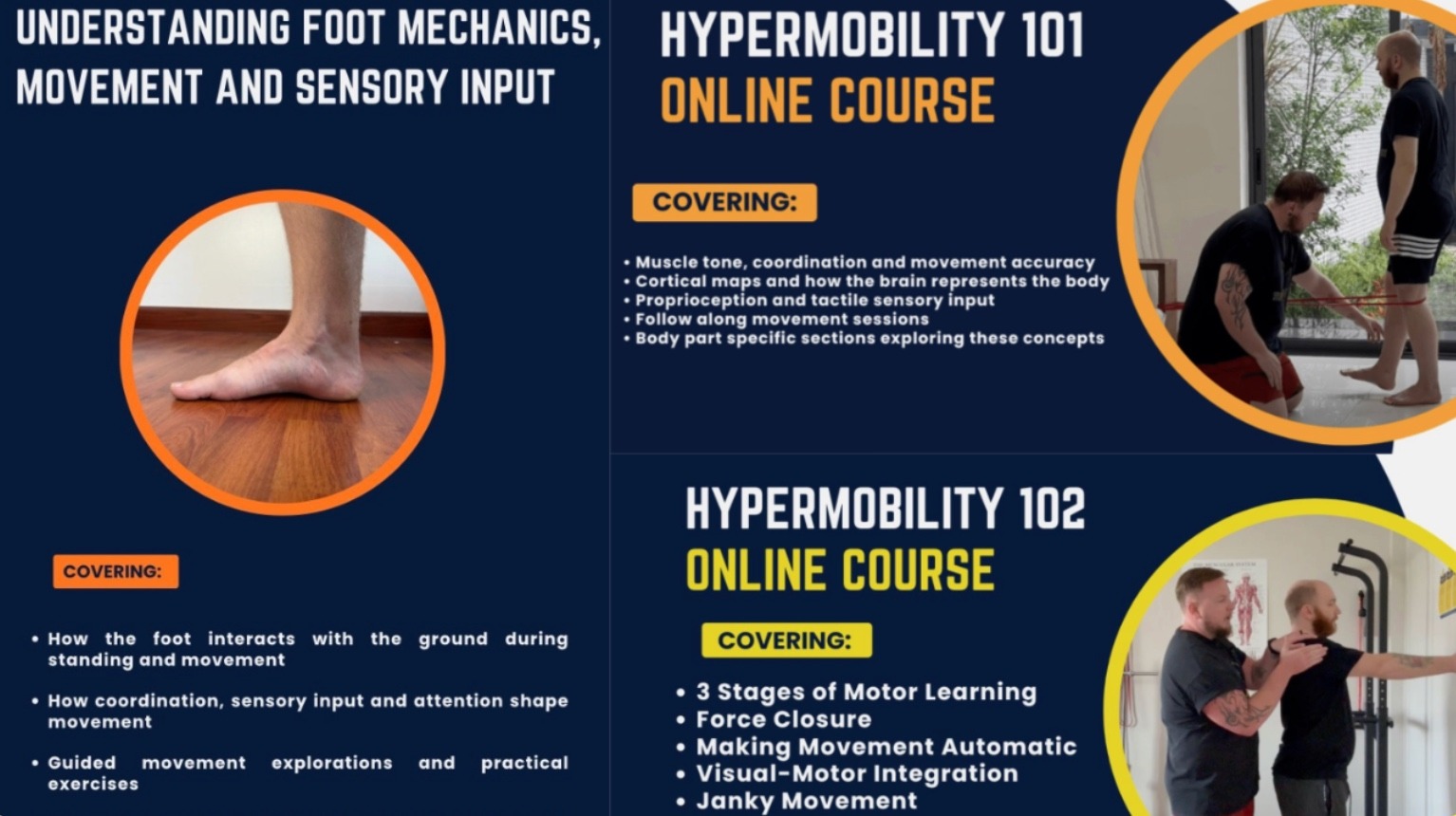
The Hypermobility Fundamentals Bundle
The Hypermobility Fundamentals Bundle is a structured education and movement pathway that starts at the bottom and builds upwards, grounded in motor learning and sensory motor science. Designed for people with hypermobility and persistent pain, it focuses on how strength and stability are organised and learned by the nervous system, beginning with the feet and progressing through sensory input, coordination, and motor learning. The courses are intended to be completed in sequence, with each one establishing the concepts and skills needed for the next.
— The Fibro Guy Team —